Setting Up on a Nebraska Cornfield Edge
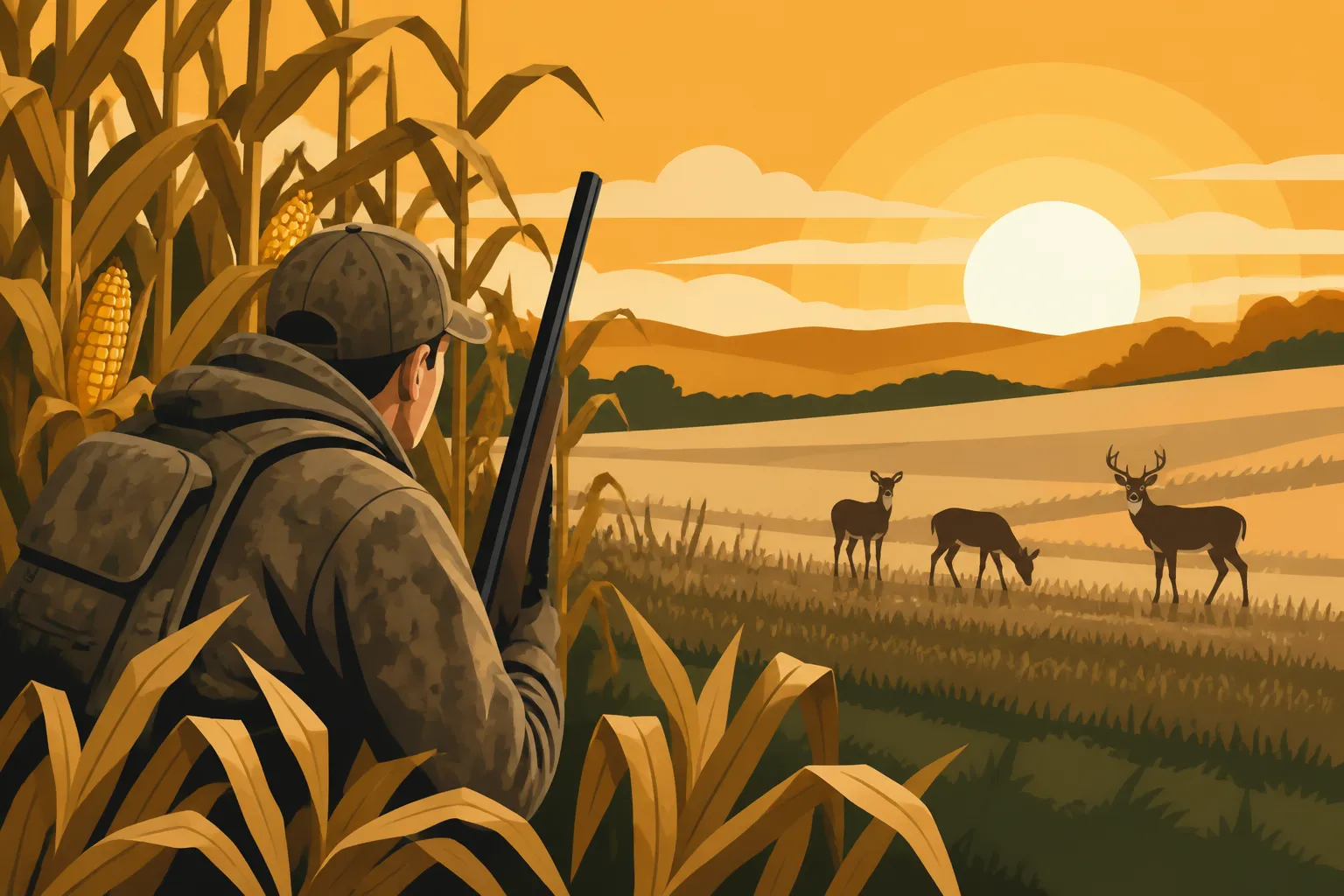
Hunting the edge of a cornfield in Nebraska can feel like trying to solve a puzzle where the pieces keep moving. Deer use these agricultural magnets in such specific, often subtle ways, making it incredibly frustrating to predict their movements and get into position without spooking them. This guide is all about demystifying those cornfield edges, giving you the scouting techniques, setup strategies, and hunting tactics you need to consistently put yourself in front of a Nebraska whitetail or mule deer.
Understanding Deer Movement Along Cornfield Edges
Nebraska's landscape, especially across its eastern and central regions, is dominated by agriculture, and cornfields are perhaps the most influential feature for deer. Understanding why deer utilize these edges, and how their patterns shift throughout the season, is the first critical step to hunting them effectively. Without this foundational knowledge, you're essentially just picking a spot and hoping for the best, and we both know how well that usually works out.
Why Cornfields Are Deer Magnets: Food, Cover, Security
Think about it from a deer's perspective: a standing cornfield is an all-inclusive resort. It provides an incredible bounty of food, particularly after the ears begin to mature and especially if the stalks aren't picked clean by harvest. But beyond the obvious food source, these fields offer unparalleled cover. A mature cornfield is a dense, noisy, and visually impenetrable fortress where a deer can disappear from human eyes almost instantly. This dense cover offers security from predators and hunters alike. You can walk within 20 yards of a bedded deer in tall corn and never know it’s there. This combination of easily accessible food, visual obstruction, and a sense of safety makes cornfields prime real estate for deer, from early archery season right through the late firearm hunts.
The "Invisible" Highways: How Deer Use Edges
Deer don't just randomly wander into a cornfield; they often use established travel routes along its perimeter, creating what I like to call "invisible highways." These are paths of least resistance, natural funnels, or simply preferred bedding-to-feeding corridors. You'll often find these well-worn trails running parallel to the edge, especially if there's an adjacent woodlot, creek bottom, or even just a thick fenceline offering additional cover. They might also cut perpendicular into the field at specific points, often where the corn meets another feature like a small ditch, a tree line, or a dip in the terrain. Recognizing these subtle travel patterns, often only evident through careful scouting, is far more important than just picking any random spot along the edge. Deer are creatures of habit, and their habits often involve the most efficient, safest routes.
Seasonal Changes and Cornfield Dynamics
The way deer interact with cornfields is incredibly dynamic and changes drastically throughout the hunting season. In early archery season, when the corn is tall and green, deer will often bed deep inside, only emerging at the very last light to feed or travel the edges. As the season progresses and the corn dries, it still offers phenomenal cover, but the rustling stalks become noisy, making a quiet approach more challenging for deer (and for you!). Post-harvest, everything changes. Once the combines roll through, that dense cover disappears almost overnight. What was once a secure bedding area becomes an exposed, stubble-filled feeding ground. Deer that relied heavily on that standing corn will suddenly shift their patterns, often retreating to nearby timber, CRP fields, or even small cedar draws for bedding, only to venture back into the corn stubble to pick through dropped kernels. This post-harvest period can be a fantastic time to hunt these edges, but it requires a complete shift in your approach. Understanding these shifts is key to knowing when to hunt the edge versus when to focus on other cover.
Scouting a Nebraska Cornfield Edge for Success
You can't effectively hunt a cornfield edge without thoroughly scouting it. Just showing up opening morning is a recipe for frustration. Nebraska's wide-open spaces mean deer have choices, and their patterns, while consistent, can be subtle. Your scouting efforts are what will unveil those patterns and give you the confidence to set up in the right spot.
Reading the Sign: Tracks, Trails, and Rubs
When you hit the field, you're looking for a story written in the dirt and on the vegetation. Tracks are your first clue. Are they fresh? Are there multiple sets? Are there big, mature buck tracks mixed in with doe and fawn prints? Pay attention to the direction of travel. Trails are often more telling than individual tracks. Look for well-worn paths along the corn's edge, or those subtle entries and exits into the standing stalks. If you find a trail that merges with a fenceline or leads directly to a timber patch, you've likely found a major travel corridor. Rubs and scrapes are the ultimate indicators of buck activity, especially as the rut approaches. Bucks will often work rub lines along the edge of a cornfield, leaving scent and visual markers. A scrape line along a fenceline adjacent to a cornfield is a prime location to target a cruising buck. Always prioritize fresh sign; old sign tells you where deer were, not necessarily where they are right now. When the whitetail rut peaks in Nebraska, these scrapes can become hotbeds of activity.
Identifying Key Entry and Exit Points
Deer don't just crash through the corn at any point; they have preferred entry and exit points. These are often subtle, but consistent. Look for areas where the corn edge meets a natural funnel or change in topography, like a small creek, a drainage ditch, or even a low spot in the field. Sometimes, it's simply a corner where the field makes a turn. These spots offer deer a bit more cover or an easier path into or out of the dense stalks. Pay attention to how deer move from the corn into adjacent timber, CRP, or pasture ground. Are they slipping out at a specific point on the edge to cross a waterway? Or are they waiting until deep dark before emerging from the security of the stalks? Understanding these critical transition zones will dictate where you place your stand or blind. This is especially true when hunting the pre-rut in late October, when bucks become more active and predictable in their travel.
Leveraging Technology: Maps and Scouting Apps
In today's hunting world, technology is an indispensable scouting tool, especially when tackling vast cornfields. Satellite imagery on apps like GoHunt, OnX Hunt, or BaseMap allows you to identify potential funnels, pinch points, and cover changes that aren't visible from the road. You can see how a cornfield connects to a distant woodlot or a hidden creek bottom. Look for areas where the corn is narrower, where it pinches down between two pieces of cover, or where a slight elevation change offers a natural travel route. You can also mark potential stand sites, bedding areas, and travel corridors digitally. This allows you to plan your approach routes carefully, minimizing disturbance. For instance, you might notice a small finger of timber extending into the cornfield – a perfect ambush point that you might miss from ground level. Being able to visualize these areas on a map can save you countless hours of unproductive walking and significantly increase your chances of finding a prime setup.
Choosing Your Stand or Blind Location Wisely
Once you've scouted and identified those high-traffic areas along the cornfield edge, the next critical decision is where to set up your ambush. This isn't just about finding a tree; it's about considering height, concealment, wind, and your approach and exit strategy.
Treestand Placement: The High Ground Advantage
When considering Choosing a Treestand Site on Nebraska Farmland, cornfield edges present both opportunities and challenges. If there are mature trees along the edge, a treestand can offer an incredible vantage point, allowing you to see deer emerge from the corn or travel parallel to its edge. You want enough height to get above a deer's line of sight, often 18-25 feet, depending on the terrain. However, the key is to choose a tree that provides adequate cover, not just elevation. A lone tree sticking out like a sore thumb will do more harm than good. Look for trees that are part of a fenceline or a small clump of timber, ideally with some back cover to break up your silhouette. Ensure your treestand is positioned so that you can comfortably shoot both into the field and along the edge. Think about the angle of the sun, too, especially during morning or evening hunts. You don't want to be silhouetted or have the sun directly in your eyes during prime time.
Ground Blind Considerations for Open Edges
In many parts of Nebraska, a mature tree offering good treestand cover along a cornfield edge is a rarity. This is where ground blinds shine. For Ground Blinds in Open Nebraska Country, the key is concealment. A well-brushed-in blind can be incredibly effective, blending into the natural contours of the field edge, especially if there's tall grass, weeds, or even leftover corn stalks. Placement is everything. Set your blind up well in advance, giving deer time to get used to its presence. Avoid placing it directly on a trail; instead, position it off to the side, allowing you to shoot the trail and the surrounding area. Pay extreme attention to your background; you don't want a deer to silhouette you inside the blind. Make sure your shooting lanes are clear, but don't over-trim, as that will reduce your concealment. The best ground blinds almost disappear into the landscape.
The Importance of Wind Direction and Scent Control
This cannot be stressed enough, especially on open cornfield edges: wind is king. Deer rely heavily on their nose, and a swirling wind will ruin your hunt faster than anything else. Before every hunt, check the forecast for wind direction and thermal currents. Always try to set up so that your scent blows away from where you expect deer to approach or travel. This often means hunting the downwind side of a trail or the leeward side of a ridge. On flat farm ground, understanding Wind Direction on Open Nebraska Prairie Stands becomes even more critical, as subtle shifts can carry your scent far.
Beyond wind, impeccable scent control is paramount. Shower with scent-eliminating soaps, wash your hunting clothes in scent-free detergent, and store them in airtight bags. Use scent-eliminating sprays on your clothes and gear before heading out. Avoid filling up your gas tank or grabbing a coffee in your hunting clothes. Even the smallest human odor can send a wary whitetail bolting. These combined efforts are your best defense against a deer's powerful sense of smell.
Tactics for Hunting Cornfield Edges
Once you've got your setup dialed in, it's time to think about the actual hunting. Cornfield edges require specific tactics to maximize your chances, from timing your entries and exits to understanding how to use calls and decoys effectively.
Timing Your Hunt: Mornings, Evenings, and Midday
Deer often feel most secure entering or exiting a cornfield under the cloak of darkness or low light. This means the first and last hours of daylight are typically your prime windows.
- Morning Hunts: For a morning hunt, plan to arrive at your stand or blind well before dawn. This allows you to get settled without disturbing deer that might still be feeding in the field or slowly making their way back to bedding cover. Deer emerging from the corn after a night of feeding might offer you a shot as they transition to timber or other bedding areas. Your entry route is crucial; you don't want to walk through an area where deer might be.
- Evening Hunts: Evening hunts often involve watching deer enter the cornfield from their bedding areas or emerge from the corn to feed. Again, get in early, quietly, and ensure your approach doesn't blow deer out of the field. This can be especially effective if you know where deer are bedding, allowing you to catch them on their way to the cornfield.
- Midday Movement: Don't discount midday, especially during the rut. Bucks will often cruise cornfield edges looking for does throughout the day. If you're seeing consistent activity, consider staying put or making a small, slow still-hunt through a particularly thick section of the edge.
Remember, your entry and exit routes on flat farm ground are as important as your stand location. A bad entry or exit can spoil an otherwise perfect setup.
Calling and Decoying Strategies on the Edge
Cornfield edges can be fantastic places to employ calling and decoying, especially as the rut kicks in.
- Grunt Calls: A simple tending grunt or a series of social grunts can pique a buck's curiosity, drawing him out of the corn or diverting his travel along the edge. During the peak of the rut, bucks are often actively seeking does, and a well-timed grunt can make them believe another deer is in the vicinity. Grunt Calls in Thick River Timber might differ slightly in volume, but the principle holds true in corn.
- Rattling: If you're looking to bring an aggressive buck in, rattling can be incredibly effective, particularly if you have good visibility along the edge. Start with a softer sequence, mimicking two bucks sparring, and increase the intensity if you don't get a response. Be ready; a buck might come in hard and fast. However, consider Rattling Volume for Open Country; in wide-open spaces, sounds carry further, so you might not need to be as aggressive.
- Decoys: A single doe decoy, or even a small buck decoy, placed strategically along the cornfield edge can act as a visual magnet. Position it so that it's visible from typical deer travel paths, but not so exposed that it looks out of place. Ensure the decoy is facing away from your shooting lane, mimicking a deer that's feeding or just walking. The goal is to draw a deer into your comfort zone for a shot.
Adapting to Pressure and Post-Harvest Changes
Nebraska deer, especially those on public land or heavily hunted private ground, are incredibly sensitive to pressure. If you hunt a cornfield edge repeatedly from the same spot, deer will notice. They'll adjust their patterns, becoming more nocturnal or using different routes.
- Rotation: Consider having multiple setup options along a cornfield edge. Rotate your stands or blinds to avoid over-pressuring one area. This keeps deer guessing and less wary.
- Post-Harvest Shift: Once the combines roll through, the entire dynamic changes. The security cover is gone, and deer will move to other bedding areas. However, the fields still hold a wealth of dropped corn. Focus on the transition zones where deer will travel from new bedding areas (like dense timber, CRP, or thick shelterbelts) to feed on the exposed kernels. This is when What Changes in Nebraska After the Corn Comes Off becomes your main focus. Consider setting up where these new bedding areas meet the corn stubble. Deer will still use the stubble fields, but their approach and exit routes will likely be different.
Dealing with Specific Nebraska Cornfield Challenges
Hunting Nebraska cornfield edges isn't without its unique difficulties. From the sheer density of standing corn to managing access on private land, these challenges require a thoughtful approach.
Hunting Standing Corn Before Harvest
Hunting a standing cornfield before harvest presents a unique set of challenges and opportunities. When the corn is tall and green, it offers unparalleled security for deer, making them incredibly difficult to locate. Deer might bed deep within the field, only emerging at last light, or they might never fully leave, simply moving deeper into the stalks if disturbed.
- Focus on Funnels: During this period, your best bet is to focus intensely on those natural funnels and pinch points where deer are forced to condense their movement. This could be where the field narrows, where it meets a creek bottom, or where a point of timber extends into the corn. These are the "choke points" where you have the highest chance of intercepting a deer.
- Edge Patrol: Deer will still cruise the edges, especially mature bucks checking for does. Setting up on a well-used trail that parallels the cornfield edge can be highly effective, catching deer as they travel from one bedding or feeding area to another.
- Noise and Scent: Remember that standing corn can be incredibly noisy to walk through, making stealth difficult. Focus on silent approaches, and be extra vigilant with your wind direction and scent control. The rustling stalks might mask some of your sounds, but your scent will still carry. Knowing the best strategies for Hunting Standing Corn Before Harvest is paramount.
What Changes in Nebraska After the Corn Comes Off
The combine changes everything. When the corn comes off, the landscape transforms, and so do deer patterns. The dense security cover vanishes, forcing deer to find new bedding locations. This immediate post-harvest period can be feast or famine for hunters.
- New Bedding Areas: Deer will typically retreat to the nearest available dense cover, whether that's timber, CRP fields, shelterbelts, or even deep drainage ditches. Your scouting focus should shift to these new bedding sanctuaries.
- Exposed Food Source: While the cover is gone, the corn stubble fields become a prime feeding ground, littered with dropped kernels. Deer will still visit these fields, but their movement patterns will be drastically different. They'll often emerge from thicker cover and move cautiously into the open stubble.
- Increased Visibility: The upside is that visibility dramatically improves. This makes glassing fields from a distance much more effective, allowing you to pattern deer entering and exiting the stubble. Setting up on the downwind edge of a stubble field, where it meets a new bedding area, can be incredibly productive. Understanding What Changes in Nebraska After the Corn Comes Off is key to adapting your strategy.
Navigating Access and Landowner Relations
In Nebraska, much of the prime cornfield hunting lies on private land. This means securing permission is often the biggest hurdle.
- Polite Requests: Always approach landowners respectfully, well in advance of the season. Offer to help with chores, respect their property, and clearly communicate your intentions. Leave your contact information. Building a relationship is key.
- Public Access Programs: While private land dominates, don't overlook Nebraska's Public Access Atlas and the Open Fields and Waters program. These initiatives lease private land for public hunting, often including agricultural fields. Check the atlas carefully; you might find cornfield edges open to public hunting.
- Respect Boundaries: Whether on private or public land, always know your boundaries. Trespassing is not only illegal but also damages the reputation of all hunters. If you're fortunate enough to gain permission, treat the land better than you would your own. If you're considering Getting Private Land Permission in Nebraska, remember that a good first impression and clear communication go a long way.
| Feature | Treestand on Cornfield Edge | Ground Blind on Cornfield Edge |
|---|---|---|
| Visibility | Excellent, elevated view over corn and edge. | Limited to ground level, relies on shooting lanes. |
| Concealment | Requires suitable tree with back cover; can be exposed. | Excellent if properly brushed in and set early; blends naturally. |
| Setup Time | Can be quicker to hang a mobile stand, but finding ideal tree difficult. | Requires pre-season setup and brushing; best left for weeks. |
| Mobility | High if using a mobile setup; low if fixed stand. | Low once established; harder to move quickly. |
| Wind Impact | Exposed to wind; scent control crucial. | More protected from wind and elements; scent still critical. |
| Comfort | Can be less comfortable in cold/wind; limited space. | Generally more comfortable, especially in bad weather; more room. |
| Safety | Requires harness and strict safety protocols. | Inherently safer on the ground. |
| Shot Angle | Steeper downward angle, often good for vitals. | Ground-level shot, can be tricky with vegetation. |
| Best Use | When mature trees are present on high-traffic edges. | In open areas lacking suitable trees, or for less mobile hunters. |
Disclaimer
Hunting is an inherently dangerous activity. Always prioritize safety, understand and follow all Nebraska Game and Parks Commission regulations, and obtain appropriate licenses and permits. The information provided in this guide is for informational purposes only and does not constitute professional advice. Always scout thoroughly, practice ethical hunting, and respect private property.