Full-Body Decoy Spreads for Geese
There are few things more frustrating in goose hunting than putting in all the effort of scouting, waking up before dawn, and hauling out a mountain of decoys, only to have flocks flare high overhead, completely uninterested. It feels like you’ve done everything right, but those wary birds just aren't buying what you’re selling. This guide is all about transforming those frustrating fly-bys into committed, feet-down landings, focusing on the meticulous art of deploying full-body decoy spreads for Nebraska geese.
Why Full-Body Decoys Are Worth the Investment
Let's be honest, full-body goose decoys aren't cheap, and they're certainly not the lightest things to haul across a muddy, frozen field in the dark. It’s easy to look at the price tag or the sheer volume they take up in your trailer and wonder if they're truly worth the hassle. I’ve been there, staring at a stack of shells thinking, "These are good enough, right?" But the truth is, when it comes to consistently pulling in educated geese in Nebraska’s expansive agricultural landscape, full-bodies offer an undeniable advantage that flat-out pays off in more birds on the strap.
The Unmatched Realism They Offer
What makes full-body decoys so effective is their incredible realism. Geese are smart, and they've seen every type of spread imaginable. They're constantly evaluating what they see on the ground, looking for any subtle cue that screams "danger." Shells and silhouettes, while effective in certain situations, often fall short of replicating the three-dimensional, lifelike appearance of a feeding or resting flock. Full-bodies, with their accurate feather detail, natural postures (feeders, sentries, resters), and realistic paint schemes, present a much more convincing tableau. They eliminate the "pancake" look that can occur with flatter decoys from certain angles, especially when birds are circling high overhead, trying to pick out imperfections. This realism is critical, especially when hunting highly pressured birds later in the season or in areas with consistent hunting pressure, like some parts of the Rainwater Basin. The subtle shadow lines, the way they catch the light, and their ability to appear substantial from any direction are game-changers.
Durability and Performance in Nebraska's Weather
Nebraska weather, as any seasoned hunter knows, can be brutal and unpredictable. From freezing rain and heavy snow to blustery winds that feel like they're trying to rip the gear right out of your hands, decoys need to withstand a lot. Full-body decoys, particularly those from reputable brands known for their sturdy construction, are built to take a beating. Their robust design means they’re less likely to crack or warp in extreme cold, and their heavier bases often provide better stability in high winds compared to lighter alternatives. Imagine setting up a spread of shells only to have half of them blown over by a strong gust just as a flock is committed. That's a heartache no hunter wants. Full-bodies, especially those with solid stakes or robust bases, stand firm, maintaining your carefully constructed illusion even when Mother Nature throws a tantrum. This durability means they last longer, protecting your significant investment over many seasons, and more importantly, they perform reliably when you need them most.
The Confidence Factor
Beyond the technical advantages, there's a psychological component to hunting with full-body decoys: confidence. When you know you've got the most realistic spread possible laid out, you tend to hunt with more conviction. You call more aggressively, you believe the birds will commit, and that positive mindset can translate into better hunting. There’s a noticeable difference in how you approach the hunt when you truly believe your setup is top-notch. And geese, whether we want to admit it or not, often react to the energy of the hide. If you're constantly worried your spread isn't convincing, you might fidget, peek out too early, or call hesitantly. Knowing your full-bodies are doing their job allows you to focus on the other critical elements of the hunt, like calling cadence, identifying individual birds in a flock, and knowing exactly when to call the shot. This confidence trickles down into every aspect of your hunting strategy, making you a more effective and successful hunter.
Crafting Realistic Full-Body Spreads for Nebraska Geese
Once you've committed to using full-body decoys, the next step is learning how to deploy them in ways that truly mimic the natural behavior of geese. It's not just about scattering them randomly; it's about creating an illusion that tells a compelling story to incoming birds. Geese are social animals, and their body language within a flock communicates a lot. Your spread needs to convey security, contentment, and an abundance of food.
Mimicking Natural Feeding and Resting Patterns
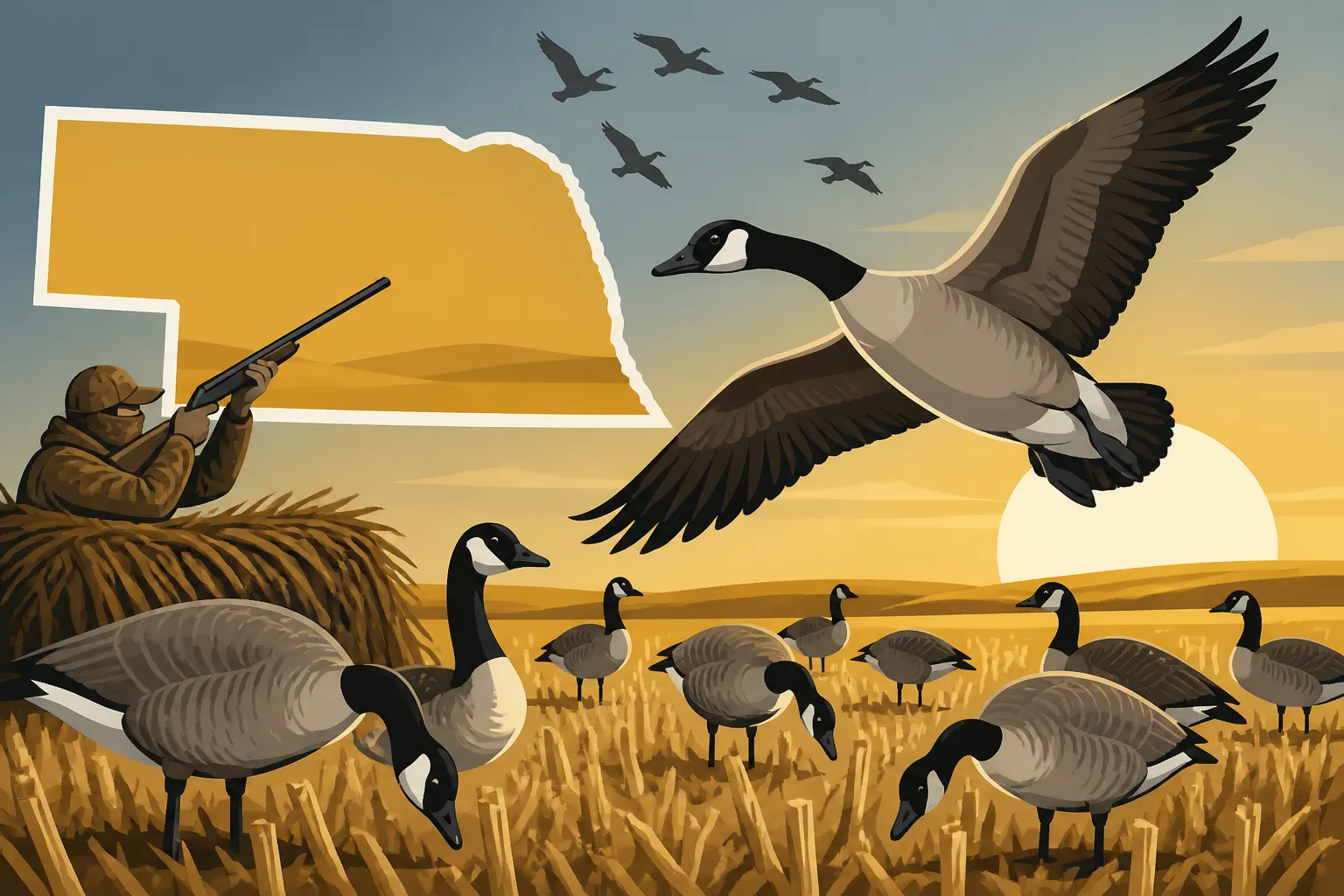
The most common and often most effective spread is a feeding spread. When geese are feeding in a field, they spread out, with some birds having their heads down, actively grazing, while others have their heads up, acting as sentries, looking for danger. This mix of postures is crucial. You want a good ratio of "feeders" to "sentries" in your spread, typically around 70-80% feeders and 20-30% sentries. Place your feeders in natural-looking clusters, as geese don't typically feed in perfectly straight lines. Vary the direction they're facing slightly; not every goose will be pointed directly into the wind, though many will. Interspersed among these feeding clusters, place your sentry decoys, usually in positions where they appear to be overseeing the flock.
Another effective pattern, especially on bitter cold, windy days or when geese are just loafing, is a resting or loafing spread. Here, you'll incorporate more "rester" decoys—birds with their heads tucked, appearing to be asleep or just relaxing. These are particularly effective in protected areas of a field, maybe behind a slight rise or in a low spot that offers a bit of shelter. Resting spreads signal extreme comfort and safety, which can be irresistible to tired, cold birds. You might also integrate a few "active" or "social" decoys—birds that look like they're interacting, stretching, or calling. This adds another layer of realism, suggesting a lively, thriving flock that has found a safe haven. Remember, the goal is to make your spread look like a photograph of real geese, not just a collection of plastic birds.
Strategic Groupings and the "Landing Zone"
Geese rarely stand in perfectly uniform lines. They form family groups, small clusters of friends, or slightly larger aggregations. Replicate this with your full-body decoys. Instead of spreading every decoy evenly, create distinct groups of 3-7 birds. These clusters can be slightly offset from each other, simulating natural movement as they graze. Leave plenty of open space between these groups. This open area is your "landing zone." Geese, being large birds, need ample room to land safely, especially into the wind. If your decoys are too dense, incoming birds will perceive it as a crowded, unsafe landing strip and will often flare.
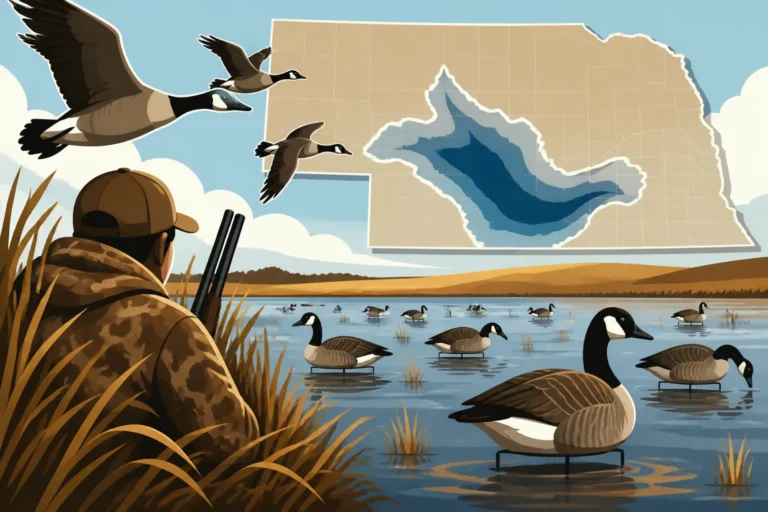
The ideal landing zone should be directly in front of your blind, perhaps 20-35 yards out, creating a perfect shooting pocket. Imagine the geese approaching, setting their wings, and dropping into that inviting open space. The way the decoys are positioned around this zone guides their approach. You might create a "J-hook" or "U-shape" with your decoys, with the open end of the J or U pointing into the prevailing wind and towards your blind. This funnels the birds directly over your hide and into that sweet spot. For effective Decoy Spreads for Rainwater Basin Geese, remember that often these birds are exceptionally wary, so spacing and realism are paramount.
When considering a major hunting trip, using a mapping tool like GoHunt can be invaluable for pinpointing specific field features, determining wind direction impacts on potential landing zones, and even identifying where Canada Geese in Nebraska tend to concentrate. This kind of detailed scouting takes the guesswork out of where to set up your full-body spreads for maximum effectiveness.
Strategic Placement and Adapting to Conditions
Setting out your full-body decoys isn't a "one size fits all" endeavor. The successful hunter understands that every field, every day, and every flock of geese presents unique challenges and opportunities. Adapting your spread to the specific conditions you face is key to consistently bringing birds into range.
Understanding Wind Direction and Field Topography
The wind is arguably the most critical factor in decoy placement. Geese, like all birds, almost always land and take off directly into the wind. This is why understanding the prevailing wind direction for your hunt is non-negotiable. Your landing zone should always be positioned so that incoming geese will approach it flying directly into the wind, bringing them right over your blind. If the wind shifts during the hunt, you might need to adjust your spread, even if it means moving a few critical groups of decoys.
Field topography also plays a huge role. Are you hunting a flat corn stubble field, a rolling pasture, or a field with subtle draws and rises? Use these natural features to your advantage. Place decoys on rises where they are more visible, and utilize depressions for your blind concealment. If there's a slight crest, you can put some sentry decoys there to catch the eye of distant birds, making your spread appear larger and more visible. In areas with varying terrain, like some agricultural fields near the Missouri River and Eastern Nebraska Access points, strategic placement around subtle changes in elevation can make your full-body spread look even more dynamic and alive. Remember, the more natural your spread appears within its environment, the more effective it will be.
Scouting for Key Locations and Sign
You can have the best full-body decoys in the world, but if you're not setting them up where the geese want to be, you're just exercising. Effective scouting is the foundation of a successful goose hunt. Before you even think about setting up a spread, you need to identify active feeding fields. Look for fresh droppings, disturbed stubble, and actual geese feeding. Pay attention to how they enter and exit the field, which can give you clues about their preferred flight paths. A great tool for this is the Nebraska Public Access Atlas, which can help you locate suitable fields, especially within the Open Fields and Waters program, but always respect private land.
Once you’ve identified a hot field, observe the birds. Where are they congregating? Are they spread out and actively feeding, or are they bunched up, trying to stay warm? This observation will dictate the type of spread you set up—a wide feeding spread, a tighter loafing spread, or perhaps a combination. Note any natural cover for your blinds, like old fence lines, tall grass, or corn rows. Don’t try to force a spread in a bad location; move to where the geese want to be. Sometimes, this means packing up and moving to a different field altogether, which, while a pain, is often the difference between a limit and an empty cooler. For detailed information on finding prime hunting spots, checking out resources like the Nebraska Public Access Atlas Mobile App can provide real-time updates and maps.
Integrating Blinds and Calling Strategies
Your full-body spread is only as good as your concealment. Layout blinds are almost essential when hunting geese in open fields, as they allow you to remain completely hidden while positioned right in the middle of your decoy spread. Brush in your layout blind thoroughly with natural vegetation from the field, making sure it completely disappears into the stubble. There’s a wealth of knowledge on how best to do this, including how to set up your Layout Blinds for Nebraska Cut Corn effectively. The goal is for your blind to look like another innocuous clump of field debris.
Once your spread is set and your blinds are hidden, your calling strategy becomes paramount. Your calls should reinforce the story your decoys are telling. If you have a feeding spread, use contented feeding clucks and murmurs. If birds are distant, use louder, more excited greeting calls to grab their attention. As they get closer, transition to softer, more reassuring sounds. The combination of realistic full-body decoys and skillful calling creates an irresistible magnet for geese. For those looking to master their vocalizations, there are some great guides on Goose Calls for Open Prairie that can help you dial in your technique. It's truly a symphony where the decoys are the orchestra and your calling is the conductor, working together to bring those birds home.
Essential Tips for Maximizing Your Full-Body Success
Mastering full-body decoy spreads goes beyond just placement; it involves careful maintenance, efficient logistics, and thoughtful execution during the hunt. These details can often make or break your efforts, especially when dealing with the realities of Nebraska hunting.
Decoy Maintenance and Transport Efficiency
Full-body decoys are an investment, and like any good investment, they need proper care to last. After each hunt, take the time to clean any mud, dirt, or debris off your decoys. Mud not only makes them heavier but can also dull their finish and make them look less realistic. Store them in slotted bags or large totes to protect their paint jobs and prevent rubbing during transport. This also makes them much easier to carry to and from the field. Keeping them looking pristine ensures they retain their drawing power season after season.
Transporting a large spread of full-body decoys can be a logistical challenge. Many hunters use utility trailers, while others stack them carefully in the back of their trucks. Consider using a system of bungee cords or straps to secure them to prevent movement and damage on bumpy gravel roads. If you're walking into a field, investing in a good decoy sled or a durable shoulder bag can save your back and make the process much more efficient. Thinking through your transport plan before the hunt will save you a lot of frustration and energy in the dark hours before sunrise. This is where a little planning, perhaps using GoHunt to identify the easiest access points to your target field, can make a huge difference in your setup efficiency.
Adding Movement to Your Spread
Even the most realistic static full-body spread can sometimes be improved with a touch of movement. Live geese are rarely perfectly still. They bob their heads, stretch their necks, and constantly shift. Adding a few motion decoys—such as a flagger, a couple of "wobblers" that pivot in the wind, or even a simple Texas rig that allows decoys to sway—can add that extra layer of realism. The subtle movement can often catch the eye of distant birds that might otherwise overlook your static spread. Be careful not to overdo it; too much unnatural movement can actually spook wary birds. A few strategically placed motion decoys, particularly those that mimic a feeding or sentinel posture, can be incredibly effective in bringing a spread to life, especially on calm days when there's little natural wind to create motion.
Adapting to Light Goose Conservation Order Tactics
While the core principles of full-body spreads apply to all goose hunting, the Hunting the Light Goose Conservation Order often demands a different scale. When hunting snow geese and blue geese during the conservation order, hunters often deploy massive spreads—hundreds, even thousands, of decoys. This is because light geese travel in enormous flocks, and a small spread can look insignificant to them. If you're targeting light geese with full-bodies, you'll need a much larger quantity to compete with the sheer numbers these birds are accustomed to.
The spread patterns for light geese also tend to be more spread out, often resembling a chaotic, expansive feeding frenzy. You might mix in more feeder-style decoys and even some "sleeper" or "rester" decoys around the edges to mimic a massive, contented flock. While full-body decoys are still highly effective, many light goose hunters also incorporate a significant number of shell decoys or even "sock" decoys to build bulk without breaking the bank. The key is to create a visual spectacle that screams "food and safety" to these huge migrating flocks as they pass through regions like the Rainwater Basin, an area known for its significant Rainwater Basin Waterfowl Numbers during migration.
| Decoy Spread Type | Primary Goal | Ideal Conditions | Key Features |
|---|---|---|---|
| Feeding Spread | Attract actively feeding birds; signal abundance. | Moderate wind, active feeding sign, early season. | Mix of feeder and sentry poses (70/30), spread out with landing zone. |
| Resting/Loafing Spread | Attract tired, cold, or pressured birds; signal safety. | Cold, windy days, low light, pressured areas. | More rester/sleeper poses, tighter clusters, often in sheltered spots. |
| Family Group Cluster | Replicate natural social structures; add realism. | Any condition, often integrated into larger spreads. | 3-7 decoys per small group, varied poses within group. |
| Massive Light Goose Spread | Overwhelm large flocks of snow geese with visual numbers. | Light goose conservation order, large open fields. | Hundreds to thousands of decoys (full-body, shells, socks), very spread out, often chaotic. |
Final Thoughts on Nebraska Goose Decoy Spreads
Ultimately, using full-body decoys for geese in Nebraska is about creating an illusion so convincing that even the wariest bird drops its guard. It's a blend of art and science, requiring observation, patience, and attention to detail. From scouting the perfect field and understanding the wind to meticulously placing your feeders and sentries, every step contributes to the overall success of your hunt. Don't be afraid to experiment, adapt, and learn from every outing. Those frustrating fly-bys will eventually turn into thrilling, feet-down approaches, and you'll realize the effort you put into your full-body spread was more than worth it.
Disclaimer
Hunting is an inherently dangerous activity. Always prioritize safety, follow all local, state, and federal hunting regulations, and obtain appropriate licenses and permits. This guide is for informational purposes only and does not substitute for professional instruction or official regulations from the Nebraska Game and Parks Commission. Always verify current rules and seasons before heading afield.