Canada Geese in Nebraska
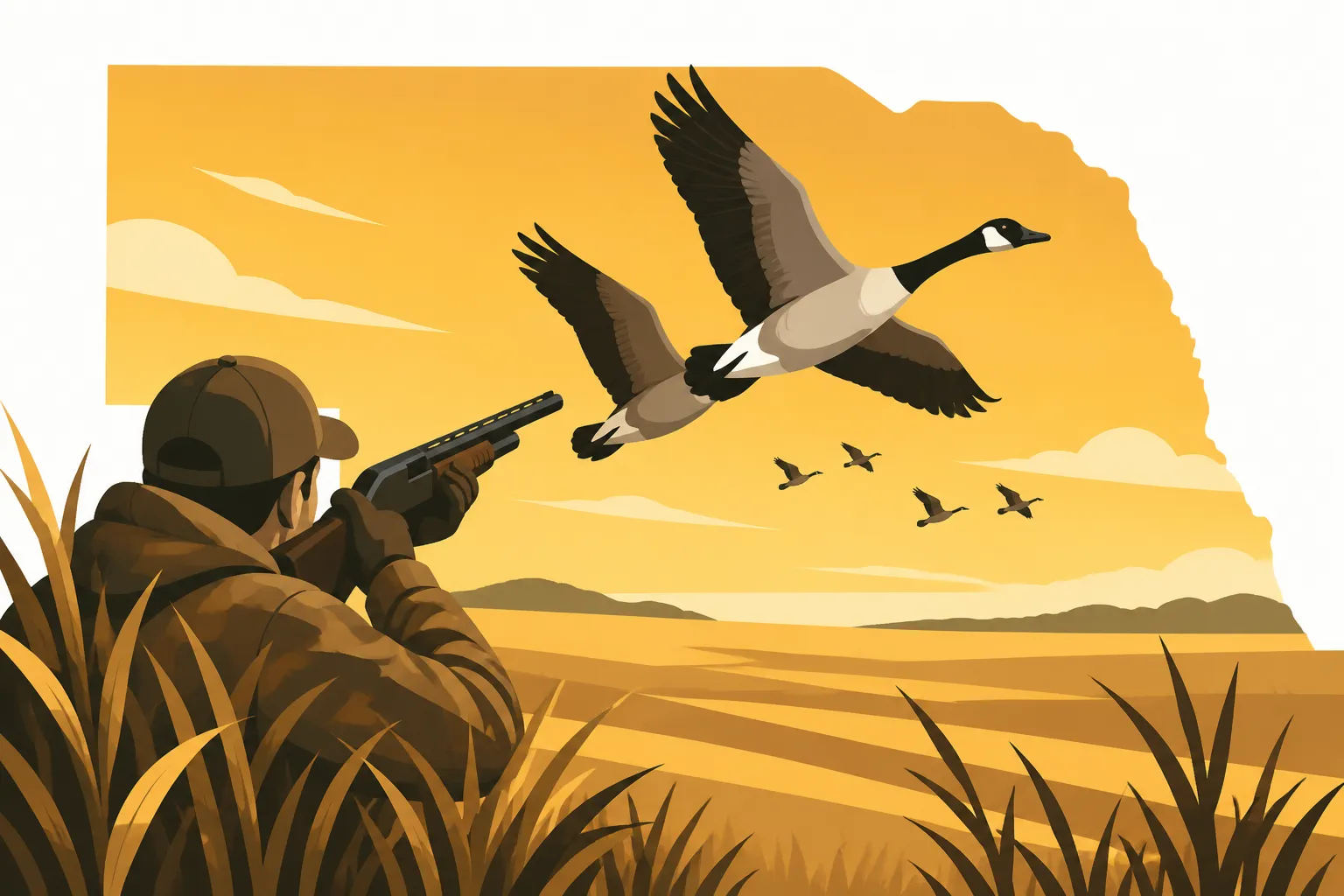
The crisp autumn air, the distant honk of geese—it's a sound that stirs the soul of any Nebraska waterfowl hunter. But bringing those magnificent Canada geese to your spread is a whole different ballgame than ducks or even specklebellies. From their impressive size to their notoriously wary nature, hunting Canadas presents unique challenges and requires a deep understanding of their behaviors and habitats. This guide is all about helping you understand the life and times of Canada geese in our great state, from their migration patterns to the nitty-gritty of successful hunting tactics, so you can fill your freezer and make lasting memories.
The Mighty Canada Goose: Understanding Nebraska's Waterfowl Icon
Canada geese are more than just a passing sight; they're a fixture in the Nebraska landscape, from the Platte River to the smallest farm pond. These birds are incredibly adaptable, thriving in a variety of environments, which is precisely why they've become such a popular and challenging game species for hunters across the state. Understanding their fundamental biology and behavior is the first step in consistently finding success in the field.
Subspecies and Local Populations
When we talk about Canada geese in Nebraska, it's important to remember that there isn't just one kind. North America is home to several subspecies, varying significantly in size and appearance, and many of these pass through or reside in Nebraska. You'll primarily encounter the larger Giant Canada Geese, which are often the resident birds, nesting and raising their young right here in Nebraska. These are the truly massive geese, often weighing in at over 10 pounds, with long necks and distinct white chinstraps.
Beyond the giants, we also see smaller migratory subspecies, like the Interior Canada Geese, passing through during migration. These birds are generally smaller and tend to breed further north in Canada. Distinguishing between them in the field can be tough, especially with mixed flocks, but their sheer numbers and differing flight patterns can tell a story about whether you're looking at local birds or fresh migrants. Each subspecies has its own nuances, but for the hunter, the key takeaway is that both resident and migratory populations contribute to the fantastic hunting opportunities here.
Diet and Feeding Habits
Canada geese are primarily grazers, meaning their diet largely consists of grasses, grains, and agricultural crops. This is why you'll so often find them in harvested cornfields, wheat stubble, or lush green winter wheat fields. They're looking for waste grain or tender new shoots to fuel their large bodies. This feeding behavior is absolutely critical for hunters to understand, as it dictates where and when geese will be.
Observing flight patterns from roost to feed is a time-honored scouting technique. Geese will often fly long distances from secure water bodies, like large reservoirs, rivers, or secluded ponds, to reach their preferred feeding grounds. They're creatures of habit, often returning to the same fields day after day until the food source is depleted or disturbed. Understanding this routine is your biggest advantage; it’s why so many of us spend hours with binoculars, watching and waiting to pinpoint their preferred dining spots.
Social Structure and Flock Behavior
Canada geese are highly social birds, traveling and feeding in flocks that can range from a handful of birds to hundreds, or even thousands, during migration. This strong social bond is why decoys are so effective – they literally speak the geese’s language, broadcasting a message of safety and plenty. Within these flocks, there's a definite hierarchy, often led by older, more experienced birds. These "sentinels" are incredibly wary, constantly scanning for danger, and it's their sharp eyes that make decoying a challenge.
Their flocking behavior also influences how they react to pressure. A small flock might be easier to decoy initially, but a large, heavily pressured group will often circle multiple times, looking for any sign of a threat before committing. Hunters need to be aware of this inherent wariness and adapt their strategies accordingly, recognizing that one wrong move or an unconvincing spread can send an entire flock spiraling away. This social dynamic also explains why calling can be so important; communicating with the flock on a social level can be the difference between a pass-by and birds in your face.
Migration and Seasonal Patterns Across Nebraska
Nebraska sits smack dab in the middle of the Central Flyway, making it a critical corridor for millions of migratory birds, including Canada geese. Our state provides essential resting, feeding, and wintering grounds, turning certain regions into waterfowl magnets during different times of the year. Understanding these seasonal movements is paramount to planning a successful hunt.
Early Season Arrivals and Resident Birds
As summer fades into fall, Nebraska's early goose season opportunities often revolve around the local, resident Giant Canada Geese. These birds hatched and matured here, and they typically stick to familiar patterns, roosting on nearby lakes, rivers, and ponds, then flying out to feed in agricultural fields. This can be some of the most consistent goose hunting of the year because the birds haven't been pressured much, and their routines are often quite predictable.
However, "predictable" doesn't mean "easy." These birds still require good scouting to locate their preferred feeding fields. You might find them in cut alfalfa, pastures, or early-harvested cornfields. As the season progresses into early October, we start seeing the first trickles of northern migrants joining these resident flocks. These early arrivals often mix with the local birds, adding more excitement and a bit of unpredictability as new birds learn the local landscape and adapt to hunting pressure.
Peak Migration Through the Central Flyway
The real excitement for many goose hunters kicks in during the peak of migration, typically from late October through November and into early December. This is when the skies over Nebraska can fill with thousands of Canada geese heading south from their breeding grounds in Canada and the northern U.S. These birds are often less wary than resident geese, at least initially, having experienced less hunting pressure along their journey. The sheer volume of birds during this period can be breathtaking, offering fantastic opportunities if you're in the right place at the right time.
Major river systems like the Platte River, and critical wetland complexes such as the Rainwater Basin, become major staging areas. Geese will pile into these areas to rest and refuel before continuing their journey. Tracking weather fronts, especially cold snaps and snow further north, is crucial during this period, as these conditions often push large numbers of birds down the flyway. Utilizing a tool like the GoHunt platform might help you identify potential public access points along these migration corridors, giving you an edge in finding those key staging areas.
Wintering Populations and Late-Season Opportunities
While many Canada geese continue south, a significant portion chooses to winter in Nebraska, especially if open water and food sources remain abundant. This provides excellent late-season hunting opportunities, particularly in December and January. These birds, however, have seen it all. They've been hunted for months, are extremely wary, and often group into massive, savvy flocks. Successfully hunting wintering geese requires meticulous attention to detail, impeccable concealment, and a deep understanding of their cold-weather behaviors.
During the deep freeze, geese rely heavily on thermal refuges, such as flowing rivers or large lakes that resist freezing, and accessible fields with remaining waste grain or winter wheat. Snow cover can actually make scouting easier, as fresh tracks and droppings in a field clearly indicate recent use. However, it also highlights any flaws in your concealment. Late-season geese demand more patience, better calling, and often larger, more convincing decoy spreads. These hunts can be incredibly rewarding, but they definitely test a hunter's skill and resolve in challenging conditions.
Prime Locations and Habitats for Nebraska Geese
Nebraska offers a diverse landscape, but when it comes to Canada geese, certain areas stand out as consistent hotspots. These prime locations often combine essential elements: secure roosting water, abundant feeding grounds, and minimal disturbance, making them magnets for both migratory and resident birds.
The Influence of the Platte River Corridor
The Platte River, stretching across the state, is an undeniable lifeline for waterfowl in Nebraska, especially Canada geese. Its wide, shallow channels, sandbars, and associated wetlands provide crucial roosting and loafing areas where thousands of geese can feel secure. During peak migration, the river corridor acts as a major highway, guiding birds through the state. The agricultural lands bordering the Platte, with their vast corn, soybean, and wheat fields, offer an endless buffet for hungry geese.
Hunting opportunities along the Platte and its tributaries can be fantastic, ranging from setting up on a sandbar to field hunting nearby. Access can sometimes be tricky due to private land, but there are numerous public access points and Platte River Public Access areas that hunters can utilize. Remember, geese using the Platte are often accustomed to human activity, including farming and fishing, but they retain their innate wariness. Early morning flights off the river to feed and late afternoon returns are classic scenarios for setting up a successful spread.
The Importance of the Rainwater Basin
Nestled in south-central Nebraska, the Rainwater Basin is a truly unique wetland complex and another cornerstone of waterfowl migration in the Central Flyway. These shallow, ephemeral wetlands provide critical resting and feeding habitats for millions of ducks and geese. While it's particularly famous for ducks and sandhill cranes, the Rainwater Basin also hosts immense numbers of Canada geese, especially during the spring and fall migrations. For more on this critical area, check out Rainwater Basin Waterfowl Numbers.
Hunting in the Rainwater Basin often involves hunting over water or in adjacent agricultural fields. The key here is understanding which wetlands are holding birds and which fields they are utilizing. Many of these wetlands are managed as Federal Waterfowl Production Areas (WPAs) or state Wildlife Management Areas (WMAs), offering public hunting access. Hunters often set large decoy spreads, sometimes in layout blinds, to entice passing flocks. The success here relies heavily on scouting to find active areas, as water levels and bird presence can fluctuate dramatically.
Agricultural Fields and Food Sources
Beyond the major river systems and wetlands, the vast agricultural fields that dominate much of Nebraska are perhaps the single most important habitat component for Canada geese, particularly outside of roosting hours. Harvested cornfields are a perennial favorite, offering readily available waste grain. But don't overlook cut alfalfa, winter wheat, milo, or even soybean stubble, especially in the early season. Geese are opportunistic feeders and will exploit whatever food source is most accessible and abundant.
A common scenario involves identifying a field where geese are consistently feeding. This usually means driving country roads, glassing with binoculars, and watching flight patterns. Once you've located a hot field, getting permission to hunt it is often the next step on private land. For public ground, like those enrolled in the Nebraska's Open Fields and Waters Program, the scouting process is similar, but access is guaranteed. The goal is always to set up where the birds want to be, well before they arrive, with perfect concealment.
Mastering Canada Goose Hunting Strategies
Canada geese are notoriously smart and wary, making them a formidable challenge for any hunter. Success doesn't come by chance; it's the result of meticulous planning, expert execution, and the ability to adapt to ever-changing conditions.
Decoying Canada Geese
Decoying is the cornerstone of virtually all successful Canada goose hunting. The goal is to create a spread that looks so natural and inviting that passing geese believe it's a safe place to land and feed. This means paying attention to detail:
- Spread Size and Configuration: While some days a dozen decoys might work, more often, especially for large, wary flocks, a larger spread is better. Think 3-4 dozen full-body decoys as a starting point, and scale up if possible. The configuration is key: a core group representing feeding geese, with a landing zone "hole" directly in front of your blinds. Outliers, or "sentinels," can be placed further out to give the appearance of a larger, secure flock. Consider checking out Decoy Spreads for Rainwater Basin Geese for specific layout ideas.
- Decoy Realism and Movement: High-quality, realistic decoys are a significant investment, but they pay dividends. Beyond realism, movement is crucial. Flagging, using a goose flag to mimic landing or flapping geese, can draw distant birds' attention. Incorporating a few motion decoys or using Texas rigs that allow decoys to sway in the wind adds to the lifelike appearance, making your spread more convincing to circling birds.
- Concealment is King: No matter how good your spread is, if the geese see you, they're gone. Layout blinds are the standard for field hunting. Ensure they are brushed in perfectly with the surrounding vegetation—corn stubble, milo, grass, or whatever is in the field. Leave no dark spots or unnatural shapes. If you're on a river sandbar, dig in or use natural cover to break up your outline. Remember, geese have incredible eyesight, and they've been educated by countless hunters before you. For insights on hiding effectively, look into Layout Blinds for Nebraska Cut Corn.
Effective Calling Techniques
Goose calling is an art, not just noise. It's about communicating with the birds, reassuring them, and drawing them closer. While a beginner can learn a basic honk, advanced callers can mimic an entire flock's sounds, creating a symphony that's irresistible to passing birds.
- Basic Calls: Start with the "honk," a single, deep note that mimics a bird communicating its presence. The "cluck" is a shorter, sharper sound, often used when geese are feeding or casually chatting.
- Greeting and Landing Calls: As birds approach, a "hail call" is a series of loud, pleading honks designed to get their attention. Once they acknowledge and begin to circle, transition to softer "clucks" and "moans," mimicking contented feeding birds. The goal is to make your spread sound like a bustling, happy flock.
- Reading the Birds: The most crucial aspect of calling is knowing when to call, and more importantly, when to shut up. If birds are locked up and coming in, often the best call is no call at all. Overcalling can easily scare wary birds. Pay attention to their reactions; if they shy away, adjust your calling. Sometimes, a quiet, subtle approach works best, especially on heavily pressured birds or during late season.
Field Hunting Versus Water Hunting
The choice between field hunting and water hunting for Canada geese largely depends on your location, available access, and the birds' current patterns. Both can be incredibly effective, but they demand different approaches and gear.
Field Hunting: This is arguably the most common and often most productive method for Canada geese in Nebraska. Geese spend a significant portion of their day feeding in agricultural fields. Success here hinges on meticulous scouting to find the exact field (and even the exact spot within the field) the birds are using. You'll need layout blinds, a substantial decoy spread (full-bodies are preferred), and excellent camouflage. Field hunting is a game of patience and precision, ensuring you're set up perfectly before the first bird shows. For setting up your spread in a field, consult Setting a Goose Spread in Harvested Corn.
Water Hunting: While less common for Canadas specifically, water hunting can be very effective, especially on large reservoirs, big rivers, or the wetlands of the Rainwater Basin where geese roost and loaf. This method often involves setting up boat blinds, permanent blinds, or natural cover near shorelines where geese are known to congregate. You might use floating decoys, sometimes combined with a few full-bodies on shore. Water hunting can be challenging due to the need for boats, waders, and understanding water currents, but it offers a unique experience and can be deadly when conditions are right, particularly during harsh weather when open water is scarce.
Permits, Regulations, and Conservation Efforts
Hunting Canada geese in Nebraska isn't just about knowing how to call or set up a spread; it's also about respecting the resource and abiding by the rules. Proper licensing, understanding season dates, and being aware of conservation efforts ensure that future generations can enjoy this incredible pursuit.
Required Permits and Stamps
Before you even think about heading afield for geese in Nebraska, you need to ensure all your paperwork is in order. This typically includes:
- Nebraska Annual Hunt Permit: This is your basic license to hunt in the state.
- Nebraska Habitat Stamp: A critical purchase that directly funds habitat improvement projects across the state, benefiting geese and countless other wildlife species. For more details, see Nebraska Habitat Stamp Requirements.
- Nebraska Migratory Waterfowl Stamp: This state-specific stamp is required for hunting waterfowl, including geese.
- Federal Duck Stamp: Often referred to as the "Federal Migratory Bird Hunting and Conservation Stamp," this stamp is a federal requirement for all waterfowl hunters 16 years of age or older. A significant portion of the funds generated from its sale goes directly to conserving wetland habitats, which are vital for geese. For information on the cost, check out Nebraska Federal Duck Stamp Cost.
- Harvest Information Program (HIP) Registration: You must register with HIP annually. This program collects vital data on hunter participation and harvest, which is used to manage migratory bird populations effectively. This is a quick, free registration, but it's mandatory. You can learn more about this at Nebraska HIP Registration Requirement.
All these permits and stamps can usually be purchased online through the Nebraska Game and Parks Commission website or at authorized vendors across the state. Failing to have any one of these can result in significant fines and loss of hunting privileges, so always double-check before the season opens!
Season Dates and Bag Limits
Nebraska's Canada goose seasons are complex and vary by management unit. The state is divided into specific goose units, each with its own opening and closing dates and bag limits. These regulations are designed to manage goose populations effectively, taking into account resident birds, different migratory groups, and overall population health.
For example, the Missouri River, Platte River, and Rainwater Basin units often have slightly different dates to account for local bird behavior and migration patterns. Additionally, there are sometimes special youth seasons, early resident seasons, or even conservation order seasons for light geese (snow, blue, and Ross' geese) that run outside the main Canada goose season. It's imperative to consult the current Nebraska Game and Parks waterfowl regulations guide each year, as dates and limits can change. Never rely on last year's regulations! A great resource to start with is Nebraska Goose Units and Dates, but always confirm with the official guide.
General Canada Goose Hunting Scenarios & Gear
| Hunting Scenario | Primary Location | Key Gear & Tactics | Typical Challenges |
|---|---|---|---|
| Early Season Field Hunt | Harvested corn, alfalfa, or wheat fields | Layout blinds, 2-4 dozen full-body decoys, goose flag, short-reed goose call | Unpredictable patterns, warm weather, fewer birds |
| Peak Migration Field Hunt | Large ag fields (corn, beans, winter wheat) | Layout blinds, 4-8+ dozen full-body decoys, skilled calling, attention to wind | High pressure, wary birds, changing migration routes |
| Late Season Field Hunt | Winter wheat, picked corn, open water nearby | Meticulous concealment, large realistic spread, expert calling, warm layers | Extreme cold, snow cover, highly educated birds, limited food |
| River Sandbar Hunt | Platte River, larger tributaries | Boat or waders, minimal decoys on sand, natural cover blind, keen scouting | Access to sandbars, quickly changing water levels, concealed approach |
| Rainwater Basin Hunt | Wetland edges, flooded fields, nearby dry fields | Layout blinds (field) or waders/boat blind (water), large spreads, motion decoys | Scouting active wetlands, managing water levels, crowd avoidance |
Conservation and Ethical Hunting Practices
Hunting is a vital tool for wildlife management, and Canada goose hunting is no exception. License fees and stamp purchases directly fund conservation efforts that protect and enhance goose habitat, ensuring healthy populations for future generations. As hunters, we have a responsibility to uphold ethical practices:
- Respect Bag Limits: Never exceed the daily bag or possession limits. These limits are set based on scientific data to ensure sustainable populations.
- Identify Your Target: Always be certain of your target. Misidentifying a protected species or another goose subspecies with a different bag limit can lead to violations.
- Retrieve All Game: Make every effort to retrieve downed birds. A wounded bird is a wasted resource. This often means having a well-trained retriever or being prepared to track birds meticulously.
- Leave No Trace: Pack out everything you pack in, including spent shotshells. Leave the field or wetland cleaner than you found it. This respects landowners and other outdoor enthusiasts.
- Know Your Land Boundaries: Always be aware of property lines, especially on public land or near private tracts. Using a tool like GoHunt, which often includes property boundary overlays, can be incredibly helpful for staying legal and respectful. Scouting diligently and understanding the Nebraska Trespass and Permission Law is also crucial.
- Report Violations: If you witness illegal hunting activities, report them to the Nebraska Game and Parks Commission. Protecting the resource is everyone's responsibility.
By adhering to these principles and continually educating ourselves, we ensure that the tradition of Canada goose hunting remains strong and vibrant in Nebraska.
Disclaimer
This article is for general informational purposes only and does not constitute professional advice. Laws, prices and regulations vary by location and change over time. Consult a qualified professional for guidance on your specific situation.