Prairie Dogs and Grassland Habitat
When you think about Nebraska's vast grasslands, you might picture rolling hills, waving tallgrass, or perhaps a majestic mule deer silhouetted against a prairie sunset. But beneath your boots, and often stretching for acres, lies a complex underground world carved out by one of the prairie's most industrious, and often misunderstood, residents: the prairie dog. These little critters aren't just cute burrowers; they're ecosystem architects, and understanding their role, their habitat, and even the opportunities they present for hunters is key to truly appreciating the dynamic nature of Nebraska's open country. This guide will walk you through everything you need to know about prairie dogs and their profound influence on our cherished grassland habitats.
Understanding Nebraska's Prairie Dogs: Species and Society
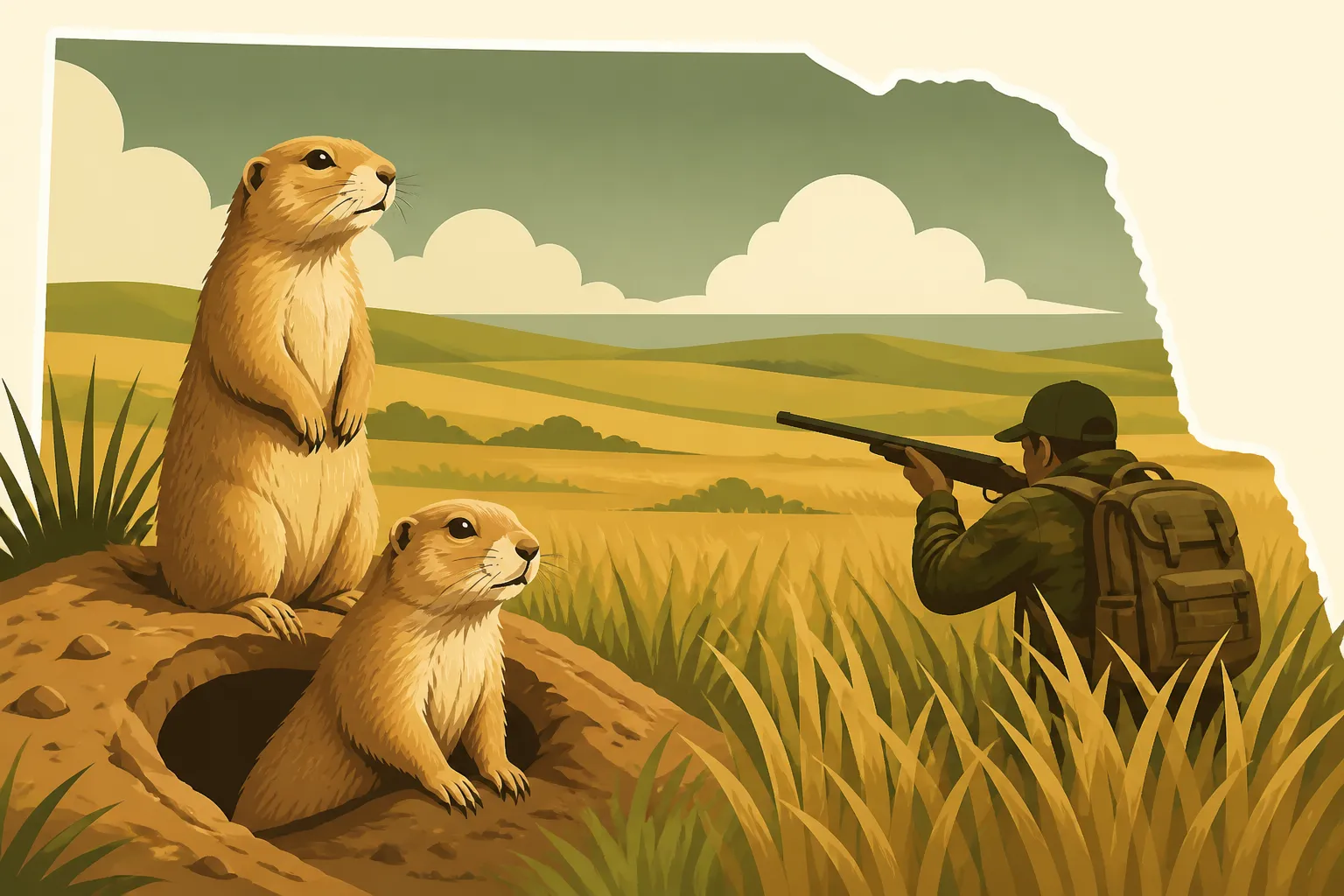
Nebraska is home primarily to the black-tailed prairie dog, a species renowned for its intricate social structure and its ability to transform landscapes. Far from being solitary creatures, these rodents live in highly organized colonies, often referred to as "towns," that can span many acres and house thousands of individuals.
The Black-Tailed Prairie Dog: A Keystone Species
The black-tailed prairie dog (Cynomys ludovicianus) is the most common prairie dog species you'll encounter in Nebraska. They are easily identified by their buff-colored fur, short, black-tipped tail, and their characteristic "bark" – a high-pitched alarm call that travels surprisingly far across the open plains. These animals are incredibly social, living in family groups called "coteries" within a larger town. Each coterie typically consists of an adult male, several adult females, and their offspring. This communal living provides a strong defense against predators and allows for efficient resource management within their extensive underground networks.
Their diet consists mainly of grasses and forbs, which they clip down to maintain clear sightlines around their burrows. This constant grazing and clipping activity directly influences the type and height of vegetation in their towns, creating a unique microhabitat different from the surrounding undisturbed prairie. It's a fascinating balance of consumption and creation, a testament to their role as a keystone species – meaning many other species depend on them or are significantly affected by their presence. Without them, the entire grassland ecosystem would look and function differently, losing a critical piece of its biodiversity puzzle.
Social Structures and Communication in Prairie Dog Towns
Stepping into an active prairie dog town is like entering a bustling miniature city. There’s constant communication happening above and below ground. Their distinctive barks serve various purposes, from signaling different types of predators (aerial vs. terrestrial) to communicating danger levels. A low, drawn-out bark might signal a distant hawk, while a rapid, high-pitched series of chirps could mean a coyote is too close for comfort. They also use visual cues, like tail flagging, to reinforce their warnings.
Beyond alarm calls, prairie dogs engage in elaborate social rituals, including "kissing" (nose-to-nose greetings to identify coterie members) and grooming. These interactions strengthen social bonds and maintain the cohesion of their coteries. Their burrow systems are equally complex, featuring multiple entrances, listening posts, nursery chambers, and escape tunnels. These elaborate tunnels protect them from extreme weather and predators. Understanding this social dynamic is critical for anyone observing or hunting them, as their collective awareness means one alarm bark can send an entire town scurrying for cover, making individual animals much harder to approach.
Prairie Dogs as Ecosystem Engineers: Impact on Grassland Habitat
The term "ecosystem engineers" is thrown around quite a bit, but for prairie dogs, it's absolutely spot-on. These small rodents dramatically alter the physical and biological characteristics of the grasslands they inhabit, creating a cascade of effects that benefit a wide array of other wildlife. It's a prime example of how even the smallest creatures can have enormous leverage in shaping their environment.
Burrow Systems and Soil Health
The most visible impact of prairie dogs is their extensive network of burrows. These subterranean cities don't just provide shelter; they actively rework the soil. As they dig, prairie dogs aerate the soil, bringing deeper, nutrient-rich layers to the surface. Their waste also fertilizes the soil, creating patches of more fertile ground within their towns. This disturbance regime, while seemingly destructive to some, actually enhances plant diversity and nutrient cycling.
The abandoned burrows don't go to waste either. They become ready-made homes for a host of other species, including burrowing owls, rattlesnakes, tiger salamanders, and even small mammals like mice and voles. These secondary occupants further contribute to the ecosystem's complexity, creating a rich web of interactions centered around the prairie dog's engineering work. This makes prairie dog towns incredibly dynamic and biologically active areas, starkly contrasting with monoculture agricultural fields.
Biodiversity Hotspots: Supporting Other Wildlife
Prairie dog towns are not just homes for prairie dogs; they are vibrant hubs of biodiversity. The short-grass habitat created by their grazing habits attracts a unique suite of species. Ground-nesting birds, like the western meadowlark, thrive in the open, low-vegetation environment. Many raptors, such as ferruginous hawks and golden eagles, regularly hunt over prairie dog towns, benefiting from the concentrated prey base. Optics for Glassing the Nebraska Sandhills are invaluable for spotting these majestic birds of prey as they patrol the skies above a prairie dog town.
Perhaps most famously, the endangered black-footed ferret is almost entirely dependent on prairie dogs for both food and shelter. Without healthy prairie dog populations, the ferret would simply cease to exist. Coyotes, badgers, and foxes also frequent these areas, finding ample prey and often utilizing the burrows themselves. Understanding this interconnectedness helps us appreciate why conservation efforts often focus not just on the prairie dog itself, but on the preservation of their active towns as critical nodes in the grassland ecosystem. When you're scouting areas, especially on public lands like the Oglala National Grassland Hunting, remember that a thriving prairie dog town indicates a healthy, diverse ecosystem.
Hunting Prairie Dogs in Nebraska: Opportunities and Considerations
For some, prairie dogs are simply a nuisance, but for a segment of the hunting community, they represent a unique and engaging challenge. Whether you're looking to hone your long-range shooting skills or simply enjoy a day afield in Nebraska's expansive country, hunting prairie dogs can be a rewarding experience.
Prairie Dog Hunting as a Skill Builder
Prairie dog hunting is often seen as an excellent way to practice precision shooting, especially at longer ranges. Their small size and habit of popping up and down quickly make them challenging targets. Shooters can work on wind estimation, rangefinding, and bullet drop compensation without the pressure of a big game hunt. It’s a fantastic training ground for building confidence in your rifle system and your own abilities. Rifle Setups for Nebraska's Open Country are often discussed in the context of larger game, but many of the same principles apply to prairie dog hunting, emphasizing accuracy and flat trajectories.
Many hunters use small-caliber rifles like .223 Remington, .204 Ruger, or even .17 HMR for prairie dogs, allowing for quieter shooting and minimizing meat waste (though most prairie dogs are not harvested for consumption). It's also a great opportunity to get familiar with your optics, using Rangefinders in Open Nebraska Country to dial in shots from various distances. The vast, open nature of Nebraska's prairie dog habitat provides ample opportunities for ethical, safe shooting, as long as you adhere to all local regulations and ensure a safe backstop.
Ethical Hunting and Local Regulations
While prairie dogs are generally not a regulated game species in the same way deer or pheasants are, ethical considerations and land-specific rules always apply. It's crucial to know where you are hunting and what the specific landowner or public land regulations dictate. Always confirm land ownership, especially when you're exploring vast areas. Tools like GoHunt can be indispensable here, providing detailed maps showing public and private land boundaries, which is absolutely vital before you ever step foot on a property.
If hunting on private land, securing permission from the landowner is paramount. Respecting private property is not just good manners; it's the law in Nebraska. On public lands, always check the specific rules for that Wildlife Management Area or National Grassland. Some areas might have restrictions on specific firearm types or shooting hours. Remember, even if prairie dogs are plentiful, responsible hunting means minimizing disturbance to other wildlife and leaving the area cleaner than you found it. This helps ensure continued access and maintains a positive image for all hunters.
Finding Prairie Dog Towns: Scouting and Access for Hunters
Locating active prairie dog towns in Nebraska requires a bit of savvy, some good mapping tools, and often, a drive into the more remote corners of the state. These aren't creatures of the suburban park, but rather inhabitants of the wide-open prairie.
Scouting for Success: What to Look For
When you're actively scouting for prairie dog towns, there are several key indicators to look for. The most obvious sign is the presence of numerous mounds of dirt, often appearing as distinct, raised circles in a grassland landscape. These mounds are typically devoid of tall vegetation, kept short by the prairie dogs' constant grazing and clipping. If you spot these, pause and observe: are there active burrows? Do you see prairie dogs standing upright, chirping, or scurrying? Active towns will have visible animals and fresh dirt around the burrow entrances.
Another visual cue is the presence of other wildlife that frequent these areas. As mentioned, raptors, badgers, and coyotes are often drawn to prairie dog towns. If you see multiple hawks circling or a coyote sitting patiently at the edge of a field, there's a good chance a prairie dog town is nearby. Use your binoculars to scan the horizon and look for the tell-tale signs. For larger landscape-level scouting, especially when planning a trip to areas like the Hunting the Nebraska Sandhills or even for species like Pronghorn Antelope on the Nebraska Plains, you can often identify potential prairie dog habitat on satellite imagery. Look for circular, disturbed patches of lighter-colored earth within expansive grasslands.
Public and Private Land Access
Access is often the biggest hurdle when planning a prairie dog hunt. Nebraska has a fair amount of public hunting land, but large, active prairie dog towns are often found on private ranchland or national grasslands.
| Access Type | Best for Prairie Dog Hunting | Key Considerations |
|---|---|---|
| Private Land | Many of the largest and most established prairie dog towns are on private cattle ranches, particularly in western Nebraska. Landowners may welcome hunters who can help manage populations that might compete with livestock for forage. | Always secure explicit permission from the landowner before hunting. Respect their rules and property. Building relationships is key. |
| Public Land | The Oglala National Grassland Hunting in the northwestern panhandle is a prime example of federal land where prairie dogs are abundant. You'll also find smaller towns on some state-owned Wildlife Management Areas, particularly those managed for grassland species. | Check specific regulations for each public area, including shooting hours, allowed weapons, and vehicle access. Use the Nebraska Public Access Atlas to identify and confirm public land boundaries. Be prepared for other users and potentially higher pressure. |
| Open Fields and Waters | While primarily focused on game birds and deer, some Open Fields and Waters (OFW) tracts might contain smaller prairie dog towns, especially those with significant grassland components. | Always check the specific rules for each OFW tract, as they can vary. They are often "walk-in only," meaning vehicle access is restricted. |
When navigating these diverse landscapes, mapping applications are your best friend. Tools like GoHunt provide invaluable layers that delineate public and private land, topographic features, and even potential access roads. This is especially useful in areas like the Reading Sign on a Nebraska Sandhills Two-Track where getting off the beaten path can lead you to less pressured towns. Whether you're hunting prairie dogs or scouting for Mule Deer in the Nebraska Sandhills and Panhandle, understanding land ownership is fundamental. Remember that these smaller critters are also part of the food chain, and managing their numbers can sometimes even contribute to broader habitat health, especially for species like coyotes, for which Coyote Calling on Winter Grassland can be an exciting pursuit.
Disclaimer
This article is for general informational purposes only and does not constitute professional advice. Laws, prices and regulations vary by location and change over time. Consult a qualified professional for guidance on your specific situation.