Diver Ducks on Nebraska Reservoirs
Chasing diver ducks on Nebraska's vast reservoirs can feel like searching for a needle in a haystack, especially when they're rafted up in the middle of a huge body of water. It's incredibly frustrating to spend time scouting, drive all that way, and then only see ducks way out of range or on private property you can't access. This guide is here to help you understand the unique challenges and opportunities of pursuing these incredible birds on Nebraska's larger waters, giving you the insights and strategies to make your next diver hunt a more productive and enjoyable experience.
Understanding Diver Duck Behavior on Large Reservoirs
Diver ducks are a distinct group of waterfowl, different from their dabbling cousins, and understanding their unique habits is the first step to success on Nebraska's sprawling reservoirs. Unlike dabblers, which feed in shallow water by tipping up, divers truly dive under the surface, propelling themselves with their large feet to find submerged vegetation, mollusks, and aquatic insects. This feeding behavior dictates where they spend their time and how they react to hunting pressure.
Identifying Key Diver Species
Nebraska's reservoirs host several species of diver ducks, each with slightly different preferences, though they often congregate together. Knowing what you're seeing can help you fine-tune your approach.
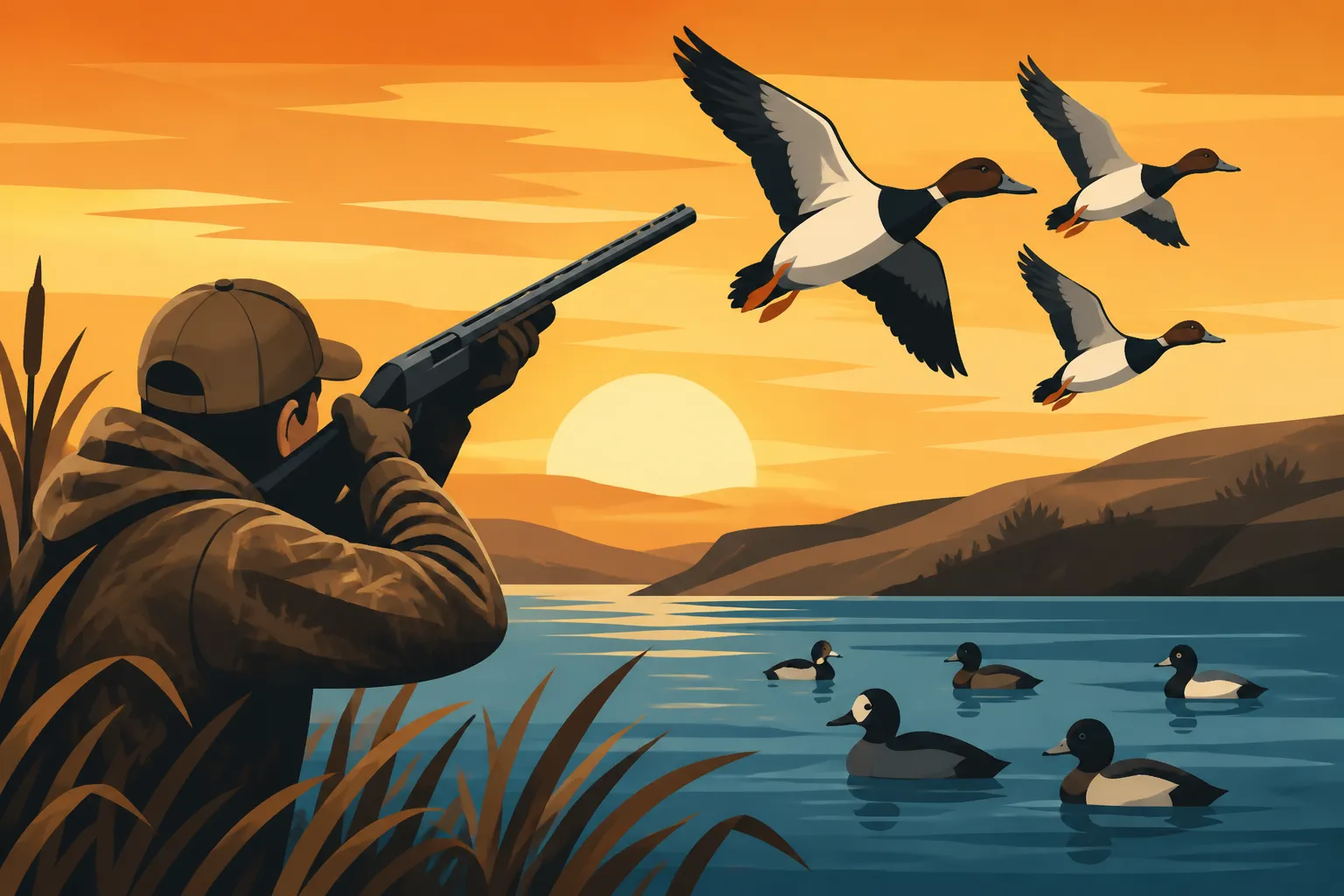
Redheads are often among the most common divers encountered. Males are striking with their rusty red heads and grey bodies, while females are a duller brown. They often feed in shallower sections of reservoirs, preferring areas with emergent vegetation, and can be quite vocal. Their flight is fast and direct, and they often respond well to decoys.
Canvasbacks are considered by many to be the "king of ducks" for their size, speed, and flavor. Males have a chestnut-red head and neck, a black chest, and a white body, with a distinctive long, sloping profile to their head and bill. Females are a reddish-brown with a similar profile. Canvasbacks prefer deeper water than redheads, feeding on tubers and rhizomes of submerged plants, and are known for their strong, rapid flight in V-formations. They can be wary, but when committed, they offer an unforgettable experience.
Lesser Scaup, often called "bluebills," are another prevalent diver. They are smaller than redheads or canvasbacks, with males featuring a purplish-black head, black chest, and grey back with a distinctive white speculum on their wings. Females are brown with a white patch at the base of their bill. Bluebills are incredibly numerous and can be found in a wide variety of depths, often feeding on aquatic invertebrates. They decoy readily and often fly in large, loose flocks. Other divers like Ring-necked Ducks (which are actually more closely related to scaup than true "ringnecks") and Buffleheads also utilize Nebraska's reservoirs, typically favoring slightly shallower or more sheltered water.
Why Divers Prefer Reservoirs
The sheer size and depth of Nebraska's reservoirs offer exactly what diver ducks are looking for: large expanses of open water for security, and abundant submerged food sources. These vast bodies of water provide a sense of safety from predators, allowing large rafts of birds to congregate far from shore. They also act as critical staging and feeding areas during migration, particularly when smaller wetlands might be frozen over or lacking sufficient forage.
Furthermore, many reservoirs are managed to maintain water levels that support diverse aquatic plant life, creating ideal feeding grounds for these underwater foragers. The deep water protects them from easy harassment, and their ability to dive gives them a foraging advantage that dabblers don't have. This combination of security and sustenance makes Nebraska's larger reservoirs indispensable to diver duck populations moving through the Central Flyway. Hunters often focus on these big waters because that's where the majority of diver ducks will be found, especially during the colder parts of the season.
Key Nebraska Reservoirs for Diver Hunting
Nebraska boasts several large reservoirs that can hold significant numbers of diver ducks throughout the hunting season. The key is knowing which ones tend to attract birds and, more importantly, understanding the access challenges and productive areas within each.
Western and Central Nebraska Gems
Out west, Lake McConaughy is arguably the most famous. Its immense size and deep, clear waters make it a magnet for thousands of divers, especially canvasbacks and scaup, during migration. The biggest challenge here is simply finding the birds on such a vast expanse, and then figuring out how to set up for them. They often raft up far from shore, requiring layout boats or long-range reconnaissance. You'll want to pay close attention to wind patterns, as birds will move to sheltered bays or shorelines when winds are strong. Access can be found at various boat ramps and public recreation areas.
Further east, but still in the central part of the state, Harlan County Reservoir offers excellent opportunities. While perhaps not as deep as McConaughy, Harlan's large open water and surrounding agricultural fields provide a great combination of security and food for divers and geese. Redheads and scaup are frequently seen here. The key to Harlan is often focusing on the main lake body, especially areas where subtle depth changes or submerged structure might concentrate food. Early morning glassing from high points can reveal where birds are loafing or feeding. Nebraska Antelope Draw Odds might not seem related, but it underlines how crucial scouting and understanding local terrain are for any specific species, even if it's not a deer or antelope.
Eastern Nebraska Opportunities
Even closer to more populated areas, reservoirs like Branched Oak Lake or Pawnee Lake, while smaller than their western counterparts, can still attract good numbers of divers, especially during peak migration or when harsh weather pushes birds south. These lakes often have more defined structure, such as old creek channels, humps, or distinct points that can concentrate diver activity. The trick here is often finding the less-pressured areas or being willing to boat out to where the birds feel safe.
The Missouri River itself, particularly where it widens into larger impoundments or flows through the eastern part of the state, also presents diver hunting opportunities. While not strictly a "reservoir," sections like those near Lewis and Clark Lake can act similarly, drawing in birds. Hunters need to be particularly aware of boat traffic and current on the river. On any of these eastern lakes, checking public access maps, possibly through an app like GoHunt, is paramount to ensure you're setting up legally and respectfully. This can save you a lot of headache and potential issues with landowners.
| Species | Primary Food Source | Typical Depth Preference | Flight Speed | Decoying Tendency |
|---|---|---|---|---|
| Canvasback | Submerged tubers, rhizomes | Deeper (>6 feet) | Very Fast | Wary, but commit |
| Redhead | Submerged vegetation, seeds | Medium (3-8 feet) | Fast | Good |
| Lesser Scaup | Aquatic invertebrates | Varied (shallow to deep) | Fast | Excellent |
| Ring-necked Duck | Aquatic plants, seeds, insects | Shallower (1-5 feet) | Fast | Good |
| Bufflehead | Aquatic insects, crustaceans | Shallow (1-3 feet) | Very Fast | Excellent |
Tactics and Gear for Diver Ducks
Hunting diver ducks on Nebraska's reservoirs requires a different approach than typical field or marsh hunting. It's often about persistence, mobility, and having the right equipment to handle open water and wary birds.
Decoy Spreads and Placement
Diver ducks are typically very social and respond well to large decoy spreads. On big water, bigger is often better. A spread of 50-100 decoys isn't uncommon, and mixing in different species can be effective. Redhead and scaup decoys are usually a good bet, with some canvasback decoys if they're prevalent in your area. Diver decoys are often weighted more heavily to ride the waves naturally and prevent them from blowing away in strong winds.
The classic diver spread is a long string or 'gang rig' with decoys spaced out, creating a landing zone in front of your blind. A common setup involves several long lines of decoys anchored at each end, stretching out from your position. The goal is to mimic a large, natural raft of birds that diver ducks feel safe joining. Consider placing some "confidence" decoys further out to catch the attention of high-flying birds, then creating a more tightly packed kill hole closer to your position. Positioning your decoys to account for the prevailing wind is crucial, as ducks will almost always land into the wind. This means placing your decoys downwind from your blind, giving the birds a natural approach. Decoy Spreads for Rainwater Basin Geese offers insights into large spreads, which share some principles with diver hunting.
Concealment and Blind Options
Concealment on open water is critical, and it often involves specialized equipment. Layout boats are incredibly effective for diver hunting on large, featureless reservoirs. These low-profile boats are designed to blend in with the water's surface, making you virtually invisible to incoming birds. They require a tender boat to deploy decoys and pick up birds, but they offer the best chance at decoying wary divers. You'll anchor your layout boat directly within or at the edge of your decoy spread.
If a layout boat isn't feasible, strategically placed shore blinds can work, especially if you can find a point or cove where birds naturally funnel or feed closer to shore. Natural vegetation, cattails, or willows can offer decent cover. Building a makeshift blind with camo netting and natural materials can also be effective. The key is to break up your outline and ensure there's absolutely no silhouette against the sky. Sometimes, simply finding a low bank and digging in can provide enough cover. Don't forget that Ground Blinds in Open Nebraska Country emphasizes how critical good concealment is when there's little natural cover.
Retrieving Birds in Open Water
One of the biggest challenges of diver hunting on large reservoirs is retrieving downed birds. Divers are notoriously tough, and a cripple can dive and disappear quickly, or drift a long way in choppy water and wind. A well-trained retrieving dog is an invaluable asset for this type of hunting. They can quickly mark and retrieve birds, even in challenging conditions. However, working dogs in cold water requires careful consideration for their safety and warmth. Water and Heat Risk for Bird Dogs reminds us of environmental considerations, even though we're talking about cold, not heat, here.
If you don't have a dog, a good tender boat is essential. This boat should be stable enough to navigate choppy water, powerful enough to quickly cover distance, and have sufficient space to retrieve birds and handle decoys. Always wear a life vest, especially when operating a tender boat in cold, open water. Never try to retrieve a bird by swimming after it unless it's absolutely necessary and the water is shallow and safe. Even then, the risk is often too great. A boat with a long-handled landing net can be a good substitute if a dog isn't an option for fetching cripples or distant retrieves. This is where Retrieving Birds Without a Dog becomes vital reading.
Challenges and Considerations for Reservoir Hunting
Hunting diver ducks on Nebraska's reservoirs presents a unique set of challenges that go beyond just finding the birds. These can range from environmental factors to regulatory hurdles, all of which need careful planning.
Weather and Water Conditions
Nebraska's weather can change in an instant, especially on large, open bodies of water. A calm morning can quickly turn into a white-capped, windy afternoon, making boating dangerous and setting decoys nearly impossible. Always check the marine forecast, not just the general weather. Strong winds create large waves that can swamp small boats, scatter decoys, and make accurate shooting extremely difficult. Cold temperatures are a given during prime diver season, so layering up with appropriate Clothing for Nebraska Wind and Cold is non-negotiable.
Ice is another major factor. As winter progresses, many smaller bays and even large sections of reservoirs can freeze over. While open water near dams or inflows might persist, ice significantly limits access and can create dangerous conditions. Knowing how to adapt to changing ice conditions, or having alternate spots in mind, is crucial. High water levels or drought conditions can also impact accessibility and bird behavior; understanding the current state of the water body is important.
Public Access and Regulations
While Nebraska has considerable public land, finding legal access points for large reservoirs can still be tricky. The shores of many reservoirs are a mix of public and private land, and respecting property boundaries is paramount. The Nebraska Public Access Atlas is an indispensable tool for identifying public hunting areas, boat ramps, and walk-in only zones around reservoirs. Before you head out, consult the Atlas, either the physical map or the mobile app, to understand where you can legally hunt and launch a boat. Some areas may have specific restrictions, such as "no wake" zones or limited hunting hours near recreation areas.
Always double-check the current Nebraska Waterfowl Seasons and Zones and Nebraska Duck Daily Bag Limit as regulations can change. Pay close attention to federal and state nontoxic shot requirements, especially on federal lands or areas managed by the Nebraska Game and Parks Commission. Federal Refuge Nontoxic Shot Rules is a good resource here. Some reservoirs may have refuge areas where hunting is prohibited, so understanding these boundaries, perhaps with a mapping tool like GoHunt, is vital. GoHunt can be particularly useful for overlaying these different layers of information onto a single map, helping you navigate complex land ownership and regulatory boundaries with greater confidence.
Safety on Open Water
Safety should always be your top priority when hunting large reservoirs. Cold water submersion is a serious risk. Always wear a life jacket, even in a shallow layout boat. It's also wise to inform someone of your hunting plans, including your location and expected return time. Carry all required safety equipment, such as flares, a whistle, a first-aid kit, and a fully charged cell phone (in a waterproof bag) or a marine radio.
Hunting from a boat, especially a layout boat, requires specific expertise. Practice deploying and retrieving your setup in calm conditions before attempting it in rough weather. Be mindful of other boaters, especially during busy seasons. Visibility can be poor in fog or low light, so take extra precautions. Consider a course in boater safety if you're new to hunting from a boat. Nebraska reservoirs are beautiful and productive, but they demand respect and a commitment to safety.
Disclaimer
This article is for general informational purposes only and does not constitute professional advice. Laws, prices and regulations vary by location and change over time. Consult a qualified professional for guidance on your specific situation.