Where Nebraska Pronghorn Herds Are Largest
It can feel like a needle in a haystack trying to pinpoint where Nebraska's swift and elusive pronghorn truly gather in significant numbers. While these incredible animals roam across much of the western part of our state, finding the largest herds, the places where your chances of seeing multiple groups are highest, requires a bit more insight than just looking at a map. This guide is here to unravel that mystery, showing you the core areas where Nebraska's pronghorn population truly thrives, and what makes these places so special for them.
The Pronghorn's Domain: Understanding Nebraska's Western Landscape
Pronghorn are creatures of the wide-open, and Nebraska's western expanses offer just that. Unlike deer that often seek cover in timber or brush, pronghorn thrive where they can see for miles, relying on their incredible eyesight and blistering speed to evade predators. This fundamental difference dictates where you'll find them in the highest concentrations.
Geography and Habitat Preferences
When you picture pronghorn habitat, think vast, unbroken vistas. In Nebraska, this primarily translates to the shortgrass and mixed-grass prairies of the western half of the state, particularly areas with rolling hills, subtle draws, and minimal tree cover. They are not animals of dense forests or heavily cultivated row crops, though they might occasionally venture into agricultural fields for specific forage, especially after harvest. Their preferred landscape is one of endless horizons, where scattered sagebrush, forbs, and various grasses dominate.
These areas provide the perfect blend of visibility and nutrition. Pronghorn are not strict grazers like cattle; they are browsers, meaning they prefer a diverse diet of forbs, shrubs, and weeds, in addition to grasses. A healthy pronghorn habitat is a mosaic of these plant types, often found in rangeland that is grazed by cattle, which can actually benefit pronghorn by keeping taller, less palatable grasses in check and allowing more desirable forbs to flourish. The subtle topography of the Sandhills, for instance, offers both visibility and sheltered pockets, though truly large herds will be more common where the ground is a bit firmer and less consistently "sandy."
Key Environmental Factors Supporting Pronghorn
Several critical environmental factors come together to create prime pronghorn habitat in Nebraska. First and foremost is the sheer acreage of intact grassland. Fragmentation of habitat by development, extensive irrigation, or dense tree belts can disrupt pronghorn movement and reduce the overall carrying capacity of an area. Where you see large, contiguous blocks of rangeland, you're more likely to find robust pronghorn numbers. This is why areas like the Oglala National Grassland are so important.
Another key factor is water availability, especially during the hotter months. While pronghorn are incredibly efficient at utilizing moisture from the plants they eat, they still need access to water sources, whether it's stock ponds, windmills, or natural springs. A good distribution of water across a large rangeland tract can help support higher densities. Lastly, mild winters with minimal deep snow are crucial for pronghorn survival, as heavy snow cover can make foraging difficult and increase energy expenditure, leading to higher mortality rates, as seen in instances of Pronghorn Winter Kill in the Panhandle.
Concentration Zones: Where the Antelope Roam
If you're looking for the heart of Nebraska's pronghorn country, you need to set your sights squarely on the westernmost portions of the state. This isn't to say you won't see an occasional antelope further east, but the true strongholds, where the largest herds congregate, are undeniable.
The Nebraska Panhandle: A Pronghorn Stronghold
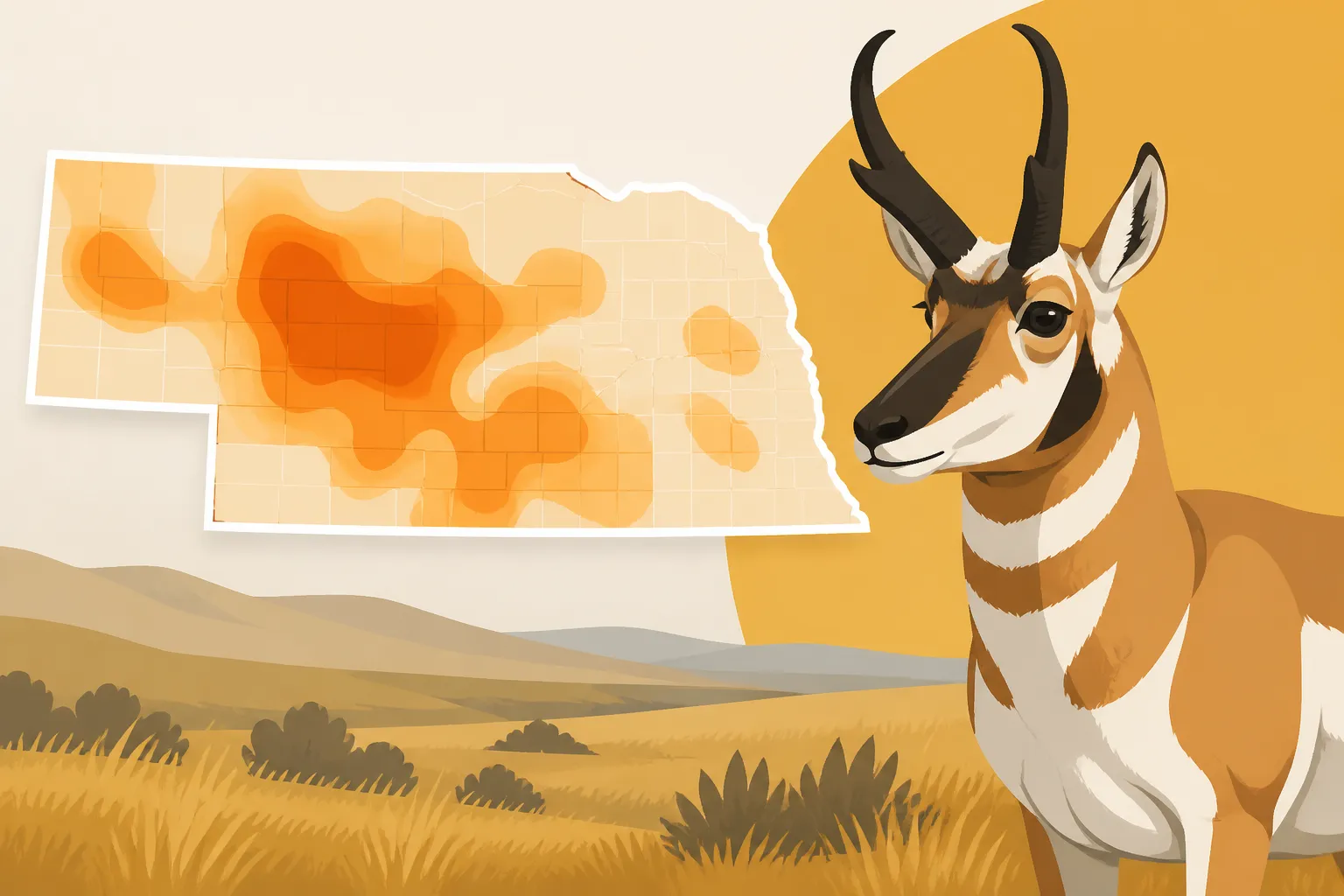
Without a doubt, the Nebraska Panhandle stands as the premier region for pronghorn. This includes counties like Sioux, Dawes, Box Butte, Kimball, Banner, and Morrill. Here, the landscape transitions from the rolling Sandhills to the more rugged Pine Ridge escarpment and vast, unbroken rangelands that stretch to the Wyoming and Colorado borders. The sheer scale of these open lands is what allows pronghorn to flourish.
Drive through these counties, especially off the main highways, and you'll likely spot small bands or even larger herds feeding or resting. Areas like the Oglala National Grassland and the surrounding private ranch lands offer exactly the kind of expansive, shortgrass prairie habitat that pronghorn prefer. The land use here is predominantly ranching, meaning vast pastures are managed for livestock, which often creates a beneficial environment for pronghorn through controlled grazing patterns. This region consistently holds the highest population densities and is often the focus when discussing How Many Pronghorn Nebraska Holds.
North Platte River Valley and Adjacent Grasslands
While the Panhandle is king, don't overlook the expansive grasslands adjacent to the North Platte River Valley as you move eastward from Scottsbluff and Gering. Counties such as Garden, Arthur, and parts of McPherson, while featuring more Sandhills topography, still offer significant tracts of suitable pronghorn habitat. The river valley itself, with its irrigated agriculture, isn't prime pronghorn territory, but the unbroken rangelands on either side are a different story.
These areas, particularly the higher, drier ground away from the immediate river, can hold strong numbers of pronghorn. The key here is finding those vast ranching operations that have preserved their native grasslands. While perhaps not as consistently dense as the very western Panhandle, these Sandhills adjacent areas provide vital contiguous habitat and connect populations. You might find pronghorn here mingling more with mule deer in certain areas, adding another layer to the hunting experience.
Scattered Pockets and Peripheral Ranges
Beyond the main strongholds, you might encounter scattered pockets of pronghorn in other western and even some central Nebraska counties. These are typically smaller, more isolated groups that persist where localized habitat conditions are favorable. This could include parts of Sheridan, Grant, or Hooker counties, often in areas bordering the more traditional pronghorn ranges. These peripheral populations are often remnants or extensions of the larger herds, sometimes moving seasonally or establishing themselves in areas that offer newly suitable habitat.
Hunting these scattered pockets can be challenging, as the animals are often fewer in number and may be more pressured or nomadic. It requires significant scouting and a deeper understanding of localized land use. However, for a hunter seeking a true challenge or an opportunity to explore less-traveled ground, these areas can be rewarding. Just be prepared for more "looking" than "hunting" in some of these spots.
Why These Areas Support Larger Herds
It's no accident that pronghorn thrive in specific parts of Nebraska. Their biological needs and behaviors are perfectly aligned with the unique characteristics of these western landscapes. Understanding these dynamics not only satisfies curiosity but also helps hunters become more effective in their pursuits.
Vast Open Spaces and Minimal Obstructions
The primary reason for larger pronghorn herds in the Panhandle and adjacent western grasslands is the sheer scale of uninterrupted open country. Pronghorn are built for speed and sight. They can see threats from incredible distances – reputedly the equivalent of an 8x binocular – and their top speed, often exceeding 50 miles per hour, is their main defense. This strategy only works if they have the space to utilize it. Dense timber, tall crops, or extensive human development create visual obstructions and impede their escape routes, making them vulnerable.
These vast rangelands offer them the unbroken sightlines they crave. When a pronghorn spots danger, whether it's a coyote, a distant hunter, or even a vehicle, it needs to quickly assess the threat and then, if necessary, cover a huge amount of ground to put distance between itself and the perceived danger. In the Panhandle, they have miles of unfenced or lightly fenced country to do just that, allowing entire herds to flow across the landscape with ease. This ability to move freely reduces stress and mortality, contributing to higher population numbers.
Forage Abundance and Diversity
Another crucial factor is the quality and diversity of forage available in these western grasslands. As mentioned, pronghorn are selective browsers, not just grazers. They prefer a mix of forbs, sagebrush, cacti, and certain grasses. The native prairies of the Panhandle provide this rich buffet. Areas that are heavily managed for a single crop, like corn or soybeans, or those with highly degraded pastures, simply don't offer the nutritional variety pronghorn need, especially through the different seasons.
Ranching practices in these areas often inadvertently create ideal conditions. Well-managed rotational grazing by cattle can help prevent grasslands from becoming too uniform or overgrown with less palatable species. By keeping some grasses shorter, it allows the desirable forbs and shrubs that pronghorn prefer to flourish. This intricate balance between livestock and wildlife forage ensures a steady food supply, supporting healthier animals and larger herds.
Water Sources and Migration Corridors
While remarkably adapted to arid environments, pronghorn still require reliable water sources, particularly during hot, dry spells. The western Nebraska landscape, though often dry, typically features a network of stock ponds, windmills, and sometimes natural springs or creeks that provide essential hydration. A good distribution of these water points across large pastures means pronghorn don't have to travel excessively long distances just for a drink, conserving energy and reducing exposure to potential risks. Knowing When Antelope Water in Hot Weather can be key to understanding their movements.
Furthermore, these vast, unobstructed landscapes often serve as vital migration corridors. While Nebraska's pronghorn don't undertake epic migrations like some western herds, they do move seasonally between different areas to access better forage or avoid harsh conditions. The contiguous nature of the Panhandle's rangelands allows for this crucial movement, preventing isolation of populations and facilitating gene flow. This connectivity is critical for the long-term health and resilience of the herds, and it's something that organizations track closely, sometimes using data that platforms like GoHunt compile for hunters.
Scouting and Accessing Prime Pronghorn Territory
Finding the largest pronghorn herds is one thing; actually getting close enough to hunt them is another entirely. This requires dedicated scouting, a firm grasp of public and private land access, and a keen eye for what makes a particular spot attractive to antelope.
Utilizing Public Access Resources
Nebraska does offer some public hunting opportunities in prime pronghorn country, notably parts of the Oglala National Grassland. However, these tracts can be vast and often hold lower densities of game due to hunting pressure. Your best friend here will be the Nebraska Public Access Atlas. This indispensable resource details all public hunting lands, including Open Fields and Waters (OFW) tracts, which can sometimes provide access to private lands that have enrolled in the program.
Spend time studying the Atlas, especially the Panhandle and western Sandhills regions. Look for large, contiguous blocks of public or OFW ground. Many hunters find that using digital mapping tools, like the GoHunt app or other GPS systems, in conjunction with the Atlas, is crucial. These tools allow you to overlay public and private land boundaries directly onto satellite imagery, making it incredibly easy to identify where you can legally step foot. Remember, even on public land, pronghorn are going to be wary, so expect to put in some serious miles on foot or with optics.
The Importance of Private Land Permission
Let's be realistic: a significant portion, if not the majority, of Nebraska's best pronghorn habitat is on private ranch land. Securing permission to hunt private ground is often the key to consistent success and access to the largest, least pressured herds. This requires time, courtesy, and often, starting well in advance of the season.
Many landowners in western Nebraska are ranchers, and they appreciate respectful hunters who understand the challenges of land management. Don't show up on opening morning with a rifle; instead, try to visit or call months ahead of time. Offer to help with chores, pick up trash, or simply build a relationship. Sometimes, even if you can't hunt a specific ranch, a friendly conversation can lead to a referral to a neighbor who might be open to it. This personal connection is invaluable and often far more productive than cold calls or generic letters.
What to Look For on the Ground
When you're actually out scouting, whether on public or private land, look for specific signs and terrain features. Pronghorn prefer ground that offers high visibility, so focus on rolling hills, ridge tops, and wide-open flats. Pay attention to water sources – stock tanks, windmills, small ponds – as these will draw animals in, especially during dry periods. Examine feed areas; pronghorn will often graze on areas with a good mix of forbs and short grasses.
Also, observe their travel patterns. Look for worn trails, especially where they might pass through fences (they prefer to crawl under fences rather than jump over them, so look for pushed-down wire). Knowing where they enter and exit pastures can be critical for planning a stalk. Binoculars and spotting scopes are your best friends here. Spend hours glassing from high vantage points, meticulously picking apart the landscape, as pronghorn can blend surprisingly well into the prairie, especially when bedded down. If you're using a tool like the GoHunt app, mark down any sightings or promising areas for future reference.
Hunting Considerations for High-Density Areas
Even when you've found an area with large pronghorn herds, the hunt itself presents unique challenges. Their keen senses and the open environment demand specific strategies and a mindful approach to ensure a successful and ethical experience.
Managing Pressure and Hunter Density
High-density pronghorn areas, particularly on public land or easily accessible private land, often correlate with higher hunter density. This can make hunting incredibly challenging. Pronghorn are highly sensitive to pressure; once spooked, they can travel miles and become extremely wary. It's not uncommon to arrive at a promising public land unit only to find multiple other vehicles already parked, indicating that the animals have likely been pushed around.
To counter this, consider hunting during the week rather than on weekends, or focusing on areas that require more effort to reach, such as those that involve significant walking. Many hunters will drive the two-tracks; those willing to get out and hike a mile or two can often find less disturbed animals. Additionally, having a clear understanding of the Nebraska Antelope Permit Cost and the specifics of the Nebraska Antelope Draw Odds for particular units can help manage expectations and strategize permit acquisition for less pressured areas.
Tactics for Open Country Pronghorn
Hunting pronghorn in Nebraska is often a game of spot-and-stalk. Their excellent eyesight means you'll almost never surprise them. The process usually involves extensive glassing from a distance, identifying a target animal or herd, and then meticulously planning an approach that utilizes every bit of available cover—no matter how small. This might mean crawling hundreds of yards through short grass, using small folds in the terrain, or even the occasional sagebrush clump for concealment. You'll definitely want to read up on Stalking Pronghorn Across Open Nebraska Ground.
Wind direction is paramount. Pronghorn have a good sense of smell, and you absolutely need to stay downwind. Thermals can be tricky in rolling country, so always be aware of how air currents are moving. Patience is a virtue; a stalk can take hours, and often ends in failure due to a missed wind shift or a sudden movement. Knowing Using a Fence Line to Close on Antelope can also be a valuable tactic, as these linear features can offer concealment for an approach.
Permit Considerations and Draw Odds
Accessing Nebraska's largest pronghorn herds generally means applying for a limited-entry permit, especially for rifle seasons. Nebraska's pronghorn permits are typically issued via a draw, and the odds can vary significantly by unit. The areas with the highest pronghorn concentrations often have the most sought-after permits, making draw odds lower for nonresident hunters, though residents also face competition. Familiarizing yourself with the Nebraska Antelope Draw Odds and the complete Nebraska Antelope Unit List is crucial before you even consider heading west.
It's wise to research past draw success rates and consider applying for preference points if they are available and if you plan to hunt Nebraska for multiple years. For archery hunters, permits are generally more available over-the-counter and less restricted, offering more flexibility, but the hunting challenge increases exponentially. No matter the weapon, secure your permit well in advance, and always double-check the current regulations regarding Nebraska Antelope Permits and Seasons.
The vast, open country of western Nebraska, particularly the Panhandle, is where you’ll find the greatest concentrations of pronghorn. These landscapes offer the crucial combination of expansive sightlines, diverse forage, and sufficient water sources that these unique animals need to thrive. While accessing these areas often requires diligent scouting and securing private land permission, the reward of encountering Nebraska’s largest pronghorn herds is an unforgettable experience for any hunter. Approach your hunt with respect for the land and the animal, and the challenge of the prairie will undoubtedly offer a profound adventure.
Disclaimer
This article is for general informational purposes only and does not constitute professional advice. Laws, prices and regulations vary by location and change over time. Consult a qualified professional for guidance on your specific situation.