Merriam’s Turkeys in the Pine Ridge
The Nebraska Pine Ridge holds a unique allure for turkey hunters, offering a chance at a true Merriam's wild turkey, a stark contrast to the Easterns and Rio Grandes found elsewhere in the state. Many hunters, accustomed to calling birds out of river bottoms or across cornfields, quickly realize the Pine Ridge demands a completely different approach. The steep canyons, dense ponderosa pines, and expansive open meadows present challenges that can leave even seasoned turkey hunters scratching their heads, wondering why their usual tactics aren't yielding results. This guide is here to help you navigate those frustrations and understand what it takes to successfully hunt Merriam's turkeys in their majestic Pine Ridge home.
Understanding Merriam's Turkeys and Their Pine Ridge Home
Hunting Merriam's turkeys in the Nebraska Pine Ridge isn't just about chasing a different subspecies; it's about entering a world where the birds behave differently, the terrain dictates tactics, and the landscape itself is a formidable challenge. These aren't your typical river-bottom gobblers, and understanding that is the first step toward success.
Distinguishing Merriam's from Other Subspecies in Nebraska
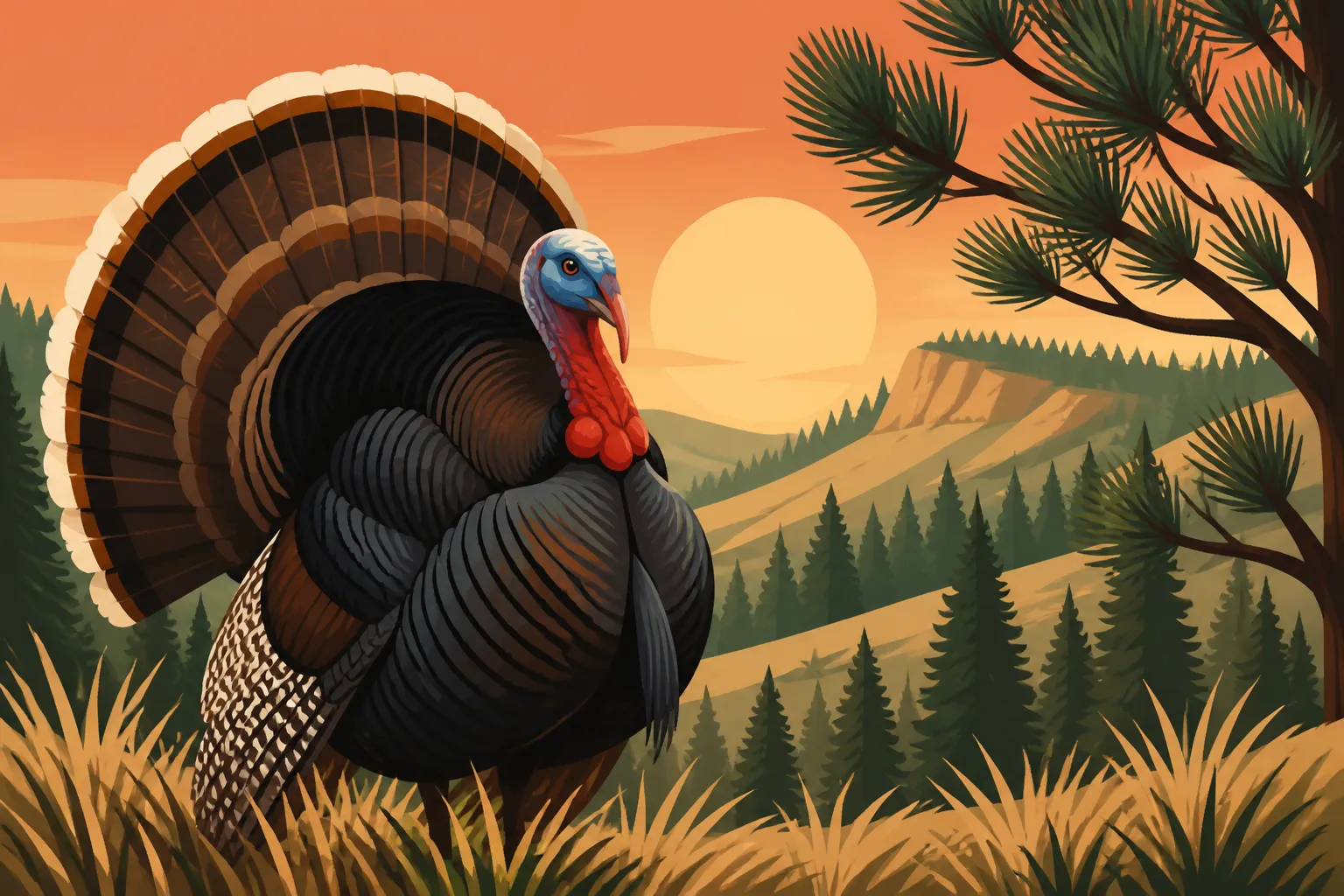
Nebraska is unique in that it hosts three subspecies of wild turkey: Easterns, Rio Grandes, and Merriam's. While they all share the fundamental "gobbler" traits, the Merriam's, specifically found in the Pine Ridge, truly stands apart. Visually, Merriam's often have more white on their tail fan tips and tail feather coverts, giving them a distinct lighter appearance compared to the buff or chocolate tips of an Eastern or Rio Grande. Their primary wing feathers will also often show more white barring.
Beyond aesthetics, their behavior is what really sets them apart for a hunter. Merriam's are birds of the mountains and open timber, adapted to traversing rugged, elevated terrain. They tend to be more vocal than Easterns, particularly on the roost, and their gobbling can carry for incredible distances across the canyons, but they can also be incredibly elusive once on the ground. Unlike Easterns that might hang up across a creek or Rio Grandes that often stick to wide-open river channels, Merriam's are comfortable navigating vertical changes and dense timber. This means a soft yelp or cluck might get lost in the vastness of the Pine Ridge, and a gobbler that sounds close could still be several hundred yards away, separated by a deep draw or a thick stand of trees. Their keen eyesight, honed by living in more open country, also makes them notoriously difficult to sneak up on, demanding absolute stealth and attention to cover. You'll quickly learn that a Merriam's will spot you long before an Eastern in a dense timber block might.
The Unique Ecosystem of the Pine Ridge
The Nebraska Pine Ridge is a truly special place, a striking contrast to the vast Sandhills or the rolling farmlands that characterize much of the state. It's an escarpment, a rugged landscape carved by erosion, featuring dramatic canyons, towering ponderosa pines, and interspersed open meadows and grasslands. This varied topography creates microclimates and distinct areas that Merriam's turkeys utilize throughout the day and across the seasons.
The ponderosa pine forests provide crucial roosting habitat, protection from predators, and shade in warmer weather. The steep canyon walls and draws offer natural travel corridors and escape routes. Hunters quickly discover that what sounds like a gobbler "just over the ridge" can often be across a deep, sprawling canyon, making a direct line impossible without significant exertion. The interspersed meadows and clearings are vital feeding areas, especially in the spring when green-up occurs. Turkeys will often spend their mornings foraging in these openings, dusting themselves, and displaying. Understanding how these birds move between these different habitats—from their high roosts to feeding grounds, and then to midday loafing areas—is critical. You'll notice they use the terrain to their advantage, often moving uphill when disturbed or taking flight across canyons to escape danger. Hunting in the Pine Ridge is as much about reading the land as it is about reading the birds. It's a place where knowing the nuances of the terrain, like those discussed in Nebraska Pine Ridge Escarpment, can really pay off.
Scouting and Locating Merriam's in the Pine Ridge
Finding Merriam's turkeys in the expansive and rugged Pine Ridge can feel like searching for a needle in a very large, very scenic haystack. You can't just blindly wander and expect to stumble upon them. A strategic approach, combining pre-season intelligence with on-the-ground observation, is absolutely essential.
Pre-Season Scouting Strategies for the Pine Ridge
Before you even step foot in the Pine Ridge with a shotgun, some serious homework needs to be done. Topographic maps and satellite imagery are your best friends here. Look for prominent ridges, deep canyons, water sources, and areas where open meadows transition into dense timber. These transition zones are often prime spots for turkeys. Identify potential roosting sites—tall, mature ponderosa pines, often on ridgelines or overlooking draws, offering clear flight paths. I personally love using mapping tools like those offered by GoHunt to layer satellite images with topo maps, marking potential hot spots right from my couch. It really helps visualize the terrain and find those hidden pockets that might hold birds.
Once you have some target areas, it's time for on-the-ground reconnaissance, if possible. This doesn't necessarily mean full-blown scouting trips weeks in advance, but even a drive through the area can reveal key access points and public land boundaries. Pay attention to private land postings; respecting property lines is paramount, and understanding Nebraska Trespass and Permission Law is critical. If you have the time, a quiet walk, particularly around dawn or dusk, can help you pinpoint actual roosting locations. Listen for gobbles, observe flight paths, and look for physical signs of turkey activity. This pre-season effort, even if it's just digitally marking a few promising canyons, will save you invaluable hunting time.
Reading Sign and Understanding Movement Patterns
When you're actually in the field, becoming a detective is key. Merriam's, like all turkeys, leave plenty of clues, but interpreting them in the Pine Ridge environment requires a keen eye. Look for tracks in soft dirt, especially around water sources or along old two-track roads. Droppings can tell you if birds are regularly frequenting an area. Larger, coiled droppings typically belong to gobblers, while smaller, more irregular droppings are hens.
Dusting bowls—shallow depressions in dry dirt or sand where turkeys bathe to rid themselves of parasites—are excellent indicators of recent activity. They'll often be found in sunny, sheltered spots near timber edges. Feathers, particularly large primary wing feathers, can signal a roosting area or a frequent travel path.
But beyond finding isolated signs, try to piece together the narrative of turkey movement. How are the birds moving between the timbered roosts, the open feeding areas, and water? Do they fly down into a particular meadow in the morning? Do they cross a certain ridge to get to a creek? Merriam's often use the terrain to their advantage, traveling along contour lines or flying across canyons rather than walking the long way around. A gobbler might roost high on a ridge, fly down into a valley to feed, then slowly work his way back up another ridge to strut in an open clearing. Understanding these patterns, much like understanding deer movement when Reading a Cedar Draw for Deer Movement, allows you to anticipate where a bird might be and position yourself accordingly.
| Sign Type | What it Tells You | Prime Locations to Find It |
|---|---|---|
| Tracks | Recent presence, direction of travel, size of bird (often) | Soft dirt, creek beds, old logging roads, around water |
| Droppings | Regular use of an area, hen vs. gobbler | Roosting areas, feeding grounds, dusting bowls |
| Dusting Bowls | Frequent turkey activity, preferred sunning/cleaning spots | Sunny, sheltered openings, timber edges, sandy patches |
| Feathers | Roosting sites, molting areas, travel corridors | Underneath tall roost trees, along game trails |
| Roost Trees | Overnight activity, traditional roosting locations | Tall ponderosa pines on ridges, overlooking canyons |
| Gobbles | Active birds, location (especially at dawn/dusk) | Carries far in open country, indicates presence and general direction |
Hunting Tactics Tailored for Pine Ridge Merriam's
Hunting Merriam's in the Pine Ridge demands a flexible and often aggressive approach. What works for a shy Eastern in a dense hardwood forest or a cautious Rio Grande on flat farm ground might fall flat here. The key is adapting to the terrain and the birds' natural tendencies.
Run-and-Gun vs. Static Setups in Steep Terrain
The decision between "run-and-gun" and a static setup is a constant negotiation in the Pine Ridge. Merriam's often cover vast distances, and their gobbles can deceive you, sounding close when they're actually a canyon away. This lends itself well to a run-and-gun strategy, where you're actively moving, calling, listening, and trying to locate a responsive bird. You might hear a gobble, move quickly and quietly to cut off its likely travel path, set up, and call. This is particularly effective when birds are "shock gobbling" to loud calls or other sounds. Run-and-Gun Turkey Tactics on Nebraska Public Ground delves deeper into this mobile approach.
However, the steep, broken terrain can make a pure run-and-gun difficult. A bird might be just over a rise, but getting there involves a grueling hike through thick brush or down into and back out of a steep draw. This is where strategic static setups come into play. If you've located birds roosting or feeding in a particular area, or if you've done your scouting and know a prime strutting zone or travel corridor, setting up early and waiting can be very effective. This requires patience, impeccable camouflage, and ensuring you have good visibility while remaining concealed. Often, a hybrid approach is best: aggressively moving and calling to locate a bird, then quickly transitioning to a static setup when you get a solid response or locate a bird working towards you. Remember, even with static sets, be ready to adjust. If the bird hangs up, sometimes a subtle repositioning, even a few yards, can make all the difference.
Calling Strategies for Merriam's
Calling Merriam's turkeys often requires a bit more volume and assertiveness than you might use for other subspecies. Their habitat, with its wide-open spaces and canyons, can swallow up timid calls. Start with louder, more emphatic yelps and cutts to get a response, especially when trying to locate birds. Once you've got a gobbler's attention, you can tone it down and get more subtle.
Diaphragm calls are excellent for their hands-free operation, allowing you to quickly shoulder your gun if a bird appears unexpectedly. Slate and box calls offer realistic hen sounds and good volume for reaching across canyons. Don't be afraid to mix up your calls. Sometimes a series of aggressive cutts will get a gobbler fired up, while other times, soft clucks and purrs will coax a wary bird into range. Listen closely to the turkey's response; if he's gobbling aggressively, match his intensity. If he's hesitant, back off and try softer, more inquisitive calls. Sometimes a subtle two-hen setup, with one call slightly different than the other, can sound like a small flock and entice a lonely gobbler. It's a game of reading the bird, much like when Calling Spring Gobblers in Nebraska Timber, but with the added consideration of vast distances and potential echoes in the canyons.
Using Decoys Effectively in Pine Ridge Terrain
Decoys can be a powerful tool when hunting Merriam's, but their effectiveness is heavily dependent on the terrain and the turkey's mood. In the Pine Ridge, where visibility can be both expansive and obstructed, placement is everything.
A single hen decoy, or a pair of hens, can be very effective, especially if you're set up in an open meadow or on a prominent ridge where they can be seen from a distance. Position your decoys where approaching gobblers will have a clear line of sight, preferably within 20-30 yards of your position. This allows the gobbler to focus on the "birds" and not your hide, and gives you a good shot opportunity. If you're using a jake or full-strut tom decoy, be aware that while they can draw in a dominant gobbler, they can also intimidate a less aggressive bird or alert pressured turkeys. Use them cautiously, perhaps after you've observed the behavior of the birds in your specific hunting area.
In the broken terrain of the Pine Ridge, you might find that decoys aren't always necessary or even practical. Sometimes, the best "decoy" is your calling, enticing the bird to crest a ridge or peek around a corner. If you're going to use decoys, consider their weight and bulk if you're planning a lot of run-and-gun movement. Lightweight, foldable foam or fabric decoys are often a better choice than heavy, solid plastic ones. Remember to always place your decoys in a spot where you have a clear shot and where you won't be mistaken for a turkey by other hunters. The principles of decoy placement are similar to those for other game, like Decoying a Nebraska Whitetail Buck, focusing on visibility and shot distance.
Essential Gear and Safety Considerations
Hunting Merriam's in the Pine Ridge is physically demanding and often takes you into remote areas. Having the right gear and prioritizing safety isn't just a good idea; it's essential for a successful and enjoyable hunt.
Gear for Pine Ridge Turkey Hunts
Your gear choices can significantly impact your comfort, safety, and success in the Pine Ridge. Here's a breakdown of what I consider essential:
- Footwear: This is arguably the most critical piece of gear. You'll be doing a lot of walking, often on steep, uneven terrain, through loose dirt, rocks, and pine needles. Invest in a pair of sturdy, comfortable, waterproof hiking boots with good ankle support. Blisters can ruin a hunt quickly.
- Clothing: Layering is key. The Pine Ridge can experience dramatic temperature swings, from chilly mornings to warm afternoons, especially with elevation changes. Start with a moisture-wicking base layer, add insulating layers, and top with a quiet, durable camouflage outer shell. Look for clothing that breathes well but also offers protection from thorns and brush. Don't forget quiet rain gear; unexpected showers can pop up.
- Optics: While not always considered essential for turkey hunting, a good pair of binoculars (8x or 10x) can be invaluable in the Pine Ridge. They allow you to glass distant hillsides and meadows, spotting turkeys that you might otherwise walk past, or confirm if that distant speck is a gobbler or just a stump. They're especially useful for spotting birds at long ranges before you start calling.
- Navigation: Don't rely solely on cell service, as it can be spotty to non-existent in many Pine Ridge areas. A reliable GPS unit or a smartphone with downloaded offline maps (like those offered by GoHunt or other mapping apps) is a must. Knowing exactly where you are, where public land ends, and where your vehicle is parked is crucial. A compass and paper map are excellent backups.
- Backpack: A comfortable daypack is necessary to carry your calls, water, snacks, extra layers, first-aid kit, and any game you might harvest. Look for one with good external straps for securing decoys if you plan to use them.
Safety and Respecting the Environment
Safety should always be your top priority. The Pine Ridge, while beautiful, can also be unforgiving.
- Fire Safety: Ponderosa pine forests are prone to wildfires, especially in dry conditions. Be extremely cautious with any open flames. Carry a small shovel and water if you plan on having a campfire (check local regulations first), and always ensure fires are completely out before leaving.
- Private Land Boundaries: A significant portion of the Pine Ridge is privately owned. Always know where you are and respect posted signs. Obtaining permission before hunting private land is not just courteous, it's the law. Many of the lessons about Entry and Exit Routes on Flat Farm Ground apply here, just with more vertical challenges.
- Hunter Orange: While not strictly required for turkey hunting in Nebraska outside of the November firearm deer season, if you're hunting during an overlapping season or in areas with other hunters, wearing some blaze orange can increase your visibility, especially when moving between setups. Knowing Nebraska Blaze Orange Square Inches is a good baseline for general hunting safety awareness.
- Shot Placement: Practice your turkey calling and shooting before the season. Aim for the head and neck of the bird to ensure a clean, ethical harvest. Using the right choke and shot size for your chosen gauge is also critical.
- Leave No Trace: Pack out everything you pack in, and then some. This includes spent shell casings, food wrappers, and any trash you might find. Leave the Pine Ridge better than you found it.
- Know Your Limits: The rugged terrain can be physically demanding. Don't push yourself beyond your capabilities, especially if hunting alone. Tell someone where you're going and when you expect to return. Should you harvest a bird, getting it out of a deep canyon can be a serious workout, much like Getting a Deer Out of a Nebraska Sandhills Basin. Plan your extraction route before you pull the trigger.
By understanding the unique nature of Merriam's turkeys and their Pine Ridge habitat, combining smart scouting with adaptable hunting tactics, and prioritizing gear and safety, you'll be well on your way to a rewarding and successful hunt in this incredible corner of Nebraska.
Disclaimer
This article is for general informational purposes only and does not constitute professional advice. Laws, prices and regulations vary by location and change over time. Consult a qualified professional for guidance on your specific situation.