EHD Die-Offs Along Nebraska Rivers
There’s little that’s more disheartening for a deer hunter than finding dead deer along a river bottom, especially during the late summer or early fall. This grim discovery often points to an Epizootic Hemorrhagic Disease (EHD) outbreak, a recurring challenge for Nebraska’s deer populations. This guide will walk you through what EHD is, why it often hits our river corridors so hard, how to recognize its signs, and what you, as a responsible hunter, can do when faced with these unfortunate circumstances.
What Exactly is EHD and Why It Hits River Bottoms So Hard?
EHD is a viral disease primarily affecting white-tailed deer, though it can impact mule deer and other ruminants to a lesser extent. It's caused by an orbivirus, transmitted by tiny biting midges, often called "no-see-ums" or gnats, not directly from deer to deer. The virus causes internal hemorrhaging, fever, and swelling, leading to a rapid decline in the affected animal. It’s a natural, albeit devastating, part of the deer ecosystem, and understanding its mechanisms helps us grasp why certain areas are hit harder than others.
The Role of Midges and Water Sources
The key to understanding EHD's prevalence in river bottoms lies squarely with the biting midges that transmit the disease. These minuscule insects thrive in wet, muddy environments, particularly during hot, dry periods when water levels drop, exposing muddy banks and shallow edges. River corridors, with their fluctuating water levels and rich, damp soil, become prime breeding grounds for these vectors. As deer congregate along these vital water sources during droughts or extended hot spells, the midges have an ideal opportunity to transmit the virus from an infected animal to many others.
Imagine a hot August or September day in Nebraska. The sun beats down, crops are drying out, and the only reliable water for miles is a slow-moving stretch of the Platte or a stagnant oxbow lake along the Niobrara. Deer are naturally drawn to these areas, seeking hydration and relief from the heat. This concentration inadvertently creates a perfect storm for EHD transmission. The midges, emerging from the drying mud, find a ready supply of deer, and the disease can spread rapidly through the concentrated population. It's a cruel irony that the very resource vital for survival also becomes a hotspot for disease. You might observe a similar pattern in EHD Outbreaks in Nebraska Deer, which details the broader trends of this disease.
Why Deer Are So Susceptible
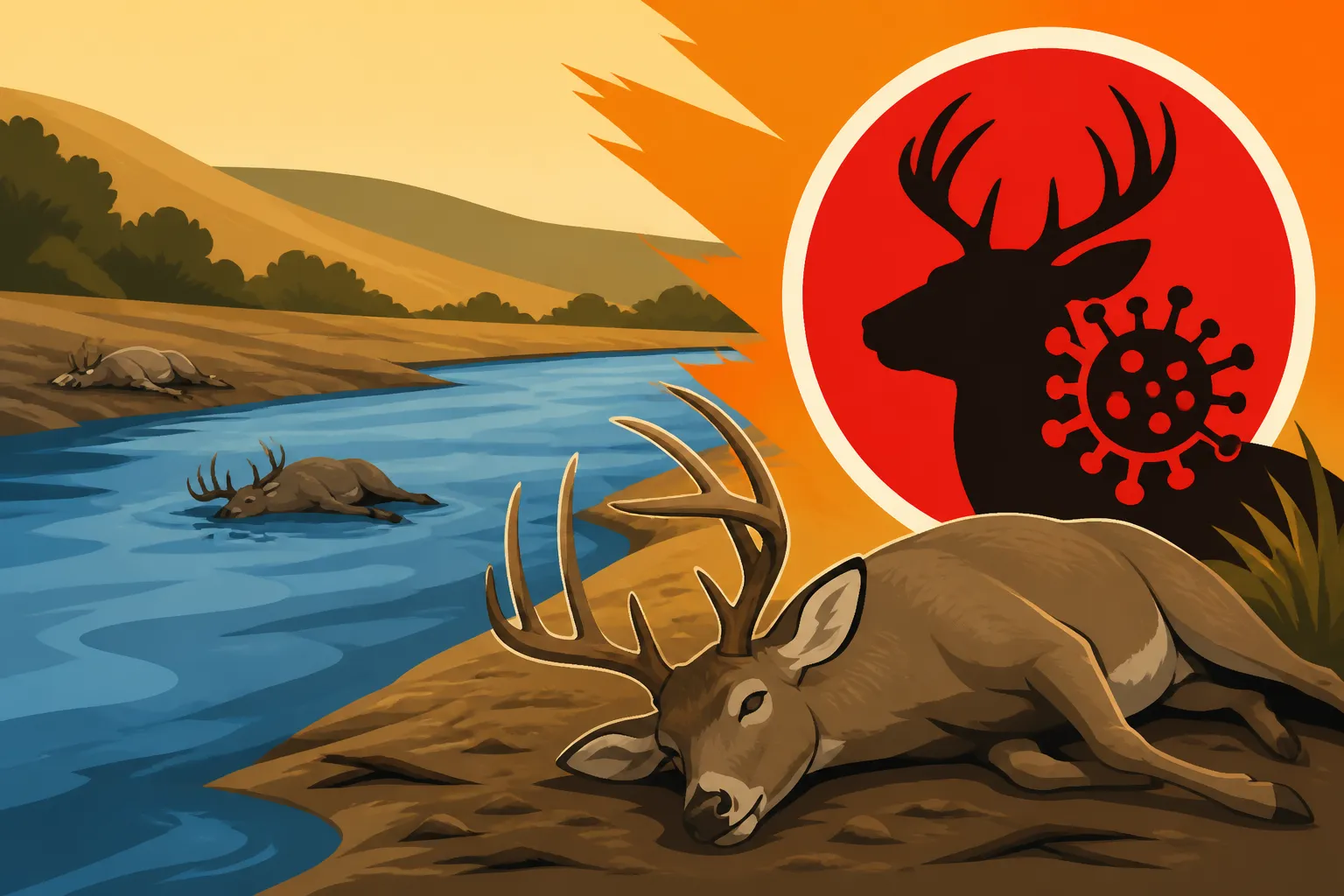
White-tailed deer are particularly vulnerable to EHD. They haven't evolved the same level of resistance to the virus as some other species, meaning infection often leads to severe illness and death. The virus attacks their blood vessels, leading to fever, internal bleeding, and organ damage. The signs can appear quickly, sometimes within a week of infection. Deer can become lethargic, develop swelling in the head, neck, and tongue, and often seek water to alleviate their fever, which is why they are so often found deceased near or in water.
While some deer may survive an EHD infection and develop immunity, a significant portion of the herd, especially fawns and deer that haven't been exposed before, will succumb. This natural susceptibility, combined with the ideal conditions for midge reproduction and deer congregation, makes our river-bottom habitats particularly prone to devastating die-offs. Hunters who spend time in these areas, perhaps engaging in River-Bottom Whitetail Hunting in Eastern Nebraska, are often the first to witness the tragic aftermath.
Recognizing the Signs: What to Look For and How to Report It
When EHD hits an area, the signs are often stark and unmistakable. Knowing what to look for, both in live deer and deceased animals, is crucial for monitoring the health of the herd and reporting potential outbreaks.
Visual Cues in Live and Deceased Deer
In live deer, symptoms of EHD can include:
- Lethargy and Weakness: Deer may appear disoriented, unresponsive, or unusually tame. They might struggle to stand or move.
- Swelling: Noticeable swelling of the head, neck, tongue, and eyelids is a classic sign. The tongue might be blue or purple.
- Fever: Although you can't measure it, the deer's drive to seek water is often a sign of high fever, leading them to stand or lay in streams and ponds.
- Hemorrhages: You might see bleeding around the eyes, nose, or mouth in advanced stages.
- Lameness: Deer may appear lame due to lesions in the hooves.
When it comes to deceased deer, the most common indicator of an EHD outbreak is finding multiple carcasses, often in or very near water. This is because the fever drives them to water. The bodies might appear bloated, and upon closer inspection, you might notice the characteristic swelling, especially of the tongue. The disease progresses quickly, so the deer often look healthy on the outside, aside from the obvious cause of death. You might find several deer in a relatively small area, particularly within dense cover where Cottonwood Bottoms and Deer Density are high.
The Importance of Reporting Sightings
If you encounter deer exhibiting EHD symptoms or find multiple dead deer, especially along river systems or near water sources, it's incredibly important to report it to the Nebraska Game and Parks Commission. These reports help wildlife biologists track the spread and severity of the disease. While there's no vaccine or treatment for EHD in wild deer populations, understanding its impact allows wildlife managers to make informed decisions about herd management, harvest quotas, and public education.
When reporting, try to gather as much detail as possible: the exact location (GPS coordinates are best), the number of affected animals, and a description of their symptoms or condition. Don't handle sick or dead animals with bare hands. You can often find a dedicated online reporting tool or a contact number on the Game and Parks website. This kind of community involvement is vital for tracking the health of the deer herd. While a platform like GoHunt can provide general information, direct reports to state agencies are invaluable for real-time data.
Impact on Deer Populations and Hunting Seasons
EHD can have a significant, sometimes drastic, impact on local deer populations. The severity depends on several factors, including the deer density in the affected area, the duration and intensity of the midge season, and the previous exposure history of the herd.
Short-Term Declines and Age Structure Changes
In areas hit hard by EHD, local deer populations can experience sharp, immediate declines. It's not uncommon for 30-50% of a localized herd to perish in a severe outbreak, and sometimes even higher percentages in very specific pockets. This loss disproportionately affects younger deer and those that haven't developed immunity from prior exposure. The immediate consequence is a noticeable reduction in deer sightings during the subsequent hunting season. It can also alter the age structure of the herd, as fawns and yearlings are often more susceptible.
After a major EHD event, hunters might find their usual honey holes eerily quiet. The Nebraska Whitetail Population Trends are influenced by these natural mortality events. While overall statewide populations are often resilient and can rebound over several years, a localized die-off can feel devastating to hunters who have invested time and effort in that specific area. This is why thorough scouting is always a good idea, even when you think you know a piece of ground well.
Potential Permit Adjustments
Wildlife agencies, including the Nebraska Game and Parks Commission, closely monitor EHD outbreaks and their impact. In severe cases, where a significant portion of the herd has been lost in a particular deer management unit, the Commission may consider adjusting permit numbers for future hunting seasons. This could mean reducing the number of antlerless permits or even buck permits in an attempt to help the herd recover.
These decisions are not made lightly and are based on biological data, hunter reports, and aerial surveys. However, it's important to remember that such adjustments are typically localized and temporary. The long-term resilience of deer populations is remarkable, and given time and favorable conditions, they can often bounce back. You can keep an eye on official announcements for any changes to permit availability or season structure through the official channels. Tools like GoHunt can sometimes aggregate this information, but always cross-reference with the official Game and Parks publications.
What Hunters Can Do: Scouting, Reporting, and Ethical Considerations
Facing an EHD outbreak can be frustrating and even heartbreaking, but as hunters, we have a role to play in monitoring and responding ethically.
Pre-Season Scouting and Observation
Before your season even begins, especially in a year where EHD has been reported or suspected, dedicate extra time to scouting. This isn't just about finding deer signs; it's about observing the health of the herd. Look for fresh tracks, active trails, and most importantly, listen for any word from landowners or other local hunters about unusual deer deaths. A tool like the Nebraska Public Access Atlas can help you pinpoint areas, and then it's up to your boots on the ground to get a feel for the local deer population.
Pay close attention to water sources and any unusual odors. If you find carcasses, note their location and condition. Your pre-season observations are invaluable in understanding the current state of the herd in your hunting area. If you normally focus your efforts on areas Where Nebraska Whitetails Bed in Row-Crop Country or specific timber blocks, expand your search to include nearby water sources.
Ethical Harvesting and Reporting Your Harvest
When hunting in an area that has experienced an EHD outbreak, it's paramount to be extra vigilant. Only harvest deer that appear healthy and are acting normally. If you see a deer that looks lethargic, emaciated, or shows any signs of illness, do not harvest it. Not only is it unethical to take a sick animal, but there could be concerns about meat quality, though EHD is not known to be transferable to humans. After the shot, observe the animal carefully before approaching.
Once you've made a harvest, ensure you properly field dress and cool the game, especially if temperatures are still warm, which is often the case during early archery seasons when EHD outbreaks are common. For guidance, refer to resources like Field Dressing and Cooling Game in Warm Weather. Always fulfill your obligation to report your harvest accurately and in a timely manner according to Nebraska Deer Tagging and Checking Rules. This data, combined with EHD reports, helps biologists manage the herd more effectively.
Dealing with Found Carcasses and Future Outlook
Discovering a deer carcass, or worse, multiple carcasses, can be a tough experience. If you find a dead deer that shows signs of EHD, report it to the Nebraska Game and Parks Commission as detailed earlier. Do not attempt to move or dispose of large carcasses yourself unless instructed by authorities, as this can be labor-intensive and may require specific protocols. Let nature take its course, or follow official guidance for disposal if it's on your private land and causing an issue.
It's natural to feel discouraged after an EHD event, especially when you consider What Changes in Nebraska After the Corn Comes Off and how those habitat changes can impact deer movement after an outbreak. However, deer populations are remarkably resilient. While a severe outbreak can temporarily reduce numbers, herds often rebound within a few years, particularly if environmental conditions are favorable. Continued monitoring, responsible hunting practices, and accurate reporting are the best tools we have to help our deer herds thrive in the long run.
Here's a quick reference table for common EHD signs:
| Symptom | Description | Progression | Severity |
|---|---|---|---|
| Fever | Deer seek water to cool down; may stand in shallow streams or ponds. | Rapid onset | High |
| Swelling | Noticeable puffiness of the head, neck, tongue (often blue/purple), and eyelids. | Develops quickly | High |
| Lethargy/Weakness | Disoriented, unresponsive, unusually tame behavior. Difficulty standing/moving. | Rapid onset | High |
| Hemorrhages | Bleeding around eyes, nose, mouth. Internal bleeding leads to organ damage. | Advanced stages | Very High |
| Lameness | Hoof lesions cause limping, reluctance to move. | Can occur quickly | Moderate |
| Carcasses near water | Most common sign of die-off; multiple dead deer often found by water sources. | Post-mortem | Varies |
Disclaimer
This article is for general informational purposes only and does not constitute professional advice. Laws, prices and regulations vary by location and change over time. Consult a qualified professional for guidance on your specific situation.