Which Nebraska Units Nonresidents Can Draw
As a nonresident hunter, the dream of chasing big game across Nebraska's diverse landscapes—from the rugged Pine Ridge to the sprawling Sandhills, or the timbered river bottoms—is incredibly appealing. However, the permit draw system can feel like a complex puzzle, leaving many frustrated as they try to pinpoint which units offer a realistic chance of drawing a coveted tag. This guide aims to demystify Nebraska's nonresident draw, helping you understand the different permit types, analyze draw odds, and craft a strategy for success in securing your hunting adventure.
Decoding Nebraska's Big Game Permit Lottery for Nonresidents
Navigating the Nebraska Game and Parks Commission (NGPC) permit system can be a steep learning curve, especially if you're coming from out of state. It's a blend of lottery draws, preference points, and over-the-counter opportunities, each with its own nuances. Understanding these foundational elements is crucial before you even think about applying for a specific unit. The goal here is to play the game smart, not just apply blindly.
The Basics of the Nebraska Draw System
Nebraska employs a lottery system for most of its highly sought-after big game permits, particularly for deer, antelope, and elk. The application period typically opens in mid-May and closes in early June, with results usually posted in mid-July. This gives you a relatively short window to make your choices, so planning well in advance is key. A fundamental aspect that significantly impacts nonresidents is the 85/15 split. This means that 85% of all permits in any given unit are allocated to residents, while a maximum of 15% are reserved for nonresidents. This percentage is crucial because it immediately tells you that competition for nonresident tags will be inherently tougher, especially in popular units.
Preference points are another cornerstone of the Nebraska draw. For every year you apply for a permit and are unsuccessful, or if you choose to purchase a preference point directly without applying for a tag, you accumulate a point. These points don't guarantee a tag, but they improve your odds in future draws. Essentially, applicants with more preference points go into a separate pool, or their application is weighted more heavily, increasing their chances of drawing a permit. It’s a long-term strategy, and patience is definitely a virtue in this system. For a comprehensive look at the process, you'll find a lot of useful information in articles like Nebraska's June Big Game Draw Explained.
Understanding Different Permit Types for Nonresidents
When it comes to deer, nonresidents primarily encounter three main permit categories: Statewide Whitetail Buck (SWB), Any Deer (unit specific), and Antlerless-Only permits. Each has different availability and draw difficulty. The SWB permit, as its name suggests, allows you to harvest a whitetail buck anywhere in the state that is open to hunting, provided you have access. These permits are generally less difficult to draw than the unit-specific "Any Deer" permits, though demand still outweighs supply for nonresidents.
Unit-specific "Any Deer" permits are typically the most coveted and hardest to draw, especially in units renowned for trophy mule deer or a strong whitetail population. These permits allow you to harvest either a whitetail or a mule deer, usually within a designated Deer Management Unit (DMU). Because mule deer are highly prized, the units where they are prevalent see intense competition. Finally, Antlerless-Only permits allow you to harvest a doe. These are often easier to obtain, sometimes even available over-the-counter after the draw, and provide an excellent opportunity for meat hunting or just getting afield. Knowing the differences is fundamental to planning your application, and you can dive deeper into specific options by exploring Nebraska Deer Permit Types by Unit.
Navigating Nebraska's Deer Management Units and Draw Odds
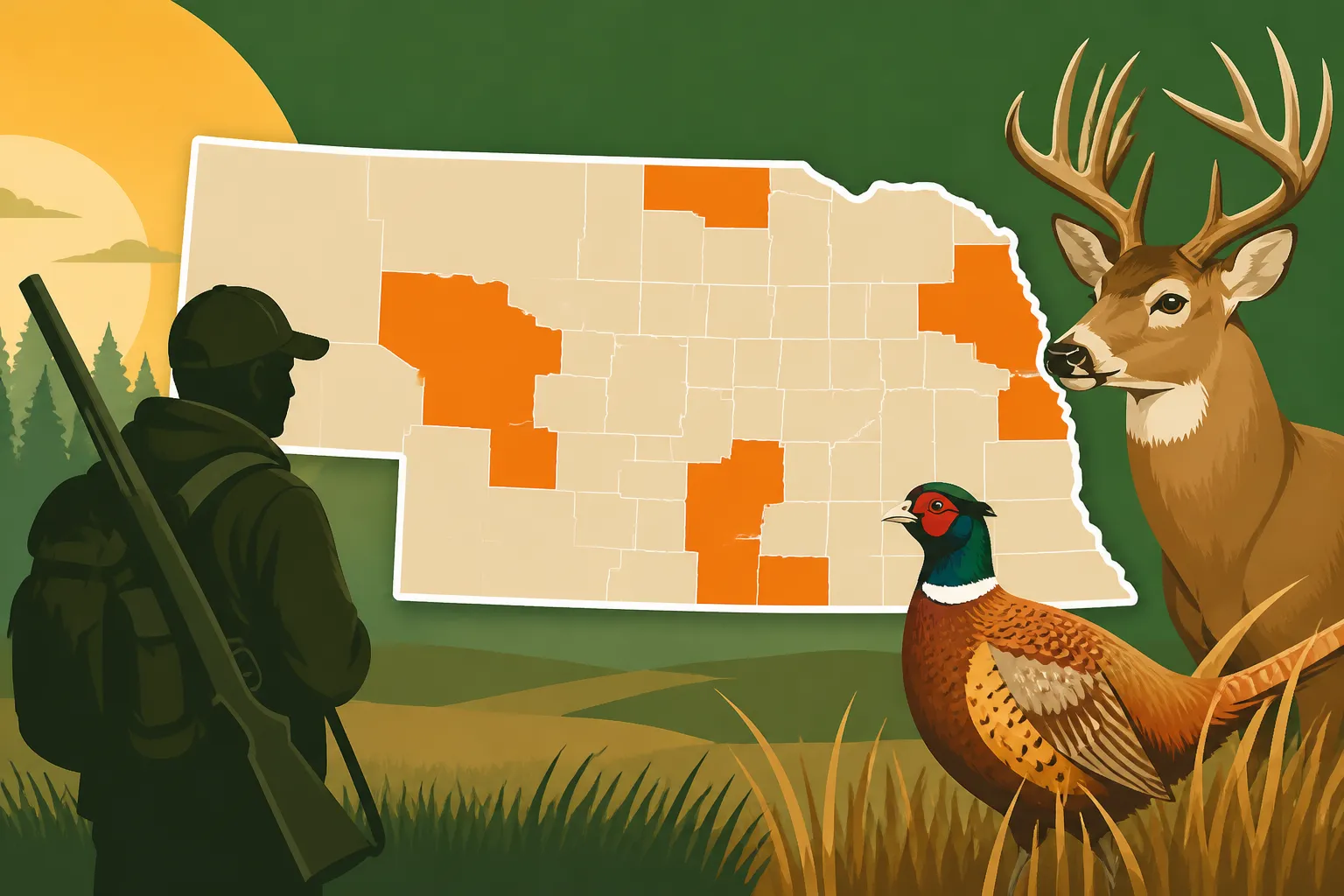
The heart of successful nonresident hunting in Nebraska lies in understanding the specific Deer Management Units (DMUs) and their associated draw odds. Nebraska is a large state with incredibly diverse habitats, and what holds true for the Pine Ridge might be completely different from the eastern river bottoms. Your strategy needs to align with your hunting goals—are you chasing a trophy mule deer, a whitetail, or simply looking for an opportunity to hunt?
High-Demand Units with Tough Odds for Mule Deer
Let's be real: if you're dreaming of a big Sandhills mule deer, so are a lot of other hunters. Units like the Sandhills, Pine Ridge, and Calamus West are legendary for their mule deer populations and breathtaking landscapes. These units are, without a doubt, the toughest for nonresidents to draw an "Any Deer" permit. In many years, you'll need several preference points—sometimes five or more—just to have a decent statistical chance. Even then, it's not a guarantee. The demand far outstrips the limited 15% nonresident allocation. This doesn't mean it's impossible, but it does mean you need a long-term strategy involving consistent preference point accumulation.
For instance, the Nebraska Sandhills Any Deer Draw Odds often show success rates in the low single digits for nonresidents without maximum points. The same often applies to the Pine Ridge Any Deer Draw Odds. Hunters applying for these units typically understand it's a multi-year investment. It’s important to research the most current draw statistics annually, as they can fluctuate slightly depending on applicant numbers and permit allocations. This is where patience and persistence truly come into play, as drawing one of these tags often represents the culmination of years of effort.
Whitetail-Focused Units with Better Chances
If your primary goal is a Nebraska whitetail buck, your odds significantly improve by focusing on units known more for their whitetail populations, particularly in central and eastern Nebraska. Units such as Blue Southeast, Platte, Wahoo, and Keya Paha consistently produce quality whitetails and, while still competitive, often have slightly more favorable draw odds for nonresidents than the mule deer strongholds. These areas are characterized by agricultural fields, river bottoms, and timbered draws, providing ideal habitat for whitetails.
Moreover, the Statewide Whitetail Buck (SWB) permit is often a more accessible option for nonresidents. While it restricts you to whitetail bucks only, it provides broad flexibility across much of the state. These permits are typically drawn with fewer preference points than the "Any Deer" unit permits, or sometimes even in your first few years of applying. It's a fantastic option if you're eager to get boots on the ground in Nebraska sooner rather than later. Understanding the differences in these units is paramount. For example, knowing that Best Nebraska Units for Whitetail Bucks tend to be in areas like the southeast can help you refine your application choices. You can also look at specific unit harvest data, such as that for Keya Paha Whitetail Harvest, to get a sense of success rates.
Antlerless-Only and Special Opportunity Permits
Don't overlook antlerless-only permits! These are often the easiest permits for nonresidents to acquire, sometimes even available over-the-counter after the main draw, or with very few preference points. Antlerless permits are a superb way to gain hunting experience in Nebraska, fill your freezer, and explore new public or private lands. They allow you to scout an area, learn deer movement patterns, and get a feel for the terrain without the pressure of a highly sought-after buck tag. Plus, there are specific late-season antlerless hunts that provide additional opportunities when other seasons have closed.
Many nonresidents use these permits as a way to "get in the game" while they build preference points for a coveted buck tag. It's a smart strategy that allows you to enjoy hunting Nebraska annually. Keep an eye on sales for Nebraska Antlerless-Only Deer Permits as they often become available in July or August. The NGPC also offers Nebraska's Extra Antlerless Opportunities, which can extend the season into January in certain units, providing prime cold-weather hunting chances, often with high success rates due to deer yarding up on food sources.
Here's a look at typical nonresident draw success rates for some key permit types and units, though these numbers can vary year to year:
Permit Type / Unit Primary Species Typical Nonresident Draw Odds (Approx.) Preference Points Needed (Approx.) Notes
: SWB – Statewide Whitetail Buck: These permits are often the easiest for nonresidents to acquire, sometimes even with 0 points depending on demand. They are valid across Nebraska for whitetail bucks.
H2: Strategic Approaches for Nonresident Draw Success
Understanding the units is one thing, but developing a sound application strategy is how you maximize your chances of success. It's about playing the long game with preference points, leveraging readily available information, and exploring all possible avenues for securing a tag. This is where you can turn a challenging system into a rewarding experience.
Building Preference Points Smartly
The preference point system is Nebraska's way of rewarding persistent applicants. For nonresidents, this often means that if you're targeting those premier "Any Deer" units in the Sandhills or Pine Ridge, you'll need to commit to a multi-year strategy of accumulating points. You can apply for a permit and, if unsuccessful, you'll earn a point. Or, you can choose to bypass the draw entirely for a given year and simply purchase a preference point. This can be a smart move if you know your current point total isn't competitive for your dream unit, or if you plan to hunt a different species over-the-counter that year.
The cost of a preference point is typically the same as the application fee for the permit itself, but it ensures you're continually improving your odds for future draws without risking a lost application fee on a long-shot unit. Decide early whether you want to hunt Nebraska every year, even if it's just for antlerless deer or small game, while banking points for a big buck. Knowing What a Nebraska Preference Point Costs can help you budget for this long-term investment. Consider if it's a better strategy to simply buy a point rather than apply if your goal is a specific high-demand unit, as detailed in When to Buy a Point Instead of Applying. This allows you to hunt other species or states while still progressing towards your Nebraska dream tag.
Analyzing Draw Statistics and "GoHunt" Tools
When you're trying to make an informed decision about where to apply, blindly guessing just won't cut it. You need data, and you need analysis. The Nebraska Game and Parks Commission provides basic draw statistics on their website, showing the number of applicants and permits issued. However, for a more detailed breakdown that includes historical trends, success rates by point levels, and expert insights, resources like GoHunt's draw odds tools and their detailed unit breakdowns are truly game-changers.
Using platforms like GoHunt to study historical draw data can help you avoid applying for units where your odds are virtually zero, directing you to more realistic options based on your current preference point accumulation. Their system often provides expert analysis that goes beyond raw numbers, helping you understand the why behind the odds, which is a significant advantage, especially for nonresidents who aren't on the ground scouting annually. Many serious nonresident hunters subscribe to services like GoHunt precisely for this kind of in-depth insight, as it transforms guesswork into strategic planning. This includes evaluating second-choice options, which can sometimes result in a tag if your first choice is unsuccessful, but only if you select a unit with available permits after the initial allocations.
Leveraging Over-the-Counter and Archery Options
While the rifle draw for bucks can be tough, Nebraska offers several avenues for nonresidents to secure a tag without navigating a complex lottery. One of the most significant is the availability of leftover permits after the primary draw. These are often for antlerless deer, but sometimes archery permits for certain units might also be available. These Over-the-Counter Big Game Permits in July can be a fantastic opportunity, especially if you're flexible with your hunting dates and locations. They sell out fast, though, so you need to be ready to purchase when they go on sale.
Another excellent strategy is to embrace archery hunting. Nebraska's Nebraska Archery Deer Season Dates are incredibly generous, often running for four months. Archery permits are generally much easier for nonresidents to acquire, with many units having over-the-counter options or very high draw success. This opens up a huge window of opportunity, allowing you to experience Nebraska deer hunting annually, often without needing to build up a significant number of preference points. Archery also offers the chance to hunt earlier in the season when the weather can still be warm, or later into the rut, depending on the specific dates.
Beyond Deer: Other Nonresident Hunting Opportunities
While deer hunting often dominates the conversation for nonresidents, Nebraska actually offers a diverse array of other hunting opportunities, some of which are far more accessible than drawing a coveted mule deer tag. Expanding your horizons beyond just deer can provide a richer and more frequent Nebraska hunting experience.
Antelope and Turkey Draw Considerations
If you're eyeing an antelope hunt in Nebraska, know that it's an even tougher draw than mule deer. Nonresident antelope permits are extremely limited, making the draw incredibly competitive. Similar to mule deer, you'll likely need many years of accumulating preference points to have a realistic chance. The antelope season is short, and the areas with permits are generally in the western part of the state. For those committed to the pursuit, learning about Nebraska Antelope Permits and Seasons is the first step, but be prepared for a long wait.
Spring turkey hunting, on the other hand, is a much more accessible option for nonresidents, though still with its own set of challenges. Nebraska has a statewide nonresident cap on turkey permits, currently set at 10,000, and these permits are known to sell out very quickly once they go on sale. It's often a matter of being online the moment sales open to secure your tag. While there's no "draw" in the traditional sense, the competitive nature of sales means you need to be prepared. Understanding the Nebraska Turkey Permits and the Nonresident Cap is vital if you want to experience a spring gobbler hunt in the Cornhusker State.
Small Game and Waterfowl: Accessible Options
For nonresidents looking for guaranteed access to Nebraska's hunting grounds without the stress of a draw, small game and waterfowl hunting are fantastic choices. Permits for species like pheasants, quail, grouse, rabbits, squirrels, and various waterfowl are typically available over-the-counter with the purchase of a valid hunt permit and any required state or federal stamps (like the Nebraska Habitat Stamp or Federal Duck Stamp). There's no draw involved, no preference points, just buy your tag and go!
Nebraska offers incredible upland bird hunting, particularly for pheasants, and its position in the Central Flyway makes it a waterfowl hunter's paradise. You can explore the Upland Season Dates and Bag Limits for various bird species, or delve into the specifics of Nebraska Waterfowl Seasons and Zones. These options provide immediate hunting opportunities for nonresidents, allowing you to enjoy the state's outdoors every year, perhaps while you patiently build points for a future big game tag. It’s a great way to experience what Nebraska hunting is all about without the draw day anxiety.
Disclaimer
Please note that hunting regulations, season dates, and permit availability can change annually. It is always the hunter's responsibility to consult the most current Nebraska Game and Parks Commission regulations prior to any hunting activity. This guide provides general information and strategic advice but should not be considered a substitute for official state publications.