Where Sharptails Outnumber Prairie Chickens
Many a hunter has found themselves scanning a vast expanse of Nebraska grassland, wondering if the bird about to flush will be a sharp-tailed grouse or a greater prairie-chicken. While both are iconic grassland birds and incredibly fun to pursue, their distributions aren't always a perfect overlap. Understanding where sharptails tend to outnumber prairie chickens can significantly improve your scouting and hunting strategy, helping you target your efforts more effectively and identify the subtle nuances of these magnificent game birds. This guide will help you decipher those differences and pinpoint the best areas for your sharptail pursuits.
Understanding the Nuances: Sharptail Versus Prairie Chicken
Before you can effectively hunt one over the other, you've got to understand what makes them tick and how to tell them apart, even if it's just by the type of country they prefer. These are two distinct species, each with its own preferred niche within Nebraska's diverse grassland ecosystem. While they might occasionally share the same general area, subtle habitat differences usually mean one species will be more abundant than the other.
Visual Distinctions and Field Marks
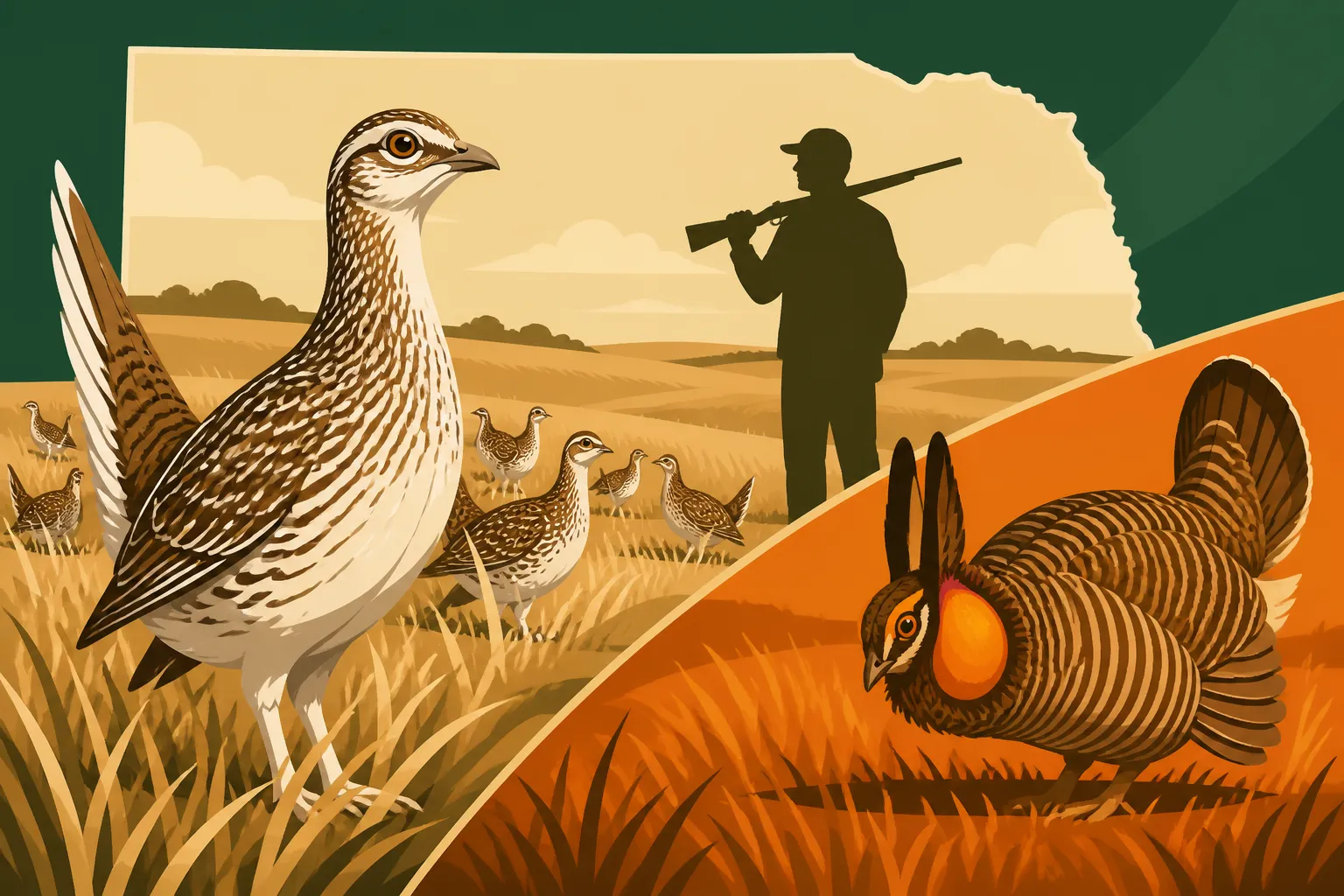
It's easy to lump "prairie grouse" into one category, but a closer look reveals clear differences between the sharp-tailed grouse and the greater prairie-chicken. In the field, especially on the wing, these distinctions become critical for identification and for understanding why they frequent different types of cover. The sharptail, as its name suggests, sports a pointed tail, often with white outer feathers, giving it a distinctive silhouette. Their plumage is generally lighter, with a barred chest and more of a "frosted" appearance on their back and wings, often featuring V-shaped markings.
Prairie chickens, on the other hand, have a much shorter, rounded tail that is uniformly dark, and they appear darker overall with broad, horizontal barring across their belly. Perhaps the most telling field mark, though not always easy to see, is the feather tuft or "pinnae" on the sides of the prairie chicken's neck, which it can erect. While both birds are masters of camouflage, these visual cues are your first hint at what you're seeing, even if it's just a glimpse as they flush. Knowing these tells can instantly inform you about the typical habitat you're moving through and whether you're likely to encounter more of one species than the other.
Beyond the tail and plumage, their flight patterns also offer clues. Sharptails tend to have a more direct, almost pigeon-like flight, often flying in tight groups, especially when flushed from cover. Prairie chickens, while also strong fliers, often present a slightly heavier, more "fluttering" flight initially before settling into a powerful, direct course. This might seem like a minor detail, but when you're walking vast stretches of open country, even the way a bird takes to the air can hint at its identity and, by extension, the type of grassland it calls home.
Habitat Preferences and Behavior
This is where the rubber truly meets the road in distinguishing where sharptails outnumber prairie chickens. Generally speaking, sharp-tailed grouse are lovers of more open, slightly sparser grasslands, often with a mix of shrubby cover, small draws, and even some scattered timber or pine. Think of the rugged, rolling sandhills and the fringes of the Pine Ridge, where the grass might not be uniformly tall, and there are pockets of sagebrush, chokecherry, or even small cedars. They're resilient and adaptable, often found scratching out a living in areas with a bit more topographical variety and slightly less dense herbaceous cover.
Greater prairie-chickens, conversely, are typically associated with vast expanses of tall-grass prairie, requiring dense, unbroken tracts of native grasses for nesting, roosting, and brood rearing. They are less tolerant of woody encroachment and tend to avoid areas with significant tree cover. Their habitat preference leans towards rich, deep-soiled prairies that historically supported huge herds of bison and sustained annual fires, creating that specific, unbroken grassland tapestry. This makes them highly sensitive to habitat fragmentation and changes in land use.
These distinct habitat preferences translate directly into hunting strategy. If you're busting through a dense stand of switchgrass on a rolling hill that seems to go on forever, you're more likely in prime prairie chicken territory. If you find yourself working through a slightly rougher area, perhaps with some shorter, clumpier grasses, interspersed with a few brushy thickets or a lonely cedar tree, your chances of a sharptail flush increase significantly. It's all about reading the landscape and understanding what each species needs to survive and thrive. You can learn more about these birds in Telling a Mule Deer From a Whitetail at Distance which actually provides some great general pointers about telling game species apart.
The Call of the Wild: Breeding Grounds
Even if you're not hunting during the spring breeding season, understanding the differences in their courtship displays, or "leks," can offer profound insights into their distribution. Sharptail leks, or dancing grounds, are typically found on slight rises or bare knolls within their preferred mosaic of open grassland and shrubby areas. The male sharptails will gather, inflate air sacs on their necks, fan their tails, and perform a buzzing, stomping dance, often accompanied by a soft cooing or clucking sound.
Prairie chicken leks, on the other hand, usually occur on elevated, very open expanses of short-grass prairie or mowed hayfields, offering unobstructed views. Their booming calls, produced by inflating large orange air sacs on their necks, are a much lower frequency, resonant sound that can carry for miles across the flat plains. The males engage in elaborate dances, stamping their feet and flaring their pinnae, creating a truly unforgettable spectacle. Learning about Sharptail Lek Behaviour in Spring or Finding Prairie Chickens on a Lek Range can be incredibly useful for understanding their preferred breeding habitat and, by extension, their year-round distribution.
The location and characteristics of these leks aren't random; they are deeply tied to the specific habitat requirements of each species. A booming prairie chicken lek signifies a nearby expanse of quality tall-grass prairie, whereas a sharptail lek points to more varied, perhaps slightly rougher, mixed-grass habitat. By studying historical lek locations and looking for the types of terrain that support them, you can gain a significant advantage in pinpointing where to focus your hunting efforts.
The Heart of Nebraska's Sharptail Country
When you hit the prairie, if your goal is to find more sharptails than prairie chickens, you need to head west and north in Nebraska. This isn't to say prairie chickens are absent from these areas, but the sheer volume and quality of sharptail habitat mean you'll likely encounter them in greater numbers. It's about finding that sweet spot where their preferences align with the landscape.
The Sandhills Dominance
If there's one region in Nebraska that screams "sharptail central," it's the vast, rolling expanse of the Sandhills. This incredible ecosystem, characterized by its stabilized sand dunes covered in native grasses, offers the perfect blend of open terrain, diverse grass structures, and scattered shrubby draws that sharptails absolutely adore. Here, you'll find them abundant in areas with mixed-grass prairie, often intermingled with pockets of yucca, sand cherry, and plum thickets. These features provide both cover and food, creating ideal conditions.
The topography of the Sandhills — the rolling hills, the gradual slopes leading into wet meadows, and the occasional blowout or cedar-lined draw — creates a varied landscape that seems tailor-made for sharp-tailed grouse. They can be found on the tops of the hills, in the basins, and along the edges of the numerous hay meadows. The sheer scale of this unbroken grassland means that areas suitable for sharptails are incredibly widespread, offering countless opportunities to pursue them. Walking Nebraska Sandhills Meadows for Sharptails describes this experience beautifully.
Unlike the vast, uniform tracts of tall-grass prairie preferred by prairie chickens, the Sandhills present a more fragmented, yet still expansive, habitat that suits sharptails perfectly. The native grasses, while robust, often aren't as uniformly tall and dense as the prairie chicken's ideal. This subtle difference in grass structure, combined with the undulating terrain, really plays into the sharptail's preferences for cover and movement.
Pine Ridge and Western Extensions
Venturing further west and north into Nebraska, particularly into the Pine Ridge region and its adjacent grasslands, you'll continue to find sharptails dominating the grouse landscape. While the Pine Ridge is famous for its mule deer and ponderosa pines, the interspersed grasslands and valleys provide excellent sharptail habitat. These areas often feature a mix of prairie grasses and brushy draws, bordering the pine forests.
In these western extensions, the habitat often becomes a mosaic of open prairie, sagebrush flats, and the occasional rocky outcrop or forested break. Sharptails are highly adaptable and seem to thrive in this more rugged, varied terrain. They utilize the brushy cover for protection from raptors and winter weather, and the diverse plant life provides a consistent food source throughout the year. The higher elevations and cooler temperatures also play a role, creating an environment distinct from the central plains.
When exploring these western regions, look for areas where the grasslands transition into more broken country, perhaps with some scattered junipers or a prominent ridge line. These edge habitats are often magnets for sharptails, offering them the benefits of open foraging alongside easy access to thicker cover when needed. This is truly where Sharp-Tailed Grouse Range in Nebraska is at its densest and most reliable.
Why Sharptails Thrive Here
The reason sharptails outnumber prairie chickens in these western and northern Nebraska landscapes boils down to a few key ecological factors. Firstly, the habitat structure is crucial. Sharptails prefer a mix of short to medium-height grasses interspersed with shrubby cover, which is abundant in the Sandhills and Pine Ridge fringes. Prairie chickens, by contrast, demand vast tracts of dense, tall-grass prairie. The Sandhills, while grassy, often have a more open understory and greater shrub component.
Secondly, land use and historical disturbance regimes have favored sharptails in these areas. While both species have been impacted by habitat loss, the vastness of the Sandhills and the less intensive agricultural practices in many parts of western Nebraska have preserved more of the mosaic habitat that sharptails prefer. Prairie chickens have suffered more dramatically from the conversion of tallgrass prairie to cropland.
Finally, winter survival plays a role. Sharptails are known for "snow roosting," burrowing into soft snow to escape harsh winter winds and cold. The consistent snowfall and varied terrain in parts of the Sandhills and Pine Ridge provide excellent conditions for this behavior, helping them weather the tough Nebraska winters. While prairie chickens also utilize snow cover, the specific habitat available often gives sharptails an edge in these more rugged, open, and sometimes snowier environments.
Prairie Chicken Strongholds and Overlap Zones
While we're talking about where sharptails dominate, it's important to understand the flip side: where prairie chickens still hold strong, and those intriguing areas where you might find both, but perhaps not in equal measure. Nebraska is unique in that it hosts both species, but their populations have faced different challenges and exist in different densities across the state.
Central Nebraska Grasslands
If you're looking for prime greater prairie-chicken country, your focus shifts more towards the central part of Nebraska, though still primarily within the Sandhills. Here, where the Sandhills transition into slightly more productive soil types and where some of the largest, most intact blocks of tall-grass prairie still exist, you'll find the strongholds of prairie chicken populations. These areas are characterized by extensive, deep-rooted native grasses that provide the dense cover essential for their survival.
Think of regions with large ranches that have maintained vast pastures of unplowed prairie, where the grass can grow tall and thick, creating a sea of cover. While these areas are still within the greater Sandhills region, the specific character of the grassland—its height, density, and uniformity—is what makes it more attractive to prairie chickens. These are the places where Greater Prairie-Chicken Numbers in the Sandhills are most stable, thanks to dedicated conservation efforts and ranching practices that mimic historical prairie dynamics.
However, even within these central Sandhills areas, prairie chicken populations have faced challenges. Nebraska Turkey Population Decline and Why Nebraska Turkey Poult Survival Dropped highlight the broader issues many ground-nesting birds face, including habitat fragmentation, predation, and severe weather events during nesting season. Prairie chickens are particularly vulnerable to these factors due to their reliance on vast, undisturbed tracts of prairie.
Areas of Coexistence and Competition
It's not always a clear-cut line where one species ends and the other begins. There are certainly areas in the Sandhills where the habitat transitions, creating zones where both sharptails and prairie chickens can be found. These overlap zones are fascinating for hunters, as you might flush a mixed bag of birds in a single day. Often, these areas represent a blend of the habitat preferences of both species: robust, but not overwhelmingly dense, grasses, with some topographical relief and perhaps scattered brush.
In these transitional areas, subtle shifts in elevation, soil type, or historical land management can dictate which species is more prevalent in a particular section of ground. A low-lying wet meadow might hold different birds than an adjacent sandy ridge. Understanding these micro-habitats within a broader landscape is key to success. For instance, you might find sharptails on a drier, slightly sandier knoll, while prairie chickens are tucked into a denser, lower-lying swale just a quarter-mile away.
However, even in these overlap zones, one species often subtly outnumbers the other due to very specific local conditions. The density of certain plant species, the average height of the grass, or the proximity to certain human disturbances can tip the scales. These areas require a keen eye for detail and an understanding of the subtle cues the landscape provides. The GoHunt platform, for instance, with its detailed satellite imagery and land ownership overlays, can be a fantastic tool for pinpointing these varied habitat types and planning your approach in areas where both species might coexist. It allows you to analyze terrain and cover without always having to walk every inch.
Declining Numbers and Habitat Loss
While sharptails may still outnumber prairie chickens in specific areas, it's crucial to acknowledge the overarching trend of Nebraska Turkey Population Decline and Greater Prairie-Chicken Numbers in the Sandhills. Both species have faced significant pressures, primarily habitat loss and fragmentation across their historical ranges. The conversion of grasslands to agriculture, urban expansion, and the degradation of remaining prairie have all taken a toll.
Prairie chickens, being more dependent on those vast, unbroken tracts of tallgrass prairie, have been particularly impacted. Their strongholds are now more isolated, making them more vulnerable to localized threats and less resilient to environmental changes. Sharptails, while more adaptable to mixed-grass and brushy habitats, are not immune to these pressures either. Even in their dominant areas like the Sandhills, habitat quality can fluctuate due to grazing practices, invasive species, and climate patterns.
Understanding these broader ecological challenges not only informs your hunting strategy but also highlights the importance of supporting conservation efforts that aim to protect and restore native grasslands. Hunting both species is a privilege that depends entirely on the health of these precious ecosystems. When you plan your trip, considering Scouting Nebraska Public Ground Before Opening Day or utilizing resources like the Nebraska Public Access Atlas Mobile App can help you find areas where habitat management is actively supporting these magnificent birds.
Scouting and Strategy for Sharptail Success
Once you've wrapped your head around the differences and where to find more sharptails, it's time to put that knowledge into action. Hunting grouse is about more than just walking; it's about reading the land and adapting your approach.
Reading the Landscape for Sharptails
Successful sharptail hunting begins long before you even step out of the truck. It starts with meticulously studying maps – topographical maps, satellite imagery, and even local land-use maps. You're looking for that specific mosaic habitat: rolling sandhills, areas with a mix of shorter to medium grasses, and those critical pockets of brushy cover like plum thickets, chokecherry, or even scattered junipers. Pay attention to how the land lays. Sharptails will often use the tops of ridges or gradual slopes for foraging and lekking, but they'll drop into draws or seek out brush for protection from weather and predators.
Consider the time of day and the weather. On cool mornings, sharptails might be more active on exposed slopes, soaking up the sun. As the day warms up or if the wind picks up, they'll likely retreat to the sheltered sides of hills, dense grass, or brushy cover. After a rain, you might find them dusting in sandy areas. It's a continuous puzzle, where every piece of information about the landscape and conditions helps you predict where the birds will be. Remember, these birds are wild and constantly adapting, so your approach needs to be flexible.
Don't overlook water sources, even in the dry Sandhills. While sharptails aren't typically "water birds," proximity to wet meadows or small ponds can influence insect populations and plant growth, making those areas richer in food sources. Look for areas where the grass changes texture or height, indicating different soil moisture or vegetation types. These subtle changes can create micro-habitats that attract sharptails.
Using Technology for Targeted Scouting
In today's hunting world, technology can be a game-changer, especially when scouting vast tracts of open country for specific habitat types. While nothing replaces boots on the ground, mapping applications and aerial imagery can save you countless miles. Platforms like GoHunt, for instance, offer detailed satellite views that allow you to discern differences in vegetation density, identify shrubby cover, and pick out topographical features that would be difficult to spot from ground level. You can mark potential hot spots, plan your routes, and check land ownership boundaries right from your phone or computer.
Using the Nebraska Public Access Atlas Mobile App is another indispensable tool. It overlays public hunting lands, including Open Fields and Waters tracts, onto maps, ensuring you're always on legal ground. This is especially vital in areas where private and public lands intertwine. Combine this with the topographical layers available in many apps, and you can quickly identify those rolling hills, brushy draws, and mixed-grass prairies that scream "sharptail habitat." It's about working smarter, not harder, to narrow down the most promising areas before you even load your shotgun.
Beyond mapping, consider how information about local conditions might influence your plans. While we don't have live data, knowing historical weather patterns, drought conditions, or recent prescribed burns in an area (if publicly available through land managers) can provide valuable context. For instance, a very dry year might push birds closer to residual cover or water. Conversely, good rainfall can mean lush growth, offering more hiding places. All these factors, when combined with your tech scouting, create a powerful predictive model for finding birds.
Hunting Methods Adapted for Sharptail Habitat
Hunting sharptails, especially in the Sandhills or Pine Ridge, is often a walking man's game, and it demands stamina. Covering ground is key, but it's not just about aimless wandering. You need to walk smart, paying attention to the wind, sun, and cover. Walking Nebraska Sandhills Meadows for Sharptails explains this perfectly. Working into the wind can help carry your scent away from the birds and improve your dog's ability to scent game. Quartering across hillsides can help you cover varied terrain and get different angles into cover.
A good bird dog is an invaluable asset for sharptails. Their ability to cover ground, scent birds, and retrieve downed game in thick cover or tall grass is unmatched. However, even without a dog, careful, deliberate walking through promising cover, especially those brushy draws and plum thickets, can produce flushes. Consider hunting with a partner: one person can push a draw while the other walks along the edges, acting as a blocker, effectively mimicking methods described in Blocking and Driving a Nebraska Field.
The shot can be challenging on these birds, as they often flush hard and fast, sometimes climbing quickly. Practice your swing and ensure you're using appropriate loads for upland birds. For those chasing both sharptails and prairie chickens in overlap zones, it's wise to carry a variety of shot sizes or choose a versatile load that performs well on both. Being mentally prepared for a variety of flushing behaviors will put you in a better position to connect when the opportunity arises.
| Feature | Sharp-Tailed Grouse Preferred Habitat | Greater Prairie-Chicken Preferred Habitat |
|---|---|---|
| Grass Type | Mixed-grass prairie, often with shorter patches | Tall-grass prairie, dense and unbroken |
| Topography | Rolling hills, draws, varied elevation | Flat to gently rolling, expansive plains |
| Woody Cover | Tolerates/utilizes scattered shrubs/brush | Avoids woody encroachment, requires open areas |
| Soil Type | Sandy soils (e.g., Sandhills) | Richer, deeper prairie soils |
| Distribution | Western & Northern Nebraska (Sandhills, Pine Ridge) | Central Sandhills, pockets of tallgrass prairie |
| Lek Location | Bare knolls, slight rises, varied cover | Open, elevated, uniform short-grass areas |
Disclaimer
This article is for general informational purposes only and does not constitute professional advice. Laws, prices and regulations vary by location and change over time. Consult a qualified professional for guidance on your specific situation.