Nebraska Bowhunter Education Requirement
One of the common questions and sometimes points of confusion for anyone looking to pick up a bow and head into Nebraska's fields and forests is figuring out the exact requirements for bowhunter education. It can feel like a maze, especially with different rules for age, residency, and even the type of equipment you're using. This comprehensive guide is here to untangle all that, ensuring you understand exactly what's needed to legally and responsibly chase your archery dreams in the Cornhusker State.
Understanding Nebraska's Bowhunter Education Requirements
The Nebraska Game and Parks Commission (NGPC) takes hunter safety very seriously, and that extends directly to bowhunting. It's not just about passing a test; it's about fostering a culture of safety, ethics, and respect for the game and the land. For many, completing a bowhunter education course is a mandatory step before heading afield.
Who Needs Bowhunter Education in Nebraska?
Let's cut right to the chase: if you're planning to bowhunt for deer, antelope, elk, or turkey in Nebraska, you'll likely need to complete a state-approved bowhunter education course. The primary rule focuses on age, which aligns closely with general hunter education requirements. Generally, anyone born on or after January 1, 1977, must complete a hunter education course to hunt with a firearm or archery equipment in Nebraska. If you're going to bowhunt, a specific bowhunter education certificate might be required in addition to (or sometimes as part of) your general hunter education, especially for non-residents or if you plan to hunt in states with stricter rules.
It's important to differentiate between general hunter education and bowhunter-specific education. While a general hunter education certificate allows you to hunt with a firearm, for bowhunting, the NGPC often recommends, and in some cases requires, specialized training. This is particularly true if you're a young hunter or a non-resident. To get a comprehensive overview of the age stipulations for all types of hunting, make sure to check out our guide on the Nebraska Hunter Education Age Requirement. There are some nuances, for example, regarding youth hunters participating in a mentored hunt, where they might be exempt from certification if directly supervised by a qualified adult. But even then, the core principles taught in bowhunter education are invaluable.
The Importance of Certified Bowhunter Education
You might think, "I've been shooting a bow for years, why do I need a class?" And that's a fair question. However, certified bowhunter education goes far beyond simply knowing how to hit a target. It's designed to instill a deep understanding of ethical hunting practices, wildlife conservation, and crucial safety protocols specific to archery in a field setting.
Think about it: bowhunting presents unique challenges that firearms hunting might not. You're often operating in much closer quarters, requiring a different level of patience, precision, and understanding of animal behavior. The courses cover things like shot placement for a quick, humane harvest, tracking wounded game, and understanding the specific anatomy of big game animals. It also dives into critical safety elements, such as safe tree stand practices – a major cause of hunting accidents – and proper equipment handling. These aren't just arbitrary rules; they are lessons learned from years of experience and unfortunate incidents, all designed to make you a safer, more effective, and more ethical hunter. It’s about ensuring that every arrow launched is done so with the utmost respect for the animal and the environment, leaving as little trace as possible.
Online vs. In-Person Course Options
The good news is that Nebraska offers flexibility in how you can complete your bowhunter education. For many busy folks, the online course option is a real lifesaver. You can work through the material at your own pace, which is perfect for fitting it into a hectic schedule. These courses are typically interactive, covering all the necessary modules, from equipment basics and shot placement to game recovery and regulations.
However, while online courses provide excellent foundational knowledge, many hunters, especially those new to the sport, find immense value in the traditional in-person classes or hybrid options that include a field day. These hands-on experiences allow you to interact with certified instructors, ask questions in real-time, and get practical experience with things like safe climbing techniques, range estimation, and even shooting different types of bows under supervision. Sometimes, these field days are required even if you complete the academic portion online, especially for younger hunters. The ability to practice shooting from different positions or learn how to properly attach a harness for a treestand is hard to replicate virtually. Both methods, when state-approved, will lead to your official certification, but consider which learning style best suits you for truly absorbing the vital information.
Navigating the Bowhunter Education Course Material
Once you're enrolled in a Nebraska-approved bowhunter education course, whether online or in person, you'll quickly realize it’s a lot more than just a formality. The curriculum is designed to make you a well-rounded and responsible archer.
What You'll Learn in a Nebraska Bowhunter Course
The content of these courses is extensive, covering everything from the physics of archery to the ethics of the hunt. You'll delve into the different types of archery equipment available, understanding the pros and cons of traditional bows, compound bows, and even crossbows. This includes learning about proper arrow selection, broadhead types, and how they impact terminal performance. For instance, you'll learn about the differences between Fixed Versus Mechanical Broadheads and when one might be more appropriate than the other, which is crucial for a clean harvest.
A significant portion of the course focuses on shot placement and animal anatomy. Knowing where to aim for the vitals on a deer, elk, or turkey is paramount for a quick and humane kill. Instructors often use detailed diagrams and models to teach you the specific organs to target, considering various shot angles. You'll also learn about the importance of tracking wounded game, interpreting blood trails, and what to do if you lose the trail. Ethical considerations, such as knowing your effective range and only taking high-percentage shots, are heavily emphasized. Furthermore, you'll gain a deeper understanding of Nebraska's specific hunting regulations, season dates, and permit requirements, which is essential for any hunter venturing out during the Bowhunting Nebraska's Four-Month Archery Season. This knowledge prepares you for success and compliance, whether you're chasing whitetails in the river bottoms or trying for Archery Antelope Over Water in Nebraska.
Practical Skills and Field Day Expectations
For courses that include a practical field day, this is where theory meets reality. These sessions are invaluable for cementing the knowledge gained from textbooks or online modules. You'll typically participate in live-fire exercises, practicing safe shooting techniques, and reinforcing proper arrow handling. Instructors will often set up scenarios that simulate real hunting situations, such as shooting from an elevated position (like a mock treestand) or from a ground blind.
Beyond shooting, field days often involve hands-on training for tree stand safety, including proper harness use and lifeline installation. You might also practice judging distances, a critical skill in bowhunting where ranges are much shorter and more precise than rifle hunting. Some courses even include basic map and compass navigation or GPS usage, which can be incredibly useful for tracking game or navigating public lands. These practical skills are not just about passing a test; they are fundamental to your safety and effectiveness as a bowhunter. The instructors are often seasoned hunters themselves, offering real-world tips and insights that you can't get from a screen.
Exemptions, Equivalency, and Non-Resident Considerations
Nebraska's bowhunter education requirements, while clear, do have some exceptions and specific considerations, particularly for those coming from out of state or those who have previously hunted.
Who is Exempt from Bowhunter Education?
While generally required, there are a few scenarios where you might be exempt from taking a bowhunter education course in Nebraska. The most common exemption is for hunters who were born before January 1, 1977. If you fall into this age bracket, you're typically not required to complete any hunter education to hunt in Nebraska, including bowhunting.
Another important exemption category is the apprentice hunter program. Nebraska offers an Nebraska Apprentice Hunter Exemption, which allows individuals who haven't completed hunter education to hunt under the direct supervision of a licensed, experienced hunter (who is at least 19 years old and has a valid permit and habitat stamp). This program is a fantastic way for new hunters, especially youth, to get started and gain practical experience before committing to the full education course. However, it's crucial to understand the strict requirements of supervision and what constitutes direct supervision. For more details on this pathway, you can look into how to obtain Nebraska Apprentice Hunter Certificates. While it offers a pathway to hunting without immediate certification, completing the education is always recommended for long-term safety and success.
Reciprocity for Out-of-State Hunters
If you're a non-resident planning to Nebraska Nonresident Deer Permit Cost for a bowhunt in Nebraska, and you've already completed a bowhunter education course in another state or province, you're usually in luck. Nebraska generally recognizes bowhunter education certifications from other states and Canadian provinces, provided those courses are approved by the International Hunter Education Association (IHEA-USA). Most states' programs meet this standard.
However, it's always a good idea to verify your specific certification with the Nebraska Game and Parks Commission before you plan your trip. You typically won't need to retake a full Nebraska course if your home state's certificate is recognized. Just be prepared to provide proof of your certification when purchasing your Nebraska hunting permits, which can include various Nebraska Archery and Muzzleloader Deer Permits. Don't leave this to the last minute; confirming reciprocity ahead of time can save you a lot of hassle and ensure your hunting plans go smoothly.
Understanding Crossbow Rules and Certification
The rise in popularity of crossbows has led to some questions about whether bowhunter education requirements apply to them. In Nebraska, crossbows are generally considered archery equipment. This means that hunters using crossbows fall under the same hunter education and bowhunter education requirements as those using traditional or compound bows. So, if you're born after January 1, 1977, and plan to hunt deer or other big game with a crossbow, you'll need to complete the necessary education.
It's also worth noting that Nebraska has specific rules regarding crossbow use, including certain restrictions or special permits that might apply in different seasons or for certain individuals (e.g., those with disabilities). You can find more comprehensive details on Crossbow Rules and Use in Nebraska and Nebraska Crossbow Permit Rules to ensure you're fully compliant. The education ensures that even with a crossbow, you understand ethical shot placement, game recovery, and safety, which are universal principles for all forms of archery hunting.
Beyond the Certificate: Ongoing Learning for Bowhunters
Getting your bowhunter education certificate isn't the finish line; it's truly just the starting gun for a lifetime of learning and growth as an ethical and skilled archer. The hunting landscape, rules, and even the game itself are constantly evolving.
Staying Current with Nebraska Regulations
One of the most crucial aspects of responsible hunting is staying up-to-date with current regulations. Hunting laws and seasons in Nebraska can and do change. What was legal last year might not be this year, or a new restriction might be in place for a specific unit. It's your responsibility as a hunter to know the rules. The Nebraska Game and Parks Commission website is your best friend here, providing the most current hunting guides, season dates, and regulation updates. Regularly reviewing these resources, especially before each season, is non-negotiable.
Beyond just the official regulations, it's also smart to keep an eye on wildlife management news, population trends, and any emerging issues like disease outbreaks (e.g., CWD) that might impact hunting practices or carcass transport rules. Being informed ensures you're not only compliant but also contributing to the health and sustainability of Nebraska's wildlife populations.
Developing Advanced Bowhunting Skills
Once you've got the basics down, the real fun begins: refining your skills. Bowhunting is a constant journey of improvement. This could mean dedicating more time to consistent target practice to improve your accuracy, especially at varying distances and angles. It might involve getting more serious about scouting, learning to read sign, utilize trail cameras, and understanding deer movement patterns in different types of terrain, from the Sandhills to eastern Nebraska's river bottoms. Tools like GoHunt can be incredibly useful for this, offering detailed mapping, draw odds, and filtering capabilities to help you scout effectively and plan your hunts, even virtually.
Learning how to effectively choose a stand site, whether it’s for Choosing a Treestand Site on Nebraska Farmland or deploying Ground Blinds in Open Nebraska Country, is a nuanced skill that improves with experience. Understanding wind thermals, scent control, and camouflage can also dramatically increase your success rates. Many experienced bowhunters also explore different calling techniques, decoying strategies, or advanced tracking methods. Never stop learning, experimenting, and challenging yourself to become a better hunter.
The Role of Mentorship in Bowhunting
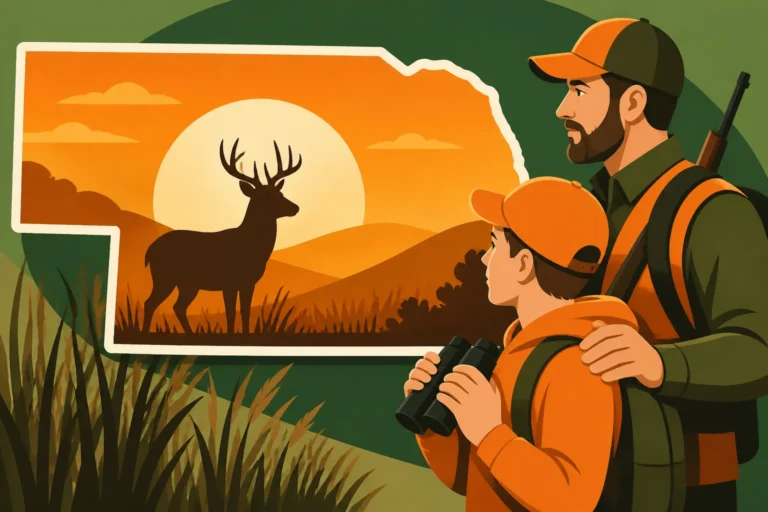
While formal education is essential, the value of mentorship in bowhunting cannot be overstated. Learning from an experienced hunter who can share real-world knowledge, tips, and ethical considerations is truly invaluable. A good mentor can teach you things that a book or an online course simply can't: the subtle art of reading a whitetail's body language, how to navigate challenging terrain, or the patience required for a long sit in a treestand.
Mentors can guide you through everything from field dressing your first animal to understanding the nuances of fair chase. If you're a youth hunter, having a mentor is often a requirement, as outlined in guidelines like Mentor Requirements for a Nebraska Youth Hunter. But even as an adult, seeking out experienced bowhunters who are willing to share their wisdom can accelerate your learning curve and instill a deeper appreciation for the sport. Don't be afraid to ask questions, join a local archery club, or participate in organized mentorship programs. The hunting community is often eager to welcome and guide new enthusiasts, passing on traditions and knowledge that have been honed over generations.
Nebraska Bowhunter Education at a Glance
To quickly summarize the core requirements for bowhunter education in Nebraska:
| Hunter's Age / Status | General Hunter Ed Required? | Bowhunter Ed Specifics | Notes |
|---|---|---|---|
| Born BEFORE Jan 1, 1977 | No | No (for Nebraska) | No education required for any hunting. |
| Born ON or AFTER Jan 1, 1977 | Yes | Generally recommended for all bowhunters; often required by other states or some permit types. | Must complete approved course. Reciprocity applies for out-of-state certificates. |
| Apprentice Hunter | No (under supervision) | No (under supervision) | Must hunt with qualified, licensed mentor. Limited duration. |
| Non-Resident | Yes | Reciprocity usually applies for IHEA-USA certified courses. | Verify your certification with NGPC before your hunt. |
| Crossbow User | Yes | Same requirements as other archery equipment. | Crossbows fall under archery rules for education. |
Disclaimer
Please remember that hunting regulations, permit requirements, and educational mandates can change. While this guide aims to provide accurate and up-to-date information, it is not a substitute for checking the official Nebraska Game and Parks Commission regulations and legal statutes. Always consult the most current hunting guide and contact the NGPC directly if you have any specific questions about your eligibility or requirements.