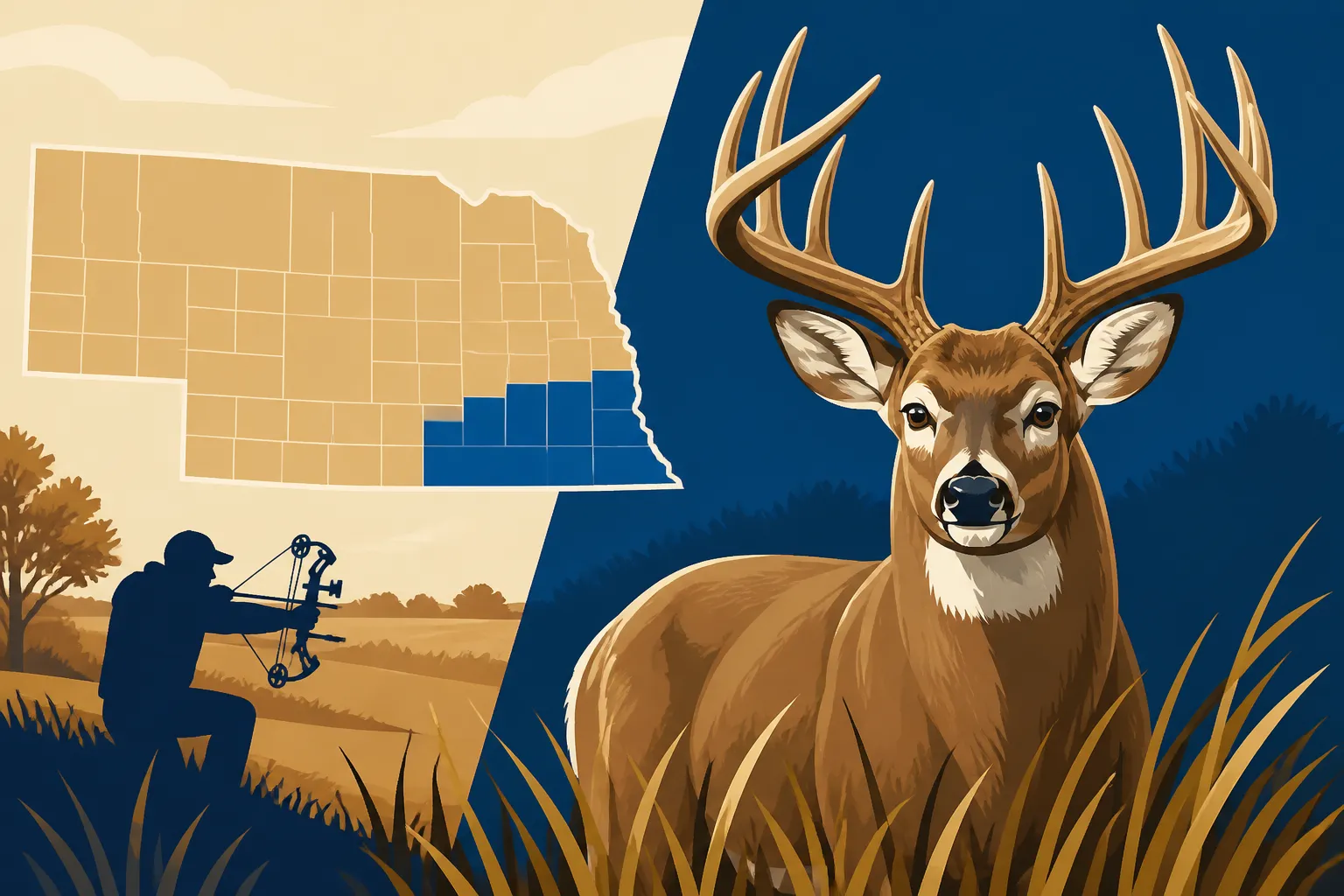
Why Blue Southeast Produces Big Whitetails
Many hunters dream of chasing monster whitetails, and while states like Iowa or Kansas often steal the spotlight, Nebraska has quietly been producing some absolute giants, especially in its southeastern quadrant. If you’ve ever wondered why that region seems to consistently kick out those truly big-racked bucks, you've likely faced the frustration of trying to pinpoint what makes it so special. This guide will peel back the layers and explain precisely why Southeast Nebraska has become such a hotbed for producing massive whitetails.
The Lay of the Land: Habitat and Agriculture's Bounty
Southeast Nebraska might not boast the vast timber tracts of northern states, or the rugged canyons of the west, but what it does possess is an incredible combination of rich, fertile land and diverse cover that creates an ideal environment for whitetails to thrive. This unique blend contributes significantly to the health and size of the deer herd.
The Rich Soil and Abundant Food Sources
The deep, fertile topsoil of southeastern Nebraska is legendary, and it's the engine behind the region's agricultural prowess. This isn't just good for farmers; it's a goldmine for deer. Imagine endless acres of corn, soybeans, and alfalfa – a veritable buffet for a whitetail. These row crops provide an incredibly high-protein diet that fuels not only body growth but also phenomenal antler development.
Throughout the spring and summer, young deer and pregnant does benefit immensely from the nutrient-rich forages. Then, as fall approaches, the corn and bean fields offer a caloric bonanza, allowing bucks to pack on critical pounds before the rut and grow impressive headgear. This consistent, high-quality nutrition year after year is a cornerstone of why you see such robust deer in this part of the state. It's a fundamental biological truth: good food means bigger, healthier animals.
Waterways and Timbered Corridors
Beyond the agricultural fields, the landscape is crisscrossed with numerous waterways, like the Big Blue River and Little Blue River, along with their countless tributaries. These rivers and creeks, even smaller drainages, are often lined with mature timber — cottonwoods, oaks, walnuts, and elms. These forested corridors are invaluable, acting as natural highways and sanctuaries for whitetails.
These timbered river bottoms provide dense cover for bedding, especially important for mature bucks seeking refuge. They also serve as vital travel routes, allowing deer to move between feeding areas, escape pressure, and access water sources without venturing too far into open country. Even smaller shelterbelts and woodlots, often found interspersed with fields, play a crucial role, offering bedding and thermal cover, especially during harsh winter weather. These pockets of cover are crucial in shaping where deer live and move, providing a sense of security in an otherwise open agricultural landscape. You'll find deer using every fold and wrinkle in the landscape, from deep ravines to dense creek bottoms, as they travel between food and sanctuary.
Low Pressure and Deer Dynamics
It might seem counterintuitive in an agriculturally rich area, but southeastern Nebraska can, in many ways, offer a surprising amount of low-pressure hunting, particularly on private land. This reduced disturbance, whether intentional or accidental, is a huge factor in allowing bucks to reach maturity, which is absolutely essential for growing those big racks.
Hunter Density and Access Challenges
Unlike vast tracts of public land in other regions, much of southeastern Nebraska is privately owned. While this can make gaining access a challenge for hunters, it often results in more localized, less intense hunting pressure on specific parcels. Many landowners are particular about who hunts their property, or perhaps don't hunt at all, inadvertently creating de facto sanctuaries where deer feel safe.
This fragmented ownership means that deer don't face constant, widespread hunter intrusion. Instead, pressure tends to be concentrated in smaller pockets, or along property lines where hunters have permission. For the deer, particularly older bucks, this allows them to establish reliable routines and live longer lives, giving their antlers more seasons to develop into impressive racks. It often comes down to successful Getting Private Land Permission in Nebraska and building those crucial relationships with local farmers.
Deer Movement and Nocturnal Habits
Even with generally lower overall pressure compared to some public land hotspots, mature whitetails in southeastern Nebraska are incredibly smart and adaptable. They quickly learn to associate human activity with danger and will adjust their movements accordingly. This often means they become primarily nocturnal, moving under the cover of darkness to feed and socialize.
However, this doesn't mean they're unhuntable. It simply means hunters need to be even more strategic. Understanding their bedding areas within thick Cottonwood Bottoms and Deer Density or the intricacies of their Entry and Exit Routes on Flat Farm Ground becomes paramount. Scouting, especially using trail cameras, helps identify these patterns. The less disturbance deer experience in their core areas, the more likely they are to stick around and, eventually, slip up during daylight hours, especially during the rut.
Genetics and Age Structure: The Secret Sauce
While food and cover are critical, it's the combination of superior genetics and the ability of bucks to age that truly makes southeast Nebraska a big whitetail producer. You can have all the food in the world, but if bucks are harvested young, they never reach their full potential.
Superior Genetics from Nutrition and Management
The incredible nutritional base in southeastern Nebraska provides the perfect foundation for deer to express their genetic potential for large body and antler size. Generations of deer benefiting from this consistent, high-quality diet contribute to a herd with excellent inherent genetics for antler growth. It’s not just about one good season; it’s the cumulative effect of a healthy, well-fed population.
Moreover, many landowners, even without formal programs, practice informal management. They might pass on younger bucks, or only allow a limited number of deer to be harvested. This selective pressure, combined with abundant resources, allows the most robust deer to breed and pass on their strong genetic traits, further enhancing the quality of the herd over time. The Nebraska Record Book Whitetails is certainly populated with some of these fine animals.
The Role of Older Age Class Bucks
Ultimately, a "big whitetail" is almost always an old whitetail. It takes several years for a buck's antlers to reach their maximum size and complexity. In areas where hunting pressure is high and young bucks are harvested frequently, there simply aren't enough older age class animals to consistently produce those truly massive racks.
In southeastern Nebraska, the combination of abundant sanctuary, adaptable deer, and lower pressure on many private parcels means a greater proportion of bucks are able to survive past their yearling and two-year-old stages. These 3.5, 4.5, 5.5-year-old, and even older bucks are the ones carrying the heavy, wide, multi-pointed racks that hunters dream about. This sustained presence of mature deer is perhaps the single biggest factor in the region's reputation for big whitetails. To understand the broader picture of deer in the state, looking at White-Tailed Deer Across Nebraska offers great context.
Scouting and Strategy for Southeast Nebraska Giants
Hunting in southeast Nebraska for trophy whitetails is often about patience, persistence, and intelligent scouting. It's a landscape that rewards those who put in the legwork and understand the nuances of deer behavior in a primarily agricultural setting.
Leveraging Technology for Scouting
In a region dominated by private land, modern technology becomes an invaluable scouting tool. Satellite imagery and digital mapping applications are your best friends. Platforms like GoHunt, along with other mapping apps, allow you to analyze terrain features, identify potential Where Nebraska Whitetails Bed in Row-Crop Country in timbered draws or CRP fields, and pinpoint likely travel corridors between food and cover. You can spot those hidden pockets of timber, small creek bottoms, and even field edges that funnel deer movement.
Using these tools, you can virtually scout thousands of acres from your couch, narrowing down potential areas to focus your on-the-ground efforts. This is especially useful for identifying pinch points, subtle changes in elevation, or unpressured corners that might hold a mature buck. Even knowing the general areas where EHD Outbreaks in Nebraska Deer have occurred can help you refine your scouting efforts to healthier herds.
Patience and Persistence on Private Land
The biggest hurdle for many hunters in southeast Nebraska is securing access to private land. This isn't a place where you can typically just show up and expect to hunt. It requires building relationships, demonstrating respect, and often a lot of persistence. Start by knocking on doors well before the season, perhaps offering to help with chores or sharing some processed game meat after a successful hunt. Remember, it's a marathon, not a sprint.
Once you gain access, a low-impact approach is crucial. Minimize disturbance, understand wind directions, and be mindful of your entry and exit routes. Even with permission, treating the land and the deer with respect will pay dividends. Focusing on effective communication and being a good steward of the land will increase your chances of continued access and, ultimately, success on those wary, mature bucks. Utilizing calls like Grunt Calls in Thick River Timber can be highly effective during the rut, but only if you're in the right spot and not spooking deer with excessive pressure.
Habitat Features and Whitetail Appeal in Southeast Nebraska
Here's a quick look at why specific habitat types are so appealing to big whitetails in this part of the state:
| Habitat Feature | Whitetail Appeal |
|---|---|
| Corn/Soybean Fields | Food: High-calorie, nutrient-rich diet for antler growth and body mass. Cover: Standing corn offers excellent visual and thermal cover, especially for mature bucks seeking refuge during daylight hours before harvest. |
| River/Creek Bottoms | Cover: Dense timber, brush, and thickets provide prime bedding and sanctuary areas. Travel Routes: Natural corridors for movement between feeding areas and escape cover. Water: Consistent water sources are always available, making these areas magnets for deer. |
| Small Woodlots/Shelterbelts | Thermal Cover: Protection from harsh winds and cold, especially in winter. Bedding: Pockets of security cover away from major disturbances. Connectivity: Link smaller feeding areas to larger timber, creating smaller, less obvious travel routes for deer. They are perfect places for Hunting a Shelterbelt Between Nebraska Fields. |
| CRP/Native Grasslands | Bedding: Tall, thick grasses offer excellent visual and thermal cover for bedding. Fawning Cover: Crucial for does to raise fawns safely. Forage: Diverse native forages provide supplemental food, especially in early spring and late summer. |
By understanding these elements and how deer utilize them, you can significantly improve your odds of connecting with one of southeast Nebraska's exceptional whitetails. Even when considering Scouting Nebraska Public Ground Before Opening Day, these same principles of habitat analysis apply.
Disclaimer
This article is for general informational purposes only and does not constitute professional advice. Laws, prices and regulations vary by location and change over time. Consult a qualified professional for guidance on your specific situation.