Pronghorn Antelope on the Nebraska Plains
For many hunters, the thought of pursuing pronghorn antelope on the Nebraska Plains conjures images of endless open spaces and animals that seem to vanish into thin air. It's a frustrating reality when you've spotted a buck at a mile, only for it to be gone moments later, leaving you wondering how on earth you're supposed to close the distance. This guide aims to demystify the pursuit of these incredible animals, providing a comprehensive look at their biology, habitat, and the nuanced strategies needed to successfully hunt them in Nebraska.
Understanding Nebraska's Pronghorn: A Unique Challenge
Pronghorn antelope, often mistakenly called "speed goats," are a truly unique and awe-inspiring big game species. Their unparalleled speed, keen eyesight, and preference for wide-open landscapes make them one of the most challenging animals to hunt, especially in a state like Nebraska, where their habitat can vary from the sprawling Sandhills to the rugged Panhandle. But don't let the difficulty deter you; the reward of outsmarting one of North America's fastest land animals is a memory that lasts a lifetime.
Nebraska's Pronghorn Population Trends
For decades, Nebraska has maintained a healthy, though somewhat localized, pronghorn population. While they don't roam every county like whitetail deer, their numbers are stable in their core range. According to the Nebraska Game and Parks Commission, the state’s pronghorn population is carefully managed, with permit numbers adjusted annually based on surveys and harvest data. Hunters often look at areas like the Panhandle and the western Sandhills for the highest concentrations. Understanding these trends is crucial because it directly influences permit availability and draw odds for units across the state. In recent years, while populations have remained robust, severe winters in parts of their range can lead to localized dips, influencing subsequent hunting opportunities. Hunters need to stay updated on these annual assessments, as they can heavily impact where and how many permits are issued.
Dispelling Myths About "Speed Goats"
Let's clear the air: pronghorn aren't goats, even though the nickname "speed goat" is endearing. They're actually the sole surviving member of the Antilocapridae family, making them truly unique to North America. Their speed is legendary, capable of reaching sustained speeds of 55 mph, and bursts up to 60 mph, making them the fastest land animal in the Western Hemisphere. But what truly sets them apart is their incredible stamina at high speeds, a trait developed to outrun ancient predators like the American cheetah. This isn't just a fun fact; it fundamentally dictates how you hunt them. You can't just expect to sprint after a spooked pronghorn and catch it. Their phenomenal eyesight, equivalent to an 8x binocular, means they'll often spot you long before you ever get a chance. This combination of speed and vision makes closing the distance an immense challenge, demanding a completely different approach than hunting deer or elk.
Challenges of Hunting Open Country
Hunting pronghorn in Nebraska is an exercise in patience, strategic thinking, and often, humility. The vast, treeless plains offer little cover, making a stealthy approach incredibly difficult. Every rise, every clump of yucca, every dry creek bed becomes a precious commodity for concealment. The wind, a constant companion on the plains, can work both for and against you, carrying your scent or aiding your stalk. Furthermore, the sheer scale of the landscape can be overwhelming. What looks like a short walk on a map can turn into miles of trudging through sand and grass, often under a relentless sun. Success in this environment hinges on mastering glassing techniques, understanding topography, and having the mental fortitude to repeatedly attempt stalks that often end in frustration. It's a game of inches and angles, where a single misstep or a momentary lapse in attention can blow an opportunity you've spent hours, or even days, trying to create.
Where to Find Pronghorn in Nebraska: Prime Habitats
When you think about Nebraska and pronghorn, your mind should immediately drift westward. While they aren't statewide, their stronghold areas offer incredible hunting opportunities for those willing to venture into the state's more rugged and open landscapes.
The Panhandle and Sandhills Strongholds
The vast majority of Nebraska’s pronghorn reside in the western half of the state, particularly concentrated in the Panhandle and the western reaches of the Sandhills. The Panhandle, with its broken badlands, shortgrass prairie, and occasional rimrock, provides ideal habitat. Counties like Sioux, Dawes, Sheridan, and Box Butte are often top producers. Moving east, the Sandhills, while appearing uniform, offer immense rolling dunes covered in grass, interspersed with wet meadows and river drainages. This subtle topography provides the food and cover these animals need. Units such as the Hat Creek Unit, Cheyenne Unit, and the Calamus East and West Units are frequently mentioned when discussing prime pronghorn country. These areas provide the crucial elements: expansive grasslands for grazing, isolated pockets of sagebrush and yucca for cover, and relatively low human population density. Understanding where Nebraska pronghorn concentrate is the first step in successful scouting and permit application.
Public vs. Private Land Access
Like much of hunting in the Midwest, a significant portion of prime pronghorn habitat in Nebraska is on private land. Gaining access to these private tracts often requires diligent research, respectful communication, and sometimes, a bit of luck. Knocking on doors, inquiring at local diners or gas stations, and building relationships with landowners can open up opportunities. However, for those without private land connections, Nebraska offers substantial public land options. The Oglala National Grassland in the Panhandle is a vast federal resource, providing thousands of acres of huntable ground. Additionally, portions of the Pine Ridge National Forest and various state Wildlife Management Areas (WMAs) in the western part of the state hold pronghorn. The Nebraska Game and Parks Commission's Public Access Atlas is an invaluable resource, detailing these public and publicly accessible lands, including Open Fields and Waters (OFW) tracts, which sometimes include suitable pronghorn habitat. Be sure to study the atlas carefully, as regulations and access points can vary by specific area.
Identifying Key Terrain Features
Successfully locating pronghorn is less about random wandering and more about understanding how these animals use the landscape. Because of their exceptional eyesight, pronghorn prefer elevated positions that offer expansive views of their surroundings, often feeding on mesas, ridge tops, or gentle slopes that provide a natural advantage. Look for subtle changes in elevation – a slight rise, a hidden basin, or a break in the terrain that offers a momentary reprieve from the wind or a hidden path for travel. Water sources, especially in arid regions or during hot periods, are critical attractants. Stock tanks, windmills, and ephemeral ponds can become magnets for pronghorn. Pay attention to fence lines; while pronghorn can jump, they famously prefer to crawl under fences. This behavior creates natural travel corridors and pinch points where you might intercept them. Lastly, identify areas with a good mix of forage – primarily shortgrasses and forbs, but also sagebrush and cacti, which provide both food and limited cover. Using mapping tools like those offered by GoHunt can help you pinpoint these critical terrain features from home, allowing for more efficient scouting once you hit the field.
Key Pronghorn Biology and Behavior: More Than Just Speed
Understanding the intricate lives of pronghorn goes beyond just knowing they're fast. Their diet, social structure, and seasonal movements are all adaptations to their open country environment, and key factors for a successful hunt.
Diet and Foraging Habits
Pronghorn are browsers and grazers, but with a particular fondness for forbs (broad-leafed plants) and shrubs over grasses. While they will consume grasses, especially lush green growth, their preference for forbs, sagebrush, and even cacti helps them thrive in arid and semi-arid environments where other herbivores might struggle. They are incredibly efficient at extracting nutrients from these plants, and their unique digestive system allows them to process a wide variety of vegetation. This dietary preference means you’ll often find them in areas with a diverse mix of plant life, rather than monocultures of grass. In the Nebraska Sandhills, they might browse on yucca, various native wildflowers, and low-growing shrubs. In the Panhandle, sagebrush is a critical component of their diet, providing both nutrition and, surprisingly, a small amount of cover. Knowing what they prefer to eat can help you identify prime feeding areas, especially during different times of the season when certain plants are more palatable.
Social Dynamics and Rut Behavior
Pronghorn social structure is fascinatingly fluid, adapting to the season and available resources. During much of the year, does and fawns will form large, cohesive herds, sometimes numbering in the dozens. Bachelor groups of bucks also roam, often in smaller, less stable formations. As summer progresses and the rut approaches, typically in late September into early October in Nebraska, this changes dramatically. Dominant bucks establish territories, which they fiercely defend against rivals. They will gather harems of does, constantly herding them and chasing off any challengers. This is a highly active and visible time for pronghorn, making it an exciting period to hunt. Bucks will display, vocalize, and engage in impressive sparring matches. Understanding this rut behavior is crucial for hunters. A rutting buck, preoccupied with does and rivals, might be slightly less wary than usual, making a strategic approach more feasible. This period also presents excellent opportunities for Decoying a Rutting Pronghorn Buck, as their territorial instincts can be used to your advantage.
Seasonal Movements and Adaptations
Pronghorn are not typically migratory in the same sense as some deer or elk populations, but they do exhibit significant seasonal movements driven by food availability, water, and weather. In Nebraska, severe winter weather, particularly heavy snowfalls, can push pronghorn from higher, exposed rangelands into more sheltered areas, though true "shelter" is often limited on the plains. Conversely, during hot, dry summers, they will congregate closer to reliable water sources. Their ability to cover vast distances efficiently, coupled with their phenomenal eyesight, means they can quickly move between feeding grounds, water, and bedding areas. These movements are often subtle, shifting a few miles rather than hundreds, but they are critical to decipher. Look for sign: tracks, droppings, and fresh rubs on sagebrush can indicate recent activity and preferred travel routes. Their adaptations to open country also include their unique pelage, with hollow hairs that provide excellent insulation in cold weather and can be erected to release heat in warm weather. This helps them endure the extreme temperature swings common on the Nebraska Plains.
Permits and Seasons: Navigating Nebraska's Antelope Hunt
Hunting pronghorn in Nebraska isn't as simple as walking into a sporting goods store and buying an over-the-counter tag. It requires careful planning, understanding the draw system, and knowing the specific season dates for your chosen method.
The Nebraska Pronghorn Draw System
Nebraska manages its pronghorn hunting through a controlled lottery draw system, meaning permits are limited and allocated based on an application process. This is where researching Nebraska Antelope Permits and Seasons becomes essential. The application period typically opens in late spring, usually June, with results announced in July. For non-residents, the competition can be stiff, as a significant portion of permits are reserved for residents. However, non-residents can draw, especially if they apply in less popular units or accumulate preference points over several years. Nebraska also offers a preference point system; if you apply and are unsuccessful, you can choose to purchase a preference point, increasing your odds in future draws. This system rewards persistent applicants. It's critical to pay close attention to the specific application deadlines and to understand the various permit types, as some may be for "any antelope" (buck or doe), while others might be antlerless-only, typically issued to help manage herd numbers. GoHunt provides excellent resources and analysis for draw odds across various states, including Nebraska, which can be invaluable for strategizing your application.
Archery vs. Rifle Seasons and Opportunities
Nebraska offers distinct archery and firearm seasons for pronghorn, each with its own set of challenges and rewards. The archery season typically opens earlier, often in August, running through the rut and into firearm season. This early start means potentially dealing with very hot weather, which makes water sources even more crucial. Archery Antelope From a Water Blind is a popular and often effective tactic during the early archery season, especially when temperatures soar. Archery hunting demands extreme stealth and a thorough understanding of pronghorn behavior, as you need to get within close range, typically under 60 yards.
The firearm season, usually a short, concentrated period in late September or early October, coincides with or immediately follows the peak of the rut, offering another exciting window. Rifle hunters benefit from increased range, making spot-and-stalk tactics across the vast plains more feasible. However, the short rifle season can lead to increased hunter pressure in easily accessible areas. It’s important to note any specific restrictions within units, such as antler-point restrictions, though these are less common for pronghorn than for deer. Regardless of your chosen weapon, familiarize yourself with all regulations, including blaze orange requirements during overlapping seasons, legal shooting hours, and tagging procedures.
Understanding Unit Boundaries and Permit Types
When applying for a Nebraska pronghorn permit, you'll need to select a specific management unit. These units are defined by geographical boundaries and are established to manage local populations effectively. Each unit will have a specific number of permits allocated, and the draw odds will vary significantly between them. For instance, the Nebraska Antelope Unit List clearly shows that units in the far western Panhandle generally have higher pronghorn densities and, consequently, often more permits, but also higher demand. Before applying, research the specific unit you're interested in, looking at factors like historical draw odds, population estimates, and the amount of public land available. Some units might offer "any antelope" permits, allowing you to harvest a buck or a doe, while others might only issue antlerless permits, primarily for population control. Knowing these distinctions is vital for setting realistic expectations and maximizing your chances of success. A thorough understanding of unit boundaries is also critical in the field to avoid unintentional trespassing or hunting in the wrong area, which could lead to serious legal issues.
Hunting Tactics for Nebraska Pronghorn: Stalking the Open Country
Hunting pronghorn on the Nebraska Plains is largely a game of cat and mouse, where superior optics, patience, and a deep understanding of the terrain are your most valuable assets. These tactics are refined over years of practice.
The Art of the Spot-and-Stalk
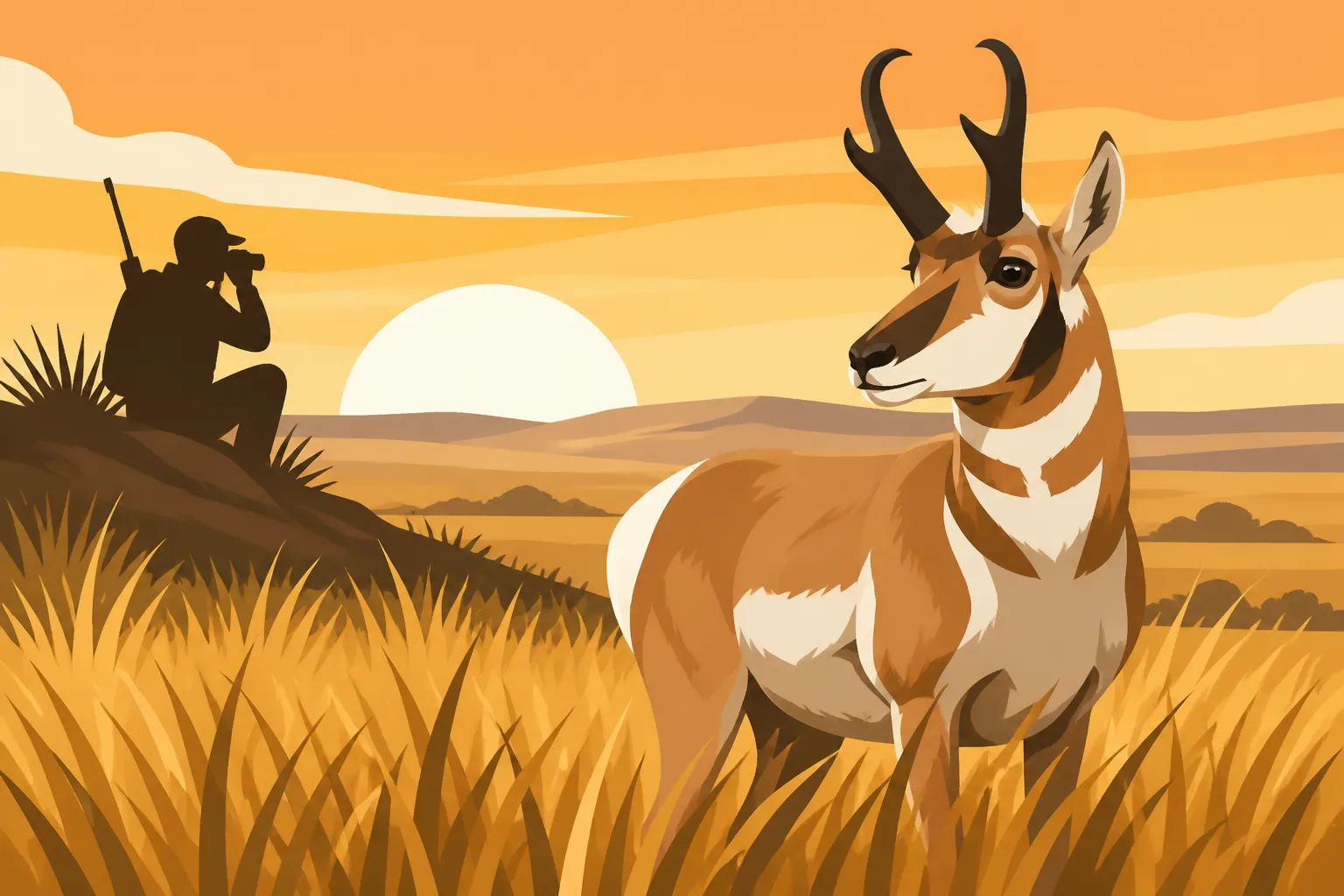
The spot-and-stalk method is, without a doubt, the quintessential pronghorn hunting tactic. It begins with extensive glassing, often from elevated positions that offer miles of panoramic views. Hunters will spend hours, sometimes entire mornings, behind their binoculars or spotting scopes, systematically scanning the landscape for even the smallest flicker of white or a distinct horn profile. Once a target animal is spotted, the real challenge begins: planning and executing an approach across terrain that offers minimal cover. This involves meticulous route planning, using every dip, rise, and natural feature to conceal your movement. Crawling on hands and knees, or even on your belly, for hundreds of yards is not uncommon. Wind direction is paramount; always keep it in your face or quartering to you. The goal is to gradually close the distance, often to within 200-300 yards for rifle hunters, or much closer for archers, before taking a shot. Successfully Stalking Pronghorn Across Open Nebraska Ground demands extreme discipline, patience, and a keen eye for terrain. Any sudden movement, exposure over a ridgeline, or misjudgment of wind can send a herd scattering in seconds.
Effective Decoy Strategies
When the landscape offers absolutely no cover, or when a pronghorn is simply too wary to allow a traditional stalk, decoys can be a game-changer, especially during the rut. Pronghorn, particularly territorial bucks, can be incredibly curious and aggressive towards anything they perceive as a rival or a potential mate. A life-sized buck or doe decoy, or even a smaller silhouette, can draw in a wary animal. The key is presentation and timing. Typically, the hunter positions the decoy in front of them, using it as a shield to advance across open ground. When a buck spots the decoy, its territorial instincts often override its caution, prompting it to come closer to investigate or challenge. For archery hunters, this is often the most effective way to close the final few critical yards. A common tactic involves one hunter holding the decoy while another crawls up behind it. During the peak of the rut, bucks will often approach a decoy head-on, offering a frontal shot opportunity. However, be aware that not all bucks will respond, and some may simply skirt wide or spook. Practice deploying your decoy quickly and silently, and understand how to manage your scent to avoid alerting the animal.
Hunting Water Sources in Hot Weather
In the arid regions of western Nebraska, especially during the early archery season in August when temperatures can soar, water becomes a lifeline for pronghorn. This makes hunting over water sources a highly effective strategy. Stock tanks, windmills, small ponds, and even muddy seeps can concentrate animals, providing a predictable pattern for hunters. Setting up a ground blind at a strategic distance from a water source, downwind and with good concealment, allows archers to wait out the animals. Pronghorn will often come to water multiple times a day, particularly in the mornings and evenings when temperatures are cooler, but also midday during heat waves. The challenge lies in setting up your blind without alerting any animals and being prepared for long waits. You'll need a blind that blends seamlessly into the prairie environment, ideally brushed in with native vegetation. Being hidden and still is paramount. Remember that other animals, like deer or various bird species, will also frequent water sources, so be prepared for distractions. This tactic requires patience, but it can turn into a high-reward situation when done correctly.
Gear and Optics Essentials for Pronghorn Hunting
Hunting pronghorn in Nebraska's expansive landscapes isn't like hunting whitetails in timber. Your gear choices, especially optics and rifles, become critically important for success when visibility is measured in miles.
Rifle and Ammunition Choices for Long Shots
Given the open nature of pronghorn habitat, shots can often be long, extending well beyond typical deer hunting ranges. Therefore, choosing the right rifle and ammunition is paramount. A flat-shooting caliber is highly recommended. Popular choices include the .25-06 Remington, 6.5 Creedmoor, .270 Winchester, and .308 Winchester. These cartridges offer a good balance of velocity, bullet weight, and manageable recoil, making precise shots at extended distances achievable. While magnum calibers certainly provide more punch, they aren't strictly necessary and can lead to increased recoil, which can be detrimental to accuracy for some shooters. The key is accuracy – a rifle that consistently shoots sub-MOA groups is far more valuable than raw power. For ammunition, select a bullet designed for controlled expansion, such as a bonded or partitioned bullet, to ensure good penetration and energy transfer on a relatively small-bodied animal. Practice shooting from various field positions, including prone with a bipod or using shooting sticks, as stable shooting platforms are crucial for Rifle Ranges Realistic in Open Country. Always confirm your rifle's zero at extended ranges (e.g., 200 or 300 yards) before your hunt.
Crucial Optics for Distant Glassing
Optics are arguably your most important tools for pronghorn hunting. Since pronghorn spend their lives scanning the horizon, you need equally powerful eyes to find them first. High-quality binoculars are non-negotiable. Many hunters prefer 10×42 or 12×50 power binoculars for general glassing, offering a wide field of view and sufficient magnification. However, a spotting scope is truly where you gain an edge. A 20-60x or 25-75x spotting scope mounted on a sturdy tripod is essential for picking apart distant landscapes, evaluating bucks, and planning stalks. A good spotting scope allows you to not only locate animals but also to judge horn length and mass from afar, saving you precious time and effort on potentially fruitless stalks. Look for scopes with excellent low-light performance and rugged construction. Brands like Swarovski, Zeiss, Leica, and Vortex offer exceptional clarity and durability. Don't forget a rangefinder; in open country, judging distance by eye is notoriously difficult, and a precise laser rangefinder is vital for making accurate shots. A ballistic rangefinder, like those integrated into some GoHunt mapping systems or specialized devices, can further aid in calculating bullet drop for those long-range opportunities.
Clothing and Footwear for Exposed Terrain
The Nebraska Plains can throw a wide array of weather conditions at you, from scorching hot and dry in August to cold, windy, and even snowy during the firearm season. Layering is key. For early season hunts, lightweight, breathable, moisture-wicking clothing in natural tones or camouflage is essential to combat heat. Long sleeves and pants offer sun protection. As the season progresses, add insulating layers, especially wind-blocking outer shells, which are critical against the relentless prairie winds. Waterproof outerwear is also a good idea. Blaze orange requirements during the firearm season (and often during early archery if it overlaps with a firearm season) mandate a minimum of 400 square inches on the head, chest, and back; ensure your orange gear meets these specifications and doesn't hinder your movement.
For footwear, comfort and durability are paramount. You'll be covering many miles, often over uneven terrain with sand, rocks, and prickly pear cactus. Choose well-broken-in hiking boots with good ankle support and a stiff sole to protect your feet. Waterproof boots are always a wise choice for dew-covered mornings or unexpected rain. Bringing moleskin and extra socks can prevent debilitating blisters. Remember, every piece of gear you carry should be lightweight and functional, as you'll be covering vast distances on foot.
Field Care and Recovery: Ensuring Quality Meat and Trophy
Harvesting a pronghorn is an exciting moment, but the work isn't over. Proper field care is critical, especially given Nebraska's often warm hunting conditions, to ensure the meat is good and any trophy is preserved.
Prompt Field Dressing in Warm Conditions
Pronghorn are small-bodied animals, but they generate a lot of internal heat, and the external temperatures during much of the Nebraska season can be quite warm, especially during the August archery opener. This makes prompt field dressing absolutely essential. As soon as you recover your animal, gut it immediately to allow the carcass to begin cooling. Remove all internal organs, including the windpipe and esophagus if possible, to eliminate heat and potential sources of bacterial contamination. If you're on a multi-day hunt or far from a cooler, consider skinning the animal in the field. The hide acts as an insulator, and removing it allows for much faster cooling. Carry a sharp, reliable field dressing knife and, if you plan to skin, a game bag. These breathable bags protect the meat from flies and dirt while allowing air to circulate. Don't underestimate the importance of this step; rushing it or delaying it can quickly spoil prime cuts of venison.
Cooling and Transporting Your Harvest
After field dressing, the next critical step is to cool the carcass as rapidly as possible. If you're hunting in warmer conditions, this might mean quartering the animal and placing the quarters in game bags directly into coolers filled with ice. Never place unbagged meat directly on ice, as it can become waterlogged. If the weather is cool enough, and you have a game pole or somewhere to hang the carcass in the shade, allowing it to hang for a few hours (or even overnight if temperatures are consistently below 40°F) can further aid in cooling and tenderizing the meat. When transporting your pronghorn, especially if you're traveling a long distance, ensure the meat is well-cooled and protected. Keep it out of direct sunlight in the back of a truck, and cover it with a breathable tarp or blanket. For those long hauls, a well-insulated cooler packed with ice is non-negotiable. Be aware of Recovering an Antelope in Warm Weather specific guidelines if you have to track an animal for a long distance or if temperatures are exceptionally high.
Taxidermy Considerations for Pronghorn
If you've harvested a trophy buck, proper caping is crucial for taxidermy. Most taxidermists prefer a full cape, meaning the hide from behind the shoulders, up the neck, and over the head. If you're unsure how to cape, it's always best to make the standard field dressing cuts, then take the entire animal (or at least the head and shoulders) to a professional taxidermist or butcher as quickly as possible. If you must cape in the field, learn the proper cuts beforehand, including skinning around the eyes, ears, and mouth. The unique horn sheaths of a pronghorn require careful attention; they are shed annually, but the bony core remains attached to the skull. Once caped, flesh out any remaining meat and fat, salt the hide liberally, and roll it up with the salted side in. Freeze it or get it to a taxidermist promptly. Taking a few good field photos of your buck, from various angles, is also a great idea for your memories and to show your taxidermist.
Conservation and Management: Protecting Nebraska's Speed Goats
The presence of pronghorn on the Nebraska Plains is a testament to successful conservation efforts. These iconic animals faced severe declines in the past, and their continued health relies on ongoing management and hunter participation.
Historical Perspective and Reintroduction Efforts
At one point, pronghorn were among the most abundant big game animals in North America, with populations estimated in the tens of millions. However, westward expansion, unregulated hunting, and habitat loss in the 19th and early 20th centuries led to a catastrophic decline, with their numbers dwindling to perhaps as few as 13,000 animals across their entire range by the 1920s. Nebraska’s pronghorn population suffered similarly. Thankfully, enlightened conservation policies, funded largely by hunters through excise taxes on firearms and ammunition (Pittman-Robertson Act), led to comprehensive reintroduction and management programs. Through trapping and relocating animals from healthier populations in states like Wyoming and Montana, pronghorn were successfully re-established in suitable Nebraska habitats, primarily in the Panhandle. This remarkable comeback story highlights the vital role that wildlife agencies and hunters play in restoring and maintaining healthy populations of game species. Understanding this history gives a deeper appreciation for every pronghorn seen and harvested today.
Modern Management Challenges
While pronghorn populations in Nebraska are generally stable and healthy, modern management faces its own set of challenges. Habitat fragmentation due to agricultural expansion, energy development, and fencing can disrupt traditional pronghorn movement patterns, particularly their tendency to crawl under rather than jump over fences. Severe winter weather, especially prolonged periods of deep snow and extreme cold, can sometimes lead to localized winter mortality, especially in the more exposed areas of their range. Disease outbreaks, though less common than in some other species, are always a concern. The Nebraska Game and Parks Commission continually monitors these factors, using aerial surveys, ground counts, and hunter harvest data to inform permit quotas and management decisions. They aim to balance hunting opportunities with maintaining a healthy, sustainable population, recognizing the unique ecological role pronghorn play in prairie ecosystems. This ongoing effort is crucial for the long-term viability of pronghorn hunting in the state.
Hunter's Role in Pronghorn Conservation
Hunters are, and always have been, the frontline of wildlife conservation. By purchasing hunting licenses and permits, and through the excise taxes on hunting equipment, hunters directly fund the research, habitat improvement, law enforcement, and management programs that benefit pronghorn and countless other species. Beyond financial contributions, ethical hunting practices are paramount. This includes adhering strictly to all regulations, accurately reporting harvests, and making every effort to recover wounded animals. Respect for the land, whether public or private, and for landowners, helps ensure continued access and positive perceptions of hunting. Furthermore, hunters often act as citizen scientists, reporting unusual observations or concerns to wildlife agencies, providing valuable real-time data from the field. Each hunter who pursues a pronghorn in Nebraska is part of this legacy, contributing to the health and future of these magnificent "speed goats." By understanding the species, respecting the land, and following ethical practices, we ensure that the thrill of the chase across the open plains continues for generations to come.
Disclaimer
The information provided in this guide is for general informational purposes only. Hunting regulations, seasons, and permit requirements are subject to change. It is the responsibility of every hunter to consult the most current Nebraska Game and Parks Commission regulations and guidelines before planning or engaging in any hunting activities. Always prioritize safety, ethical hunting practices, and respect for wildlife and landowners.