Why Nebraska’s Rifle Season Runs Nine Days
That brisk November air in Nebraska carries a unique kind of excitement, a palpable tension among deer hunters. For many, the annual firearm deer season is the culmination of months of scouting, planning, and anticipation. But if you've ever felt that rush, you've probably also wondered, "Why is it only nine days?" It feels so short, so fleeting, especially when you compare it to other states. This guide is going to peel back the layers of that question, diving deep into the historical, biological, and practical reasons behind Nebraska's unique nine-day rifle season, and how understanding it can actually make you a more effective hunter.
The Historical Roots and Evolution of Nebraska's Firearm Deer Season
It’s easy to look at the current regulations and think they were just pulled out of a hat, but Nebraska’s firearm deer season, particularly its nine-day duration, is the result of decades of careful planning, observation, and adaptation. It’s a fascinating journey that reflects both the recovery of deer populations and the evolving needs of hunters and landowners across the state.
A Look Back at Early Deer Management
Nebraska wasn't always teeming with deer. In fact, by the early 20th century, deer populations were critically low, almost nonexistent in many areas due to unregulated hunting and habitat loss. It took significant conservation efforts, including reintroduction programs and strict protections, to bring deer back from the brink. As populations began to rebound in the mid-20th century, the state needed to implement controlled hunting seasons to manage these growing herds. Initially, seasons might have been very short or highly restricted to specific areas, primarily focused on allowing a limited harvest of bucks while does were protected to foster growth.
Over time, as deer numbers swelled to healthier levels, particularly whitetails in the eastern river bottoms and mule deer in the Sandhills and Pine Ridge, the Nebraska Game and Parks Commission (NGPC) began to refine its management strategies. The goal was twofold: to provide recreational hunting opportunities for a growing number of eager hunters and to prevent overpopulation, which can lead to habitat degradation, increased deer-vehicle collisions, and crop damage for farmers. The format and length of the firearm season became a critical tool in this balancing act. Early seasons were experimental, but a pattern began to emerge that sought to concentrate hunting pressure. This wasn't just about deer; it was also about managing hunter expectations and experiences.
Why Nine Days Became the Standard
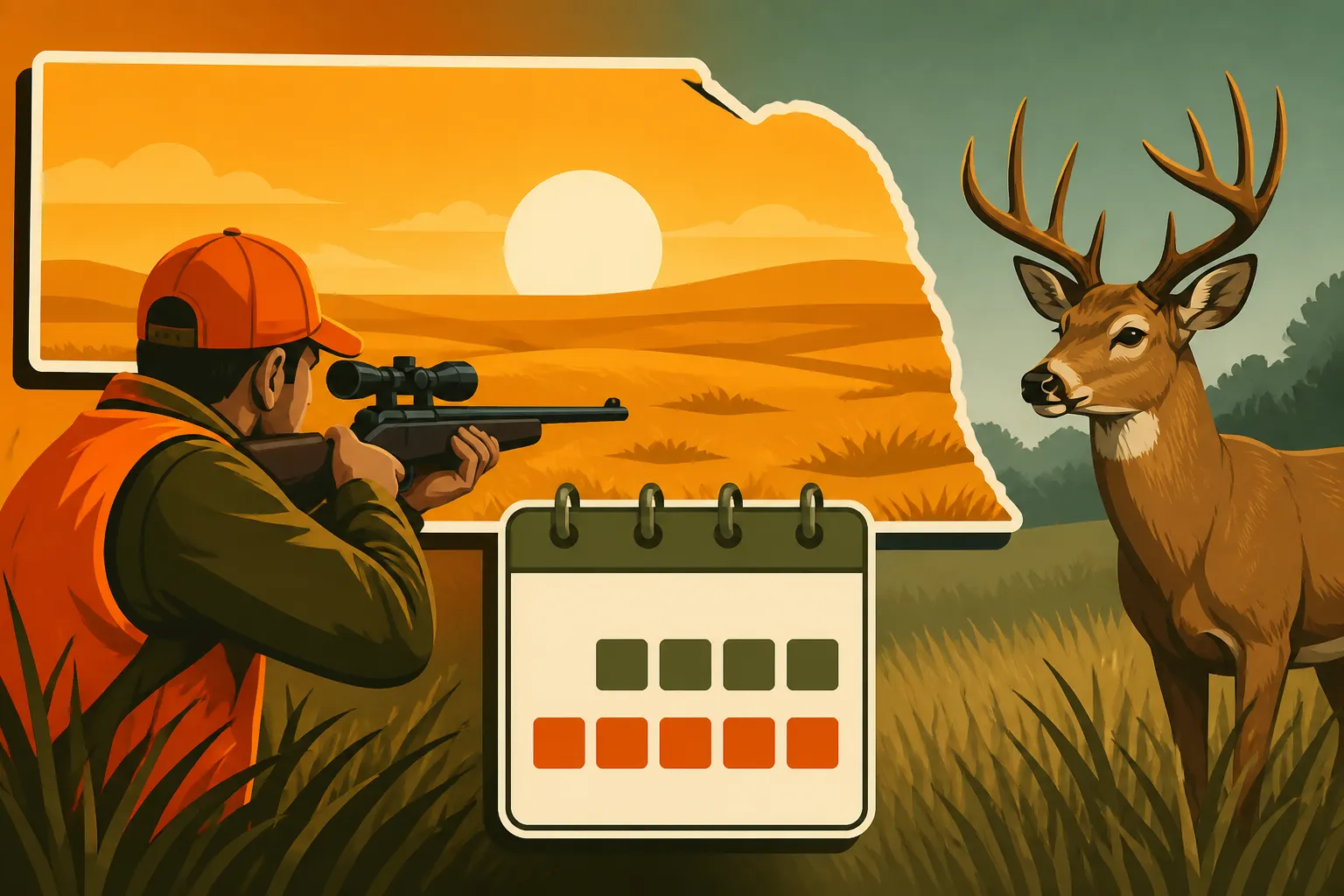
The decision to standardize the firearm season at nine days, typically starting the second Saturday in November, wasn't arbitrary. It's a calculated period designed to hit a sweet spot for both deer management and hunter success. One of the primary drivers is the desire to achieve a significant harvest in a concentrated timeframe. A shorter, more intense season means that hunters are out in force during a specific window, which allows the NGPC to more accurately predict and manage harvest numbers. It's a more efficient way to meet population control objectives, especially for antlerless deer, which are crucial for herd health. You can find more details on how these seasons are set in resources like How Nebraska's Nine-Day Firearm Season Is Set.
Another crucial factor, often overlooked by those who don't live in a predominantly agricultural state like Nebraska, is landowner relations. Farmers and ranchers, who own the vast majority of deer habitat, need to go about their daily operations. A month-long rifle season, for example, could be a constant source of disruption, leading to more "no hunting" signs. By concentrating the rifle season into a single, relatively short week and two weekends, the NGPC minimizes the impact on private land, which helps foster better relationships between landowners and hunters. It’s a compromise that ensures access and maintains goodwill, which is vital in a state where private land dominates. The nine-day structure essentially creates a "controlled chaos" that maximizes harvest efficiency while minimizing long-term social friction.
Balancing Hunter Opportunity with Deer Population Health
The nine-day firearm season is a fine-tuned instrument in Nebraska's deer management orchestra. It aims to strike a delicate balance between offering meaningful hunting opportunities and ensuring the long-term health and vitality of the state's deer herds. This balance is critical, especially when considering the diverse habitats and varying deer populations across different units.
Meeting Harvest Objectives Efficiently
The Nebraska Game and Parks Commission has specific population goals for each deer management unit across the state. In some areas, particularly in agricultural regions, the goal might be to reduce deer numbers to mitigate crop damage. In other areas, the focus might be on maintaining a stable population. The concentrated nine-day firearm season is incredibly effective at achieving these harvest objectives. With a high number of hunters in the field for a relatively short, intense period, a significant portion of the annual deer harvest can be achieved quickly. This includes the crucial antlerless harvest, which is vital for managing herd size and keeping populations within ecological carrying capacity.
Consider the typical scenario: opening weekend sees a huge influx of hunters. This initial push can account for a substantial percentage of the overall harvest. The following weekdays might see slightly less pressure, but dedicated hunters are still out there. Then, the final weekend brings another surge. This concentrated effort means that deer don't have months to adapt to constant pressure from rifle hunters, which can make them more predictable for a short window. This efficiency helps the NGPC analyze harvest data quickly and make informed decisions for future seasons. For those looking to maximize their opportunities, especially for does, understanding Nebraska's Extra Antlerless Opportunities is key, as these often run concurrently or extend beyond the main rifle season. Tools like GoHunt can be particularly useful here, allowing hunters to analyze harvest data by unit and understand where population management is a priority, guiding their permit choices.
Minimizing Impact on Mature Buck Age Structures
One of the common concerns among hunters is the potential for a long firearm season to "burn out" the mature buck population, leaving fewer older, larger-antlered deer. While a shorter season certainly concentrates pressure, the nine-day model in Nebraska is also designed to offer a balance. By limiting the total number of days, the theory is that some mature bucks, especially those that quickly adapt to hunter pressure, have a better chance of surviving the season. It’s a strategic choice that aims to prevent a sustained, high-pressure environment that could disproportionately impact the older age classes of bucks.
The NGPC closely monitors Nebraska Whitetail Population Trends and mule deer populations, looking at factors like age structure, buck-to-doe ratios, and harvest data to ensure their seasons are sustainable. While some might argue for even shorter or more restrictive seasons to protect trophy animals, the nine-day season is a practical compromise that provides broad hunter access while still aiming to maintain a healthy and diverse age structure within the deer herd. The idea is to provide enough opportunity for hunters to fill their tags, including a reasonable chance at a mature buck, without unduly depleting the breeding stock or eliminating the chance for younger bucks to grow into older, more impressive animals. This approach helps ensure that Nebraska continues to offer quality hunting experiences year after year.
Navigating the Nine-Day Challenge: Strategies for Success
That nine-day window, while brief, is packed with potential. It's a sprint, not a marathon, and understanding its unique dynamics can dramatically increase your chances of success. Hunters who adapt their strategies to this condensed timeframe often find themselves tagging out, while those who treat it like a leisurely, drawn-out affair might go home empty-handed.
The Intensity of a Condensed Season
When the firearm season kicks off, especially on that first Saturday, Nebraska's public lands and accessible private ground light up with activity. This intense pressure means deer quickly become wary. They'll shift their patterns, moving from open fields to thicker cover, often becoming nocturnal or moving only during the darkest hours. If you're hunting public land, you'll feel this intensity. Parking areas are full, and you're likely to encounter other hunters. This isn't necessarily a bad thing, as other hunters can move deer, but it means you need to be prepared for competition and adjust your expectations.
Successful hunters understand that their initial plans might need to change rapidly. Scouting Nebraska Public Ground Before Opening Day is absolutely crucial, but you also need to be ready to pivot based on real-time observations of deer movement and hunter pressure. Don't be afraid to walk further, explore overlooked pockets of cover, or hunt during non-traditional hours within the legal shooting light. Tools like GoHunt can be invaluable here; their mapping features and unit information can help you identify less-pressured areas or potential travel corridors that deer might use to escape the crowds. By knowing the terrain and having backup spots, you can make the most of those precious nine days.
Adapting Your Strategy to the November Rut
The timing of Nebraska's nine-day firearm season is no accident; it usually falls right in the heart of the whitetail rut. This can be both a blessing and a curse. On one hand, bucks are actively seeking does, often letting their guard down and moving more frequently during daylight hours. This increases your chances of encountering a mature buck that might otherwise be nocturnal. For many hunters, this is the prime time, and knowing When the Whitetail Rut Peaks in Nebraska is a huge advantage. On the other hand, heavy hunter pressure can quickly push even rut-crazed bucks into dense cover.
Your strategy during the nine-day season needs to factor in both the rut and the concentrated hunter presence. Still-hunting through thick timber, especially during midday when other hunters might be back at camp, can be very effective. Utilizing rattling and grunting calls can also be productive, as bucks are responsive to signs of competition. If you have access to private land or less-pressured public ground, sitting on known travel corridors between bedding and feeding areas, or staging areas near doe groups, can pay off. For those hunting smaller timber blocks, organizing Deer Drives on Small Nebraska Timber with a few trusted partners can push deer out of hiding. Again, GoHunt can provide detailed topographical maps and land ownership overlays, helping you pinpoint these key areas and plan your movements efficiently during this critical time.
Considerations Beyond the Hunt: Rules and Respect
Hunting responsibly during Nebraska's firearm season means more than just knowing where to aim. It involves a deep understanding of the rules and regulations, but just as importantly, a commitment to ethical conduct and respect for the land, wildlife, and fellow hunters. In a condensed season with high hunter numbers, these considerations become paramount.
Essential Rules for the Firearm Season
Nebraska, like all states, has clear regulations designed to ensure safety, fairness, and responsible wildlife management. For firearm deer season, understanding blaze orange requirements is non-negotiable. While archery hunters during certain periods might have different rules, during the general firearm season, all deer hunters (and anyone accompanying them) must wear at least 400 square inches of blaze orange on their head, chest, and back. This is for your safety and the safety of everyone else in the field. You can learn more about specific requirements in posts like Orange Requirements for Archers in November.
Another critical aspect is adhering to Nebraska Legal Shooting Hours. Hunting is only permitted from 30 minutes before sunrise to 30 minutes after sunset. Tempting as it might be to try and extend your hunt in low light, especially when that big buck is just out of range, it's illegal and unsafe. Knowing and following these precise times is fundamental to ethical hunting. Furthermore, understanding the legal firearms for deer, ammunition restrictions (like straight-wall cartridges in certain areas), and proper tagging procedures immediately after a harvest are all essential. Ignorance of the law is never an excuse.
Respecting Landowners and Fellow Hunters
Nebraska is predominantly private land, and much of the state's deer hunting success hinges on the goodwill of landowners. It is your responsibility to know and respect Nebraska's Posted-Land and Trespass Rules. Always obtain clear, explicit permission before hunting on private property, and make sure you understand the landowner's specific wishes. Leaving gates as you found them, avoiding unnecessary driving on wet fields, and picking up your trash are small but significant actions that build trust and ensure future access for everyone.
Even on public land, where you have the right to hunt, courtesy and respect for fellow hunters go a long way. This includes giving other hunters space, especially if you see them setting up, and not "sky-busting" (shooting at birds or other non-game animals when walking into your deer stand). Communicate clearly if you are hunting in an area with others. Remember that the woods are big enough for everyone, and fostering a positive hunting community benefits us all. The nine-day season can feel crowded, but a collective commitment to safety and respect ensures a better experience for everyone.
| Aspect | Nebraska 9-Day Season | Typical Longer Rifle Seasons (e.g., 20+ days) |
|---|---|---|
| Hunter Pressure | High intensity, concentrated | More spread out, but prolonged |
| Deer Response | Rapid adaptation, shift to nocturnal/thick cover | Slower adaptation, but sustained wariness |
| Harvest Efficiency | High, effective for meeting quotas | Can be harder to predict overall harvest |
| Landowner Impact | Minimized disruption to agricultural ops | Can lead to more landowner friction |
| Rut Overlap | Often coincides with peak rut (Nov) | May encompass early, peak, and post-rut |
| Buck Age Structure | Aims to balance harvest and survival | Risk of higher mature buck harvest over time |
| Hunter Planning | Requires meticulous pre-season prep | Allows for more flexibility and multiple trips |
| Economic Impact | Concentrated boost during the season | More prolonged, smaller daily economic impact |
Disclaimer
Always check the most current Nebraska Game and Parks Commission regulations before planning and embarking on any hunting trip, as rules and dates can change. This guide is for informational purposes only and does not supersede official state regulations.