Late-Season Roosters and Longer Flushes
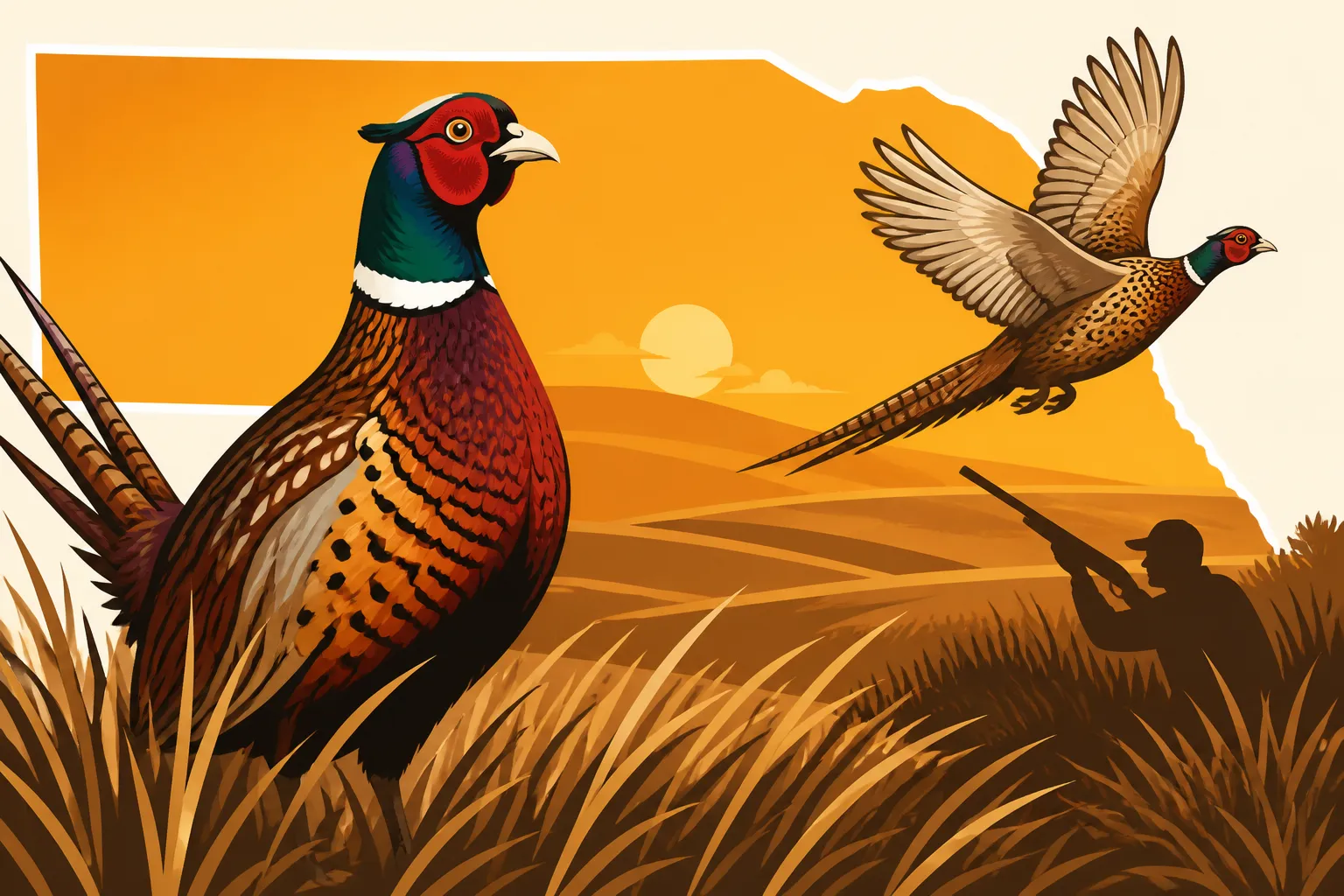
You know that feeling when you're walking through what looks like perfect pheasant cover in late December or January, expecting a rooster to burst out at your feet, only for him to flush 50 yards out, a tiny speck against the cold, gray sky? It’s incredibly frustrating, and it's a common struggle for hunters. Those late-season roosters are a different breed entirely, honed by weeks of pressure and bitter cold. They're wiser, wilier, and much more prone to those "longer flushes" that leave you shaking your head. This comprehensive guide is here to help you understand why these birds are so tough and, more importantly, how to adapt your strategies, gear, and mindset to tag a few more of those magnificent long-tailed birds before the season closes.
The Late-Season Rooster's Survival Playbook
By the time the calendar flips to late fall and winter, Nebraska's pheasants, particularly the roosters, have been through the wringer. They've dodged hunters, outsmarted dogs, and survived some pretty brutal weather. This isn't the same bird you chased on opening weekend. Understanding their evolved survival tactics is the first step toward putting more birds in the bag.
Adapting to Pressure: The Educated Flush
After weeks, or even months, of relentless hunting pressure, these roosters become incredibly savvy. They’ve learned that a human figure, especially one accompanied by a barking dog, usually means trouble. They've heard countless shotgun blasts and witnessed their brethren fall, so their natural instinct to flee is amplified. This means they're no longer content to hold tight and hope you walk past them; instead, they're looking for the earliest possible escape route.
This "educated flush" manifests in several ways. You'll often find birds running far ahead of you, using the thick cover to their advantage, only to flush well out of shotgun range. They might pop up over a small rise, giving you only a fleeting glimpse, or burst from the far edge of a field, using the open ground to put distance between themselves and danger. Their heightened wariness is a direct result of surviving multiple encounters, making them some of the smartest, toughest game birds you’ll ever pursue. It's a humbling experience to watch them outmaneuver you time and again, but it also makes finally connecting with one all the more rewarding.
They've also learned the rhythm of hunting pressure. They know when the sun comes up, when hunters typically arrive, and which fields get walked most often. This means they might shift their feeding and roosting patterns to less disturbed times or areas. This adaptability is what makes late-season hunting such a challenge, requiring hunters to think like a pheasant and anticipate their moves rather than simply relying on flushing them from obvious cover. The birds you're after now are the PhDs of the pheasant world, and they demand a higher level of strategic thinking.
Covert Operations: Where Roosters Hide Now
As winter truly sets in, the natural landscape changes dramatically, and so do the pheasant's preferred hiding spots. Early season often finds birds in standing crops, grassy field edges, or sparse CRP. But once the corn is cut and the milo stalks are bare, these areas offer little protection from predators or the biting Nebraska wind. The smart roosters gravitate towards the densest, most impenetrable cover they can find. If you’re still focusing on thin cover, you’re likely walking past the birds.
Think cattail sloughs, especially those with standing water or ice, which offer insulation and camouflage. Dense cedar thickets, brush piles, drainage ditches choked with thorny brambles, and even heavy shelterbelts become prime real estate. These areas not only provide excellent thermal cover against the freezing temperatures but also create a physical barrier against dogs and hunters. A bird can run and weave through this thick stuff with incredible speed, often putting enough distance between itself and a dog to gain a significant head start before flushing. Learning to identify these hardcore hideouts is critical; if it looks like a place you wouldn't want to walk through, that's probably where the roosters are. You can learn more about Hunting Cattail Sloughs Late in the Season to fine-tune your approach for these tricky spots.
Furthermore, they'll often be found in cover that offers a clear escape route, ideally into even thicker habitat or over a terrain feature that breaks the line of sight. They're not just looking for a place to hide, but a place to launch their escape from. This means a slough that bottlenecks into a cedar draw, or a thick shelterbelt adjacent to a large, unhuntable property, will be much more attractive than a patch of thick grass in the middle of an open field. Pay close attention to these transitions and edges, as they reveal the late-season rooster's calculated strategy for survival.
The Art of the Escape: Running and Flying Smart
Late-season roosters are Olympic-level runners. Their primary defense mechanism, especially in relatively open country, is to hit the ground running the moment they detect a threat. They understand that a long flush gives a hunter less time to react and shoot accurately. They will often run hundreds of yards through heavy cover, using every available dip, rise, and patch of vegetation to stay out of sight, before finally taking to the air. This running strategy is particularly effective in large fields where they can maintain a safe distance from hunters and dogs.
When they do decide to fly, it's often a calculated move. They'll wait until they are just on the edge of effective shotgun range, or even slightly beyond it, before flushing. This isn't accidental; it's a learned behavior. They might flush into the wind to gain speed quickly, or over a ridge where they immediately disappear from view, using the terrain to their advantage. A common tactic is flushing from the far side of a fence line or creek bottom, creating an additional obstacle and distance for the hunter. This makes Reading a Cedar Draw for Deer Movement and applying similar principles to pheasants crucial, as they use terrain in a remarkably similar way to avoid detection.
The challenge for hunters is to disrupt this escape plan. This requires understanding their likely running routes and anticipated flush points. Anticipating where they will break cover, or where they will feel safe enough to finally flush, is the key to getting a shot within range. It demands a level of observational skill and strategic thinking that goes beyond simply walking a field. You need to read the landscape, the wind, and the bird's likely reaction to your presence to stand a chance against these cunning late-season survivors.
Strategic Hunting Approaches for Wary Birds
Hunting late-season roosters demands a significant shift in tactics compared to the early weeks. The casual walk-and-flush approach of October just won't cut it anymore. You need to become more strategic, more patient, and often, more collaborative.
Unleashing the Right Dog Power
A good bird dog is always an asset, but in the late season, a great bird dog is absolutely indispensable. Those long flushes often occur because the birds are running far ahead of the hunters, and without a dog that can pinpoint their exact location, you're at a distinct disadvantage. For late-season roosters, you want a dog with experience, tenacity, and a powerful nose. These birds are holding tight in incredibly dense cover, and it takes a dog that's willing to bust through thick cattails or heavy brush to get them airborne.
A strong, wide-ranging pointer or an aggressive flusher can make all the difference. A pointer that can lock up on a bird at 40 yards, allowing you to move in and get into position, can turn a potential run into a solid shot opportunity. Flushers that work close and methodically can ensure that a running bird is pushed hard enough to fly, rather than slipping out the back of the cover. Beyond their ability to locate birds, a well-conditioned dog can also handle the colder temperatures and demanding terrain, staying effective for longer periods. Remember, even the best dog needs to be warmed up to the task; those initial flushes might still be long until the dog gets scent and learns the birds' patterns for the day. For those without canine companions, you can still find success by understanding Hunting a Pheasant Field Without a Dog, but it requires even more strategic thinking.
It's also crucial to remember that scenting conditions can be tougher in the late season due to colder, drier air or snow cover. A dog's nose might not be as effective as it is in warmer, moister conditions. This means your dog needs to be working smarter and harder, methodically covering ground and trusting their instincts. Conditioning is key; a dog that tires quickly won't be able to keep up with running roosters in heavy cover. Regular exercise and a good diet are essential to keep your partner in top form for these challenging late-season hunts.
Master the Block and Drive Tactics
Trying to walk a large field with just one or two hunters in the late season often results in birds running out the ends, never offering a shot. This is where strategic blocking and driving become paramount. This tactic involves positioning "blockers" at the far end of a field or cover strip, while "drivers" walk through, pushing the birds towards them. The key is to anticipate the birds' escape routes and funnel them into an area where your blockers are waiting. You can find more specific advice on Blocking the End of a Nebraska Field.
For this to be effective, communication is vital. Everyone needs to know their role and maintain their position. The blockers must remain still and quiet, often concealed in dense cover or behind a natural barrier, ready to raise their gun when a rooster flushes their way. The drivers need to move slowly and methodically, covering the ground thoroughly, particularly in the thickest areas where birds are most likely to hold or run. Sometimes, even adding a third person to walk the sides of the cover can help prevent birds from slipping out the edges. The goal is to create a "wall" of hunters that the birds cannot easily penetrate or outrun.
Consider the terrain and wind direction when planning your drive. Birds often prefer to flush into the wind, as it aids their takeoff. If you can drive them crosswind or slightly downwind towards your blockers, you might get better flushing behavior. Similarly, look for natural funnels – a narrow strip of cover between two open fields, a point of a cattail slough that extends into a field, or a drainage ditch that ends at a road. These features can help concentrate birds, making the drive more efficient and increasing the chances of a successful flush within range. The patience required to set up these drives and execute them properly is well worth the effort when a flurry of roosters erupts at the end.
Slow and Steady Wins the Rooster
Gone are the days of quickly striding through the field. Late-season roosters demand a much slower, more deliberate approach. Speed walking will only push birds further ahead, ensuring those frustrating long flushes. Instead, you need to walk at a snail's pace, pausing frequently, and even taking a step or two backward occasionally. This erratic movement can sometimes make a running rooster hold tight, thinking the threat has passed or that it has effectively hidden itself.
When you're working particularly dense cover, every step needs to be intentional. Kick at brush piles, stomp through thick grass, and make noise. This aggressive approach helps to dislodge birds that are determined to sit tight. Sometimes, a well-placed kick into a seemingly empty bush will send a rooster rocketing skyward. It’s also important to watch for subtle signs of a running bird – rustling grass, a quick flash of color, or your dog's sudden change in body language. These small clues can give you precious seconds to anticipate a flush and prepare for a shot. For particularly heavy cover, you might even consider Working a Cattail Slough in January with this slow and methodical approach.
This slow approach also gives your dog more time to work the scent and pinpoint birds, especially in challenging conditions. Don't rush your dog; let them do their job. If your dog gets birdy, slow down even more, or even stop and encourage them to work that specific area. Often, a rooster that has been running will finally hold if the pressure is maintained but not overwhelming. It's a game of psychological warfare with these birds, and patience is your most potent weapon. Remember, it's better to walk a smaller area thoroughly and slowly than to cover a vast amount of ground quickly and flush nothing within range.
Equipping Yourself for Longer Shots and Colder Weather
Late-season pheasant hunting isn't just about changing your strategy; it's also about adjusting your gear. Those longer flushes demand different ballistic considerations, and the bitter Nebraska winter requires appropriate clothing to keep you comfortable and effective in the field.
Shotgun and Choke Selection for Range
When roosters are flushing at 40 yards and beyond, your early-season open chokes and light loads just aren't going to cut it. This is the time to reach for a shotgun that can deliver a dense pattern with enough power to anchor a tough bird at extended range. While a 12-gauge is certainly the most popular choice for its versatility and payload, a 10-gauge can also be an excellent option for those who prioritize maximum power and pattern density for those truly distant shots. The extra punch of a larger gauge often means more pellets and more energy downrange.
Crucially, you'll want to tighten up your choke selection significantly. Forget improved cylinder or modified; now is the time for improved modified, full, or even extra full chokes. These tighter constrictions help keep your shot pattern dense and effective at those longer ranges, minimizing gaps that a flying rooster could slip through. While it means a slightly smaller margin for error on closer birds, the reality is that close flushes are rare in the late season. It's about optimizing for the most common scenario: a distant bird. Test your shotgun with various chokes and ammunition combinations on a patterning board to see what performs best at 40-50 yards. This will give you confidence in your setup when that big rooster finally takes flight.
Another consideration is barrel length. While shorter barrels are handier in thick cover, a slightly longer barrel (say, 28 or 30 inches) can sometimes provide a smoother swing and a longer sight plane, which can be beneficial for those longer, more challenging shots. Ultimately, the best shotgun is one you are comfortable and proficient with, but pairing it with the right choke for the situation is paramount for late-season success.
Ammunition: The Key to Knockdown Power
Just like your choke, your ammunition choice needs an upgrade for late-season roosters. Small shot sizes like 7.5s or even 6s that work well for early-season birds simply lack the kinetic energy and mass to consistently bring down a big, tough rooster at longer ranges. You need heavier loads and larger shot to ensure clean kills. For lead shot (where legal), stepping up to 5s or even 4s is advisable. These larger pellets retain more energy and penetrate better through the rooster's thick winter plumage. For Shot Sizes for Late-Season Nebraska Roosters, it's often a balance between pattern density and individual pellet energy.
If you're hunting on public land or specific areas in Nebraska where non-toxic shot is required, your choices will be steel, bismuth, or tungsten alloys. Steel shot, being lighter than lead, requires you to go up another size or two to achieve similar energy levels. So, if you'd use lead 5s, you might consider steel 3s or even 2s for late-season birds. Bismuth and tungsten alloys are denser and perform more like lead, but they come at a higher cost. Regardless of the material, opt for heavier loads – 1 ¼ ounce, 1 3/8 ounce, or even 1 ½ ounce magnum loads – to get the most pellets downrange with sufficient velocity.
Understanding your ammunition's capabilities and limitations is crucial. Pattern your chosen load and choke combination. Pay attention to pellet count within a 30-inch circle at your anticipated shooting distances. You want at least 100-120 pellets in that circle at 40 yards for a reliable pattern. This knowledge, combined with practice, will give you the confidence to take those longer shots that late-season roosters so often demand.
Here's a quick guide for late-season pheasant load considerations:
| Shot Material | Recommended Shot Size (Lead Equivalent) | Choke Recommendation | Load Weight (12-Gauge) | Notes |
|---|---|---|---|---|
| Lead | #5, #4 | Full, Improved Mod. | 1 1/4 oz – 1 3/8 oz | Best penetration and energy; check local regulations for legality. |
| Steel | #3, #2 | Improved Mod., Full | 1 1/4 oz – 1 1/2 oz | Requires larger size due to lighter weight; common on public lands. |
| Bismuth | #5, #4 | Full, Improved Mod. | 1 1/4 oz – 1 3/8 oz | Similar performance to lead, less dense than tungsten, good alternative. |
| Tungsten | #6, #5 | Improved Mod., Full | 1 1/8 oz – 1 1/4 oz | Very dense, excellent performance; often expensive, smaller sizes perform well. |
Dressing for Success in Nebraska's Winter
Nebraska winters are no joke. Freezing temperatures, biting winds, and potential snow mean that staying warm is not just about comfort, but about safety and effectiveness. You won't be able to swing your shotgun smoothly or focus on flushing birds if you're shivering uncontrollably. Layering is your best friend in these conditions. Start with a moisture-wicking base layer to pull sweat away from your body, preventing that clammy, cold feeling. A mid-layer of fleece or wool provides insulation. Your outer layer should be windproof and water-resistant, protecting you from the elements.
Don't forget the extremities. A warm hat that covers your ears is essential, as a significant amount of body heat is lost through the head. Insulated, waterproof gloves or mittens are crucial for keeping your hands warm, but they need to allow for dexterity to operate your shotgun safely. High-quality, insulated, waterproof boots are non-negotiable, especially when you might be slogging through snow or frozen marsh edges. Consider wool socks to further enhance warmth and moisture management. You can also refer to advice on Boots for Walking Milo Stubble as those same footwear principles apply to all late-season walking.
Finally, remember blaze orange requirements. Even in the late season, during firearm deer seasons, specific orange rules apply to pheasant hunters. Ensure you have at least 400 square inches of blaze orange visible on your head, chest, and back. This high visibility is critical for safety, especially when hunting with a group or in areas where other hunters might be present. Check the Nebraska Game and Parks regulations carefully to ensure compliance. Being properly dressed means you can focus on the hunt, not on fighting off the cold.
Unlocking Untouched Pheasant Havens
By late season, many of the easily accessible, popular spots have been hammered. The key to finding success often lies in seeking out those overlooked areas or utilizing tools to identify new opportunities. Don't be afraid to put in the legwork to find where the birds are hiding.
Digging Deeper on Public Access Lands
It's tempting to hit the same few public spots you know well, but by December and January, those areas have likely seen a lot of pressure. Instead of giving up on public ground, try to think differently. Look for larger Wildlife Management Areas (WMAs) or extensive Open Fields and Waters (OFW) tracts that require a bit more effort to access. The further you're willing to walk from the parking area, the better your chances are of finding less pressured birds. Most hunters stick close to their vehicles, so those interior pockets of cover often hold overlooked roosters. When planning your outings, consider checking out Hunting Open Fields and Waters Tracts for Pheasants for insights into these valuable access points.
Study the maps of these larger tracts. Look for areas that are difficult to reach – perhaps a long walk across a stubble field to get to a dense cattail slough in the back corner, or a large block of CRP surrounded by thorny brush. These "honey holes" often require navigating tricky terrain, but the reward can be significant. Don't shy away from areas with dense, forbidding cover like osage orange thickets or heavy plum bushes; these are precisely the places pressured birds will seek refuge. They know hunters generally prefer easier walking.
Another tactic is to hunt these areas during the week, rather than on weekends. Weekday pressure is significantly lower, giving the birds a chance to settle back into a more predictable pattern. Furthermore, consider hunting right after a fresh snowfall. While it makes walking tougher, it often concentrates birds into specific thermal cover, and their tracks become visible, giving you clues to their presence and movement. Be prepared for a tougher walk, but also for potentially unpressured birds.
Scouting Smart for Hidden Gems
Successful late-season hunting often starts before you even step foot in the field. Remote scouting, combined with on-the-ground observation, is critical for identifying those hidden gems where roosters might be holding. This means spending time with maps, both traditional topographical maps and modern satellite imagery. Look for convergence points of different cover types, such as where a food plot meets a cedar tree line, or where a river bottom transitions into a dense shelterbelt. These transition zones are often travel corridors and holding areas for pheasants.
Identify areas with strong thermal cover that are adjacent to food sources. Roosters will spend their nights roosting in thick, protective cover and then move to nearby food sources to feed during the day, especially on sunny slopes that offer some warmth. Standing corn that hasn't been harvested, a milo field with some remaining grain, or even patches of weeds that still hold seeds can be magnets for birds in the deep winter. A key is to locate areas that offer both food and extremely dense cover, often with an escape route nearby. You can get more information about Scouting Nebraska Public Ground Before Opening Day which applies to pheasant hunting as well.
Don't overlook small, isolated patches of cover that others might miss. A forgotten corner of a field with a thick patch of weeds, an old farmstead with overgrown hedges, or even a deep, brushy ditch that nobody bothers to walk can hold a surprising number of birds. These small, seemingly insignificant areas offer just enough protection for a few roosters to evade detection. The key is thoroughness and a willingness to explore areas that might not look like classic pheasant habitat at first glance.
Harnessing Technology for Tactical Advantage
In today's hunting world, technology can be a powerful ally, especially when trying to find those elusive late-season roosters. Mapping applications and scouting platforms have revolutionized how we approach hunting. A powerful tool like GoHunt, for example, allows you to scrutinize detailed satellite imagery from your couch, identifying potential pheasant habitat long before you drive out to the field. You can mark dense cover, map out potential walking routes, and even identify access points and property boundaries to ensure you're always on legal ground.
Using a platform like GoHunt to analyze land ownership, terrain features, and different habitat types can give you a significant edge. You can pinpoint those hard-to-reach pockets of cover in larger WMAs or OFWs, areas that other hunters might simply skip over because they look too challenging on a paper map. The ability to overlay different map layers – such as CRP fields, wetlands, or wooded areas – helps paint a complete picture of the landscape and where pheasants are most likely to concentrate. It's like having a bird's-eye view, allowing you to formulate a precise plan of attack.
Furthermore, these apps often work offline, which is critical in rural Nebraska where cell service can be spotty at best. You can download maps for your target areas before you leave home, ensuring you always know where you are and where you're going, even deep in a remote draw. You can track your movements, mark flushes, and identify areas that held birds, building a database of information for future hunts. In the late season, when every advantage counts, leveraging tools like GoHunt can significantly increase your odds of breaking the code of those wary, long-flushing roosters.
Disclaimer
Hunting is an inherently dangerous activity. Always prioritize safety, understand and follow all Nebraska Game and Parks Commission regulations, and obtain proper landowner permission before hunting on private land. This guide is for informational purposes only and does not substitute for thorough research or professional instruction. Be sure to carry a first aid kit and inform others of your hunting plans and location.