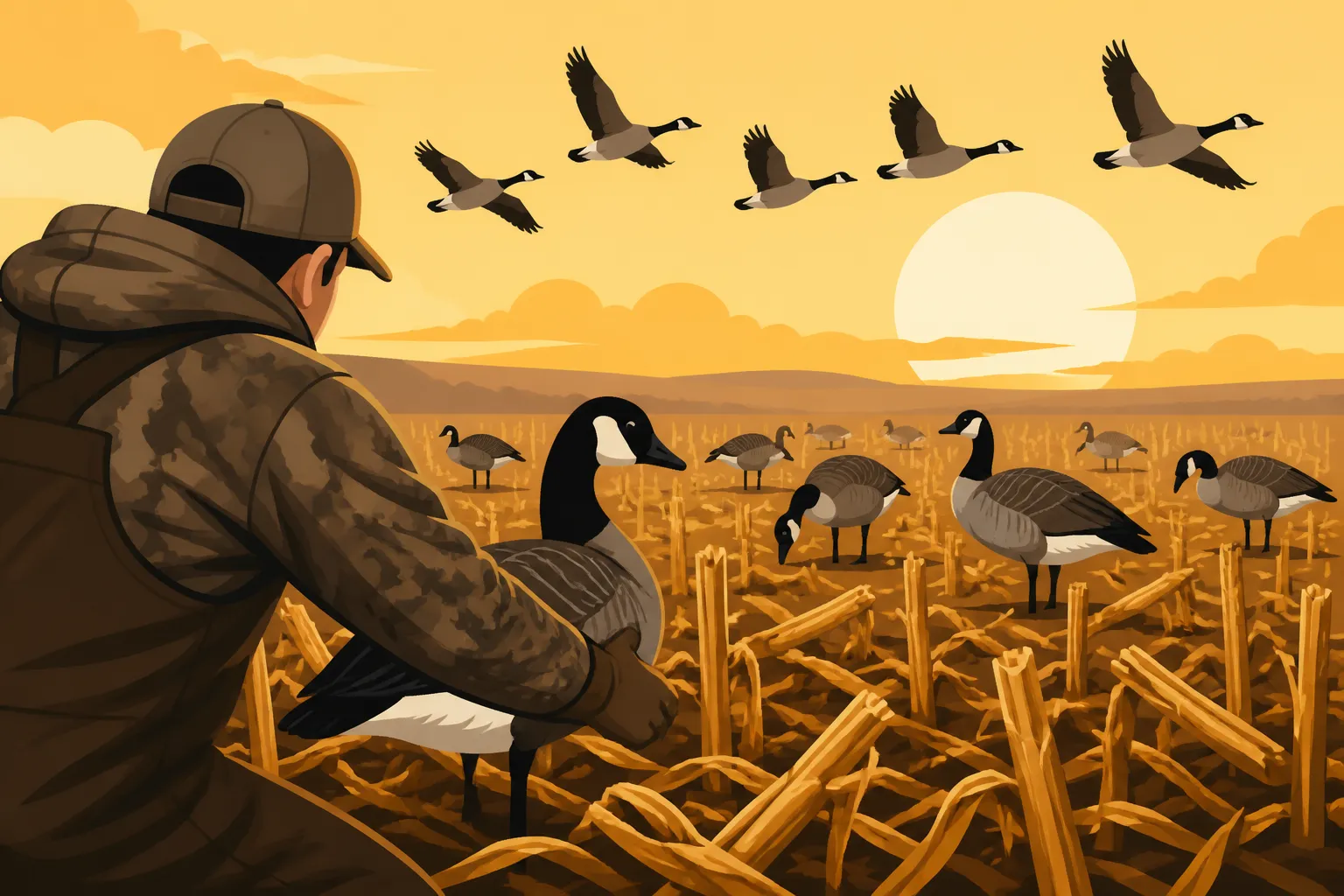
Setting a Goose Spread in Harvested Corn
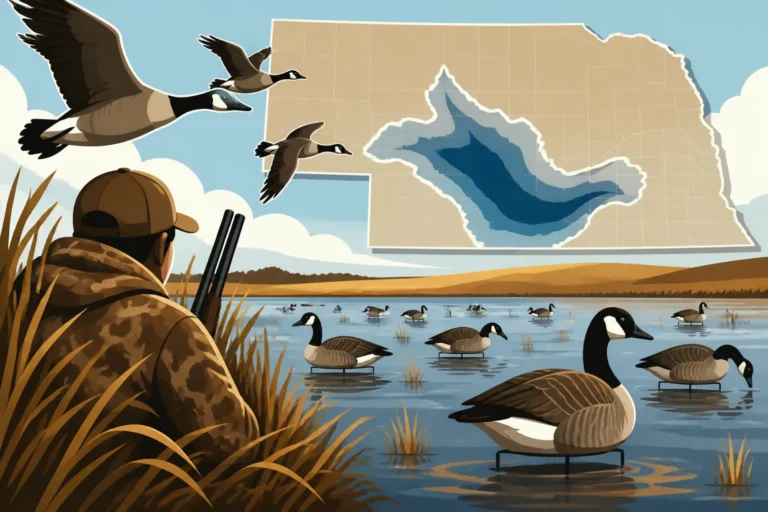
There’s nothing quite like the sight of a perfect goose spread laid out in a harvested cornfield, waiting for those big Canadas or persistent snow geese to commit. But let’s be real, getting it just right can feel like solving a complex puzzle, especially when you’ve driven miles in the dark, and the geese have seen every trick in the book. This guide is all about demystifying the art and science of setting an effective goose spread in those crucial harvested cornfields here in Nebraska, helping you turn those circling birds into feet-down commitment.
Understanding Goose Behavior in Harvested Corn
Hunting geese in harvested cornfields is a time-honored tradition here in Nebraska, and for good reason. These fields are literal goldmines for hungry birds, offering high-energy sustenance as they fuel up for migration or simply make it through a cold winter day. But to consistently bring them into your spread, you first have to understand why they’re there and how they operate. It’s not just about throwing out some decoys; it’s about mimicking their natural tendencies.
Why Geese Choose Harvested Corn
For a goose, a harvested cornfield isn't just a place to eat; it's a grocery store, a social club, and sometimes, a sanctuary all rolled into one. After the combines have run through, there's usually a bounty of spilled corn kernels left behind – a high-calorie feast that's relatively easy to access. Unlike trying to grub for roots in a pasture or pick seeds from shorter stubble, corn offers big, easy bites. This caloric intake is vital, especially as temperatures drop and their energy demands soar.
Beyond the food, these fields often provide open sightlines, which is crucial for geese to feel safe from predators. They can see for a long distance, allowing them to detect threats well in advance. And let's not forget the social aspect; geese are highly social birds. A field already occupied by a large group signals safety and good feeding, attracting more birds to join the party. That's why your decoys need to look like a happy, relaxed flock, not just a random scattering of plastic. They’re looking for reassurance, and a well-placed spread delivers just that.
Reading Goose Flight Patterns and Feeding Habits
Before you even think about tossing a decoy out of the truck, you need to become a goose detective. Geese are creatures of habit, often following predictable flight paths from their roosting areas to their chosen feeding grounds. These are called "flight lines," and understanding them is paramount. Pay attention to how they approach a field – do they come in high and circle, or do they drop in quickly from a particular direction? Observing these nuances will dictate where you set up your blinds and the orientation of your spread. Sometimes, they might even seem to defy logic, flying past a perfectly good field to hit one a mile further down the road, likely because that field has been "proven" safe by previous successful feedings.
When they land, geese typically don't just spread out randomly. They often work into the wind, landing short of the main flock and walking towards them, or landing among them if they feel particularly secure. They also tend to feed in specific areas of a field, often along edges, slight rises, or where the combine might have spilled more corn. Watching how they land and where they concentrate helps you understand the "sweet spot" in the field. Are they picking along the rows, or are they congregating in a low spot? Every detail you gather by observing live birds will be invaluable when you're laying out your own simulated flock. This kind of diligent scouting is key to setting up for success, whether you're targeting big Canada geese or smaller cacklers. If you're looking for more general scouting tips before the season kicks off, check out this guide on Scouting Nebraska Public Ground Before Opening Day.
Scouting for Optimal Spread Locations
Scouting, scouting, scouting – I can’t emphasize it enough. You might have the best decoys on the market, but if you set them up in a field geese aren’t using, you’re just admiring your expensive plastic. Begin your scouting well before your hunt day. Drive around at dawn and dusk, identifying active feeding fields. Look for fresh droppings, disturbed corn stubble, and actual geese on the ground. A good pair of binoculars or a spotting scope like the ones discussed in Optics for Glassing the Nebraska Sandhills will be your best friend. Don't be afraid to pull over and watch for an hour or two. Identify the specific areas within the field where they're landing and feeding.
Once you’ve identified a hot field, get permission from the landowner immediately. Many prime fields are permission-only, and waiting until the last minute can mean losing out. When you get into the field, pay attention to the terrain. Are there subtle rises or depressions? Where does the wind typically blow from? Where can you position your layout blinds to achieve maximum concealment against a fence line or a slight stubble change? Consider the sun's position throughout the morning or afternoon. You want the sun at your back, if possible, to illuminate your spread and keep it out of the geese’s eyes as they approach. A clear plan on entry and exit routes will also minimize disturbing other potential birds or game in the area. Remember, the goal is to make your spread look as natural and undisturbed as possible, which starts long before the decoys ever hit the dirt.
Essential Decoy Types and Their Role
When it comes to goose decoys, it's not a one-size-fits-all situation. The type of decoys you choose, and how you combine them, plays a huge role in how convincing your spread looks to wary geese. Each type has its advantages and disadvantages, and a truly effective spread often uses a combination to create realism and impact.
Full-Body Decoys: The Realism Factor
Full-body decoys are, without a doubt, the gold standard for realism. They accurately replicate the size, shape, and posture of live geese, right down to the texture of their "feathers." When viewed from above, or even from a distance, they cast realistic shadows and appear three-dimensional, making them incredibly convincing. This level of realism is especially crucial on clear, calm days or when hunting heavily pressured birds that have seen every trick in the book. A spread filled with high-quality full-body decoys can make a field look like an inviting, safe haven.
The downside? They are bulky, heavy, and can be expensive. Transporting and deploying a large spread of full-body decoys requires significant effort and vehicle space. However, for a serious goose hunter, the investment in time and money is often worth it. Brands like Avery, Dakota Decoy, and Avian-X produce excellent full-body goose decoys that hold up well to the elements and replicate natural poses such as feeding, sentry, and resting birds. For a deep dive into using these, you might find this post useful: Full-Body Decoy Spreads for Geese. The goal is to create a dynamic, lifelike scene, and full-bodies truly excel at that.
Shells and Silhouettes: Volume and Portability
While full-bodies bring realism, shell and silhouette decoys bring volume and portability. Shell decoys are hollow, half-bodied decoys that give a decent 3D profile without the bulk of a full-body. They’re lighter, stackable, and more affordable, allowing you to quickly put out a larger number of "birds" to create the impression of a massive flock. This volume is critical for drawing in geese from a distance, as large numbers signal safety and abundant food.
Silhouettes, on the other hand, are two-dimensional cutouts, often made from corrugated plastic or metal. They offer the ultimate in portability and can be deployed in massive numbers with minimal effort. While they lack the 3D realism up close, from a distance, especially in low light or on cloudy days, they can be incredibly effective at creating the illusion of a large feeding flock. Many hunters use silhouettes as the "bulk" of their spread, especially around the edges, and then place full-bodies closer to their blinds for added realism where geese will get their closest look. Combining shells or silhouettes with full-bodies allows you to achieve both volume and realism without breaking your back or your bank.
Motion Decoys and Flagging: Bringing Life to the Spread
Static decoys are good, but live geese are rarely still. This is where motion decoys and flagging come into play, adding a critical element of realism and drawing power to your spread. Motion can mimic feeding, preening, or simply the subtle movements of a goose looking around, making your spread irresistible to circling birds.
Flappers or "rotary machines" that simulate a landing or taking-off goose create a strong visual cue from a distance. The flash of wings can catch a goose's eye miles away. Dive-bombing geese also indicate a safe landing area. For closer birds, subtle motion can be achieved with "feeder" decoys on stakes that sway in the wind, or even just by giving a decoy a gentle tug on a line. Flagging, using handheld goose flags, is another incredibly effective way to attract attention and simulate movement. A well-timed flag can turn a hesitant flock that’s passed your spread once, bringing them back around for another look. However, remember to use flags sparingly and realistically; over-flagging can spook wary birds, making them think something is amiss. It’s all about creating the illusion of natural, subtle movement, not a chaotic bird disco.
| Decoy Type | Pros | Cons | Best Use |
|---|---|---|---|
| Full-Body | Highly realistic, 3D profile, casts shadows | Bulky, heavy, expensive, time-consuming to set | Close to blinds, focal points, pressured birds |
| Shells | Good 3D profile, stackable, lighter, affordable | Less realistic than full-bodies, can appear flat | Adding volume, middle ground in spread |
| Silhouettes | Very portable, lightweight, inexpensive, quick deployment | 2D, minimal realism up close | Bulk of spread, edges, distant visibility |
| Motion | Adds realism, catches attention from distance | Mechanical issues, can be expensive, over-use can spook | Anywhere you need movement, especially upwind |
Strategic Goose Spread Patterns for Success
Laying out your decoys isn't just about scattering them across the field. There's a method to the madness, and understanding different spread patterns can significantly increase your success. Each pattern is designed to mimic natural goose behavior and guide approaching birds exactly where you want them.
The "J" Hook and Variations for Landing Zones
One of the most classic and consistently effective patterns for goose hunting is the "J" hook or "U" shape. This pattern is designed to create an inviting, open landing zone (the mouth of the J or U) directly in front of your blinds. Geese prefer to land into the wind, so your setup should always account for this. The main body of the "J" or "U" consists of the majority of your decoys, representing the bulk of the feeding flock. The hook or curve of the "J" extends downwind, subtly guiding approaching geese into the open area.
To make this pattern work, you position your layout blinds at the bend of the "J" or at the closed end of the "U," with the open area directly upwind. As geese approach, they'll naturally fly into the wind, see the "open" landing strip, and come in right over your heads. You want the decoys closest to your blinds to be particularly realistic, perhaps even a few full-body sentries looking back at the main flock, suggesting a safe, active feeding area. Variations include widening the "J" to a "U" or even an "O" shape if you have enough decoys and want multiple landing spots. The key is to keep that central landing zone clear and enticing. This principle is also critical when you're working on Decoy Spreads for Rainwater Basin Geese, though the terrain might be different.
Family Groups and Natural Cluster Formations
Geese don't just stand around in a perfect line; they move, feed, and interact in smaller, cohesive family units or clusters within the larger flock. A realistic spread should reflect this natural grouping. Instead of spacing all your decoys evenly, arrange them in clusters of 3 to 7 birds. Think of it like small family units or feeding groups scattered throughout your overall pattern. Some might be feeding, others looking around, some resting.
Place these clusters with varying distances between them, creating a more organic, less uniform look. Leave plenty of open space between these clusters to indicate that the birds are comfortable and there's ample food. A few "stragglers" on the fringes, perhaps a single sentry or a pair of feeders, can also add to the realism, making it seem like the flock is spreading out to exploit new food sources. These natural groupings not only look more convincing to geese but also provide visual breaks in your spread, allowing incoming birds to better judge depth and feel more comfortable committing. Remember, you’re trying to replicate what a real group of geese does, not just create a decorative arrangement.
Big Spreads vs. Small Spreads: Adapting to Pressure
The size of your spread often depends on the type of geese you're targeting, the amount of hunting pressure they've experienced, and the number of decoys you have at your disposal. For large Canada geese or snow geese that have been hunted heavily, a "big spread" (100+ decoys) can be very effective. It signals a massive, confident flock that has found a prime feeding spot, often drawing in wary birds from a distance. The sheer volume can be intimidatingly attractive.
However, a big spread isn't always necessary, or even desirable. Sometimes, especially with less pressured resident geese or when hunting smaller fields, a "small spread" (2-3 dozen decoys) can be incredibly effective. A smaller, well-placed spread can appear less threatening and more natural, particularly if geese in the area are accustomed to feeding in smaller groups. The key is to make whatever size spread you're using look realistic and inviting.
A smaller spread also requires less gear, less time to set up, and is easier to move if the geese change their feeding patterns. For instance, if you're targeting early-season honkers in a smaller pasture, a few dozen high-quality full-bodies might be all you need. If you're chasing the massive migrating flocks of the Hunting the Light Goose Conservation Order, then you'll likely want to deploy as many as possible to create the irresistible draw of thousands of birds. Always consider the local conditions and the specific behavior of the geese you're hunting.
Concealment is King: Blinds and Gear
You can have the most perfect, realistic spread in the world, but if the geese spot you, it’s all over. Geese have incredible eyesight, often picking out hunters or unnatural shapes from hundreds of yards away. That’s why concealment is paramount. Blending into your surroundings is non-negotiable for success in a harvested cornfield.
Layout Blinds: Blending into the Stubble
For field hunting geese, layout blinds are the undisputed champions of concealment. These low-profile blinds allow you to lie down flat in the field, effectively disappearing into the stubble. Modern layout blinds are designed with multiple stubble straps and loops, allowing you to easily weave in natural vegetation from the field itself – corn stalks, grass, weeds – to break up their outline even further. The goal is for your blind to look like just another clump of stubble.
When positioning your layout blinds, always consider the wind direction. You want to be facing the direction from which the geese will approach, ideally with the wind at your back to help funnel them into your landing zone. Also, pay attention to any subtle changes in topography. A slight rise or depression can offer natural cover that helps to hide the blind even more effectively. Never place your blinds right on a prominent skyline; even the lowest profile blind will stand out. For more in-depth advice on this, check out Setting Decoys Around a Layout Blind and Layout Blinds for Nebraska Cut Corn. The more natural material you can incorporate, the better. And remember, when you're in the blind, stay down. The moment you peek out too early, you risk flaring an entire flock.
Natural Blinds and Utilizing Topography
While layout blinds are fantastic, sometimes the situation calls for a more improvised approach, or you might not have enough blinds for your entire hunting party. This is where mastering the art of the natural blind comes in handy. Harvested cornfields, while seemingly flat, often have subtle features you can exploit for concealment. Fence lines, brush rows, and even standing strips of corn or taller weeds can offer excellent cover if used correctly.
If you’re hunting near a fence line, you can often brush in a temporary blind using materials gathered from the field or surrounding areas. Pile up corn stalks, grass, and even tumbleweeds to create a screen that breaks up your outline. Similarly, a ditch or a subtle swale in the field can provide a natural depression to lie in, making you less visible. Even the shadows cast by a large tree or a pivot irrigation system can be used to your advantage. The key is to always think like a goose: what would look out of place? If you can eliminate those unnatural shapes, you significantly improve your chances. It requires a bit more effort and creativity than simply setting up a layout blind, but it can be just as effective.
Dressing for Success: Breaking Up Your Outline
Your clothing choice is just as important as your blind placement. While you're primarily concealed in the blind, there will be times when you need to move, reach for a call, or ultimately sit up to shoot. During these moments, your personal camouflage becomes critical. Avoid bright colors, reflective materials, or anything that creates a solid, unnatural silhouette.
Opt for camouflage patterns that mimic the colors and textures of a harvested cornfield – tans, browns, faded greens, and dull yellows. Layering is also essential, not just for warmth but to break up your shape. A loose-fitting jacket over a vest can create a less defined outline than a single, tight-fitting garment. Don’t forget about your face and hands; skin reflects light and can be easily spotted. A face mask, neck gaiter, and gloves in appropriate camo patterns are non-negotiable. Even your gun should have a non-reflective finish or be camouflaged. The goal is to blend seamlessly into the stubble, becoming just another part of the field until the moment you decide to rise.
Calling and Final Preparations
Even with the perfect spread and impeccable concealment, there are still critical steps that can make or break your hunt. Effective calling and careful final adjustments based on real-time conditions are what separate a good goose hunter from a great one.
Effective Goose Calling Techniques for Cornfields
Goose calling is an art, not just a noise-making exercise. It's about communicating with live birds, convincing them that your spread is a safe, happening place. In harvested cornfields, you're primarily mimicking feeding and contented calls. The "cluck" and "moan" are your bread and butter – short, sharp sounds followed by a longer, deeper moan, signaling that birds are happily grubbing for corn. Add in some "double clucks" and soft "honks" to simulate a flock conversing and competing for food.
The key is realism and cadence. Listen to live geese! When they’re feeding, they’re not usually making continuous, loud honks. It’s often a mix of quiet clucks, murmurs, and occasional louder honks to communicate. Match the intensity of your calling to the birds’ distance and behavior. When they’re far out, a louder "hail call" might be needed to get their attention. As they get closer, switch to softer, more contented "chatter" to reassure them. If they start to turn away, a little extra volume or a quick series of clucks might pull them back. Don’t overcall, especially when they’re close and committed. Let the decoys do the work, and be ready. For more detailed insights into specific calls, you might want to review Goose Calls for Open Prairie.
Wind, Weather, and Decoy Placement Adjustments
The wind is your best friend and worst enemy in goose hunting. Geese always land into the wind, so your spread and blinds must be oriented accordingly. Before you even set your first decoy, use a wind checker or simply feel the breeze to determine the direction. Your "J" hook or "U" pattern should be set with the open end facing directly into the wind, guiding the geese to land there.
Weather plays a huge role too. On clear, sunny days, geese will be warier, demanding a more realistic spread and perfect concealment. On overcast or foggy days, they might be more forgiving, and you can get away with a slightly less perfect setup. Cold weather often means hungrier geese, which can make them more aggressive in their pursuit of food. Watch for changes in wind direction throughout the morning. It’s not uncommon for the wind to shift, forcing you to adjust your blind and decoy orientation, even mid-hunt. Having your decoys on adjustable stakes or easy-to-move bases can make these crucial, quick adjustments possible. Being flexible with your setup is a hallmark of an experienced goose hunter.
Post-Hunt Gear Management and Ethics
Your hunt doesn't end when the last shot is fired. Proper post-hunt management is crucial for respecting the land, ensuring your gear lasts, and upholding ethical hunting standards. First, always retrieve all your decoys and any spent shells. Leave no trace. This not only keeps the field clean but also respects the landowner who granted you permission. Missing decoys are also lost money, and nobody wants that.
Clean your decoys if they're muddy or dirty before storing them. Mud and grime can degrade their finish and make them less effective over time. Store them in bags or trailers designed for decoys to prevent damage during transport and off-season storage. If you used flags or other motion devices, ensure they are properly cleaned and put away. For your shotgun, a good cleaning after each hunt, especially in dusty or muddy conditions, will prevent malfunctions and prolong its life. And always, always make sure all harvested birds are properly tagged, field dressed, and cooled. For tips on ammunition choices, consider reading about Waterfowl Loads for Nebraska Geese. Handling your game ethically and efficiently is just as important as the hunt itself.
The Nuance of Season and Species
Nebraska offers diverse goose hunting opportunities, from early-season resident Canadas to vast migrations of snow and white-fronted geese. Understanding the nuances of the season and the specific species you're targeting is crucial for tailoring your spread and tactics.
Early Season vs. Late Season Geese
Early season goose hunting, often in September, typically targets resident Canada geese that haven't faced much hunting pressure. These birds can be less wary, and a smaller, simpler spread might be effective. They're often found in pastures and smaller cornfields closer to urban areas or farm ponds. Scouting their roost-to-feed patterns is still key, but they might be more forgiving of minor setup flaws. The weather is generally warmer, so consider your clothing and dog care, as discussed in "Water and Heat Risk for Bird Dogs".
Late season, however, brings in the big migrators – waves of Canada geese, often from the northern prairies, and massive flocks of snow geese. These birds have traveled hundreds, if not thousands, of miles, encountering hunting pressure all along the Central Flyway. They are much warier, demanding larger, more realistic spreads, meticulous concealment, and precise calling. The weather can be brutally cold, meaning you need to dress in layers and plan for long, static sits. Food sources might be scarcer, making good scouting even more critical. Understanding the Nebraska Goose Units and Dates will help you pinpoint when different waves of birds are moving through your area.
Tailoring Spreads for Canada, Snow, and Specklebelly Geese
While the core principles of goose hunting remain, each species often benefits from specific spread considerations.
Canada Geese: These are the big, intelligent birds most hunters target. A spread of 2-5 dozen full-body or shell Canada goose decoys is often a good starting point. Focus on realistic postures – a mix of feeders, sentries, and resting birds. The "J" hook pattern works exceptionally well for Canadas. They are often responsive to deep, guttural honks and clucks. They'll scrutinize your spread, so realism and concealment are paramount.
Snow Geese: Hunting snow geese, especially during the When the Snow Goose Conservation Order Runs, is a different beast entirely. These birds fly in massive flocks, sometimes thousands strong. You need volume, and lots of it. Spreads often consist of hundreds, if not thousands, of lightweight snow goose rags, silhouettes, or Sillosocks. The sheer numbers create a visual spectacle that draws them in. Motion is also critical, with rotary machines and flyers. Calling for snow geese is chaotic – loud, high-pitched "kisk" calls and chatter. They might decoy from high altitudes, circling endlessly before committing, so patience is key.
Greater White-Fronted Geese (Specklebellies): Often overlooked but highly prized, "Specks" are known for their distinctive high-pitched calls and discerning nature. While they might decoy to Canada goose spreads, a dedicated spread of a few dozen realistic specklebelly decoys can be incredibly effective. They're often found associating with Canada geese. Their calling is unique, a rapid-fire "kek-kek-kek" that is quite different from Canada geese. They are notorious for circling several times before committing, requiring exceptional patience and careful calling.
Knowing which species you're targeting will dictate the quantity and type of decoys you deploy, the calling techniques you employ, and even the level of patience you need. GoHunt, with its wealth of scouting tools and information, can be a fantastic resource for understanding migration patterns and peak times for different species in Nebraska, helping you plan your hunts for specific species.
The Role of Technology and Tools
Modern hunting has been revolutionized by technology, and goose hunting in Nebraska's cornfields is no exception. From mapping apps to advanced optics, these tools can give you a significant edge in your pursuit of geese.
Mapping and Scouting Apps: Your Digital Eye in the Sky
Gone are the days of relying solely on paper maps and driving endless miles to scout. Today, apps like onX Hunt have become indispensable tools for goose hunters. These apps provide detailed satellite imagery, property boundaries, and public land overlays directly on your smartphone. This means you can identify potential feeding fields, locate access points, and even confirm land ownership from the comfort of your home or truck.
Before you even step foot in a field, you can use these apps to analyze terrain, pinpoint potential blind locations, and plan optimal entry and exit routes without disturbing game. Many hunters use them to mark active feeding areas, track flight paths they've observed, and even record wind directions for future reference. For nonresident hunters or those exploring new areas, these mapping applications are invaluable for identifying accessible public land within the Nebraska Public Access Atlas program or pinpointing potential private land for permission requests. Remember, technology is a tool, not a substitute for old-fashioned legwork, but it certainly makes that legwork more efficient.
Portable Power and Communication
In the vast, open cornfields of Nebraska, reliable communication and power are critical. Many hunters now rely on portable power banks to keep their smartphones charged, especially when using GPS-intensive mapping apps or taking photos and videos throughout the day. A dead phone can mean losing your location, your hunting partners, or your ability to call for help in an emergency.
Two-way radios are also excellent for communication within a hunting party, particularly when you have blockers at one end of a field or want to coordinate calling strategies without shouting and spooking birds. While cell service can be spotty in some remote areas of Nebraska, a good portable radio system offers dependable short-range communication. These tools contribute to both your success and your safety in the field.
Trail Cameras and Remote Scouting
While not as common for goose hunting as for deer, trail cameras can still offer insights, particularly if you're trying to pattern early-season resident geese near a consistent water source or in smaller fields. A trail camera placed discreetly near a known feeding area might confirm goose presence, feeding times, and general patterns without requiring you to be physically present.
However, be mindful of local regulations regarding trail camera use on public lands. In many areas, they are restricted or require specific permits. On private land, with permission, they can be a useful, albeit less conventional, tool for remote scouting in your goose hunting arsenal. Just make sure they are well-concealed and not disturbing the birds.
Disclaimer
Hunting is an inherently dangerous activity. This guide provides general information and recommendations for setting a goose spread in harvested cornfields in Nebraska. Always prioritize safety, follow all local, state, and federal hunting regulations, and obtain proper licenses and permits. Respect private property and always secure landowner permission before hunting. The information provided here is not a substitute for hands-on experience, professional guidance, or thorough personal preparation. Engage in ethical hunting practices and be aware of your surroundings at all times.