Binocular Power for the Sandhills
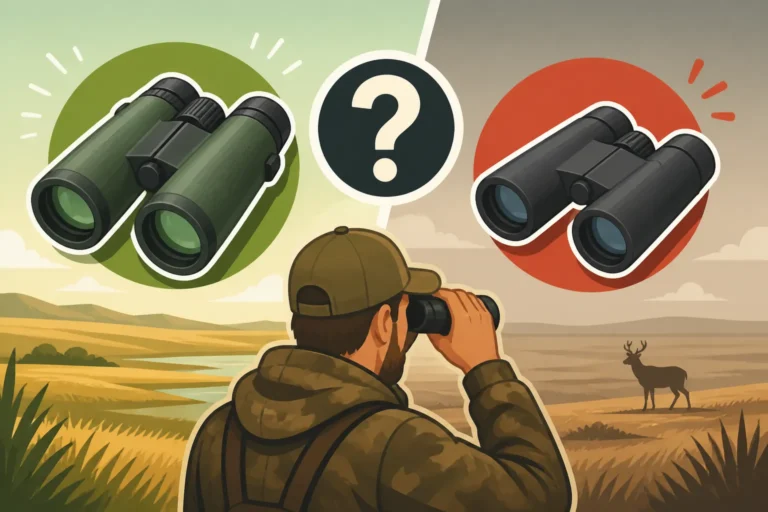
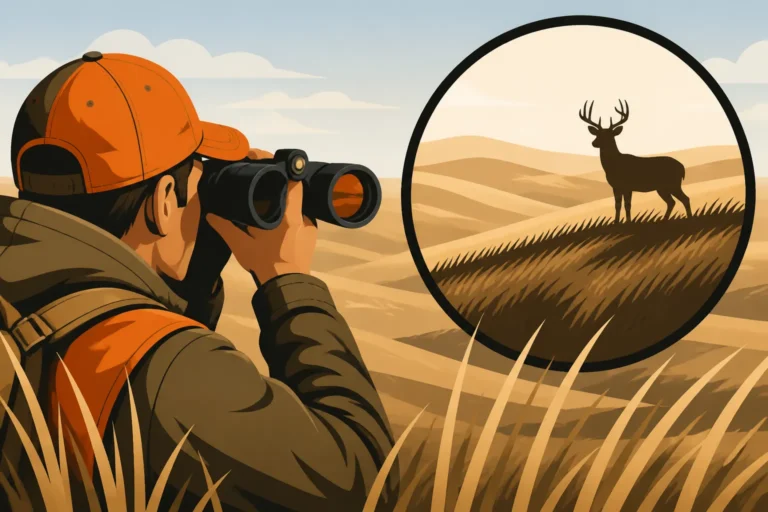
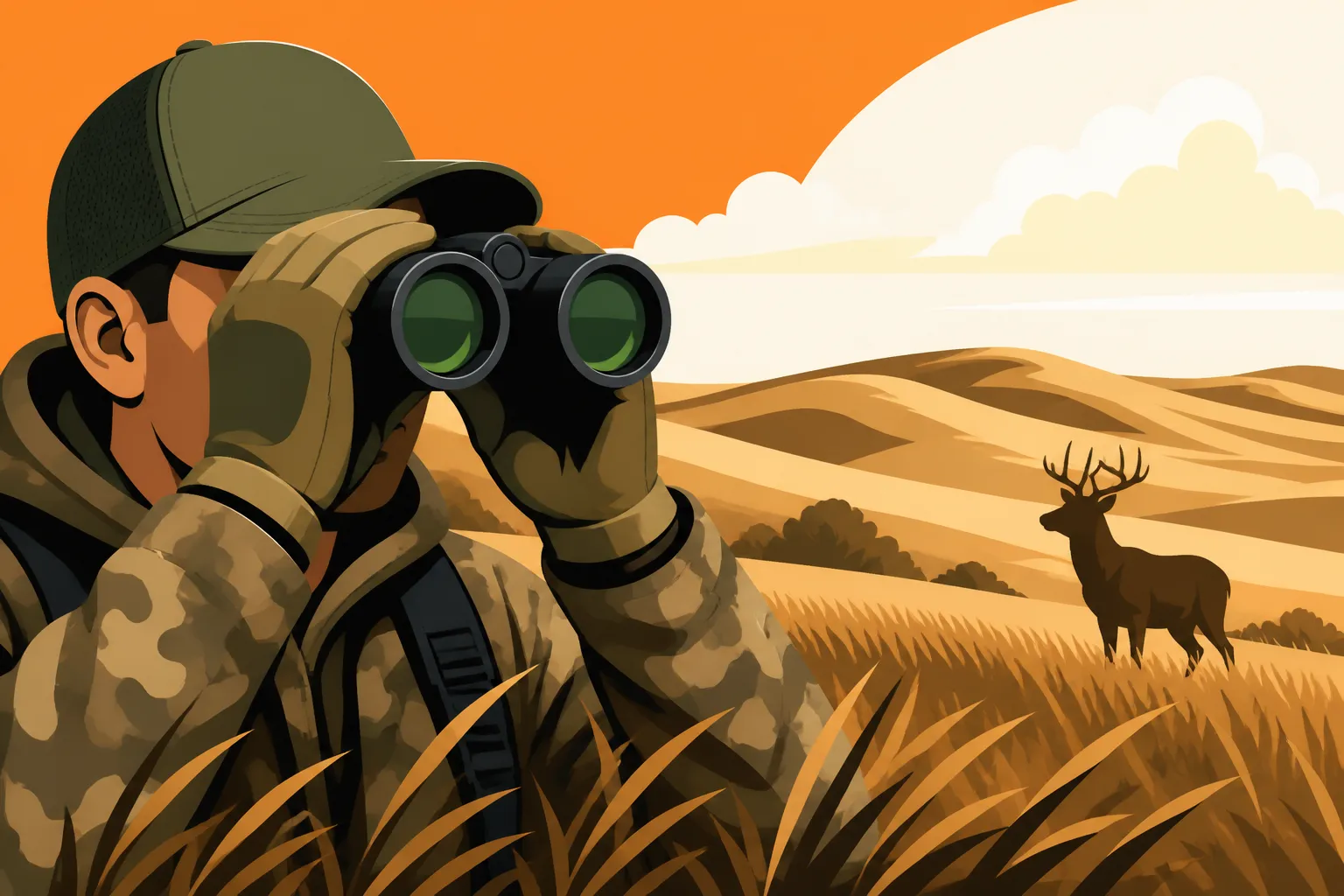
Hunting in the Nebraska Sandhills presents a unique set of challenges, particularly when it comes to spotting game across those immense, rolling vistas. You've probably found yourself staring through a pair of binoculars, squinting at a distant dark spot, wondering if it's a mule deer buck bedded down or just another cedar bush playing tricks on your eyes. This guide is all about helping you understand the crucial role binocular power plays in successful Sandhills hunting and how to choose the right glass to make those long-range identifications with confidence, cutting through the frustration of missed opportunities.
The Unique Optics Challenge of the Nebraska Sandhills
The Nebraska Sandhills are an incredible place to hunt, but they are not like hunting a dense eastern timber block or a small river bottom. Here, vastness is the name of the game. You're dealing with immense, unbroken grasslands, rolling dunes, and scattered pockets of trees, often at distances that would make a whitetail hunter in a treestand blink. This expansive landscape fundamentally changes how we approach optics, especially when you're after a trophy mule deer or a wary pronghorn.
The Sheer Scale of the Sandhills Landscape
Imagine standing on a high point in the Sandhills, looking out over miles and miles of seemingly endless grass. What looks like a short walk on a map can easily be a two-mile trek through soft sand and steep blowouts. You simply cannot cover this ground efficiently by walking every ridge or peering over every rise with the naked eye. The very nature of the terrain demands that you find game from afar, often before they ever know you're there. This is where good glass, specifically with the right magnification, becomes less of a luxury and more of an absolute necessity. You need to be able to pick apart distant details, separating game from brush, and identifying antler points without having to burn daylight and energy closing the distance repeatedly. This is a common frustration for hunters new to the region – underestimating the sheer scale and the optical power required to effectively scout and hunt it.
Identifying Game at Extreme Distances
When a mule deer buck beds down on a distant slope, or a pronghorn buck is grazing a mile away, a standard pair of binoculars might show you a "blob." But what kind of blob? Is it worth a two-hour stalk, only to find out it's a doe or a smaller buck? This is where magnification truly shines. Higher power binoculars allow you to resolve those critical details at range, such as antler configuration, body size, and even subtle movements that indicate a living animal rather than a static object. The ability to make these determinations before committing to a stalk saves immense time and effort, especially when you're trying to Spot-and-Stalk Mule Deer in the Nebraska Sandhills under a hot September sun. Without the right optical power, you're essentially walking into a guessing game, and in the Sandhills, guessing means tired legs and empty tags.
Understanding Binocular Numbers: Magnification and Objective Lens
Binoculars are typically described by two numbers, like "10×42" or "8×32." Understanding what these numbers mean is the first step to choosing the right pair for the Sandhills. It's not just about bigger numbers; it's about what combination best suits your hunting style and the conditions you'll face.
Magnification The First Number
The first number, like the "10" in 10×42, refers to the magnification. This means the object you are looking at through the binoculars will appear 10 times closer than it does with the naked eye. So, an animal that's 1,000 yards away will look as if it's 100 yards away. For the vast expanses of the Sandhills, more magnification often seems like the obvious choice. After all, if you can make something look closer, you can identify it better, right?
However, there's a trade-off. As magnification increases, several other things change. Your field of view (how wide an area you can see) narrows, and any hand shake or movement is also magnified. This can make it harder to hold the image steady, especially if you're glassing for extended periods or in windy conditions. Imagine trying to hold a 15x pair perfectly still while a gust of wind whips across the prairie – it can be a real challenge to maintain a clear, stable image, leading to eye strain and frustration. This is why many experienced Sandhills hunters rely on a good tripod or other stabilization methods, which we'll get into later.
Objective Lens Diameter The Second Number
The second number, such as the "42" in 10×42, indicates the diameter of the objective lens in millimeters. This is the large lens at the front of the binoculars that gathers light. A larger objective lens gathers more light, which generally results in a brighter image, especially in low-light conditions like dawn or dusk, when game animals are most active. In the Sandhills, those critical first and last minutes of light can be the difference between spotting a trophy and going home empty-handed.
While a larger objective lens is great for light gathering, it also means a larger, heavier, and often more expensive pair of binoculars. A compact 8×32 might be light and easy to carry, but an 8×42 or 10×50 will perform better when the sun dips below the horizon. For hunters spending all day Glassing the Nebraska Sandhills for Mule Deer, that extra weight can become a factor, so balancing light-gathering capability with portability is key. You want enough light to see clearly without feeling like you're carrying bricks around your neck.
Popular Magnifications for Sandhills Hunting
When you look at the options available for binoculars, there are a few magnification ranges that consistently come up as favorites for open-country hunting. Each has its strengths and weaknesses, and the best choice for you really depends on your specific needs, how you hunt, and your budget.
8x Magnification Balanced and Versatile
An 8x magnification, often seen as 8×32 or 8×42, offers a really nice balance for general hunting across varied terrain. While the Sandhills are vast, not every hunt is about finding something three miles away. If you find yourself in more broken country with scattered cedar draws, or if you also hunt river bottoms in eastern Nebraska, an 8x might be a fantastic all-around choice. The lower magnification means a wider field of view, making it easier to scan large areas and pick up movement. It's also much more forgiving when hand-holding, which is a huge benefit if you're on the move frequently and don't always have time to set up a tripod.
However, where 8x can fall short is in resolving fine details at truly extreme distances. If that "blob" is a mile out, an 8x might confirm it's a deer, but reliably counting antler points might be a challenge, especially if there's heat shimmer or mirage playing tricks on your eyes. It's a great choice for closer work or if you're also using a spotting scope for the really long-range stuff. Many hunters who prioritize portability and quick target acquisition will lean towards an 8x, appreciating its steadiness and broad view.
10x Magnification The Workhorse for Open Country
The 10x magnification, commonly 10×42, is arguably the most popular choice for open-country hunting, and for good reason. It provides a significant boost in magnification over an 8x, allowing for much better detail resolution at longer distances, which is critical when you're trying to Judge a Mule Deer Buck in the Field across those vast Sandhills basins. You'll be able to discern antler width, tine length, and even subtle body characteristics that help you make a go/no-go decision without covering unnecessary ground.
While 10x offers more power, it's still generally manageable for hand-holding, though you'll definitely notice any unsteadiness more than with an 8x. For extended glassing sessions, especially when picking apart distant hillsides for a bedded animal, mounting a 10×42 on a tripod can really unlock its full potential, providing a rock-solid, shake-free image. Many hunters using scouting tools like GoHunt, which helps them visualize terrain and potential game locations, find that a 10×42 binocular perfectly complements their planning by allowing them to thoroughly dissect those promising areas from afar. It's the sweet spot for many who need that extra reach without the extreme stability demands of higher magnifications.
12x and 15x Magnification Reaching Out Further
For those who live and breathe long-range glassing in truly vast, open country like the Nebraska Sandhills, 12x (often 12×50) or even 15x (typically 15×56) binoculars become serious contenders. These magnifications are purpose-built for extreme distance. With a 15x pair, that deer two miles away will appear as if it's only 130 yards off, allowing for incredible detail resolution that can be crucial for identifying a mature buck that might otherwise go unnoticed. This is especially true when Stalking Pronghorn Across Open Nebraska Ground, where every bit of detail you can gather before committing to a stalk is invaluable.
However, these higher magnifications come with significant trade-offs. The field of view shrinks considerably, making it harder to initially find what you're looking for, almost like looking through a straw. Hand-holding a 12x or 15x binocular effectively for any length of time is nearly impossible due to magnified hand shake; even slight tremors turn the image into a vibrating mess. For these binoculars, a sturdy tripod is not optional – it's absolutely essential. If you plan to spend hours meticulously Glassing Sandhills Blowouts for Mule Deer from a stationary position, often from a vehicle or a vantage point with a tripod, then a 12x or 15x can be a game-changer. But if you're a run-and-gun hunter who rarely uses a tripod, the frustration of a shaky image will quickly outweigh the benefits of the extra power.
Here's a quick comparison of popular binocular powers for the Sandhills:
| Magnification | Objective Lens (Common) | Primary Use Case (Sandhills) | Pros | Cons | Tripod Needed? |
|---|---|---|---|---|---|
| 8x | 32mm / 42mm | General scouting, closer distances, varied terrain | Wide field of view, steady handheld, lighter | Less detail at extreme range, harder for ID | Optional |
| 10x | 42mm / 50mm | Primary long-range glassing, mule deer/pronghorn | Good balance of power and view, strong detail | Handshake noticeable, narrower field | Recommended for long glassing |
| 12x | 50mm / 56mm | Dedicated long-range, identifying trophy size | Excellent detail at very long distances | Much narrower field, very shaky handheld | Essential |
| 15x | 56mm | Extreme long-range, competitive glassing | Maximum detail, allows for confident ID | Smallest field of view, heaviest, very shaky | Absolutely Essential |
Beyond Magnification: Other Critical Factors
While magnification and objective lens size are the primary numbers, there are other crucial aspects of binocular design that significantly impact their performance in the challenging Sandhills environment. Ignoring these can lead to buyer's remorse, regardless of how powerful your chosen glass is.
Field of View vs. Magnification
Field of view (FOV) refers to the width of the area you can see through your binoculars at a specific distance, usually measured in feet at 1,000 yards. As magnification increases, your field of view naturally decreases. Think about it: the more you zoom in, the tighter your view becomes. For hunting in the Sandhills, where you're trying to locate game in a vast expanse, a wider field of view can be incredibly beneficial for quickly scanning and spotting initial movement or detecting animals within a larger area.
An 8x binocular, for example, might offer a field of view of 420 feet at 1,000 yards, while a 12x might only show 320 feet. This difference means you can cover more ground with fewer sweeps of your 8x binoculars, making initial detection faster. However, once you've spotted something, the narrower FOV of a 12x or 15x allows you to zoom in and examine it more closely. The trick is to strike a balance; if your FOV is too narrow, you'll spend more time trying to find the game you're looking for, which can be frustrating when deer are on the move or subtle in their bedding. For a comprehensive overview of how to maximize your visibility, consider how this plays into Glassing the Nebraska Sandhills for Mule Deer.
Exit Pupil and Low Light Performance
The exit pupil is the diameter of the light beam that exits the eyepiece and enters your eye. It's calculated by dividing the objective lens diameter by the magnification (e.g., 10×42 binoculars have an exit pupil of 4.2mm). A larger exit pupil is generally better for low-light conditions because it delivers more light to your eye, resulting in a brighter, clearer image when the sun is barely up or starting to dip below the horizon.
In hunting, these low-light periods are often when game is most active. A binocular with a 5mm exit pupil (e.g., 8×42 or 10×50) will perform better at dawn and dusk than one with a 3mm exit pupil (e.g., 10×30). However, your eye's pupil also changes size with light; in bright daylight, it might only be 2-3mm, but in low light, it can dilate up to 7mm. So, a binocular with an exit pupil larger than your eye's dilated pupil won't necessarily make the image brighter, but it makes it easier to position your eye to receive all the light. For those critical minutes of legal shooting light in the Sandhills, having binoculars that excel in low-light conditions can be absolutely vital for making out that last-minute movement.
Stability and Tripods: An Essential Partnership
Perhaps the most overlooked, yet most critical, factor when choosing binocular power for the Sandhills is stability. As mentioned, higher magnifications amplify movement. Even a slight breeze or muscle tremor can make a 12x or 15x image unusable. This is why for serious long-range glassing, especially with magnifications of 10x and above, a good quality tripod is not just recommended, it's essential.
A tripod eliminates hand shake, allowing you to hold the binoculars perfectly still and truly resolve the fine details that higher magnification provides. When you're spending hours patiently Hunting a Creek Crossing in the Sandhills or systematically picking apart a distant hillside, a tripod-mounted binocular will save your arms from fatigue and your eyes from strain. You'll see things you'd never spot freehand, and your ability to confidently identify game at extreme distances will skyrocket. Many hunters combine their primary hunting binos (e.g., 10×42) with a spotting scope for extreme magnification, but a tripod-mounted 10x or 12x binocular can often serve as a fantastic primary glassing tool, offering a comfortable, wide-eyed view for hours on end. Don't underestimate the impact a stable platform has on your ability to use powerful optics effectively in the wide-open Sandhills.
Disclaimer
This article is for general informational purposes only and does not constitute professional advice. Laws, prices and regulations vary by location and change over time. Consult a qualified professional for guidance on your specific situation.