Nontoxic Shot Rules on Nebraska WMAs
Stepping onto public hunting land in Nebraska, the last thing any of us wants is a preventable run-in with a game warden. Confusion around ammunition types, especially on our beloved Wildlife Management Areas (WMAs), is a common frustration. This guide will meticulously break down the often-misunderstood nontoxic shot rules, ensuring you're well-prepared and compliant for your next Nebraska hunting adventure.
The Environmental Imperative: Why Nontoxic Shot Matters
As hunters, we're inherently conservationists. We care deeply about the lands and the wildlife we pursue. But for a long time, traditional lead shot, a mainstay in our bags, has been posing a silent, insidious threat to that very wildlife. It's a tough pill to swallow when you've used something for decades, but the science is clear, and the rules are in place for a good reason. It’s not about making hunting harder; it’s about protecting the ecosystem we cherish.
Lead's Silent Toll on Wildlife
Imagine a pheasant taking a pellet of lead shot and carrying on, only to succumb later. Or a duck that's hit, falls into the marsh, and is never retrieved. Those tiny lead pellets don't just disappear. They settle into the soil and water, becoming a dangerous meal for other animals. Scavengers, like our majestic eagles, hawks, and even coyotes, can ingest lead fragments when they feed on game that was wounded or killed with lead shot. Even songbirds can pick up spent lead pellets, mistaking them for grit needed for digestion. This lead poisoning leads to organ damage, neurological issues, and ultimately, death, creating a ripple effect through the food chain that no hunter wants to contribute to. It's a heartbreaking reality, and one that nontoxic shot helps mitigate.
Waterfowl's Early Lesson: A Precedent Set
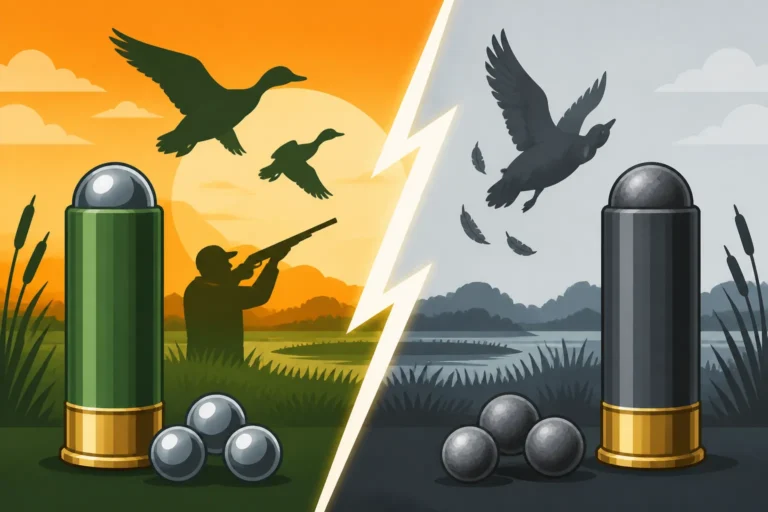
For those of us who've been chasing ducks and geese for a while, the concept of nontoxic shot isn't new. The federal mandate for nontoxic shot in waterfowl hunting went into effect nationwide in 1991, primarily to combat widespread lead poisoning in ducks, geese, and swans that were ingesting spent lead pellets in wetlands. These birds, often feeding in shallow waters, would pick up lead shot as they sifted through mud for seeds and invertebrates. The results were devastating to waterfowl populations. This long-standing regulation for waterfowl served as a crucial precedent, demonstrating that a switch to alternative shot materials could protect avian populations without ending hunting opportunities. It showed that adaptation was not only possible but necessary for the future of the sport.
Where Nontoxic Shot Rules Apply in Nebraska
Navigating where you must use nontoxic shot can feel like a maze, especially with varying regulations across different types of public land. It's not just a blanket rule across the state, which adds to the confusion. You might be hunting ducks with steel on a WMA one day and then hunting pheasants with lead on private land the next, if not for the WMA rules. The key is knowing your location and its specific restrictions. This is where tools that help you scout and verify boundaries, like detailed mapping apps, become incredibly useful for hunters, enabling them to confidently identify regulated areas.
Wildlife Management Areas: The Primary Zone
The most important thing to remember for upland hunters in Nebraska is this: almost all Nebraska Wildlife Management Areas (WMAs) require the use of nontoxic shot for all shotgun hunting, not just waterfowl. This means if you're out Walking Nebraska Pheasant Cover With a Dog for pheasants, or pushing a cattail slough for late-season roosters, you'll need steel, bismuth, or another approved nontoxic load. This rule applies to all upland game birds, rabbits, squirrels, and furbearers hunted with a shotgun on these state-managed lands. It's a critical distinction because many hunters, especially those new to public land, might assume the nontoxic requirement only applies to waterfowl. Always double-check the specific WMA regulations, often found in the Public Access Atlas or on the Nebraska Game and Parks website, because failing to do so can lead to an unexpected citation. For general rules, check out Nebraska Wildlife Management Area Rules.
Federal Lands and Specific Water Bodies
Beyond state WMAs, federal lands in Nebraska, such as National Wildlife Refuges and some lands managed by the Army Corps of Engineers, also adhere to strict nontoxic shot regulations. These areas are primarily managed with federal guidelines that typically mandate nontoxic shot for all hunting, regardless of species. For instance, if you're planning a trip to one of the public areas around the Hunting Rainwater Basin Wetlands, you'll definitely need nontoxic shot, not just for the ducks and geese, but potentially for upland birds found in adjacent habitat as well. Furthermore, some specific rivers or lakes might have additional local regulations, often implemented to protect sensitive aquatic ecosystems or migratory bird staging areas. While less common, it’s always prudent to check local ordinances for any particular water body you plan to hunt, especially if it’s outside a designated WMA or federal refuge.
Open Fields and Waters Considerations
Nebraska's Nebraska's Open Fields and Waters Program (OFW) is a fantastic initiative that opens up thousands of acres of private land to public hunting. This program is a lifesaver for hunters seeking more access. However, the nontoxic shot rules on OFW tracts can sometimes be a bit more nuanced. Generally, OFW lands follow statewide regulations. This means that if you're hunting upland birds or small game on an OFW tract, lead shot is typically permissible, unless that specific tract is designated as a nontoxic shot zone. Such designations are usually clearly marked on the Public Access Atlas maps and on signage at the site. It’s critical to scrutinize the map and any posted signs for each individual OFW parcel you intend to hunt. While most OFW areas don't require nontoxic shot for upland hunting, it's wise to be prepared, especially if you also hunt waterfowl, where nontoxic is always required. Using a mapping platform like GoHunt can help you quickly identify if an OFW parcel has any special restrictions layered onto its public access data, providing real-time peace of mind.
What Nontoxic Actually Means: A Hunter's Guide to Shot Materials
So, you know where you need to use it. But what exactly is nontoxic shot? It's not just "not lead." There's a spectrum of materials available today, each with its own characteristics, advantages, and drawbacks. For many hunters, making the switch meant moving from familiar lead shot to something entirely new, with different ballistic properties. It’s an adjustment, no doubt, but understanding the options can help you choose the best load for your style of hunting.
| Shot Material | Cost (Relative) | Density (Relative) | Performance (General) | Choke Compatibility | Key Characteristics |
|---|---|---|---|---|---|
| Steel | Low | Low | Good for ducks/geese, needs larger shot for upland | Most modern chokes | Light, fast, less dense, can damage older barrels |
| Bismuth | Medium | Medium-High | Excellent all-around, closer to lead performance | All chokes (softer) | Denser than steel, softer, good energy retention |
| Tungsten-Alloy | High | Very High | Superior range and knockdown power | Most modern chokes | Very dense, retains energy well, expensive |
| Lead (for comparison) | Low | High | Excellent, dense, deforms for wider patterns | All chokes | Toxic, illegal in nontoxic zones |
Steel: The Accessible Workhorse
When the nontoxic mandate first came in for waterfowl, steel shot was the primary alternative. It remains the most common and often the most affordable nontoxic option today. Steel is lighter and harder than lead, which means it behaves differently. Because it's lighter, you typically need to go up one or two shot sizes compared to lead to get similar pellet energy and knockdown power. For example, if you typically shoot #6 lead for pheasants, you might consider #4 or #3 steel. Its hardness means it doesn't deform as much as lead, often leading to tighter patterns, which can be both a blessing and a curse depending on your shooting style and the ranges you encounter. Modern shotguns are designed to handle steel, but older barrels, especially those with fixed full chokes, might be susceptible to wear or damage. Always check if your shotgun is steel-shot compatible before heading afield. Steel Versus Lead on Nebraska WMAs goes into more detail about these differences.
Bismuth and Tungsten: Premium Options
For hunters seeking performance closer to lead, or for those who appreciate the benefits of denser shot, bismuth and various tungsten-alloy loads are excellent, albeit more expensive, choices. Bismuth shot is denser than steel and much softer, making it safe for all shotgun chokes, including older guns. Its density allows for smaller shot sizes to achieve similar knockdown power to lead, which means you might not have to adjust your preferred shot size as much. This translates to more pellets in your pattern and often better energy retention downrange.
Tungsten-alloy loads, on the other hand, are the kings of density. Some tungsten blends are significantly denser than lead, offering incredible knockdown power and extended range. These are often chosen by serious waterfowl hunters facing long shots or for hunting tough birds like geese, or by upland hunters who demand the best performance, even at a higher price point. While more expensive, these premium loads can provide a significant advantage in certain hunting scenarios, giving you confidence when Waterfowl Loads for Nebraska Geese are critical. The high cost, however, is often a barrier for many hunters, especially for species where many shots might be taken.
Understanding Performance Trade-offs
Making the switch to nontoxic shot, regardless of material, means understanding that there are performance trade-offs. Steel, being lighter, tends to lose energy faster and patterns tighter, potentially requiring you to adjust your choke selection. Where you might have used a modified choke with lead, an improved cylinder or light modified might be better with steel to open up the pattern. Bismuth and tungsten, with their greater density, retain energy better and often provide more consistent patterns closer to what you'd expect from lead.
It's crucial to pattern your shotgun with your chosen nontoxic loads, just as you would with lead. Head to the range, set up targets at realistic hunting distances, and see how your shotgun performs. This practice will reveal any surprises in patterning and help you gain confidence in your new ammunition. Don't wait until opening day to find out your pattern is too tight or too open for the type of hunting you plan to do, whether you're hunting Upland Season Dates and Bag Limits or chasing geese.
Practical Strategies for the Nontoxic Hunter
Adapting to nontoxic shot doesn't have to be a major hurdle. With a little forethought and preparation, you can ensure you're just as effective and ethical in the field as you've always been. It's about being proactive, not reactive, when it comes to adhering to regulations and respecting the wildlife. Hunters are problem solvers, and this is just another puzzle piece in the bigger picture of responsible hunting.
Stocking Up and Testing Patterns
One of the best pieces of advice for any hunter is to not wait until the last minute to buy your ammunition. This is especially true for nontoxic loads, which can sometimes be less readily available than traditional lead, or found at a higher price point. Plan ahead, purchase a few different brands and shot sizes, and get to the range. As discussed earlier, steel shot often performs differently than lead. You might find that your usual choke doesn't give you the pattern you want. Experiment with different Choke Choice for Walking Birds or even a different choke tube altogether. Test your new loads at the typical ranges you expect to encounter game, whether that's 20 yards for flushing quail or 40 yards for pheasants. Knowing how your gun and ammunition perform together builds confidence and ensures you make clean, ethical shots. This practice is invaluable, especially when you're hunting unfamiliar public ground.
Adjusting Your Approach in the Field
With nontoxic shot, particularly steel, you might need to adjust your shooting strategy slightly. Because steel is lighter, it has a shorter effective range than lead. This means being more mindful of your shot distances and perhaps waiting for birds to be a bit closer. For upland birds, this could mean working your dog more aggressively, or being more patient to ensure a tighter flush. For waterfowl, it might mean perfecting your decoy spread to bring birds closer or improving your calling to entice them into comfortable shooting range.
Another consideration is that steel shot patterns tend to be tighter. This can be an advantage for longer shots but might require more precise aiming on closer flushes. Understanding this will help you choose the right moment to pull the trigger. Remember, the goal is always a clean, humane kill, and adapting your fieldcraft to the characteristics of your ammunition is part of being a responsible hunter. If you're hunting in thick cover, for example, your window of opportunity might be smaller, so practice those quick, instinctive shots.
Scouting and Verification
Before you ever leave the house, thorough scouting and verification are absolutely critical. Never assume. Always consult the most current Public Access Atlas, which provides detailed maps and lists special regulations for all public hunting lands, including WMAs and OFW tracts. Many states also offer digital versions or mobile apps that can be incredibly helpful in the field. GoHunt, for example, is a well-regarded mapping tool that often integrates public land boundaries and specific regulations directly into its platform, making it a fantastic resource for checking if a particular parcel requires nontoxic shot. A quick check can save you a significant headache and potential legal trouble. Think about it: a few minutes of planning at home could prevent a citation, or worse, the confiscation of your harvest or hunting equipment. Knowing where you stand before you enter the field is paramount to a successful and compliant hunt.
The Repercussions of Ignoring the Rules
I know, it can feel like a lot to keep track of, and sometimes the rules seem to change on a dime. But ignorance of the law is rarely an excuse that holds up. For hunters, respecting regulations isn't just about avoiding trouble; it's about upholding the integrity of our sport and ensuring access to these precious public lands for generations to come. Failing to use nontoxic shot where required on a Nebraska WMA can have real, tangible, and quite unpleasant consequences.
Fines and Citations
The most immediate consequence of being caught with lead shot in a nontoxic zone is a citation and a fine. These aren't just minor parking tickets; game law violations can carry substantial monetary penalties. The exact amount can vary depending on the specifics of the violation, your history, and the discretion of the enforcement officer. Beyond the initial fine, there might be additional court costs or administrative fees. This financial hit alone can be enough to ruin a hunting season, turning what should have been an enjoyable day afield into a costly regret. Imagine saving up for that hunting trip, only to spend a significant portion of your budget on a preventable fine. It's a tough lesson, and one best avoided.
Loss of Privilege
Beyond the financial penalties, violating nontoxic shot rules can have more severe, long-term implications for your hunting privileges. Depending on the seriousness of the offense and state laws, you could face a temporary suspension or even permanent revocation of your hunting license. If your license is suspended, you won't be able to hunt legally in Nebraska, and often, due to interstate wildlife violator compacts, that suspension can extend to other states as well. This means your passion for hunting could be put on hold, or even ended, all for a preventable mistake. It's a stark reminder that our hunting privileges are just that—privileges—and they come with the responsibility of adhering to all regulations.
The Ethical Aspect
While legal and financial repercussions are certainly a deterrent, there's also an ethical dimension to consider. As hunters, we pride ourselves on being responsible stewards of the land and its wildlife. Deliberately or carelessly using lead shot in areas designated for nontoxic alternatives undermines these principles. It puts wildlife at risk and diminishes the reputation of hunters as conservationists. Every time an incident of non-compliance occurs, it provides ammunition for those who oppose hunting, potentially jeopardizing public land access and future hunting opportunities for everyone. Adhering to these rules isn't just about legality; it's about demonstrating our commitment to wildlife and the future of our hunting heritage. It's about ensuring the health of the very game we love to pursue, from the smallest quail to the largest Canada goose.
Disclaimer
This article is for general informational purposes only and does not constitute professional advice. Laws, prices and regulations vary by location and change over time. Consult a qualified professional for guidance on your specific situation.