Rifle Setups for Nebraska’s Open Country
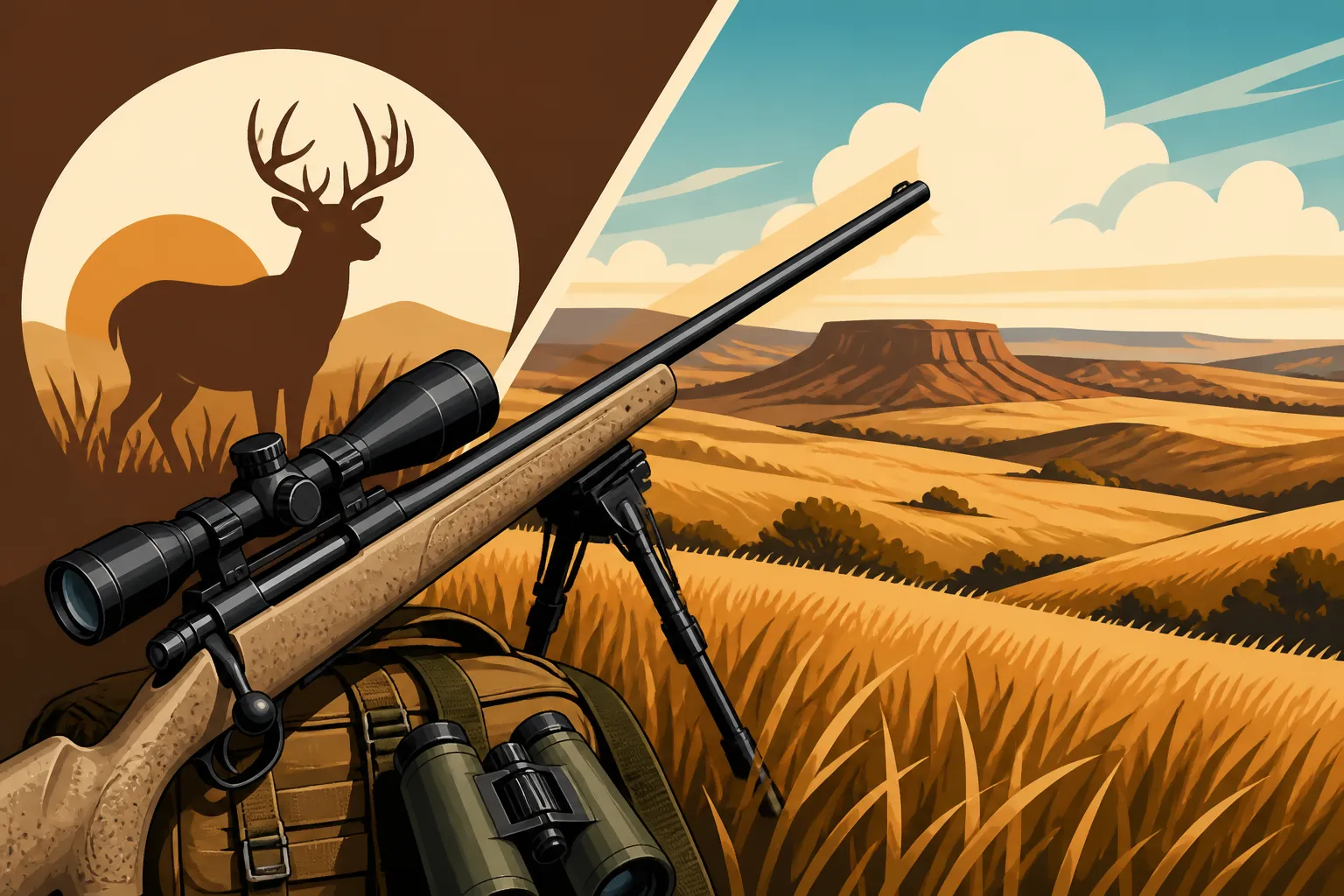
Hunting in Nebraska's vast open country presents a unique set of challenges that can make even the most seasoned hunter question their setup. From the expansive vistas of the Sandhills to the long, windswept fields of the plains, taking an ethical shot at distance requires a rifle and optic combination that's truly up to the task. This comprehensive guide will walk you through everything you need to know to assemble a rifle setup optimized for the diverse and often demanding conditions found across Nebraska.
Understanding Nebraska's Open Country Hunting Challenges
Before we dive into the nuts and bolts of rifle setups, let's really acknowledge what we're up against out here. Nebraska isn't your typical timber hunting state where 100-yard shots are the norm. It's a place where opportunities often present themselves much farther out, demanding a specific approach to gear and preparation.
The Reality of Long Shots and Wide-Open Spaces
If you've spent any time glassing the rolling hills of the Sandhills or staring across a massive cornfield, you know that deer and antelope don't always cooperate and walk right into bow range. Ethical shot opportunities can easily stretch out to 300, 400, or even 500 yards, especially when targeting a wary mule deer or a sprinting pronghorn. This isn't just about having a rifle that can shoot that far; it's about having a setup that allows you to shoot accurately and confidently at those distances. You need to be prepared for those moments when the animal you've been pursuing for days finally appears at a range you might not typically practice. This means not only a capable rifle and optic but also a deep understanding of ballistics and your own limitations.
Battling Nebraska's Infamous Wind
Ah, the Nebraska wind. It's legendary for a reason, and it's perhaps the single biggest factor influencing accuracy in our open country. A gentle breeze at your back can quickly turn into a swirling 20 mph crosswind that can push a bullet inches, or even feet, off target at extended ranges. This isn't just a nuisance; it's a critical variable that can make or break a shot. Hunters often underestimate its effect, especially when adrenaline is pumping. Your rifle setup needs to be inherently stable, and your bullet choice should prioritize good ballistic coefficients to cut through that wind as efficiently as possible. Compensating for wind requires practice, keen observation, and often, equipment that provides quick and reliable adjustments. Reading Wind on the Nebraska Plains is an absolute art form, and your rifle setup plays a huge part in how well you can execute.
Diverse Terrain: From Sandhills to Farm Fields
Nebraska's hunting landscape is incredibly varied. One day you might be navigating the deep, sandy blowouts of the Sandhills, where elevation changes are subtle but constant, and footing is always a challenge. The next, you could be setting up on the edge of a vast soybean field in eastern Nebraska, overlooking a river bottom. Each terrain type presents different shooting positions, backdrop considerations, and ultimately, demands different nuances from your rifle setup. A heavy magnum might feel like a burden when you're hiking miles through soft sand, but that stability might be crucial when bracing for a shot across a wide valley. Conversely, a lighter, more nimble rifle might be better suited for quick target acquisition when River-Bottom Whitetail Hunting in Eastern Nebraska. Understanding these nuances and how they impact your shooting platform is key.
Essential Rifle Calibers for Nebraska Deer and Antelope
Choosing the right caliber is perhaps the most debated topic among hunters, and for good reason. In Nebraska's open country, you need a cartridge that offers enough energy for a clean kill at distance while maintaining a flat trajectory to minimize error.
The Versatility of .30-Caliber Options
For many Nebraska hunters, the .30-caliber family remains a top choice, and it's easy to see why. Cartridges like the .30-06 Springfield, .308 Winchester, and .300 Winchester Magnum offer a fantastic blend of power, versatility, and readily available ammunition. A .30-06, for instance, has been a workhorse for over a century, capable of taking any big game in North America, and it performs admirably on Nebraska's deer and antelope. The .308 offers similar performance in a shorter action, making for a lighter, handier rifle, which can be a real plus when you're covering a lot of ground. For those pushing the envelope on distance, or hunting in extremely windy conditions, the .300 Win Mag provides additional velocity and energy, giving you a flatter trajectory and more knockdown power at those longer ranges often encountered when glassing for a trophy. These calibers give you confidence whether that buck steps out at 150 yards or 450.
Flat-Shooting Mid-Calibers for Distance
While the .30s are excellent, many hunters are finding immense success with modern mid-calibers known for their inherent accuracy and flat trajectories. The 6.5 Creedmoor, for example, has become incredibly popular for its mild recoil, superb accuracy, and excellent ballistic properties, making it a fantastic choice for deer and antelope across Nebraska's plains. Its ability to buck the wind better than some larger, slower bullets is a distinct advantage. Other cartridges like the .270 Winchester, 7mm-08 Remington, and various 7mm Magnum offerings also shine in open country. The .270, a classic, is renowned for its flat shooting capabilities, perfect for minimizing holdover guesswork on distant targets. These calibers allow for more precise shot placement with less bullet drop, which is crucial when ranges are constantly changing and estimating distance accurately becomes paramount.
Straight-Wall Cartridges for Specific Zones
It's important to remember that not all of Nebraska allows traditional bottlenecked rifle cartridges. Some specific areas, particularly certain managed public lands or units, have regulations requiring the use of straight-wall cartridges for deer hunting. This rule is generally in place to provide a measure of safety in areas with higher population density or smaller hunting tracts where bullet travel distance is a concern. While not as common for wide-open prairie hunting, it's critical to know if your hunting area falls under these restrictions. For these situations, calibers like the .450 Bushmaster, .350 Legend, and 30-30 Winchester are popular choices. These cartridges offer good knockdown power at typical deer ranges (usually within 200 yards), but their ballistic performance differs significantly from their bottlenecked counterparts. Always double-check the regulations for your specific hunting unit. You can learn more about these specific requirements by researching Straight-Wall Cartridge Options in Nebraska.
The Importance of Rifle Optics: Scopes for Precision
A rifle is only as good as the optic sitting on top of it, especially when dealing with the vastness of Nebraska's open country. Your scope needs to be robust, clear, and provide the tools necessary for precise shot placement.
Magnification and Objective Lens Considerations
For long-range hunting in Nebraska, a variable power scope is almost a necessity. A common magnification range like 3-9x, 4-12x, or even 4-16x offers tremendous versatility. The lower magnifications are great for quickly acquiring a target in thicker cover or closer ranges, while the higher end allows you to pick out details and place your shot precisely at extended distances. When you're trying to judge a mule deer buck's antlers at 500 yards, that higher magnification makes a huge difference. The objective lens size, typically measured in millimeters (e.g., 40mm, 50mm), impacts how much light gathers, which is critical during those low-light conditions at dawn and dusk when game is most active. A larger objective lens generally provides a brighter image, but also adds weight and can sometimes require higher scope rings. It's a balance between light gathering, weight, and desired profile.
Reticle Choices for Long-Range Hunting
The reticle, or crosshairs, in your scope can be a simple duplex or a sophisticated Christmas tree pattern. For open country hunting in Nebraska, many hunters find success with reticles that offer some form of bullet drop compensation (BDC) or holdover points. These allow for quick adjustments to account for bullet drop at various ranges without having to dial turrets. Milliradian (MRAD) or Minute of Angle (MOA) based reticles, particularly those in the first focal plane (FFP), are gaining popularity. An FFP reticle scales with the magnification, meaning your holdover points remain accurate at any power setting, which is invaluable when you might need to take a quick shot at an unknown distance with varying magnification. Simpler BDC reticles are often calibrated for specific cartridges and can be very fast for hunters who know their rifle's ballistic performance cold. The key is finding a reticle that you can quickly and intuitively use under pressure.
Turrets, Parallax, and Proper Setup
For maximum precision, understanding and utilizing your scope's turrets is vital. Capped turrets are great for set-it-and-forget-it hunters, but exposed, resettable turrets with clear clicks (either MOA or MRAD) are preferred by those who dial for long shots. Being able to quickly dial in elevation adjustments based on your rangefinder reading significantly reduces guesswork. Parallax adjustment, often found on higher magnification scopes, helps eliminate apparent reticle movement relative to the target, which is crucial for extreme accuracy. Improper parallax setting can cause significant errors, especially on smaller targets at long distances. Finally, proper scope mounting is non-negotiable. Quality rings and bases, correctly torqued, ensure your scope remains zeroed and doesn't shift under recoil, even after miles of hiking or riding rough terrain. Many hunters use a level kit to ensure the reticle is perfectly plumb, a small detail that has a massive impact on accuracy at range.
Accessories for Accuracy and Stability in the Field
A great rifle and scope are only part of the equation. In Nebraska's open country, having the right accessories can turn a challenging shot into a confident one.
Bipods, Shooting Sticks, and Tripods
Stability is paramount for accurate shooting, especially at extended ranges or in windy conditions. Bipods, typically attached to the rifle's forend, provide a stable rest when shooting prone or from a bench. They are excellent for those long waits and steady shots on unspooked game. For a more versatile option, shooting sticks (monopods, bipods, or tripods) offer quick deployment and adjustability for various shooting positions – kneeling, sitting, or even standing in taller grass. Carbon fiber models are lightweight, making them easy to carry on long stalks. A full-size tripod with a shooting rest attachment can provide rock-solid stability, particularly for extreme long-range shots or when glassing and shooting from a fixed position, like atop a hill in the Sandhills. They might be a bit bulkier, but the confidence they provide is often worth the extra effort.
Slings and Carrying Comfort for Miles
When you're walking across miles of open prairie or through sandy blowouts, a comfortable and functional rifle sling is essential. It needs to distribute the weight of your rifle evenly, prevent it from digging into your shoulder, and keep it secure against your body as you traverse uneven terrain. Padded slings with non-slip backing are highly recommended. Beyond comfort, a good sling should allow for quick adjustments so you can shoulder your rifle rapidly when an opportunity arises. Some tactical-style slings can even be used to provide additional shooting stability by wrapping them around your arm, giving you an extra point of contact and reducing movement when taking an unsupported shot. Don't underestimate the fatigue a poorly designed sling can cause on a long day afield, which can directly impact your shooting performance.
Ammunition Selection for Performance and Ethics
The best rifle setup in the world is useless without the right ammunition. For Nebraska's big game, you need a bullet that will perform reliably upon impact, delivering quick, ethical kills. Bullet construction is key. Controlled expansion bullets, like those from Barnes TSX, Hornady GMX, or Nosler AccuBond, are designed to retain weight and penetrate deeply, even on larger game or when hitting bone. For open country, look for bullets with a high ballistic coefficient (BC). A high BC means the bullet is more aerodynamic, flies flatter, and is less affected by wind, which as we've discussed, is a huge factor in Nebraska. Practice with the exact load you plan to hunt with to ensure your rifle is sighted in for that specific bullet and that you understand its ballistic curve. This isn't just about accuracy; it's about being a responsible, ethical hunter.
Mastering Your Rifle: Practice, Zeroing, and Ballistics
Having the best gear is only half the battle. The other half, and arguably the more important part, is knowing how to use it proficiently. This means dedicated practice and a deep understanding of your rifle's capabilities.
The Non-Negotiable Practice Regimen
You can buy the most expensive rifle and scope, but without consistent practice, you're just carrying a fancy stick. Your practice regimen needs to simulate actual hunting conditions as much as possible. Don't just shoot from a bench at 100 yards. Practice from prone, kneeling, and even standing positions using your bipods or shooting sticks. Shoot at varying distances – 200, 300, 400 yards – to truly understand bullet drop and wind drift. Practice quick target acquisition and follow-up shots. Simulating the adrenaline of a hunting situation, perhaps by walking for a bit before taking a shot, can also be incredibly beneficial. The more you practice, the more muscle memory you build, and the more confident you'll feel when that trophy animal finally presents itself. Rifle Ranges Realistic on the Nebraska Prairie often involve substantial distances, so ensure your practice reflects that.
Zeroing Your Rifle for Nebraska Distances
For open country hunting, where shots can easily stretch beyond 200 yards, a standard 100-yard zero might not be optimal. Many Nebraska hunters prefer to zero their rifles at 200 or even 300 yards. A 200-yard zero, for example, often means your bullet will be slightly high at 100 yards, dead-on at 200, and only drop a manageable amount at 300, allowing for a "hold-on-hair" approach for many common deer cartridges within that range. For true long-range precision, however, knowing your exact ballistic data and being prepared to dial your turrets or use precise holdovers is essential. This means not just zeroing, but confirming that zero and then charting your bullet's trajectory at extended intervals. Tools like ballistic calculators can help you predict your bullet's path, but there's no substitute for actually shooting at those distances. You'll want to review resources like Zeroing at 200 Yards for comprehensive guidance.
Understanding Ballistics and Environmental Factors
Ballistics is the science of projectile motion, and understanding the basics is critical for ethical long-range shooting. This involves knowing your bullet's velocity, ballistic coefficient, and how external factors like temperature, altitude, and humidity affect its flight. Higher altitudes (though less of a factor in flatter Nebraska) and higher temperatures generally mean less air density, which can result in a slightly flatter trajectory. Wind, as we've discussed, is a huge factor and requires constant vigilance and compensation. Many hunters use smartphone apps or dedicated ballistic calculators like those found on GoHunt to get real-time firing solutions. Inputting your specific ammunition data and environmental conditions can provide extremely accurate holdover and windage adjustments. Don't just guess; understand the science behind your shot.
Specialized Setups for Different Nebraska Game
While a versatile rifle can handle most situations, optimizing your setup for specific game species and their typical habitats can give you a distinct advantage.
Mule Deer in the Sandhills
Mule deer in the Nebraska Sandhills are often found in vast, undulating terrain, requiring extensive glassing and long-distance stalks. Shots can regularly be in the 300-500 yard range, and the wind is almost a constant companion. For this scenario, a flat-shooting caliber with a good ballistic coefficient is king. Think 6.5 Creedmoor, .270 Winchester, or a 7mm Magnum. A robust scope with higher magnification (e.g., 4-16x or 5-20x) and reliable turrets for dialing elevation is highly advantageous. A bipod or sturdy shooting tripod is nearly essential for stable shooting in the often-uneven terrain. You'll spend a lot of time behind glass, so an accurate rangefinder is also paramount. You might want to consider the Best Rifle Caliber for Nebraska Mule Deer when making your decision.
Whitetails in River Bottoms and Farmland Edges
In the river bottoms of eastern Nebraska or along farmland edges, shot distances are often shorter, but opportunities can arise quickly, and in denser cover. Here, a quick-handling rifle in a .308 Winchester, .30-06 Springfield, or even a .243 Winchester can be ideal. A scope with a lower minimum magnification (e.g., 2-10x or 3-9x) allows for wider fields of view for fast target acquisition. While long shots aren't as common, knowing your rifle's capability out to 250-300 yards is still prudent for those moments when a buck slips into an open field. Ground blinds and tree stands are popular here, so consider how your rifle fits and handles in those confined spaces. The emphasis here is often on maneuverability and fast, accurate shots in dynamic environments.
Pronghorn on the Open Plains
Hunting pronghorn in Nebraska is an exercise in long-range spotting and often even longer-range shooting. These animals have incredible eyesight and rarely let you get close. Shots of 400+ yards are commonplace. A highly accurate, flat-shooting cartridge like a 6.5 PRC, .270 WSM, or even a .25-06 Remington shines here. A scope with excellent clarity, high magnification, and a reticle designed for holdovers or dialing is crucial. Because you'll be glassing vast areas, a spotting scope in conjunction with your rifle scope is often part of the setup. A sturdy bipod or tripod is absolutely essential for stability against the ever-present wind. When Stalking Pronghorn Across Open Nebraska Ground, every advantage, from your rifle to your optics, makes a difference.
Legality and Practicalities: What Every Hunter Needs to Know
Beyond the gear itself, understanding the legal framework and practical considerations of rifle hunting in Nebraska is vital for a safe and successful season.
Nebraska's Legal Firearm Requirements
Before you head afield, always make sure your rifle and ammunition comply with Nebraska's hunting regulations. This includes legal shooting hours, magazine capacity limits for certain game, and of course, caliber restrictions if you're hunting in a straight-wall cartridge zone. Ensure you have all necessary permits, including a valid Nebraska Big Game Permits and How to Get One for your chosen species and unit, and a Nebraska Habitat Stamp. Ignorance of the law is never an excuse, so a thorough review of the current Nebraska Game and Parks regulations is essential each year. Always carry your permits and identification with you while hunting.
Safety First: Handling and Transporting Your Rifle
Responsible firearm handling is paramount. Always treat every firearm as if it's loaded, keep the muzzle pointed in a safe direction, keep your finger off the trigger until ready to shoot, and be sure of your target and what's beyond it. When transporting your rifle in a vehicle, it must be unloaded. Many hunters prefer to keep their rifles cased, especially when traveling on public roads or through towns. If you're hiking through thick cover or crossing fences, always unload your rifle for safety. During designated firearm seasons, always comply with any blaze orange requirements. Nebraska Legal Shooting Hours also dictate when your rifle can be loaded and ready for action.
Maintenance for Longevity in Harsh Conditions
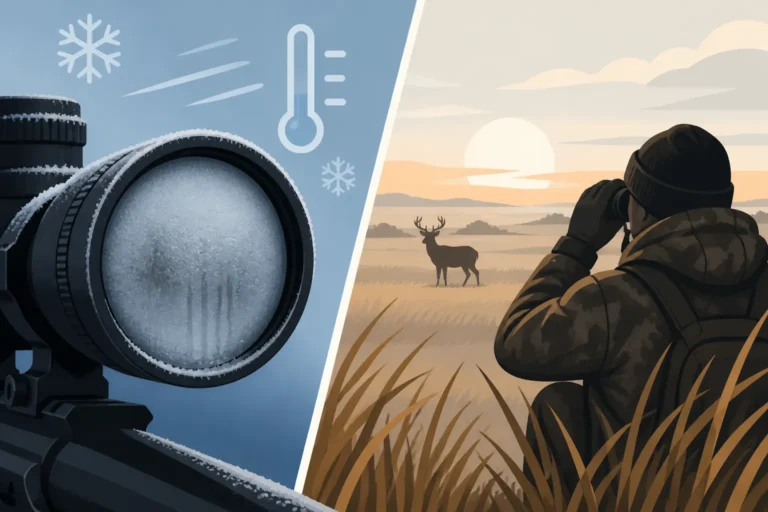
Nebraska's hunting conditions can be tough on firearms. Dust, sand, rain, and snow are common, and they can all wreak havoc on your rifle's action and optics if not properly maintained. Regular cleaning, especially after being exposed to the elements, is crucial. Pay attention to the bore, bolt, and trigger assembly. Keep your optics clean with proper lens cleaning solutions and cloths, as scratches or smudges can impair clarity at critical moments. Lubricate moving parts to ensure smooth operation, but don't over-lubricate, as this can attract dirt. A well-maintained rifle is a reliable rifle, and reliability is key when you have only one shot at a trophy animal. Consider a quality hard case for travel to protect your investment from bumps and jostles, especially if you’re driving hundreds of miles to your hunting spot.
Pre-Season Prep and In-Field Confidence
The best rifle setup is only part of the journey. What you do before and during your hunt truly seals the deal.
Gear Checks and Pack Organization
Before the season even begins, conduct a thorough gear check. Inspect your rifle, scope, bipod, and any other accessories. Ensure all screws are tight, optics are clear, and everything is functioning smoothly. Make sure you have enough of your chosen ammunition, and that it's the exact load you've practiced with and zeroed. Organize your pack with essentials like a rangefinder, wind checker, emergency kit, and anything else you might need for a day afield. Knowing exactly where everything is in your pack means less fumbling and more focus when a hunting opportunity arises. Use a checklist to ensure nothing is forgotten.
Mental Preparedness and Ethical Shot Placement
Hunting isn't just a physical challenge; it's a mental one. The ability to stay calm under pressure, to accurately judge distance, wind, and animal behavior, and to make an ethical shot is paramount. Practice deep breathing exercises to control your heart rate, and visualize successful shot placement. Understand that there will be times when the shot isn't perfect, or conditions are too risky. Knowing when not to take a shot is as important as knowing when to pull the trigger. Always aim for the vital organs to ensure a quick, humane kill. After the shot, be prepared for recovery, which can often be as challenging as the hunt itself, especially in the vastness of the Sandhills. Resources like GoHunt can help you understand game movement patterns that can assist with recovery prediction. And always be aware of Carcass Transport Rules Out of Nebraska if you are an out-of-state hunter.
Nebraska Rifle Hunting Setup Summary
Here's a quick overview of key considerations for your Nebraska rifle setup:
| Category | Key Considerations | Common Caliber Examples | Optic Recommendations | Stability Tools |
|---|---|---|---|---|
| Caliber | Flat trajectory, sufficient energy for ethical kill at range, wind performance | .308 Win, .30-06, 6.5 Creedmoor, .270 Win, .300 Win Mag, .450 Bushmaster (straight-wall) | Variable power, FFP/BDC reticle, parallax adj., clear glass | Bipod, Shooting Sticks |
| Optics | High clarity, sufficient magnification for distance, reliable turrets, good light gathering | N/A | 3-9x, 4-12x, 4-16x (variable); 40-50mm obj. lens | Tripod for glassing |
| Stability | Essential for long shots and windy conditions, versatile for field positions | N/A | N/A | Bipod, Tripod, Shooting Sticks |
| Ammunition | High BC, controlled expansion, practice with chosen load | N/A | N/A | N/A |
| Comfort | Reduces fatigue, allows quick rifle deployment | N/A | N/A | Padded Sling |
| Legality | Adhere to state regulations, acquire proper permits, understand zone restrictions | N/A | N/A | N/A |
| Maintenance | Regular cleaning, lubrication, optic care | N/A | N/A | Cleaning Kit |
| Practice | Simulate field conditions, shoot at varied distances, understand ballistics | N/A | N/A | Rangefinder, Ballistic App |
Disclaimer
This article is for general informational purposes only and does not constitute professional advice. Laws, prices and regulations vary by location and change over time. Consult a qualified professional for guidance on your specific situation.