Wildcat Hills State Recreation Area
The Wildcat Hills, rising majestically in the Nebraska Panhandle, present a unique hunting experience that can feel a world away from the state's more common flat farmlands and river bottoms. Many hunters, especially those accustomed to row-crop country, find themselves scratching their heads when trying to figure out how to approach this rugged landscape. This guide aims to demystify hunting in the Wildcat Hills State Recreation Area, offering practical advice and strategies for successfully navigating and hunting this distinct Nebraska gem.
Understanding the Wildcat Hills Landscape
When you first lay eyes on the Wildcat Hills, you might do a double-take, wondering if you're still in Nebraska. This isn't your typical cornfield or Sandhills vista. It's a place of dramatic elevation changes, ponderosa pine forests, deep cedar canyons, and open grasslands, offering a truly different kind of challenge and reward for the hunter. This unique topography not only dictates how game moves but also how you, as a hunter, must adapt your approach.
Unique Terrain and Habitat
The Wildcat Hills are characterized by their steep, rocky bluffs, deep ravines carved by eons of water flow, and dense stands of ponderosa pine and eastern red cedar. Interspersed are pockets of native grasslands and some riparian areas along intermittent streams. This diverse habitat creates a mosaic that provides excellent cover, bedding areas, and travel corridors for wildlife. Unlike the vast, rolling expanses of the Sandhills, the Wildcat Hills offer a more broken and enclosed environment, where visibility can be limited by the dense tree cover and the undulating terrain. Hunters often express frustration trying to move silently through the dry, crunchy pine needles and rocky ground, or feeling claustrophobic after miles of wide-open prairie. It requires a different mindset and a focus on detail that might be unfamiliar to many.
The changes in elevation also create distinct thermal currents, especially in the mornings and evenings. Understanding how these thermals rise and fall can be critical for keeping your scent from spooking game. For example, in the early morning, cool air sinks into the valleys and draws, carrying your scent downhill. As the sun rises and heats the slopes, the air begins to rise, carrying scent uphill. Ignoring these natural air currents is a surefire way to have deer, particularly, bust you before you even know they're there. It's a constant mental chess match, always checking the wind, but also considering how the sun's position is affecting air movement in the canyons.
Game Species Present
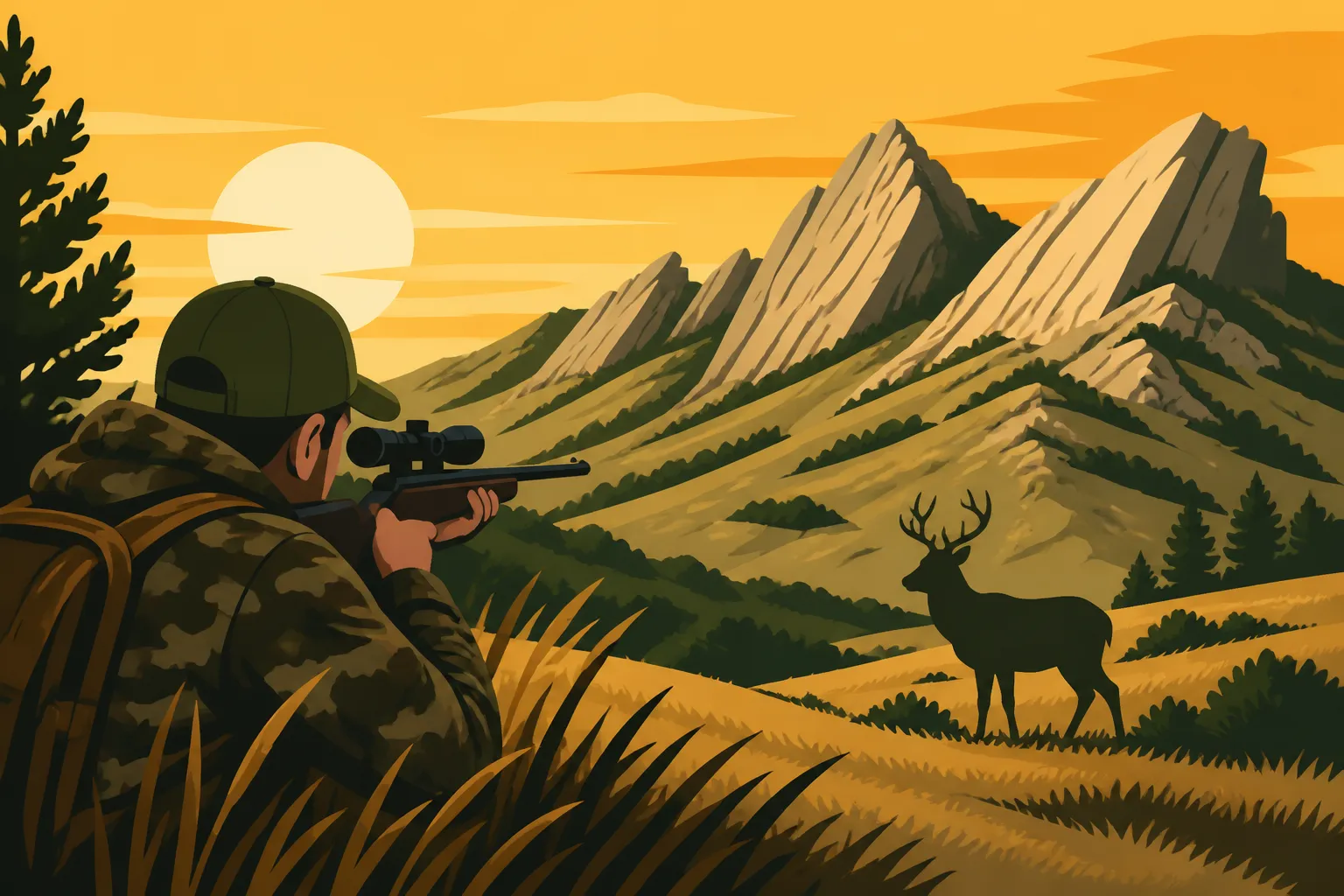
The primary big game species pursued in the Wildcat Hills are mule deer and whitetails, though their distribution varies. Mule deer tend to favor the more open, pine-studded slopes and grasslands, often bedding high on the ridges where they can survey their surroundings. Whitetails, on the other hand, are more typically found in the thicker cover of the cedar canyons and along the brushy creek bottoms, where they can remain concealed. Hunters need to be prepared for both species and adjust their tactics accordingly. Mule Deer in the Nebraska Sandhills and Panhandle is a good resource to understand their general behavior.
Beyond deer, the Wildcat Hills also offer opportunities for other species. Small game like rabbits and squirrels can be found in appropriate habitats, and upland birds, including some quail and turkeys, also call the area home. While not as renowned for these species as other parts of the state, a diverse hunter might find success by scouting specific pockets of habitat. For turkey hunting, the rugged terrain means calling strategies might need to be adapted from what works in flatter river corridors. Hunting Merriam's in the Nebraska Pine Ridge shares similar habitat challenges that can apply here.
Here's a quick overview of what you might encounter:
| Species | Preferred Habitat | Common Hunting Method |
|---|---|---|
| Mule Deer | Open pine ridges, grassy slopes, rocky bluffs | Spot-and-stalk, Glassing |
| White-tailed Deer | Dense cedar canyons, brushy creek bottoms, riparian areas | Still-hunting, Ground Blinds |
| Wild Turkey | Pine forests, rocky slopes, mixed timber | Calling, Ambush |
| Cottontail Rabbit | Brushy areas, thickets, rocky outcrops | Still-hunting, Dog hunting |
| Fox Squirrel | Timbered areas, oak stands | Still-hunting, Dog hunting |
Navigating Public Access and Regulations
Hunting public land in Nebraska can often feel like finding a needle in a haystack, and the Wildcat Hills are no exception. While there are significant public tracts, they are often intermingled with private land, creating a complex patchwork. Understanding where you can legally hunt and how to effectively navigate these areas is paramount to a successful and frustration-free trip.
Permitting and Season Considerations
The Wildcat Hills State Recreation Area is generally open to hunting in season, but specific rules apply depending on the game species and your chosen weapon. For deer, the area typically falls under a specific Deer Management Unit, meaning you'll need the appropriate permit for that unit. This could be a General Deer permit, or perhaps an Antlerless-Only permit, depending on availability and your target. It's absolutely crucial to check the latest Nebraska Game and Parks Commission regulations each year, as unit boundaries, permit types, and season dates can change. Nebraska Deer Permit Types by Unit provides a deeper dive into the permit structure.
For upland birds or small game, you'll generally need a Nebraska Hunt Permit and a Habitat Stamp. Again, verify season dates, bag limits, and any specific regulations for the Wildcat Hills area. Unlike some parts of the state with specific public land antlerless seasons, the opportunities here will usually align with general unit seasons. Always remember that even within a state recreation area, certain zones might be closed to hunting for safety, management, or recreational use by other visitors, so pay attention to signage.
Tools for Access and Navigation
In the Wildcat Hills, a good mapping tool isn't just a convenience; it's a necessity. The mixture of public and private land, combined with the rugged terrain, makes it easy to inadvertently trespass if you're not paying close attention. This is where tools like onX Hunt truly shine. Using a reliable mapping app that shows public land boundaries, landowner information, and topographical features can save you a lot of headache and keep you on the right side of the law. You can download maps for offline use, which is critical in areas where cell service is spotty, as it often is in these hills. It's a game-changer for confidently navigating unfamiliar territory and preventing those "am I on public or private?" moments of panic.
Beyond digital maps, the Nebraska Public Access Atlas is an invaluable, free resource. It's published annually and details all public hunting lands, including Open Fields and Waters (OFW) tracts, Wildlife Management Areas (WMAs), and other state or federal properties. While the Wildcat Hills State Recreation Area is a fixed public land, knowing about other nearby access points can extend your hunting options. Reading the Nebraska Public Access Atlas can help you get the most out of this resource. Always cross-reference the Atlas with your digital map for the most current information, as changes, though rare for established recreation areas, can occur.
Hunting Strategies for the Wildcat Hills
Hunting the Wildcat Hills demands a different approach than typical Nebraska hunting. The terrain itself is your biggest asset and challenge, and successful hunters learn to work with it, not against it. It's less about sitting in a stand over a food plot and more about relentless scouting, patient glassing, and often, strenuous foot travel.
Stalking and Still-Hunting Tactics
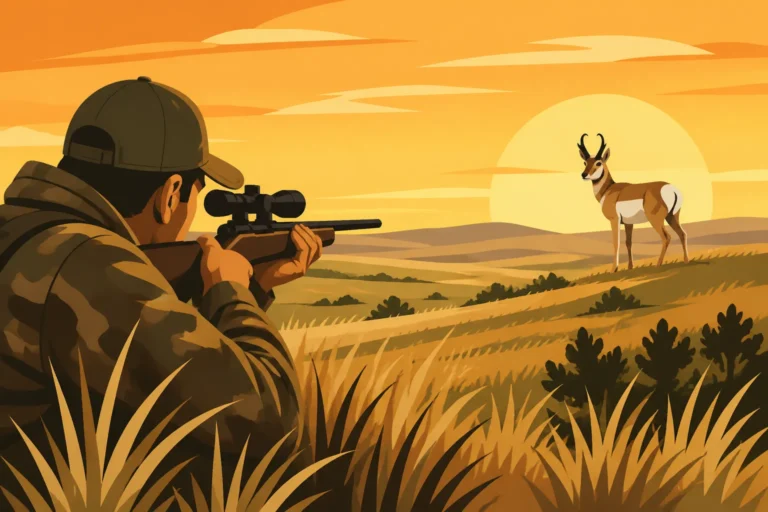
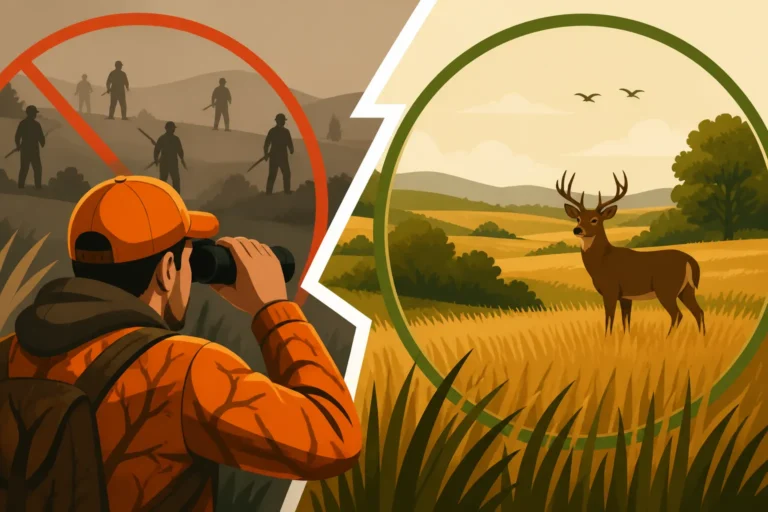
Given the broken terrain and mixed cover, spot-and-stalk is a highly effective method for mule deer in the Wildcat Hills. This involves using high vantage points to glass large areas, identifying game, and then carefully planning an approach to get within shooting range. Good optics, especially a quality pair of binoculars and a spotting scope, are crucial for this. You'll spend a lot of time behind glass, patiently picking apart distant hillsides and pine thickets. Optics for Glassing the Nebraska Sandhills offers excellent advice that translates well to the Wildcat Hills, emphasizing the importance of quality glass and patience. Once game is spotted, the stalking often involves navigating steep slopes, dodging through thick cedars, and using the contours of the land to remain out of sight and downwind. This can be physically demanding, requiring both stamina and mental fortitude.
For whitetails, or when moving through denser cover, still-hunting can be incredibly productive. This involves moving slowly and deliberately, taking only a few steps at a time, and then pausing for several minutes to observe and listen. The goal is to blend into the environment, letting your eyes and ears do most of the work, trying to spot parts of an animal before it sees you. This technique is particularly effective in the cedar-choked draws and pine stands where visibility is limited to shorter distances. Pay attention to fresh tracks, rubs, and scrapes, which can indicate recent deer activity. Still-Hunting Nebraska Cedar Draws provides excellent tactical insights into this method, directly applicable here. The key is extreme patience and scanning for the smallest detail that might betray a deer's presence – an ear flick, a horizontal line in a vertical world, or the slight shift of a tail.
Gear Considerations for Rugged Terrain
Your gear choices can make or break a hunt in the Wildcat Hills. Footwear, in particular, is critical. You'll be covering a lot of ground, often on uneven, rocky, and sometimes sandy terrain, so comfortable, supportive, and durable boots are a must. Look for boots with good ankle support to prevent twists and ample cushioning for long days on your feet. Given the variable weather, from warm early season days to frigid late season, a good layering system for clothing is also essential. Wind is often a factor on the exposed ridges, so windproof outer layers are highly recommended. Boots for Walking Nebraska Grass and Sand offers great advice on choosing appropriate footwear for similar rugged conditions.
Beyond personal gear, consider what you'll need to get your animal out. If you're successful on a mule deer high on a ridge or a whitetail deep in a canyon, you'll face a strenuous pack-out. A good quality frame pack and game bags are indispensable. Even if you plan to quarter your animal in the field, having the right tools for field dressing and meat care will be crucial, especially if temperatures are warm. Meat Care Gear for Warm Nebraska Openers is a must-read for anyone hunting early season or in unpredictable Nebraska weather, as spoiling meat after a hard-earned harvest is a disheartening experience. Don't underestimate the physical demands of this area; prepare your body and your gear accordingly.
The Challenge and Reward of the Wildcat Hills
Hunting the Wildcat Hills State Recreation Area is not for the faint of heart or the unprepared. It demands physical stamina, mental grit, and a willingness to adapt your hunting style to its unique demands. Many hunters, accustomed to easier terrain, find the steep climbs, dense cover, and often sparse game numbers a true test of their resolve. You might put in miles without seeing a thing, only to suddenly come across a magnificent mule deer buck or a wary whitetail ghosting through the pines.
However, the rewards are equally unique. The satisfaction of spotting a deer across a canyon, executing a perfect stalk through rugged terrain, and harvesting an animal in such a wild and scenic setting is unparalleled. It offers a glimpse of what Nebraska hunting can be beyond the agricultural landscape. The solitude you can find here, especially deep within the draws, is a welcome change from some of the more heavily pressured public lands. It's a place where you can truly immerse yourself in the hunt, honing skills that will serve you well in any challenging environment. For those willing to put in the effort, the Wildcat Hills offers an authentic, rewarding, and truly memorable Nebraska hunting adventure.
Disclaimer
This article is for general informational purposes only and does not constitute professional advice. Laws, prices and regulations vary by location and change over time. Consult a qualified professional for guidance on your specific situation.