Wildlife Management Areas Near Scottsbluff
Finding public hunting ground in the vast, often privately-owned landscapes of western Nebraska can feel like an impossible puzzle, especially when you're looking for opportunities close to a hub like Scottsbluff. It's a common frustration for hunters, both residents and nonresidents, who dream of chasing mule deer in the breaks, Merriam's turkeys in the canyons, or pheasants along the creek bottoms. This guide is designed to cut through that confusion, focusing specifically on the invaluable Wildlife Management Areas (WMAs) that pepper the Scottsbluff region, giving you the real-world insights you need to plan a successful hunt.
Understanding Nebraska's Wildlife Management Areas in the Panhandle
When you hear "Wildlife Management Area" in Nebraska, it's easy to picture flat, marshy ground in the eastern part of the state, or maybe some rolling hills. But out here in the Panhandle, WMAs take on a completely different character, offering some of the most unique and challenging hunting experiences in the state. These aren't just generic tracts of land; they are vital pieces of habitat specifically acquired and managed to provide public access and foster healthy wildlife populations.
What Makes Panhandle WMAs Unique
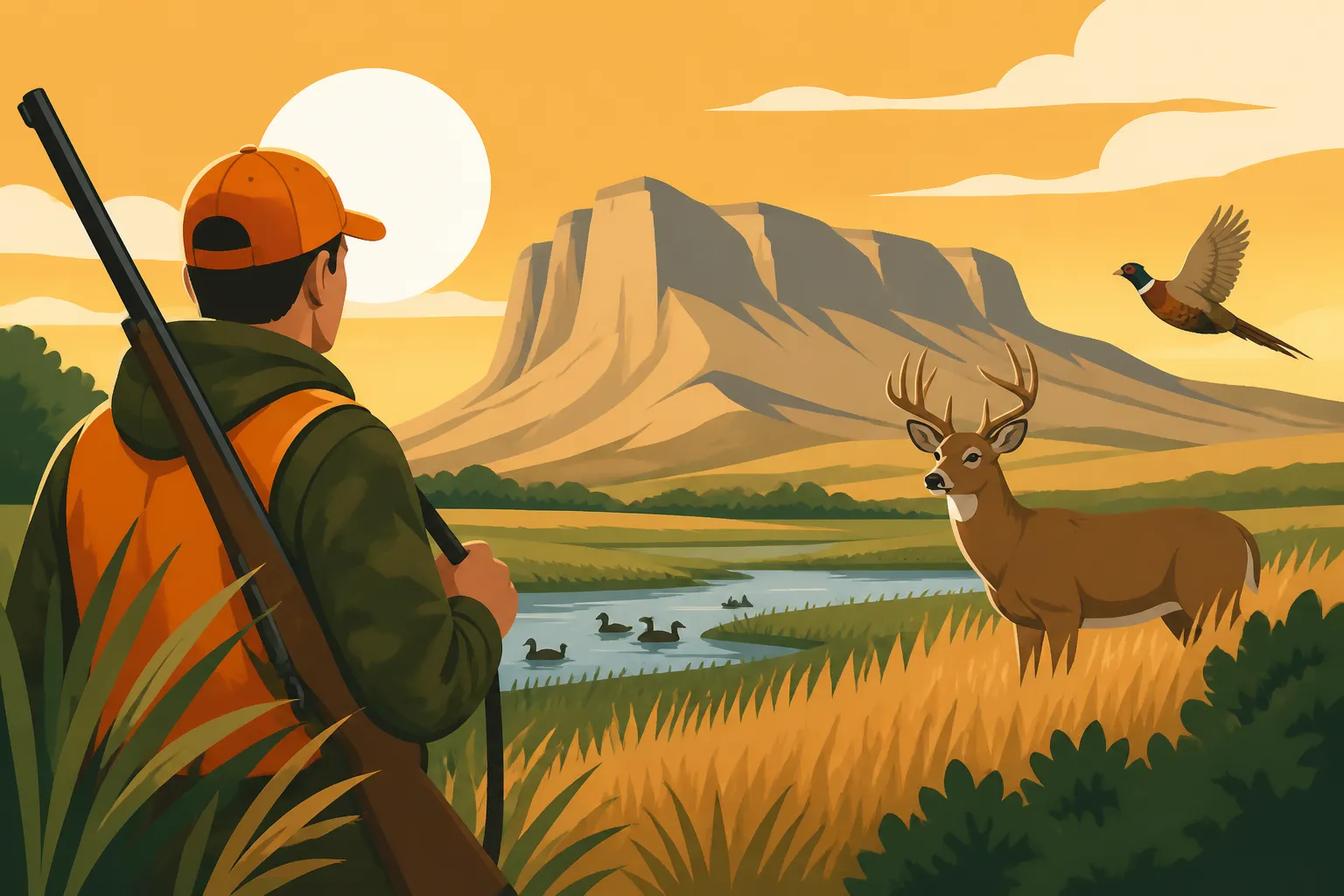
The Panhandle is a world apart from much of Nebraska. Forget the endless cornfields; here, you're looking at rugged badlands, towering pine-clad buttes, deep canyons carved by ancient waterways, and vast expanses of shortgrass prairie. The WMAs in this region aren't just remnants; they're often the most prime habitat available for several sought-after species, acting as crucial public islands in a sea of private agricultural and ranch land. This means they can be hotspots, but also receive significant pressure.
Unlike many WMAs closer to the Platte River or Rainwater Basin, these western Nebraska properties are often characterized by significant elevation changes, rocky outcrops, and dense cedar or ponderosa pine draws. This topography dictates not only the wildlife you'll find but also the tactics you'll need to employ. You're far more likely to be Hunting the Wildcat Hills Rimrock for mule deer or Merriam's turkey than sitting in a box blind over a food plot. These areas are home to thriving populations of mule deer and whitetails, robust numbers of Merriam's turkeys, and even pronghorn antelope on the prairie edges. In the northern reaches of the Panhandle, certain WMAs can even offer rare opportunities for elk, although those permits are notoriously difficult to draw. Upland birds like pheasant, quail, and even sharp-tailed grouse can also be found in specific habitats within these management areas, adding to the diverse hunting menu.
General WMA Rules and Etiquette
While each WMA might have specific nuances in its rules, there are some universal truths to keep in mind when hunting any public ground in Nebraska, especially out west. First and foremost, leave no trace. This isn't just a polite suggestion; it's a foundational principle of public land hunting. Pack out everything you pack in, and if you see litter, consider packing that out too. These lands are for everyone, and preserving their wild character is paramount.
Permanent blinds, tree stands, or elevated platforms are generally prohibited on WMAs. If you use a portable stand or blind, it usually needs to be removed daily, or sometimes within a specified timeframe (e.g., end of season, within a certain number of days). Always check the specific regulations for the WMA you plan to hunt, as rules can vary from one area to another and are subject to change year to year. Vehicle access is typically restricted to designated parking areas and established roads; off-road travel is almost universally forbidden. Respecting these boundaries is not only a legal requirement but also a matter of courtesy to other hunters and the wildlife. There’s nothing more frustrating than having a hunt disrupted by someone driving where they shouldn't be. Remember, these rules are in place to ensure fair chase, safety, and the long-term health of the habitat. Always carry your current Nebraska Habitat Stamp Requirements and your relevant hunting permits, as conservation officers frequent these popular public hunting spots.
Key Wildlife Management Areas Around Scottsbluff
When you're based in Scottsbluff, you're sitting pretty close to some truly fantastic public hunting opportunities. While some of the major WMAs require a bit of a drive, there are several within a reasonable distance that offer diverse terrain and target species. Knowing which areas to focus on can save you a lot of windshield time and put you on game faster.
| WMA Name | Primary Species | Key Habitat | Notable Features | Driving Time from Scottsbluff (Approx.) |
|---|---|---|---|---|
| Wildcat Hills SRA/WMA | Mule Deer, Whitetail, Merriam's Turkey | Pine Ridge, Rugged Breaks, Canyons | Scenic overlooks, steep terrain, challenging access | 20-30 minutes |
| Nine Mile Creek WMA | Whitetail, Waterfowl, Pheasant | Riparian, Wetlands, Grassland | Creek bottom, good for stalking, diverse bird cover | 30-40 minutes |
| Kiowa WMA | Pheasant, Quail, Rabbit, Whitetail | Grassland, Riparian, Shelterbelts | Smaller tract, good for upland birds | 15-25 minutes |
| Fort Robinson State Park | Elk, Mule Deer, Whitetail, Merriam's Turkey, Grouse | Pine Ridge, Badlands, Buttes, Open Prairie | Large, diverse, requires specific park permits for big game | 1 hour 30 minutes – 2 hours |
Note: Driving times are estimates and vary greatly with road conditions and speed limits. Always check the official Nebraska Game and Parks Public Access Atlas for precise boundaries and specific regulations.
Wildcat Hills State Recreation Area and WMA
Just a short drive south of Scottsbluff, the Wildcat Hills area is an absolute gem. This WMA, often integrated with the State Recreation Area, is characterized by dramatic bluffs, deep canyons, and dense stands of ponderosa pine. The terrain here is challenging, featuring steep climbs, rocky footing, and thick cover, which makes for a truly adventurous hunt. It's a stark contrast to the flat fields you might expect elsewhere in Nebraska.
The primary draw for hunters here is undoubtedly the mule deer and whitetails that call these hills home. The dense pine and cedar draws provide excellent cover, making deer hunting a test of stealth and patience. Merriam's turkeys also thrive in these woods, offering an exciting spring or fall pursuit. Access can be tricky, with some areas requiring significant walking to get away from roads and other users. The scenic beauty of the Wildcat Hills attracts hikers and sightseers, so be mindful of non-hunters, especially during peak seasons. Always double-check the local regulations, as parts of the State Recreation Area might have restricted hunting zones or archery-only requirements. This is where a reliable mapping app like onX Hunt becomes invaluable, allowing you to clearly see WMA boundaries, elevation changes, and potential access points, helping you navigate the rugged landscape without straying onto private property.
Nine Mile Creek WMA
Venturing a bit northwest of Scottsbluff, you'll find the Nine Mile Creek WMA. This area offers a different ecological profile than the Wildcat Hills, centered around the riparian corridor of Nine Mile Creek. Here, the landscape transitions from rolling grasslands into dense willow and cottonwood stands along the creek bottom, interspersed with some agricultural fields. This diversity creates excellent habitat for whitetail deer, which prefer the dense cover of the creek bottom, and a variety of waterfowl and upland birds.
Nine Mile Creek can be an excellent spot for still-hunting whitetails along the meandering creek, where cover is abundant and deer travel corridors are well-defined. Waterfowl hunters might find opportunities during migration periods, while pheasant and quail hunters can work the edges of the riparian zones and the adjacent grasslands. It's generally less rugged than the Wildcat Hills, making for easier walking, but still demands good scouting to find the most productive areas. Identifying pinch points and natural funnels along the creek is key to success here.
Kiowa WMA
Even closer to Scottsbluff, the Kiowa WMA provides more accessible hunting opportunities, often comprising a mix of native grassland, some scattered trees, and riparian fringes. While typically smaller than the larger Panhandle WMAs, Kiowa is a fantastic option for a quick morning or evening hunt, especially for upland birds like pheasants and quail, as well as rabbits. Whitetail deer will also utilize the available cover, particularly if adjacent to private crop fields.
These smaller WMAs often receive consistent pressure, but don't let that deter you. Smart hunters can still find success by working harder, walking further, or hunting during off-peak times. The combination of grassland and limited cover makes it an ideal spot for walking with a good bird dog. If you're looking for a convenient spot for an afternoon pheasant hunt after work, Kiowa WMA could be just the ticket. It's a testament to the value of Nebraska's WMA program, providing hunting close to populated areas.
Fort Robinson State Park (and WMA)
While a bit further north, approximately an hour and a half to two hours from Scottsbluff, Fort Robinson State Park is an absolute must-mention for anyone considering big game hunting in the Panhandle. This isn't just a WMA; it's a massive state park with extensive hunting lands embedded within it, offering some of Nebraska's most unique hunting experiences. Its sheer size and diverse habitat—ranging from the Pine Ridge escarpment to open prairie and badlands—make it legendary.
Fort Robinson is one of the very few places in Nebraska where you can even dream of drawing an elk permit. If you're lucky enough to draw one, the hunting within the park is an unparalleled experience. Beyond elk, the park also boasts strong populations of mule deer, whitetails, Merriam's turkeys, and even sharp-tailed grouse. However, hunting within a state park comes with its own set of rules and often requires specific, limited permits. You can't just walk in with a general deer tag for the unit; you'll often need a separate park-specific permit, which are typically very limited and drawn through a lottery system. If you're planning a big game hunt in the Panhandle, researching Fort Robinson's specific big game draw options through sites like GoHunt is essential, as the draw odds are competitive but the reward is immense. Hunting Mule Deer in the Nebraska Pine Ridge is an experience you won't soon forget, and Fort Robinson provides some of the best access to this unique ecosystem.
Strategies for Hunting WMAs Near Scottsbluff
Successfully hunting WMAs in the Scottsbluff area requires a blend of preparation, adaptability, and understanding the local nuances. It's not just about showing up with a gun; it's about making smart decisions before and during your hunt, leveraging modern tools, and applying tactics that suit the unique Panhandle environment.
Scouting and Planning Your Hunt
Effective scouting is the bedrock of success on public land, and especially on western Nebraska WMAs. Given the often vast and rugged nature of these areas, simply driving up on opening day with no prior knowledge is a recipe for frustration. Start with maps. The Nebraska Public Access Atlas is your best friend, a free resource that clearly delineates public hunting lands, including WMAs. Beyond that, embrace technology. Apps like onX Hunt are game-changers, offering detailed satellite imagery, property lines, and topographic maps right on your phone. You can use it to identify potential bedding areas, travel corridors, water sources, and specific terrain features that might concentrate game. Looking for a hidden draw that might hold a mature mule deer? onX Hunt can reveal it. Trying to avoid private land while working a creek bottom? Its property line overlay is indispensable.
Beyond digital tools, physical scouting, even if it's just a drive-through visit before the season, can provide invaluable real-time information. Note recent activity, changing cover, or newly cut fields. Where Cameras Help on Pressured Ground is a topic often discussed for deer, and while rules vary on WMAs, knowing where to focus your attention can be greatly aided by previous trail camera data, or even just fresh tracks and sign observed during scouting trips. Combining traditional map analysis with modern GPS tools and boots-on-the-ground recon will significantly increase your odds.
Tailoring Tactics to Panhandle Terrain and Species
The varied landscapes around Scottsbluff demand varied hunting tactics. You can't hunt the Wildcat Hills like you'd hunt a Platte River bottom, and vice versa.
-
For Mule Deer and Pronghorn: The open, often rolling terrain of many Panhandle WMAs makes spot-and-stalk hunting the most effective method. This involves covering ground, often using high vantage points, to glass for animals. Patience is key. Spend hours behind good optics – Binocular Magnification for the Sandhills and Spotting Scope Magnification for Antelope are critical here – searching every fold, shadow, and draw. Once you spot an animal, the real work begins: planning your stalk using terrain features, considering Wind and Thermals in the Sandhills, and slowly closing the distance. This method applies whether you're hunting open grassland areas for antelope or breaking down the more open benches within the Wildcat Hills for mule deer. Glassing Sandhills Blowouts for Mule Deer offers principles that apply widely to glassing open country, even if the habitat isn't precisely "Sandhills blowouts."
-
For Whitetails and Turkeys: When targeting whitetails and turkeys, especially in riparian corridors like Nine Mile Creek or the denser sections of Fort Robinson, your tactics will shift. For whitetails, focus on cover. Still-hunting through creek bottoms, or setting up a ground blind or portable treestand (remember WMA rules on stand placement) along known travel routes are productive. Grunt Calls in Thick River Timber can be effective during the rut. For turkeys, particularly the Merriam's in the Pine Ridge areas, run-and-gun calling strategies are often productive. Locator calls like owl hoots or crow calls to get a shock gobble, then moving into position and using a slate or box call to mimic a hen can bring a gobbler in. Calling Spring Gobblers in Nebraska Timber is a classic strategy that works well in these areas.
-
For Upland Birds: The grasslands and brushy edges of WMAs like Kiowa and Nine Mile Creek are prime pheasant and quail country. Walking these areas, especially with a good bird dog, is the most common approach. Focus on dense cover: cattail sloughs, plum thickets, tall grass, and shelterbelts. Walking Milo and Corn Stubble for Pheasants applies to any adjacent agricultural fields or areas managed with similar crops. Often, these birds will hold tight, requiring hunters to walk slowly and thoroughly. If hunting with a group, blocking and driving tactics can also be effective in larger fields.
Regardless of the species, remember that public land often sees more pressure. This means animals can be warier and more prone to seeking refuge in the thickest, nastiest cover. Being willing to walk further, hunt harder, and explore less accessible pockets of these WMAs can often yield success where others give up. Being able to adapt your strategy on the fly, based on what the animals and the landscape are telling you, is a hallmark of a successful public land hunter. Consider checking mapping resources on the Nebraska Game and Parks website, or using tools like onX Hunt which updates its public land layers frequently, ensuring you're always on legal hunting ground.
Essential Considerations for Western Nebraska WMA Hunters
Hunting in western Nebraska's WMAs is an incredible experience, but it comes with its own set of challenges and requirements. Being well-prepared for everything from permits to unpredictable weather can make the difference between a memorable hunt and a miserable one.
Permits, Seasons, and Regulations Specifics
First and foremost, you can't just show up and hunt. Nebraska, like every state, has a system of permits and regulations. Your hunting on WMAs around Scottsbluff will be governed by the general state hunting regulations, but you must also be aware of any WMA-specific rules that might apply. For instance, some areas may have archery-only restrictions, specific shooting hours that differ from statewide regulations, or even temporary closures for management purposes.
Always start by acquiring your basic Nebraska annual hunt permit and the essential Nebraska Habitat Stamp Requirements. For big game, you'll need the appropriate deer, antelope, or (if you're dreaming big) elk permits. Understanding Nebraska Big Game Permits and How to Get One is crucial, especially for the limited draw opportunities in the Panhandle for species like mule deer or antelope. Nonresidents often face more competition for permits, making planning ahead through services like GoHunt even more critical to understand draw odds and application timelines.
During certain times of the year, particularly the November firearm deer season, blaze orange requirements become mandatory for all hunters, including archers. Be aware of Orange Rules That Apply During Archery Season if you plan to bowhunt during the rifle season overlap. Always consult the current Nebraska Game and Parks hunting guide, which is updated annually, for the most accurate and up-to-date information. Don't rely on old information or hearsay; things change.
Weather, Terrain, and Safety
The Panhandle of Nebraska is a land of extremes. Weather can shift rapidly, from warm, sunny days to fierce blizzards, all within a matter of hours. Wind is a constant companion, capable of chilling you to the bone even on a moderately cold day. Layering your clothing is not just a suggestion; it's a survival strategy. Start with moisture-wicking base layers, add insulating mid-layers, and top it off with a windproof and waterproof outer shell. Clothing for Nebraska Wind and Cold is an article you might want to revisit to ensure you're adequately prepared.
The terrain itself presents challenges. From the steep, rocky climbs of the Wildcat Hills to the sandy, sometimes treacherous, two-tracks of areas further afield, proper footwear is paramount. Invest in comfortable, supportive, and waterproof hiking boots that are broken in. Blisters on day one can ruin an entire hunt. Boots for Walking Nebraska Grass and Sand are different from what you might wear in a swamp. Physical fitness is also a huge asset; being able to cover miles of challenging terrain makes a world of difference in accessing unpressured areas.
Safety should always be your top priority. Cell phone service can be spotty to non-existent in many of the more remote WMA areas. Carry a reliable GPS device (even if it's just your phone with offline maps like onX Hunt downloaded) and consider a satellite communicator for emergency contact. Always let someone know where you're going and when you expect to return. Carry plenty of water, extra food, a first-aid kit, and essential vehicle recovery gear (shovel, tow strap, air compressor) if you plan on exploring dirt roads. Getting stuck in sand or mud miles from the nearest paved road is a real possibility and can quickly turn dangerous if you're unprepared. Be realistic about your abilities and don't take unnecessary risks in a landscape that can be as beautiful as it is unforgiving.
Disclaimer
This article is for general informational purposes only and does not constitute professional advice. Laws, prices and regulations vary by location and change over time. Consult a qualified professional for guidance on your specific situation.