Bowhunting During Nebraska’s November Firearm Season
For bowhunters, the thought of hitting the woods during Nebraska’s bustling November firearm deer season can bring a mix of emotions – excitement for prime rut activity, but also significant apprehension about safety and navigating a landscape suddenly filled with rifle hunters. It’s a challenging time where knowing the rules, adapting your strategy, and prioritizing visibility become absolutely critical to not only finding success but, more importantly, ensuring you come home safely. This guide will walk you through everything you need to know to confidently and effectively bowhunt when the rifles are roaring.
Understanding the Overlap of Seasons
Nebraska offers a unique scenario where the archery deer season runs concurrently with the highly anticipated nine-day November firearm season. For archers, this means navigating a vastly different hunting environment than the quieter early fall weeks. It's crucial to grasp the legal frameworks and the specific dates when this overlap occurs, as it dictates many of your planning and safety measures.
Key Dates and Legalities for Bowhunters
The Nebraska firearm deer season typically kicks off in mid-November and runs for nine consecutive days, often encompassing what many consider the tail end of the whitetail rut or the post-rut secondary breeding phase. During this period, archers are absolutely still permitted to hunt, provided they possess a valid archery permit. However, the game changes dramatically. You'll need to be acutely aware of the specific legal requirements that apply to all hunters in the field during this time, regardless of their chosen weapon. This includes mandatory blaze orange requirements, which are often overlooked by archers accustomed to wearing camouflage. Knowing these dates precisely, which you can always confirm with the Nebraska Game and Parks Commission, is your first step in staying compliant and safe.
It's not just about wearing orange; it's about understanding the specific type of permit you hold. While a regular archery permit allows you to hunt throughout your season, the firearm season introduces unit-specific permits and increased hunter density. This overlap can be a boon for opportunistic archers, as deer movement can be influenced by the pressure, potentially pushing animals into areas they might not frequent otherwise. However, it also means your quiet, solitary bowhunt can quickly turn into a much more social, and potentially stressful, affair. Always double-check your permits and the regulations for the specific deer management unit you plan to hunt.
Permit Nuances and Hunter Density
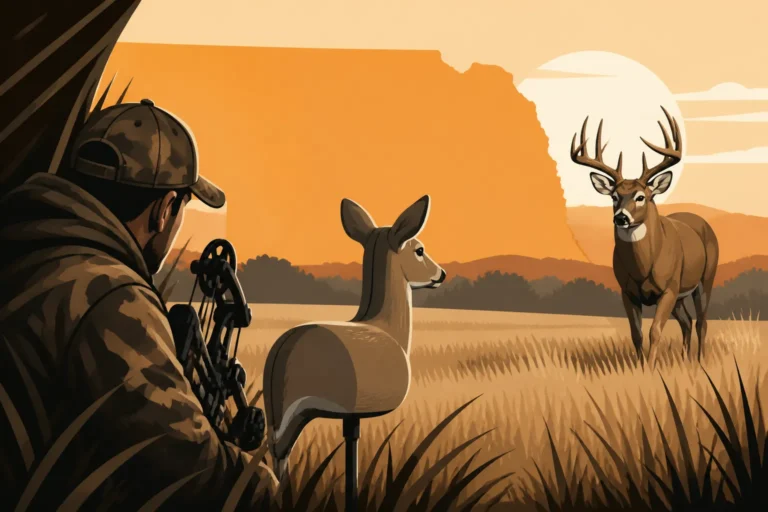
During the November firearm season, specific deer units often have a higher allocation of permits, leading to a significant increase in hunter density, particularly on public lands and easily accessible private parcels. This influx of hunters can drastically alter deer behavior. What might have been a quiet patch of timber a week before the firearm opener can become a flurry of activity, with deer on high alert, constantly moving, and often seeking refuge in dense cover. For bowhunters, this means adjusting expectations and tactics. You might find deer pushing into thicker bedding areas, using specific travel corridors more intensely to avoid open spaces, or even becoming nocturnal.
Consider the implications of this density. More hunters mean more scent, more noise, and more movement in the woods. This can make a stealthy bowhunting approach incredibly challenging. It might also mean that popular stand locations you've used successfully in October are now occupied or too pressured. When contemplating "Bowhunting During Nebraska's November Firearm Season", always assume the woods will be far busier than any other time during the archery season. Using mapping tools like GoHunt can help you identify public lands and assess potential access points that might see less pressure, or at least understand the lay of the land to anticipate where deer might seek refuge.
Safety First and Foremost
Safety is not just a recommendation; it’s an absolute necessity when you’re bowhunting during any firearm season. The woods become a different place when rifles are involved, and understanding and adhering to strict safety protocols is paramount for your well-being and that of others.
Mandatory Blaze Orange Requirements
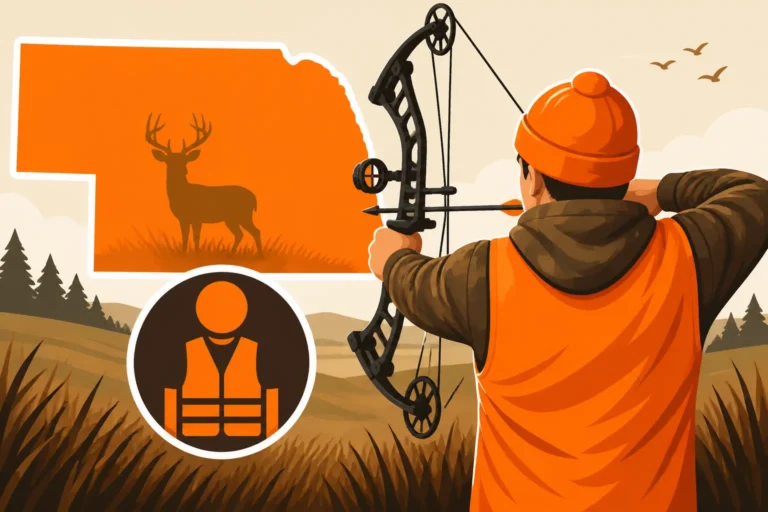
Let's get this straight: if you are hunting deer in Nebraska during any firearm deer season, you must wear blaze orange, even if you are bowhunting. There's no exception. The rule in Nebraska states that you must wear at least 400 square inches of blaze orange on your head, chest, and back. This isn't just a suggestion; it's a legal requirement designed to make you highly visible to other hunters and prevent tragic accidents. Many archers are used to dressing in full camouflage for stealth, but during rifle season, blending in is the last thing you want to do.
Think about it: in the low light of dawn and dusk, or in dense cover like a cedar draw, a person in drab camo can be easily mistaken for a deer. Blaze orange significantly reduces this risk. This means swapping out your favorite camo beanie for a blaze orange one, and wearing a vest or jacket that meets the 400-square-inch requirement. Don't skimp on this. Your life, and the peace of mind of other hunters, depends on it. For a full breakdown, check out the article on "Orange Rules That Apply During Archery Season" for specifics.
| Item | Requirement (Blaze Orange) | Best Practice Notes |
|---|---|---|
| Headwear | Required | Bright orange beanie or cap. |
| Upper Body | At least 400 sq. inches | Vest or jacket covering chest and back. Avoid small patches; go for full visibility. |
| Lower Body | Not explicitly required | Consider orange accents on pants or gaiters for added visibility, especially when tracking. |
| Backpack | Not explicitly required | Can be orange or have an orange cover to increase visibility while walking or still-hunting. |
Communication and Visibility Protocols
Beyond wearing blaze orange, proactive communication and maximizing your visibility are critical. Before you even head out, inform someone of your exact hunting location and expected return time. This is good practice for any hunt, but it's especially vital during high-pressure firearm seasons. If you're hunting with a partner, establish clear communication methods—whether it's two-way radios, cell phone texts, or agreed-upon signals—and stick to them.
When you're actually in the field, think about your presence. If you're walking in or out, move deliberately and perhaps make a bit more noise than you typically would as a stealthy bowhunter. This isn't about being loud and obnoxious, but about consciously alerting others to your presence. If you hear shots, take a moment to pinpoint their direction and proximity. Consider using a safety whistle, especially if you get turned around or need to signal for help. When you set up your stand or ground blind, think about its visibility from different angles, not just for deer, but for other hunters. A bright piece of orange cloth tied to a nearby tree, while still maintaining your camouflage for deer, can be an extra layer of visibility for fellow hunters traversing the area. Remember, your goal is to be seen and identified as a human hunter, not mistaken for game.
Strategic Adjustments for Bowhunters
Hunting during the firearm season requires a complete re-evaluation of your typical bowhunting strategies. The increased pressure, altered deer behavior, and general "busyness" of the woods mean that what worked in September or October might be completely ineffective, or even dangerous, in November.
Adapting to Deer Behavior Under Pressure
Deer, especially whitetails, are incredibly intelligent and adapt quickly to hunting pressure. When the firearm season opens, their routines are instantly disrupted. What was a predictable food source might become too exposed, and their bedding areas, if easily accessible, might be abandoned for denser, harder-to-reach cover. This means that your long-established patterns of deer movement, perhaps based on agricultural fields or specific water sources, are likely to change dramatically. Deer will move more during the day, but often quickly and furtively, using the thickest cover available. They’ll become more nocturnal in open areas.
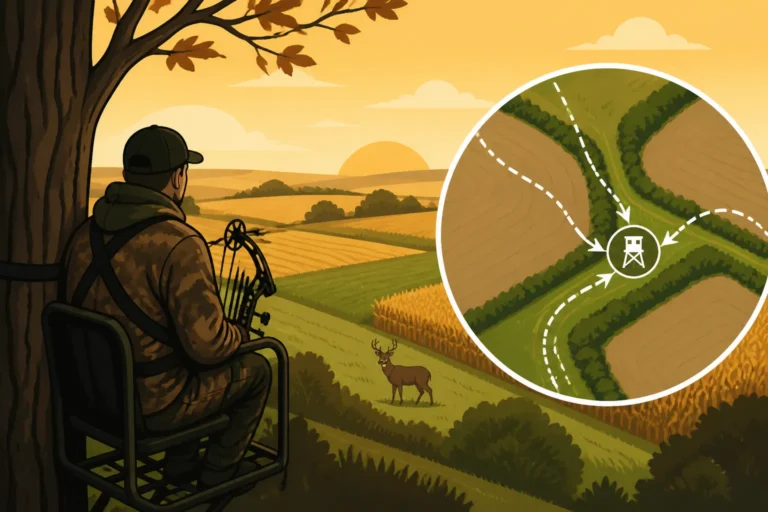
Your best bet is to focus on these thicker bedding areas and the escape routes leading to them. Look for hidden pockets of cover that offer security and visual obstruction. Cedar draws, dense plum thickets, or even just heavy stands of timber in river bottoms become prime locations. Deer will often try to slip out of these areas during brief lulls in hunter activity, or when being pushed by other hunters. Scouting apps like GoHunt can show you aerial views and topo maps, helping you identify these overlooked havens. Understanding "Entry and Exit Routes on Flat Farm Ground" or how deer move through "Reading a Cedar Draw for Deer Movement" becomes even more critical now.
Stand Placement and Ground Blind Tactics
When rifle hunters flood the woods, many traditional treestand spots can become compromised. A stand overlooking a field edge that was perfect in October might now be too exposed, or worse, directly in the line of fire of a rifle hunter. It's time to get creative and prioritize safety and concealment. Consider setting up deeper in cover, perhaps near dense bedding areas or along pinch points that deer use to sneak between parcels of timber. Deer will often follow creek beds, drainages, or fencelines under the cover of brush to avoid open spaces.
Ground blinds, when properly brushed in, can offer excellent concealment and a greater sense of security during firearm season. They keep your movement minimized, contain your scent, and perhaps most importantly, provide a physical barrier. If you're in open country, mastering "Ground Blinds in Open Nebraska Country" is a valuable skill. However, even with a ground blind, remember your blaze orange when entering or exiting, and ensure your blind isn't placed in an area that could be mistaken for an animal. On public land, where pressure is high, you might need to walk further or hunt less desirable spots to find pockets of unpressured deer. Always have an escape route in mind, and know the direction of prevailing winds, as "Wind Direction on Open Nebraska Prairie Stands" is still a factor, though deer may be less predictable.
Public vs. Private Land Strategies
The dynamic between public and private land changes considerably during the firearm season. Public lands, especially those easily accessible, often experience extreme hunter pressure. This isn't necessarily a bad thing for a bowhunter, as that pressure can push deer off the public land and onto adjacent private parcels where hunting pressure might be lower, or vice versa. If you have private land access, you might find deer seeking refuge there. Conversely, if you're restricted to public land, you might have to work harder, walk further, and target less obvious areas.
On public ground, focus on overlooked pockets of cover, steep terrain that discourages rifle hunters, or areas that require significant effort to reach. Look for those small, isolated parcels that other hunters might skip. The Nebraska Public Access Atlas, combined with tools like GoHunt, can be invaluable for identifying these potential honey holes. On private land, communicating with the landowner about their hunting plans and any other hunters they’ve given permission to is paramount. Understanding the overall pressure in the area, whether public or private, will help you predict deer movement and select a safe and effective stand location. This overlap is precisely why understanding "How Nebraska's Archery Deer Season Overlaps the Rut" is so important, as deer are still very much thinking about breeding even under duress.
Gear Considerations for the November Overlap
Your gear choices, from clothing to optics, also need to be adjusted for bowhunting during Nebraska's November firearm season. It’s a blend of keeping warm, staying safe, and maximizing your archery effectiveness in potentially high-pressure situations.
Clothing and Layering for Visibility and Comfort
November in Nebraska can throw a wide range of weather at you, from mild Indian summer days to bitter cold, wind-driven snow. Layering is always key, but during the firearm season, your outer layer must incorporate blaze orange. You'll want a system that allows you to shed layers if you’re walking a long distance to your stand and then add them back to stay warm once you're sitting stationary. Think about durable, quiet fabrics that won't make a rustling sound as you draw your bow.
For your inner and mid-layers, focus on moisture-wicking materials and insulation. Merino wool or synthetic blends work wonders to keep you warm even if you sweat on the hike in. Your outermost layer, the blaze orange one, should also be windproof and water-resistant. "Layering for a Nebraska November Sit" is critical, as you’ll spend long hours motionless. Don't forget insulated gloves or mittens that allow you to operate your bow, and warm, waterproof boots. And, as mentioned, that blaze orange hat is non-negotiable.
Optics and Bow Setup Adjustments
Your optics setup might not change drastically, but how you use them certainly will. During the firearm season, your binoculars and rangefinder become even more vital for positively identifying your target before you even think about drawing your bow. With increased hunter movement, it's possible to glimpse something moving in the distance and mistakenly identify it. Take your time, use your optics, and be 100% sure of your target and what's beyond it. A good quality rangefinder is always important for bowhunting, helping you dial in those precise distances.
As for your bow setup, dependability is paramount. You want a bow that’s quiet, accurate, and comfortable to shoot in cold weather, potentially with thicker gloves on. Double-check all your nocks, fletching, and broadheads before heading out. Consider a fixed-blade broadhead for reliability, especially if you anticipate shots at deer that are jumpy or moving quickly. Ensure your peep sight is clear and not obstructed by fog or moisture. The last thing you want is a gear malfunction when a pressured buck offers a fleeting opportunity.
Mental Game and Expectations
Bowhunting during the firearm season is as much a mental game as it is a physical one. Managing your expectations and maintaining a positive attitude despite the chaos can make all the difference between a frustrating experience and a rewarding one.
Dealing with Increased Pressure and Disturbance
Let’s be honest: the woods are going to be loud. You’ll hear distant rifle shots, the occasional vehicle on a two-track, and likely more human scent and noise than you’re used to. This can be incredibly frustrating for a bowhunter who thrives on stealth and quiet. The key is to accept it. Don't let every distant shot rattle you. Instead, try to interpret the disturbances. A flurry of shots might mean deer are being pushed your way. A vehicle driving down a specific road might signal hunters entering or exiting an area.
Use the pressure to your advantage. While many deer will hunker down, some will be pushed into new areas or forced to move during daylight hours. Focus on pinch points, cover transitions, and areas where deer feel secure. This might mean sitting longer, being more patient, and staying positive. The deer are still there; they're just behaving differently. Remember, the peak rut for whitetails is often around mid-November, meaning that even with pressure, bucks will still be driven to find does. This can make "When the Whitetail Rut Peaks in Nebraska" a valuable time despite the added challenge.
Adjusting Expectations for Success
It's tempting to think that the increased deer movement during firearm season will automatically lead to more bowhunting opportunities. Sometimes it does, but often, the sheer difficulty of remaining undetected and getting a clean, ethical bow shot is amplified. Adjust your definition of success. A successful hunt might be observing deer patterns, learning how they react to pressure, or simply enjoying your time in the woods safely. Don’t put undue pressure on yourself to fill a tag.
This doesn't mean you won't be successful. Many dedicated bowhunters fill their tags during this overlapping period by being adaptable, patient, and focusing on those small windows of opportunity. Just understand that it might require more effort, more hours in the stand, and a greater tolerance for disruptions. Embrace the challenge, learn from the experience, and remember why you love bowhunting in the first place—for the close encounters, the intimate knowledge of the land, and the sheer satisfaction of the hunt. Tools like GoHunt can help you scout and plan, which is half the battle when conditions are tough.
Disclaimer
Please remember that hunting regulations can change. It is always your responsibility to consult the most current Nebraska Game and Parks Commission regulations before heading afield. This guide is for informational purposes only and does not supersede official state regulations.