Hunting the Nebraska Sandhills
The Nebraska Sandhills, a vast expanse of grass-covered dunes spanning over 19,000 square miles, presents a hunting challenge unlike any other in the state. Many hunters dream of pursuing trophy mule deer or speedy pronghorn in this iconic landscape, but the sheer scale, unpredictable weather, and unique terrain can be incredibly intimidating. This guide is here to demystify hunting the Sandhills, offering practical advice and strategies to help you navigate its wild beauty and successfully chase the game that calls it home.
Understanding the Sandhills Landscape
Stepping into the Nebraska Sandhills feels like entering another world. It's a place where the horizon stretches forever, the wind is a constant companion, and the subtle undulations of the dunes hide more than you'd ever imagine. To truly hunt here successfully, you first need to understand the very ground beneath your feet.
Unique Geology and Topography
The Sandhills are essentially a massive ancient dune field, stabilized by grass, making it one of the largest intact grasslands in the world. This isn't flat, featureless prairie. Instead, you'll encounter a seemingly endless series of rolling dunes, varying in size from gentle swells to steep, imposing hills. Between these dunes lie "interdunal valleys," which often hold wet meadows, small ponds, or even larger lakes. These water sources are absolute magnets for wildlife in an otherwise arid environment.
The soil itself is primarily sand, which has significant implications for travel and hunting. It's incredibly soft and loose in many areas, making it easy for vehicles to get stuck. For the hunter on foot, it means walking can be much more taxing than on firm ground, especially uphill. Don't underestimate the energy drain of slogging through loose sand for miles. The sparse vegetation is mostly native grasses, perfectly adapted to hold the sand in place, but offering limited dense cover for hunters or game beyond the natural contours of the land. This vast, open nature dictates that long-range glassing and strategic stalking are paramount.
Climate and Weather Challenges
If there's one thing you can count on in the Sandhills, it's that the weather will be unpredictable and often extreme. Early archery seasons can bring scorching heat, with temperatures soaring into the 90s or even higher. This creates challenges for both hunter and harvested game, requiring careful planning for hydration and immediate meat care. Conversely, late-season hunts can usher in brutal cold, high winds, and sudden blizzards that can drop feet of snow in a matter of hours.
The wind is a near-constant factor, sometimes a gentle breeze, often a relentless gale. This wind not only makes holding still for a shot difficult but also carries scent far and wide, making it crucial to understand wind direction for stalking. A hunter needs to be prepared for all four seasons in a single day sometimes, layering clothing and carrying emergency gear. Don't let a clear morning fool you; the Sandhills can brew up a storm faster than you can say "blizzard."
Water Sources and Vegetation
In such an immense grassland, water is life, and this holds true for the Sandhills' wildlife populations. The unique geology allows rainwater to filter through the sandy soil, recharging the vast Ogallala Aquifer, which then feeds countless springs, creeks, wet meadows, and small lakes. These water sources are critical focal points for game. Deer, antelope, and upland birds will congregate around these areas, especially during dry spells. Learning to identify these spots on a map and understanding how animals use them is a significant advantage.
Beyond the water, the dominant vegetation is various native grasses, which provide forage for grazing animals and crucial nesting cover for birds. While dense timber is rare, you'll find pockets of cedars or other woody vegetation, particularly along creek bottoms or in deep draws. These small islands of cover provide essential bedding areas and thermal protection for deer, particularly during harsh winter conditions. Savvy hunters learn to read these subtle shifts in vegetation, recognizing where animals will seek shelter, feed, and travel.
Game Species of the Sandhills
The Nebraska Sandhills are renowned for specific game animals that thrive in its unique environment. Understanding their habits and preferences in this particular landscape is key to a successful hunt.
Mule Deer: Kings of the Open Country
Mule deer are the quintessential big game animal of the Sandhills. Their large ears, distinct bounding gait, and preference for open, broken terrain make them perfectly suited for this environment. Unlike their whitetail cousins who prefer dense cover, mule deer are masters of using the subtle contours of the land – the rolling dunes, the shallow draws, and even the occasional blowout – to remain unseen. They often bed in these depressions, allowing them to survey their surroundings while staying low.
Hunting mule deer here is primarily a game of Spot-and-Stalk Mule Deer in the Nebraska Sandhills. You'll spend hours glassing vast expanses, patiently picking apart every patch of grass and every shadow until a tell-tale ear or antler tines reveal a buck. Once spotted, the challenge shifts to planning an approach that uses the terrain to hide your movement, all while keeping the ever-present wind in your favor. They are notoriously good at disappearing, even in seemingly wide-open country. For more on their presence, see Mule Deer in the Nebraska Sandhills and Panhandle.
Pronghorn Antelope: Speed and Sight
The pronghorn antelope, often mistakenly called "antelope," is another iconic species of the Sandhills. These animals are built for speed and survival in open grasslands, possessing incredible eyesight that rivals or even surpasses a hunter's optics. They can spot movement from miles away, making them one of the most challenging animals to stalk. They prefer the flatter, more open sections between the major dune complexes, where their speed is their ultimate defense.
Hunting pronghorn is an exercise in patience and precision. Like mule deer, it involves extensive glassing, but stalks are often longer and more exposed. Using subtle dips in the terrain, dry creek beds, or even a line of tall grass can be critical to closing the distance. Their watering patterns can sometimes offer an advantage, as they may visit specific water sources in predictable ways, especially during hot weather. Dive deeper into their world with Pronghorn Antelope on the Nebraska Plains. Knowing When Antelope Water in Hot Weather can be a game-changer.
White-tailed Deer: Adapting to the Edges
While mule deer dominate the Sandhills, white-tailed deer are also present, particularly in areas offering slightly more cover. You're more likely to find whitetails along river systems that flow through the Sandhills, in areas with more cedars, or where the Sandhills transition into agricultural ground. They utilize dense pockets of cover, like cedar thickets in deep draws or the brushy edges of wet meadows, to bed and feel secure.
Hunting whitetails in the Sandhills requires a slightly different approach than hunting mule deer. While spot-and-stalk can still be effective, especially if you locate a buck using a specific travel corridor or bedding area, stand hunting near thicker cover or known travel routes can also be productive. Understanding their preference for dense escape cover within the broader open landscape is key. You can find more comprehensive information on their overall distribution in White-Tailed Deer Across Nebraska.
Upland Birds and Predators
The Sandhills aren't just for big game. It's also prime habitat for unique upland birds and offers excellent predator hunting opportunities. Sharp-tailed grouse and greater prairie-chickens are native to these grasslands and provide a thrilling challenge for bird hunters. These birds are known for their explosive flushes and reliance on vast, open grass. Hunting them often involves covering many miles on foot, working windrows, or focusing on areas of taller, denser grass that provide escape cover and food. A good bird dog is an invaluable asset for locating downed birds in the thick cover. To learn more about these fascinating birds, check out Greater Prairie-Chickens and Sharptails in Nebraska.
Coyotes are abundant throughout the Sandhills, taking advantage of the open terrain to hunt their prey. For predator callers, this landscape offers fantastic opportunities for long-range calling and shooting. Setting up with a good vantage point, using electronic callers, and being prepared for quick shots at wary coyotes makes for an exciting hunt. Learn more about calling these cunning animals in Coyote Calling on Winter Grassland and about their general presence in Coyotes and Bobcats in Nebraska.
Navigating and Accessing Sandhills Public Land
The sheer size of the Sandhills can be overwhelming, especially when trying to pinpoint public hunting access. Unlike areas with clear boundaries, much of the Sandhills is private ranchland, making knowing where you can legally hunt absolutely critical.
Decoding the Public Access Atlas
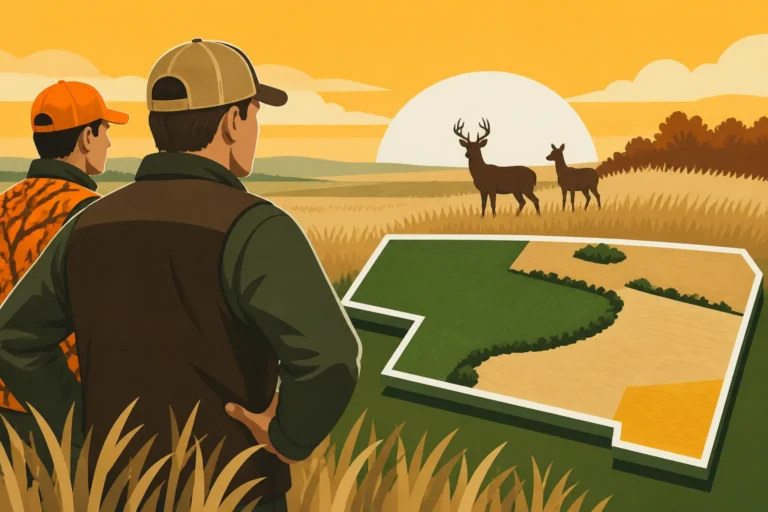
Your first, and arguably most important, tool for hunting the Sandhills is The Nebraska Public Access Atlas. This annual publication, available online and often in print, is the definitive guide to public and publicly accessible lands across the state. In the Sandhills, this includes Wildlife Management Areas (WMAs), certain State Recreation Areas, school trust lands, and tracts enrolled in the Open Fields and Waters (OFW) program.
Learning to read the Atlas effectively is crucial. It uses color-coded maps to differentiate between various types of public access. You'll need to understand the nuances of each land type – for example, some school lands may have specific access rules, and OFW tracts might be walk-in only. Pay close attention to the legends and any special restrictions noted for particular areas. The Sandhills have large tracts of public ground, but they are often isolated or surrounded by private land, making access points vital. Don't just glance at the map; study it, identifying potential parking areas, legal access corridors, and the boundaries of the land you intend to hunt.
Utilizing Mapping Apps
While the Public Access Atlas is foundational, modern technology offers indispensable tools for navigating the vast and often unmarked Sandhills. Mapping applications like onX Hunt and GoHunt are not just convenient; they are essential for safely and legally hunting this country. These apps provide detailed satellite imagery overlaid with property lines, land ownership information, and various public land designations.
Before you even leave home, you can use onX Hunt or GoHunt to e-scout. Look for areas of public land that offer good terrain features – deep draws, isolated water sources, or transitional zones between different types of cover. Most importantly, these apps allow you to download maps to your phone, ensuring you have detailed navigation even when you lose cell service, which is a frequent occurrence in remote Sandhills areas. Once in the field, they provide real-time GPS tracking, showing your exact location relative to property boundaries. This is invaluable for avoiding accidental trespassing, which is a major concern in a landscape where fences are often miles apart and landmarks are few. Understanding Downloading Nebraska Public Land Maps for offline use is paramount to success and safety.
Road Networks and Off-Road Considerations
The "roads" in the Sandhills are often a far cry from paved highways or even maintained gravel. You'll encounter a spiderweb of two-track dirt trails, sandy tracks, and sometimes simply open rangeland where a path has been worn. These can be incredibly deceptive. What looks like a firm track on a map might quickly turn into a deep sand trap in reality.
A four-wheel-drive vehicle with good ground clearance is absolutely essential. Even then, you need to exercise extreme caution. Carrying a shovel, a tow strap, and even a small air compressor to air down your tires for better traction (and then reinflate them) are highly recommended. Getting stuck miles from pavement, with no cell service, can quickly turn a hunting trip into a survival situation. Always stay on established trails, even if they're just two tracks, and never venture off-road onto private land without explicit permission. Respect property lines and rancher access. For more insights on this, read Getting Stuck in Sandhills Sand. The key message here is: be prepared for challenging driving conditions and prioritize self-rescue capabilities.
Essential Gear for Sandhills Hunting
Hunting the Nebraska Sandhills is a test of preparation as much as skill. The vastness, unpredictable weather, and remote nature of the terrain demand a specific gear list to ensure safety, comfort, and success.
Optics: Your Best Friends
In the Sandhills, your eyes are your most valuable hunting tool, but they need an assist. High-quality optics are not a luxury; they are an absolute necessity. You'll spend the vast majority of your time glassing – patiently scanning miles of terrain for the subtle outline of an animal. This means you need excellent binoculars, typically 10x or 12x magnification, with clear glass that performs well in all light conditions. Equally important is a spotting scope, ideally 60x or higher, mounted on a sturdy tripod. This allows you to pick apart distant hillsides, identify specific animals, and judge antler size without disturbing them.
A rangefinder is also non-negotiable. In the open country of the Sandhills, distances are incredibly deceptive. What looks like a 300-yard shot can easily be 500, and a 100-yard approach might be much further. A good rangefinder, ideally with ballistic compensation features, will give you the precise data needed for an ethical shot. Many hunters find that a sturdy tripod for their binoculars is also a game-changer, reducing arm fatigue and providing a much steadier image for prolonged glassing. For a deeper dive into selecting the right glass, explore Optics for Glassing the Nebraska Sandhills.
Footwear and Clothing for Variable Conditions
Your feet will be your primary mode of transport in the Sandhills, and they will cover many miles over soft sand and uneven ground. Invest in high-quality, broken-in hunting boots that offer excellent ankle support and comfort. Waterproofing is also a plus, especially if you'll be traversing wet meadows or dew-covered grass in the mornings. Blisters or sore feet can quickly end a hunt prematurely. Read Boots for Walking Nebraska Grass and Sand for more detail.
Clothing needs to be versatile enough to handle the extreme temperature swings and constant wind. A robust layering system is key. Start with moisture-wicking base layers, add insulating mid-layers for warmth, and top it off with a windproof and water-resistant outer shell. Even on a warm day, a sudden cold front or evening chill can make you shiver without proper wind protection. Blaze orange is often required during firearm seasons, so ensure your outer layers meet the square inch requirements for visibility. Don't forget durable brush pants or gaiters to protect against thorns and burrs. More on this topic can be found in Clothing for Nebraska Wind and Cold.
Navigation and Communication
As mentioned earlier, cell service is often non-existent in the remote Sandhills. Your phone with a downloaded mapping app (like onX Hunt or GoHunt) is a primary navigation tool, but it's crucial to have backups. A dedicated GPS unit can be more reliable in extreme cold or for longer battery life. Always carry a physical compass and a paper map as a failsafe. Power banks for charging your electronics are essential for multi-day trips or even long single-day hunts.
For communication, especially if you're hunting solo or in a group that might split up, consider a satellite communication device like a Garmin inReach or a similar unit. These allow you to send emergency messages, track your location, and even communicate with family back home via satellite, regardless of cell service. They are a literal lifeline in a vast and isolated environment where a twisted ankle could otherwise turn into a dire situation. Knowing your options between GPS Units Versus Phone Apps can save your hunt.
Vehicle Preparedness
Your vehicle is your base camp and often your primary means of accessing distant public lands. As such, it needs to be equipped for the harsh realities of Sandhills travel. Beyond 4×4, carry a full-sized spare tire, a jack, and tools for changing a flat. A robust tow strap and a strong, collapsible shovel are non-negotiable for self-extraction from sand. Consider a small, portable air compressor for airing down and re-inflating tires.
Pack extra water (for you and your vehicle), an emergency first-aid kit, a full tank of gas, and possibly an extra jerry can of fuel if you're venturing far from towns. Jumper cables, basic tools, and an emergency blanket or sleeping bag are also wise additions. Assume you'll be on your own if something goes wrong, and pack accordingly.
Hunting Strategies for Deer and Antelope in the Sandhills
Successfully hunting big game in the Nebraska Sandhills is largely about mastering the art of the spot-and-stalk. The open terrain and sharp-eyed animals demand a methodical and patient approach.
Spot-and-Stalk Excellence
This is the bread and butter of Sandhills hunting. It begins with extensive glassing from a high vantage point. Find the tallest dune or ridge you can legally access and spend a significant amount of time slowly and meticulously scanning the landscape with your binoculars and spotting scope. Look for any anomaly – a horizontal line in a vertical world, a patch of different color, or the glint of an antler. Patience here is paramount; animals can blend in incredibly well.
Once an animal is spotted, the real chess game begins. Before moving, study the terrain between you and the animal. Identify potential cover: draws, folds in the hills, lines of taller grass, or isolated cedars. Plan your approach, always considering the wind direction. A slight shift in the breeze can carry your scent for miles, blowing your stalk before you even get close. Move slowly, deliberately, using every piece of available cover to stay out of sight. Remember that even a slight rise can hide you from view. For comprehensive tactics, refer to Spot-and-Stalk Mule Deer in the Nebraska Sandhills.
Understanding Animal Behavior
To stalk effectively, you need to think like the animal. Mule deer often bed down in shallow depressions or "blowouts" on leeward sides of dunes, where they are protected from the wind and can see potential threats. They typically feed in the wet meadows or on the nutritious grasses of the dunes during cooler parts of the day. Knowing Where Mule Deer Feed at First Light can help you position for an early morning glassing session. Antelope, with their incredible eyesight, are often constantly moving, but they will frequent specific water sources, especially during hot weather.
Observe their natural movements. Are they grazing, bedding, or traveling? If they are moving, try to intercept them. If they're bedded, plan your stalk for when they are most comfortable, perhaps letting the sun rise higher to warm them, making them less likely to jump up for minor disturbances. How they react to pressure is also vital; mule deer tend to bound away, often stopping to look back, while antelope might simply disappear over the horizon at top speed.
Using Terrain to Your Advantage
The rolling topography of the Sandhills is your greatest ally during a stalk. Those seemingly endless dunes and draws create natural funnels and hiding places. As you plan your approach, visualize using the back side of a dune, a shallow coulee, or a slight rise in elevation to conceal your movement. Walk low, sometimes even crawling on hands and knees for the final hundred yards.
Be mindful of skylining yourself. Walking over the crest of a dune without first peeking over can instantly reveal your position to animals on the other side. Always approach a rise slowly, using a low crawl or belly crawl to check the far side before exposing yourself. The sandy soil also means you can move incredibly quietly if you're careful, but watch for loose gravel or dry grass that can crunch underfoot. The challenge of Closing the Last Hundred Yards on Sand is real and requires impeccable stealth.
Rifle Selection and Shot Placement
Given the open nature of the Sandhills, shots can often be long, exceeding 300 yards. This necessitates a rifle setup capable of accuracy at extended ranges and a caliber that maintains sufficient energy and flat trajectory. Common choices include calibers like .270, .30-06, 6.5 Creedmoor, or various magnum options. Practice shooting from prone positions, using bipods or shooting sticks, as this is how you'll often be shooting in the field. Understanding your rifle's capabilities and your personal limitations is critical for ethical shot placement. For more on appropriate firearms, see Rifle Setups for Nebraska's Open Country.
Wind is a major factor in long-range shooting in the Sandhills. What might be a slight breeze feels like a gale to a bullet traveling hundreds of yards. Practice "doping" the wind – reading its speed and direction – and compensating for it. Ballistic rangefinders and apps can help, but nothing beats actual practice. Ethical hunters know their maximum effective range and stick to it, even if it means passing on a shot. Refer to Rifle Ranges Realistic in Open Country for a deeper discussion on practical distances.
| Aspect | Mule Deer Hunting | Pronghorn Antelope Hunting |
|---|---|---|
| Primary Terrain | Rolling dunes, blowouts, cedar pockets | Flat, open plains, gentle swells, wide-open country |
| Eyeseight | Excellent, but often rely on terrain for cover | Unmatched, can spot movement from miles |
| Speed | Fast, bounding gait, often stop to look back | Incredibly fast, rarely stop once spooked |
| Stalking | Uses dune folds, draws, cedars for concealment | Requires extreme patience, low profile, long crawls |
| Typical Shots | Often 200-400 yards, sometimes closer in draws | Often 300-500+ yards, very open shots |
| Challenge | Reading subtle terrain, staying hidden, wind | Overcoming their vision, covering immense distances |
| Key Strategy | Thorough glassing, methodical, patient approach | Ultra-long glassing, using minimal cover, precise wind calls |
Hunting Upland Birds and Predators in the Sandhills
Beyond the big game, the Sandhills offer unique opportunities for hunters seeking upland birds or pursuing coyotes. These hunts require different tactics but are equally rewarding.
Grouse Hunting: The Prairie Challenge
Hunting sharp-tailed grouse and greater prairie-chickens in the Sandhills is a quintessential prairie bird hunting experience. These birds prefer different types of native grass, often dense and tall, which provides excellent cover for them but can make finding them challenging. They are known for holding tight, only to erupt with an explosive flush right at your feet, testing your reflexes.
Walking vast expanses of Sandhills grass is the primary method. It’s physically demanding, and a good bird dog is an almost indispensable partner. A well-trained pointing dog can help locate birds that are holding tight, while a flushing dog can help cover ground and push birds into the air. Focus your efforts on the cooler parts of the day – early morning and late afternoon – as birds may be more active and feeding. Look for areas where different types of grass meet, or near the edges of wet meadows. For more detailed strategies, consult Prairie Grouse Hunting on Nebraska's Open Range.
Predator Calling for Coyotes
The Sandhills are teeming with coyotes, and the open terrain makes for excellent predator calling. Coyotes are adaptable and opportunistic, always on the lookout for an easy meal. For hunters, this means using distress calls (rabbit, fawn, bird) can be highly effective. The vastness of the Sandhills allows your calls to carry for long distances, potentially drawing in coyotes from far off.
Setting up for a coyote stand requires a good vantage point where you can see approaching animals from a distance. The wind is critical; always set up with the wind in your face or quartering, so your scent doesn't carry downwind to approaching coyotes. Use electronic callers to broadcast sounds, and be prepared for coyotes to approach quickly and from unexpected directions. Shots can often be at extended ranges, so a flat-shooting rifle and practice at distance are beneficial. For specific tactics, look into Coyote Calling on Winter Grassland.
Shotgun and Ammunition Choices
For grouse hunting, a reliable 12-gauge or 20-gauge shotgun is typically preferred. Open chokes like improved cylinder or modified are often ideal for the close, fast-flushing shots characteristic of grouse. Larger shot sizes, such as 5 or 6, are generally recommended for the hardy prairie grouse, which can be tough birds to bring down cleanly. Always confirm local regulations regarding shot type, as some public lands or federal areas may require non-toxic shot. Check Shotguns and Loads for Nebraska Pheasants for general shotgun advice, which also applies to grouse.
When hunting predators like coyotes, a flat-shooting rifle is preferred for the often long-range shots. Calibers like .223, .22-250, or .204 Ruger are popular choices, known for their speed and accuracy. Use appropriate bullet types designed for varmint hunting to ensure quick, humane kills. For close-range predator encounters, a shotgun loaded with buckshot can also be effective.
Safety and Preparedness in the Vast Sandhills
The beauty and solitude of the Nebraska Sandhills come with inherent risks. Its vastness and remoteness mean that self-reliance and preparedness are not just good ideas—they are absolutely essential for a safe and successful hunt.
Weather Contingencies
The weather in the Sandhills can change drastically and without much warning. A beautiful, calm morning can turn into a raging blizzard or a violent thunderstorm by afternoon. Always pack extra layers of clothing, even if the forecast seems mild. A spare hat, gloves, and a heavy jacket can literally be lifesavers if you're caught out after dark or in an unexpected cold front. An emergency blanket or bivy sack is light and could provide crucial warmth.
Carry enough food and water for at least 24-48 hours longer than you plan to be out, especially if venturing into truly remote areas. Dehydration is a real concern during warm early seasons, and hypothermia can set in quickly during cold, wet, or windy conditions. Keep a close eye on weather forecasts, but always assume the worst and pack accordingly.
Navigation and Getting Lost
It's surprisingly easy to get disoriented in the rolling, seemingly featureless dunes of the Sandhills. Without prominent landmarks, one dune looks much like the next. This is why reliable navigation tools are so critical. Always trust your GPS unit or phone app with downloaded maps (like onX Hunt). Before you leave your vehicle, mark its location as a waypoint.
Pay attention to your surroundings as you travel, noting unique features or changes in terrain that could serve as reference points. If you do find yourself lost, the first rule is to stay calm. Consult your map and compass, or your GPS, and try to reorient yourself. Don't wander aimlessly. If darkness approaches or the weather turns, prioritize finding shelter and staying warm. A personal locator beacon (PLB) or satellite messenger can be your quickest way to signal for help if you become truly disoriented or injured.
Emergency Contact and First Aid
Before heading into the Sandhills, always inform someone of your hunting plans. Provide them with your expected return time, your general hunting area, and details about your vehicle. This way, if you don't check in, someone knows where to start looking.
Carry a comprehensive first-aid kit that goes beyond just band-aids. Include items for treating cuts, sprains, snake bites (if applicable to the season), blisters, and other common outdoor injuries. Familiarize yourself with basic first aid. Given the remote nature of the Sandhills, professional medical help can be hours away, so being able to stabilize an injury yourself is critical. Additionally, pack any personal medications you might need. Being prepared for minor mishaps can prevent them from becoming major emergencies.
Planning Your Sandhills Hunt
A successful Sandhills hunting trip doesn't start when you arrive; it begins months, sometimes even a year, in advance with meticulous planning and preparation.
Permit Considerations and Draw Odds
Hunting big game like mule deer and pronghorn in the Sandhills often requires specific permits that are allocated through a lottery draw system. These permits are highly sought after, especially for nonresidents, and draw odds can be challenging. It's crucial to understand the application process, deadlines, and permit types for the units you are interested in. Research Nebraska Big Game Permits and How to Get One well in advance of the season.
The Nebraska Game and Parks Commission typically sets application periods in early summer, with draw results announced later. Pay attention to Nebraska Draw Application Dates in June and be sure to submit your application on time. Some antlerless deer permits might be available over-the-counter later in the year, but for prime buck or antelope tags, the draw is usually the only way. If you're planning a multi-year effort, consider buying preference points if available, to increase your odds in future draws.
Scouting Before Your Trip
In a landscape as vast as the Sandhills, effective scouting is paramount. While physically driving and walking the ground is ideal, it's often not practical for out-of-state hunters. This is where e-scouting becomes incredibly powerful. Utilize satellite imagery on mapping apps like onX Hunt or GoHunt to identify key features. Look for distinct dune formations, deep draws, wet meadows, isolated cedar thickets, or any significant changes in vegetation that might hold game.
Pay attention to potential access points to public land and visualize how you would approach a stalk on specific terrain. Identify water sources, which are often wildlife magnets. Cross-reference your e-scouting with historical harvest data or reports if available, to get an idea of game density and success rates in particular units. Even a few hours spent e-scouting can save days of aimless wandering in the field. For more general advice on preparing for a hunt, see Scouting Nebraska Public Ground Before Opening Day.
Respecting the Land and Landowners
The Sandhills are primarily private ranchland, and access to public ground often requires crossing or driving alongside private property. Building good relationships with landowners or, at the very least, showing utmost respect for their property, is critical for maintaining access and the good name of hunters. Always obtain explicit permission before stepping foot on private land, even if it's just to retrieve a downed animal. Nebraska has clear Nebraska's Posted-Land and Trespass Rules you must understand.
When using public roads or two-tracks, stay on designated paths and close any gates you open. Do not leave trash, disturb livestock, or damage fences. Pack out everything you pack in, and leave the area cleaner than you found it. The future of hunting access often depends on the respectful behavior of those who venture onto the land. Even on public tracts that are walk-in only, understand that the surrounding private land is someone's livelihood. If you need to seek Getting Private Land Permission in Nebraska, approach ranchers with courtesy and respect.
Disclaimer
This article is for general informational purposes only and does not constitute professional advice. Laws, prices and regulations vary by location and change over time. Consult a qualified professional for guidance on your specific situation.