Eastern and Rio Grande Turkeys in Nebraska
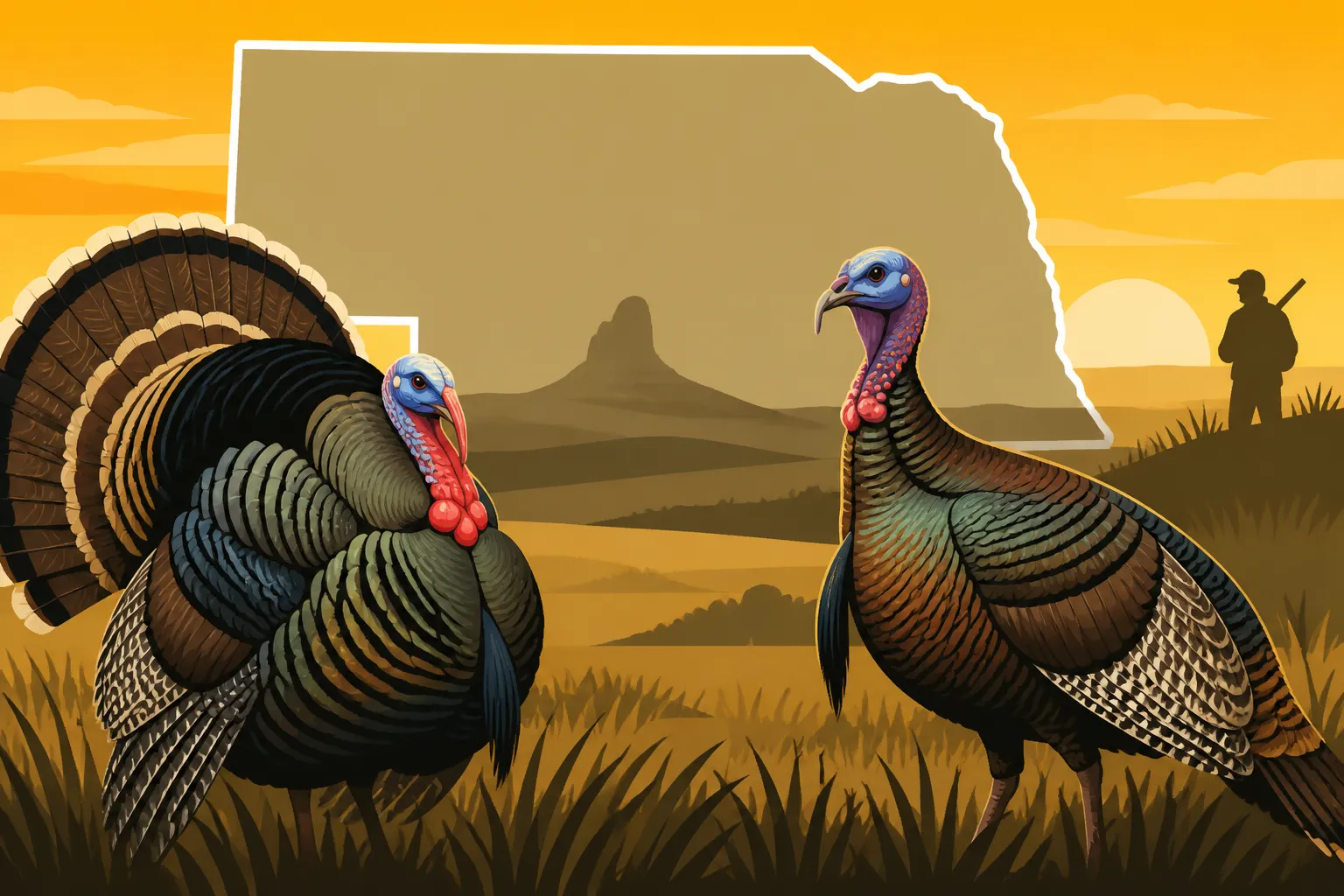
One of the most rewarding aspects of hunting in Nebraska is the diversity of our wild game, and for turkey hunters, that often means encountering different subspecies. However, many hunters, especially those new to the state or venturing into unfamiliar regions, often grapple with identifying whether they're pursuing an Eastern or a Rio Grande wild turkey, or even a hybrid. This comprehensive guide aims to clear up that confusion, offering a deep dive into the unique characteristics, habitats, and population dynamics of both Eastern and Rio Grande turkeys across Nebraska's varied landscapes.
The Eastern Wild Turkey in Nebraska: Our Timbered River Bottoms
The Eastern wild turkey (Meleagris gallopavo silvestris) is the most widespread and numerous subspecies across North America, and it holds a significant presence in the eastern half of Nebraska. These magnificent birds are perfectly adapted to timbered environments, making our state's rich river bottoms and mature hardwood forests their prime domain.
Distinctive Features and Habitat Preferences
Eastern wild turkeys are often recognized by their striking, iridescent plumage. When the sunlight hits them just right, you'll see a rich, metallic green and bronze sheen on their body feathers. Their tail feathers are tipped with a dark, often chocolate-brown band before the buffy outer fringe. Their leg color tends to be a darker, purplish-gray, and they are generally considered the largest of the five common subspecies in terms of body size. Their gobble is typically a deeper, more resonant sound compared to their western cousins.
Here in Nebraska, you'll find Easterns thriving in the dense timber corridors of rivers like the Missouri, Platte, Elkhorn, and Nemaha. They require mature forests for roosting, foraging for mast crops like acorns and walnuts, and seeking cover. These birds are masters of navigating thick undergrowth and are often found scratching through leaf litter for insects, seeds, and nuts. Early spring mornings in these timbered river systems often echo with their powerful gobblers. Understanding their reliance on these specific habitats is crucial for successful hunting, as it dictates everything from scouting locations to calling strategies. For more detailed insights into their history and current status, check out Wild Turkeys in Nebraska and Their Decline.
Population Status and Challenges
The Eastern wild turkey population in Nebraska has a fascinating history. While native to much of the eastern United States, their numbers in Nebraska saw significant declines due to unregulated hunting and habitat destruction in the late 19th and early 20th centuries. Reintroduction efforts, often involving wild-trapped birds from other states, helped establish the robust populations we see today. These efforts capitalized on the remaining and recovering timbered habitats.
However, even with successful reintroductions, Eastern turkey populations face ongoing challenges. Habitat fragmentation due to agricultural expansion can isolate populations, making them more vulnerable. Disease outbreaks, changes in land use, and weather patterns that impact poult survival all play a role in their year-to-year numbers. Hunters contribute significantly to conservation efforts through permit fees and habitat stamp purchases, helping to fund programs that maintain and improve these crucial timbered environments. When planning your hunt, always keep these factors in mind, and consider using scouting tools, like those found on GoHunt, to identify areas with prime timber and food sources.
The Rio Grande Wild Turkey: Our Western and Central River Systems
Venturing west and into central Nebraska, the dominant turkey subspecies shifts to the Rio Grande wild turkey (Meleagris gallopavo intermedia). While they share many similarities with Easterns, the Rio Grandes have adapted to a more arid, open landscape, making them perfectly suited for the cedar breaks, brushy river bottoms, and agricultural fringes of the Sandhills and western Nebraska.
Key Distinctions and Preferred Terrains
Rio Grande turkeys are often characterized by a slightly different metallic sheen, which tends to be more coppery or golden-bronze on their body feathers. The most noticeable difference is in their tail feathers, where the dark band is followed by a distinct, narrow, buff-colored band, contrasting sharply with the broader, chocolate-brown band of the Easterns. Their legs are typically lighter, often appearing pinkish-red. On average, Rio Grandes are slightly smaller than Easterns, and their gobble tends to be a bit higher-pitched and sometimes more rapid.
You'll encounter Rio Grandes along the Republican, Loup, Niobrara, and Platte River systems in central and western Nebraska. They thrive in areas where brushy creek bottoms, plum thickets, and scattered cedar trees provide roosting and cover, often in close proximity to agricultural fields that offer abundant food sources like waste grain. These birds are more prone to utilizing open country, traversing grasslands between patches of cover. Their affinity for areas with interspersed agriculture makes setting up along field edges or creek crossings a popular and effective tactic for hunters. To better understand the overall picture of turkey subspecies in the state, refer to Turkey Subspecies Found in Nebraska.
Population Strongholds and Historical Presence
Unlike the Eastern, the Rio Grande was not historically found throughout Nebraska. Their presence in the state is primarily the result of successful translocation efforts by state wildlife agencies, beginning in the mid-20th century. Birds from Texas were introduced into suitable habitats in western and central Nebraska, where they flourished. Today, these regions represent some of the most consistent and productive turkey hunting opportunities in the state.
The success of the Rio Grande reintroductions highlights the adaptability of wild turkeys to diverse environments. Their ability to utilize a mosaic of habitat types – from dense riparian timber to more open, shrubby areas – has allowed them to establish strong populations. However, they too face challenges, including severe winter weather, changes in agricultural practices that reduce waste grain availability, and predation. Conservation efforts continue to focus on maintaining and improving these crucial habitats, ensuring healthy Rio Grande populations for future generations of hunters.
Where the Wild Things Meet: Overlap and Hybridization in Nebraska
Nebraska holds a unique geographical position, acting as a transition zone where the ranges of Eastern and Rio Grande wild turkeys meet and often overlap. This means that in some parts of the state, particularly in the central river corridors, you might encounter birds that exhibit characteristics of both subspecies. These are often referred to as hybrids.
The Blending of Characteristics
In areas of overlap, it's not uncommon to see birds with mixed plumage features. A turkey might have the coppery body sheen of a Rio Grande but a wider, more Eastern-like tail band, or vice-versa. This genetic intermingling is a natural phenomenon where two closely related subspecies share territory and breed. For most hunters, these hybrids are simply part of the diverse turkey population, and their behavior tends to mirror that of the dominant subspecies in their immediate habitat.
Identifying a pure Eastern or Rio Grande can be a fun challenge, but for practical hunting purposes, understanding the local habitat and turkey behavior is far more important. Are you in dense, mature timber? Odds are you're dealing with more Eastern-like tendencies. Are you in a more open, brushy river bottom near fields? You're likely encountering Rio Grande behaviors. Using detailed mapping resources, such as those provided by GoHunt, can help you understand the specific habitat types in the area you plan to hunt, which is often more telling than trying to genetically classify a bird on the fly.
Hunting in the Transition Zone
Hunting in these transition zones requires hunters to be adaptable. You might need to employ a wider range of calling techniques, from the deeper clucks and yelps often effective for Easterns in dense timber to the slightly higher-pitched, more urgent calls that can carry across open country and entice Rio Grandes. Scouting becomes even more critical to understand how birds are using the varied landscape. Are they roosting in the big cottonwoods along the river but feeding in distant cornfields? Or are they sticking tight to the cedar breaks?
The key is to observe and adapt. The principles of turkey hunting – locating birds, understanding their movements, and calling effectively – remain constant, regardless of the precise genetic makeup of the gobbler you're pursuing. Whether it's Calling Spring Gobblers in Nebraska Timber or adapting your strategy for Fall Turkey Tactics in Nebraska, knowing the local patterns will lead to success.
Understanding Population Dynamics and Conservation Efforts
Both Eastern and Rio Grande turkey populations in Nebraska are dynamic, influenced by a variety of environmental factors and management strategies. As hunters, understanding these broader trends helps us appreciate the resource and contribute to its health.
Factors Influencing Turkey Numbers
One of the most significant factors impacting turkey numbers statewide, for both subspecies, is poult survival. Why Nebraska Turkey Poult Survival Dropped is a complex issue, often linked to weather conditions during nesting and early brooding periods, as well as predation pressure on young birds. Cold, wet springs can decimate poult numbers, leading to fewer adult birds in subsequent years. Habitat quality, including nesting cover and insect availability for poults, also plays a critical role.
EHD (Epizootic Hemorrhagic Disease) outbreaks, while primarily known for affecting deer, can also impact turkey populations in certain circumstances. Additionally, predation from coyotes, bobcats, and even raccoons can take a toll on nests and young turkeys. The balance of these factors, combined with legal hunting pressure, determines the overall Nebraska Turkey Population Estimate year after year.
The Role of Hunters and Conservation
Hunters are undeniably the primary conservationists for wild turkeys in Nebraska. The funds generated from the sale of hunting permits, including Nebraska Spring Turkey Permit On-Sale Date and the overall How Many Spring Turkey Permits You Can Buy, directly support the Nebraska Game and Parks Commission's efforts to manage turkey populations, conduct research, and improve habitat.
Conservation efforts focus on a multi-pronged approach:
- Habitat Improvement: Working with landowners to enhance timber stands, create suitable nesting cover, and establish food plots benefits turkeys and other wildlife.
- Research and Monitoring: Continuous study of turkey populations, including harvest data, poult survival rates, and disease prevalence, helps biologists make informed management decisions.
- Public Access: Programs like Open Fields and Waters provide crucial hunting access, spreading out hunting pressure and promoting responsible harvest. Hunters can utilize tools like the Nebraska Public Access Atlas to find these valuable areas.
By engaging in ethical hunting practices, reporting harvests, and supporting conservation initiatives, hunters ensure that both Eastern and Rio Grande wild turkeys continue to thrive across Nebraska's diverse landscapes. For those looking to dive deeper into scouting and finding prime turkey territory, leveraging advanced mapping and data resources through platforms like GoHunt is an excellent way to prepare for your next hunt and support the future of these incredible birds.
Disclaimer
This article is for general informational purposes only and does not constitute professional advice. Laws, prices and regulations vary by location and change over time. Consult a qualified professional for guidance on your specific situation.