Nebraska Deer Transport Requirements
Alright, let's talk deer hunting in Nebraska. You’ve put in the scouting, spent the hours in the stand or glassing the Sandhills, and finally, you’ve put down a magnificent deer. The hard part, some might say, is over. But then comes the often-overlooked and sometimes confusing challenge: getting your deer from the field to your home, especially if that home is across state lines. Understanding Nebraska's deer transport requirements is crucial, not just for compliance, but for ensuring your hard-earned venison makes it safely and legally into your freezer. This guide will walk you through every step, helping you navigate the rules with confidence.
The Immediate Aftermath: Tagging and Reporting Your Harvest
The very first thing that happens after you've successfully harvested a deer in Nebraska is the tagging. This isn't just a suggestion; it's a legal requirement that needs to be addressed before you move the animal from the point of kill. We all know the adrenaline dump after a successful hunt, but taking a few deep breaths and handling this step correctly is paramount.
Understanding Nebraska's Tagging Procedures
Once your deer is down and you've confirmed it's ethically dispatched, locate your permit. Nebraska law requires you to immediately attach your tag to the deer. This means having your permit on hand, accessible, and ready to use. Don't wait until you've dragged it out, or loaded it into your truck. The tag must be securely affixed to the carcass. Make sure the date and time of kill are clearly marked, and that the tag is visible. This simple act is your proof that the deer was legally harvested and belongs to you. If you're wondering about the specifics of the actual tag, our guide on Nebraska Deer Tagging and Checking Rules offers a deeper dive into the permit itself and how to fill it out correctly. It's often the first thing a conservation officer will check if they stop you.
The Importance of Prompt Harvest Reporting
Beyond the physical tag, Nebraska also requires you to report your deer harvest. In this digital age, it's usually a quick online process. This isn't just bureaucratic red tape; it's how the Nebraska Game and Parks Commission (NGPC) gathers vital data on deer populations, harvest rates, and management needs. Failing to report can result in penalties, and honestly, it skews the data, which ultimately impacts future hunting opportunities for everyone. The specific timeframe for reporting is critical – typically within 48 hours of harvest, but always double-check the current regulations in the Public Access Atlas or on the NGPC website. If you're a planner and use resources like GoHunt, you'll find these reporting requirements clearly outlined, often with direct links to the reporting portal, making it incredibly straightforward even if you're out in the field with limited service. For a detailed walkthrough of the process, our article on Reporting a Nebraska Deer Harvest is an excellent resource.
Transporting Your Deer Within Nebraska
Once tagged and reported, you’re ready to move your deer. Whether it's a short drive to the local processor or a longer haul back to your property, there are still rules and best practices to follow to ensure a legal and quality transport. The key here is maintaining the integrity of your harvest and making sure it's identifiable.
Legally Moving a Carcass on Public Roads
When you're driving your deer across Nebraska, the primary concern is that the carcass remains tagged and is readily identifiable as legally harvested. This means the tag should still be firmly attached and visible. While some hunters prefer to transport a whole deer, especially for taxidermy, others opt for field dressing. Field dressing is crucial for proper cooling, especially during a warm Nebraska's August Archery Antelope Opener or early deer season. If you've field dressed your deer, the tag should remain attached to the main carcass.
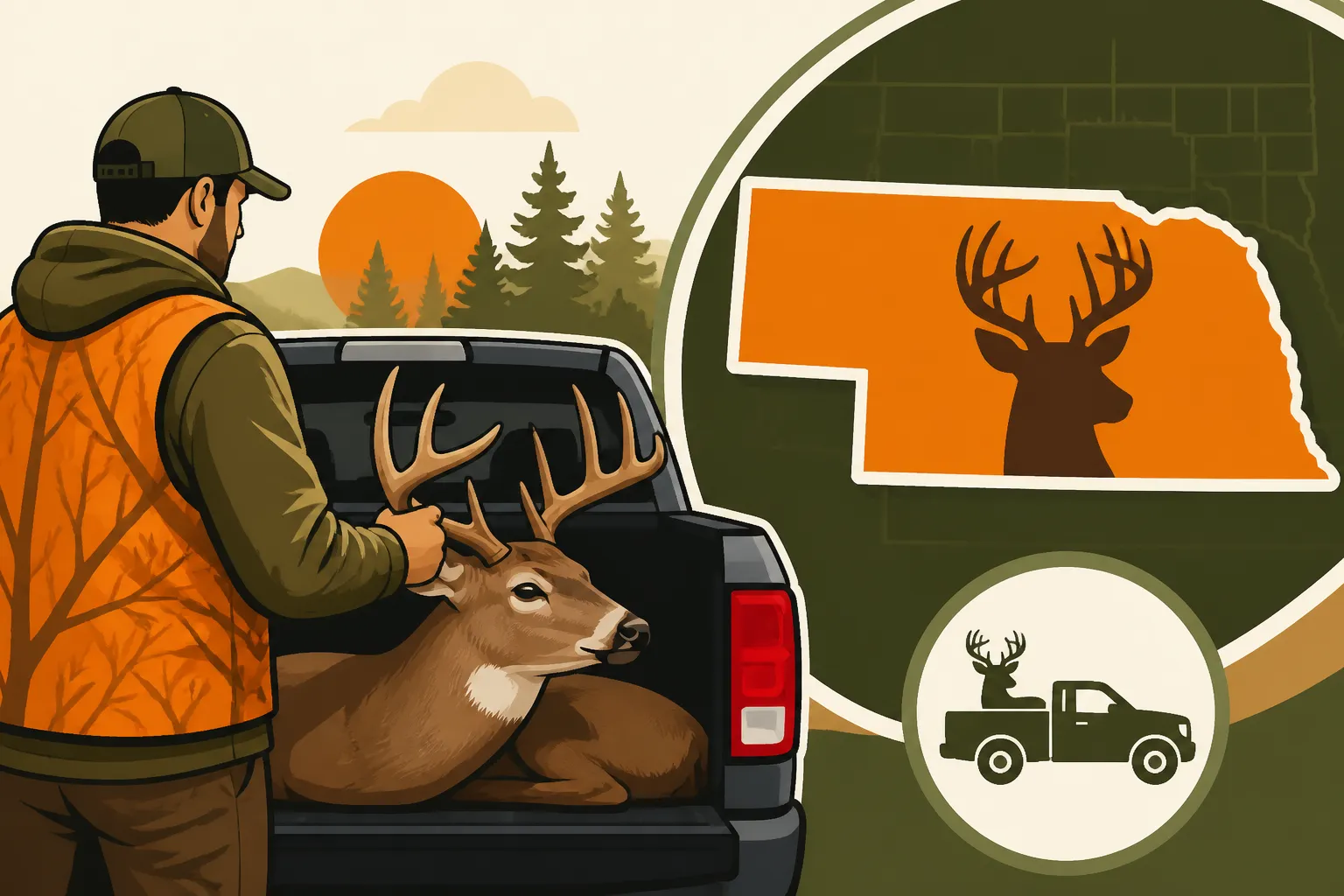
When transporting a whole deer, it's wise to have it secured in the back of a truck or on a hitch carrier. Don't let parts drag or hang loosely. While there isn't a specific law against having it visible, common courtesy and respect for non-hunters often dictate covering the carcass, particularly when driving through towns. A tarp or game bag works wonders. The goal is to move your animal without causing alarm or attracting unnecessary attention, while still being able to prove its legality at a moment's notice.
Strategies for Keeping Your Harvest Cool and Clean
Nebraska weather can be notoriously unpredictable. An early October deer hunt might mean daytime temperatures are still climbing into the 70s, making rapid cooling essential. Our guide on Field Dressing and Cooling Game in Warm Weather can't be stressed enough here. After tagging, getting that internal heat out of the animal is paramount to prevent spoilage. This usually means field dressing immediately.
Once field-dressed, consider using game bags. These breathable bags protect the meat from flies, dirt, and debris while allowing air to circulate, aiding in cooling. If you're facing a long drive or particularly warm conditions, ice is your best friend. A large cooler filled with ice can house quartered sections, or even large bags of ice placed inside the chest cavity of a whole, field-dressed deer can make a huge difference. Think about how you’ll handle your deer if you're successful. Do you have the right Coolers and Game Bags for a Nebraska Opener? Having a plan for this before you even head out can save your venison. Remember, good meat care isn't just about taste; it's about respecting the animal and your efforts.
Transporting Deer Out of Nebraska: Navigating CWD Regulations
This is where things can get a bit more complicated, especially if you're a nonresident hunter or even a resident heading to a different state. Chronic Wasting Disease (CWD) is a serious concern for wildlife agencies across North America, and Nebraska has robust regulations to prevent its spread. These rules dictate what parts of a deer can leave the state, particularly from designated CWD management zones.
Understanding Nebraska's CWD Carcass Transport Rules
CWD is a fatal neurological disease affecting deer, elk, and moose. It's caused by abnormal proteins called prions, which can persist in the environment for years. To prevent its spread, Nebraska, like many other states, has put in place specific rules regarding the transport of deer carcasses, especially out of state.
Key Restrictions for Transporting Deer Carcasses Out of Nebraska:
- No Whole Carcasses: Generally, you cannot transport a whole deer carcass out of Nebraska, especially from known CWD areas. This is because the brain and spinal cord, which contain the highest concentration of prions, must be left behind.
- Permitted Parts: You can typically transport:
- Deboned meat.
- Antlers (with no skull tissue attached, or with the skull plate cleaned and free of brain material).
- Hides (without the head).
- Cleaned skull plates.
- Taxidermy-ready capes (free of brain and spinal cord tissue).
- Teeth.
- Designated CWD Management Zones: Some areas within Nebraska might have stricter rules. Always consult the latest Nebraska Game and Parks regulations or the Public Access Atlas. Websites like GoHunt often compile these regulations in an easy-to-understand format for various states, which can be invaluable for non-residents planning a hunt. Our guide on Carcass Transport Rules Out of Nebraska provides an exhaustive list of what is and isn't allowed.
It's vital to remember that not only does Nebraska have these rules, but your home state might also have regulations regarding what deer parts you can bring into its borders. Always check both ends of your journey.
The Role of CWD Testing and Sampling
Nebraska encourages and sometimes requires CWD testing in certain areas. Understanding Nebraska CWD Sampling for Hunters is crucial. If you harvest a deer in a CWD-positive area or an area of interest, you might be asked to submit a sample. This usually involves removing the lymph nodes or brainstem for testing. The NGPC provides locations and instructions for submitting these samples.
Summary of CWD Carcass Transport Rules from Nebraska
| Carcass Part | Permitted for Out-of-State Transport | Notes |
|---|---|---|
| Whole Carcass | No | Brain and spinal cord contain high prion concentrations. |
| Deboned Meat | Yes | All muscle tissue, completely separated from bone and nervous tissue. |
| Antlers (Clean) | Yes | Skull plate must be cleaned of all brain and nervous tissue. |
| Hides | Yes | Must be removed from the animal's head. |
| Cleaned Skull Plates | Yes | Free of all meat and brain tissue. |
| Taxidermy-Ready Capes | Yes | Head removed, free of brain and spinal cord tissue. |
| Teeth | Yes | Individual teeth or attached to a completely cleaned jawbone. |
| Head (for CWD testing) | Yes (to designated collection sites) | Only to a CWD sampling station or licensed taxidermist within Nebraska, then only permitted parts (cleaned skull, cape) may leave the state after testing. |
This table serves as a quick reference, but always consult the most current regulations published by the Nebraska Game and Parks Commission, as rules can change based on disease prevalence and research. Information on the broader topic of Chronic Wasting Disease in Nebraska can offer valuable context for why these rules are so important.
Practical Tips for Long-Distance Transport
Regardless of whether you're staying in Nebraska or heading home, long-distance transport of deer meat requires careful planning to ensure quality and legality. You don't want all your hard work to go to waste due to improper handling.
Preparing Your Meat for the Journey
Once you've field-dressed your deer, cooling the meat is the absolute priority. If you're going to quarter it, do so cleanly, separating meat from bone and nervous tissue. This is especially important for compliance with CWD regulations if you're taking it out of state. Our piece on Getting Venison Home From Nebraska delves into the finer points of this process.
Consider a professional processor. They have the facilities to rapidly cool and package your meat, often vacuum-sealing it, which is ideal for transport and long-term freezer storage. They're also well-versed in CWD regulations and can ensure your meat is compliant for transport. If you're doing it yourself, invest in good quality game bags and a large cooler.
The Critical Role of Ice and Insulation
For any significant travel, particularly when temperatures are mild or warm, copious amounts of ice are non-negotiable. Place ice directly on the meat, or use frozen water bottles or jugs to prolong cooling without waterlogging the meat. Make sure your cooler is well-insulated and can hold temperature for the duration of your trip. Don't skimp on ice; Ice Requirements for Hauling a Deer are often underestimated, but it's the single most effective way to protect your harvest.
Even in colder weather, a well-chilled carcass is better than one that warms up. If you're driving hundreds of miles, periodic checks of your cooler's ice levels are a good idea. Keep the cooler out of direct sunlight in your vehicle, and if possible, place it in the coolest part of your vehicle, away from direct engine heat.
Final Checks Before You Depart
Before you hit the road, take a moment for a final checklist. It’s easy to forget something minor in the excitement or fatigue of a hunt, but a small oversight can lead to big headaches.
Ensuring All Documentation is in Order
Always have your hunting permit, tags, and any harvest confirmation numbers readily accessible. Even if the tag is on the deer, having your paper or digital permit handy is crucial. If you’re a non-resident, carrying copies of relevant state regulations regarding carcass transport can also be helpful, though usually not strictly required. The folks at GoHunt often recommend a digital folder on your phone for all these documents. Knowing Nebraska Big Game Permits and How to Get One is the first step, but keeping them organized is the final.
Double-Checking CWD Compliance
If you're leaving Nebraska, take a final look at the CWD rules for both Nebraska and your destination state. Is all brain and spinal tissue removed? Is the meat deboned? Are skull plates clean? These are non-negotiable steps. If you're unsure, it's always better to err on the side of caution and process your deer fully within Nebraska rather than risking a violation or confiscation at a state border. The goal is to get your deer home legally and safely, providing delicious meals and fond memories for months to come.
Disclaimer
Please note that hunting regulations, including those concerning deer transport and CWD, are subject to change. While this guide aims to provide accurate and up-to-date information, it is always the hunter's responsibility to consult the most current regulations published by the Nebraska Game and Parks Commission and any relevant agencies in their home state before embarking on a hunt or transporting game. This content is for informational purposes only and does not constitute legal advice.