Run-and-Gun Turkey Tactics on Nebraska Public Ground
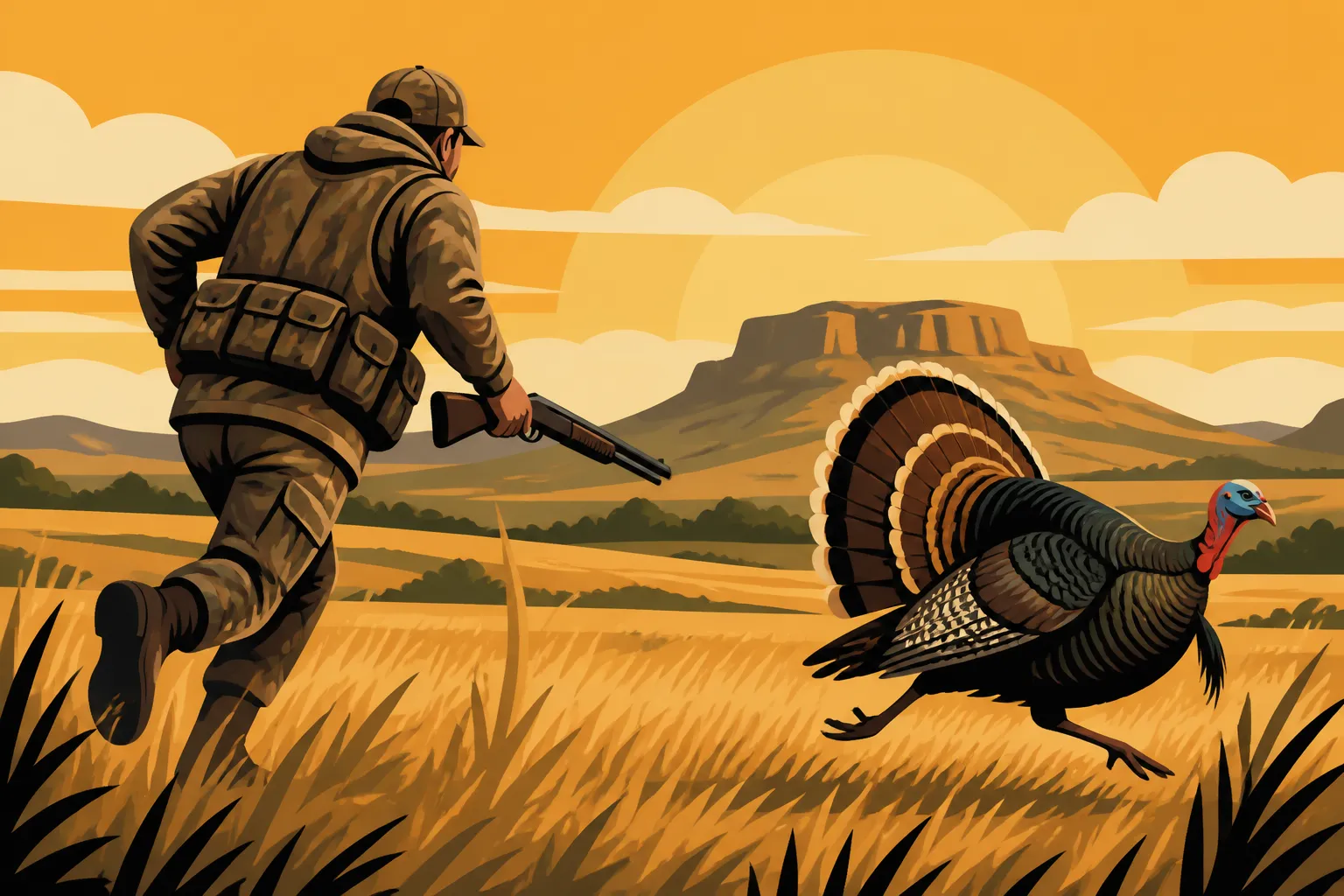
Finding unpressured spring gobblers on Nebraska's public lands can feel like searching for a needle in a haystack. With increasing hunter numbers and birds that wise up quickly, simply sitting and waiting often leads to frustration and empty vests. This guide is all about embracing a dynamic "run-and-gun" strategy, empowering you to actively pursue those elusive longbeards across the varied landscapes Nebraska offers.
The Tactical Edge of Run-and-Gun on Nebraska Public Land
Let's face it, public hunting ground can be tough. The birds hear more calls, see more hunters, and become incredibly wary, sometimes even going silent for days. That's why being static can be a recipe for disappointment. The run-and-gun approach isn't just a style; it's a necessity for consistent success when you're sharing the woods. It's about being proactive, not reactive, and letting the land—and the turkeys—dictate your movements.
Why Public Ground Demands Mobility
On many public tracts in Nebraska, especially those closer to population centers, access points can become bottlenecks. Hunters often funnel into the same areas, creating a lot of human presence. Turkeys, being intelligent creatures, quickly learn to avoid these high-traffic zones or become "call-shy." If you set up in one spot and commit to it for hours, you might be wasting precious time while the birds are a quarter-mile away, silently feeding in an overlooked corner.
Think about the sheer size of some of Nebraska's public lands. From the sprawling national grasslands to the smaller, more fragmented wildlife management areas (WMAs), a gobbler could be roosted deep within, or actively feeding miles from any discernible road. Without the ability to move and adapt, you're essentially hoping a bird walks into your tiny sphere of influence. This is where mobility becomes your greatest asset. It allows you to break free from the patterns of other hunters and cover more ground, increasing your odds of encountering a less-pressured bird.
The Benefits of Covering Ground
The primary benefit of a run-and-gun strategy is simple: you cover more ground, therefore you find more turkeys. Instead of waiting for a bird to come to you, you're going to them. This is particularly effective for locating those "lone wolf" gobblers that have been pushed away from high-pressure areas or birds that are simply not vocal from the roost. A quick setup, a burst of calling, a few minutes of listening, and then you're on to the next promising spot.
This active approach also helps you adapt to silent birds or those that only gobble sparingly. Sometimes, a tom might only gobble once or twice on the roost, then drop down and go quiet, making you think he's not there. By moving, you increase your chances of stumbling upon these birds or eliciting a response from a closer range where your calls are more direct and less likely to be perceived as just another distant hunter. You're constantly seeking new opportunities rather than waiting for a single, potentially non-existent one.
Leveraging Technology for Public Access
Before you even step foot in the timber, your run-and-gun success begins with scouting. Modern technology has revolutionized how we approach public land. Tools like the Nebraska Public Access Atlas are indispensable. I can't stress this enough: study the maps. Look for areas that are difficult to access, perhaps requiring a longer walk, or pieces of public ground that are oddly shaped or fragmented. These are often the places that receive less pressure.
Many hunters use apps like GoHunt or other digital mapping systems to overlay public land boundaries with satellite imagery. This allows you to identify potential roost trees along creek bottoms, open fields where birds might strut, or dense timber blocks they might use for security. Pay attention to topography—even slight elevation changes can funnel birds or create natural barriers. By understanding the lay of the land digitally, you can plan multiple routes and escape hatches, anticipating where birds might go and how other hunters might move. This pre-hunt diligence with tools like GoHunt saves you countless hours of aimless wandering once you're in the field, making your actual hunting more efficient and productive.
Essential Gear for the Mobile Turkey Hunter
When your strategy involves covering miles of varied terrain, every ounce in your pack matters. The traditional turkey hunter's heavy vest, filled with every conceivable call and gadget, is often counterproductive for a run-and-gun approach. Your gear needs to be lightweight, versatile, and absolutely essential.
Streamlining Your Loadout
A small, comfortable backpack is your best friend. Forget the sprawling vests; you need something that won't snag on brush and will stay snug as you move quickly. Inside, keep it lean. A few mouth calls, perhaps a single slate or box call for versatility, a couple of realistic decoys (more on that later), water, a headlamp for those early morning hikes, and maybe a small snack are often all you need.
The goal is to be able to pick up and move at a moment's notice without feeling burdened. Every item should have a purpose. Do you really need three different box calls, or can one good one suffice? Can you get by with a single friction call that produces multiple sounds? This minimalist mindset isn't about sacrificing effectiveness; it's about optimizing it for speed and agility. You're a hunter, not a pack mule.
| Item | Why It's Essential | Notes on Weight/Type |
|---|---|---|
| Small Backpack | Carries essentials, allows free movement | ~10-20 liters, comfortable shoulder straps, quiet fabric |
| Mouth Calls | Hands-free calling, versatile sounds | 2-3 different cuts for various pitches/tones |
| Friction Call | Backup, louder calls, different timbre | Single slate or small box call, lightweight striker |
| Minimalist Decoys | Visual attraction for wary birds | Foldable hen or jake fan, realistic head/paint |
| Water | Hydration for long walks | Hydration bladder or lightweight bottle |
| Headlamp | Navigating in the dark | Small, bright, red light option for stealth |
| GPS/Mapping App | Navigation, marking birds, avoiding trespass | Phone with GoHunt or dedicated GPS, spare battery |
| First-Aid Kit | Basic injury treatment | Small, compact kit for cuts, blisters, emergencies |
| Face Mask/Gloves | Concealment | Lightweight, breathable material |
| Hunting Vest (opt) | For carrying harvested bird, extra shell storage | Lightweight mesh style if chosen |
Calls and Decoys for Dynamic Situations
Your calling strategy will be just as mobile as you are. Mouth calls are paramount for run-and-gun because they allow you to call hands-free while maintaining a clear view and holding your gun. This is critical for quick setups. Master a few different yelps, clucks, and purrs on a mouth call. A good slate call or small box call can be a fantastic backup or for making louder, more resonant calls when you need to reach out further, especially in windy conditions.
When it comes to decoys, think minimalist. Hauling a full strutting tom and a couple of hens across several miles of varied terrain is simply not practical. Instead, consider a single collapsible hen or jake decoy. Even better, a realistic turkey fan on a stick can be incredibly effective, especially if you're stalking the last 100 yards and need that visual confidence boost to draw a bird into range. This kind of minimalist decoy allows for rapid deployment and quick packing, keeping your momentum going.
Apparel and Footwear for Stealth and Comfort
Your clothing needs to be quiet, breathable, and able to handle Nebraska's notoriously unpredictable spring weather. Layering is key, as mornings can be chilly, but midday can get quite warm when you're walking. Think about a good base layer, a mid-layer for insulation, and a quiet, camouflaged outer shell that offers some wind and water resistance. Check out guides on Clothing for Nebraska Wind and Cold for more insights on staying comfortable.
Footwear might be the most crucial element. You'll be covering significant ground, often through varying terrain—mud, sand, stubble, and possibly shallow water crossings in river bottoms. Invest in comfortable, waterproof, broken-in hunting boots that provide good ankle support. Blisters or sore feet will quickly end your hunt. Make sure your socks are moisture-wicking to prevent discomfort. Remember, your feet are your engine in a run-and-gun scenario, so treat them right!
Mastering the Run-and-Gun Approach in Nebraska
Executing a run-and-gun strategy effectively is an art form. It's a blend of aggressive movement, subtle calling, and knowing when to push and when to back off. It requires constant awareness of your surroundings and the turkeys' reactions.
Early Morning Recon and Roosting
Your day often begins well before legal shooting light. Get to your chosen public area early—I'm talking an hour or more before sunrise. Park in an area that allows you to easily slip into the timber or along a ridge without making a lot of noise. Once in position, the first order of business is listening for those tell-tale gobblers on the roost. This is where your ears become your most important tool.
Use locator calls—owl hoots, crow caws, even coyote howls—to try and elicit a shock gobble. Once you pinpoint a bird, the strategy shifts. If he's close and on public land, you might make a strategic move to get into a good setup spot, using the cover of darkness and the bird's limited visibility. Position yourself so you have a clear shooting lane, with your back against a wide tree like a cottonwood, as described in Setting Up Against a Cottonwood, and await fly-down. But if the bird is distant or on private property you can't access, it's time to keep moving. The initial roost listen is simply your first data point in a day of seeking. Don't be afraid to keep moving if that first bird isn't cooperating.
Aggressive Calling and Patient Listening
The "calling" part of run-and-gun is about efficiency and responsiveness. You don't want to overcall, but you also don't want to be timid. When you move to a new area, particularly one you've identified as promising on your map, start with a series of attention-grabbing calls: a loud yelp sequence, perhaps a cut. Then, be silent. Listen intently for 5-10 minutes. A longbeard that's willing to gobble will often do so quickly.
If you hear nothing, try another sequence, maybe a different call, and listen again. If still no response, it's time to pick up and move to the next spot. The key is to avoid burning out an area by calling incessantly. You're trying to locate a bird, not necessarily call him all the way in from a mile away. Once you get a response, that's when you can adjust your strategy, perhaps moving closer while maintaining stealth, then becoming more subtle with your calls, transitioning to softer yelps and clucks. For more detailed insights on effective vocalizations, check out Spring Turkey Calling in Nebraska's River Corridors.
Strategic Movement and Quick Setups
This is the "run" part. Once you've determined a spot is cold, or a bird isn't responding, don't linger. Pack up quickly and move to your next planned location. Your movement should be purposeful and quiet. Use terrain features, creek beds, or dense cover to conceal your movement. Walk with purpose, but scan ahead for any hidden turkeys.
When you get a response or arrive at a new, promising area, be ready to set up fast. You don't have time to scout for the perfect setup for 15 minutes. Identify a tree or brush pile that offers good concealment and a clear field of fire, preferably with your back protected. Get your calls and gun ready, and immediately start listening and calling softly. The beauty of run-and-gun is that you’re always putting yourself in new positions, increasing the odds that you'll eventually bump into a hot bird. If a bird gobbles close, you might even consider moving slightly to intercept him, using aggressive tactics as covered in Calling a Nebraska Gobbler Off the Roost.
Adapting to Nebraska's Unique Public Land Challenges
Nebraska's public lands offer fantastic opportunities, but they also present specific challenges that a mobile turkey hunter needs to address. Understanding these nuances can significantly improve your success rates.
Navigating Hunter Pressure
On popular public hunting areas, you will encounter other hunters. It’s inevitable. The run-and-gun strategy helps mitigate this by allowing you to move away from crowded spots. If you pull into a parking area and see multiple trucks, consider that a sign to find a less-traveled section. Utilize your maps (like those from GoHunt) to identify parcels that are harder to get to, perhaps requiring a longer walk-in or navigating tricky terrain. These areas often hold less-pressured birds.
Another tactic is to hunt mid-week if your schedule allows, or later in the day when many hunters have packed up. Many public land hunters hit it hard in the morning and are gone by noon. This can open up opportunities for an afternoon run-and-gun session. Being aware of your surroundings, listening for other hunters, and respecting their space is paramount. Sometimes, the best move is to simply move on if an area is already occupied. For more ideas on how to approach this, consider reviewing Scouting Nebraska Public Ground Before Opening Day.
Diverse Habitats and Terrain
Nebraska’s public ground is incredibly diverse, from the thick river bottoms of the eastern part of the state to the rolling Sandhills and rugged Pine Ridge in the west. Your run-and-gun tactics need to adapt to these different environments. In dense river bottoms, visibility is limited, so focusing on listening and using louder calls to penetrate the timber is key. Turkeys in these areas might hang up behind thick brush, so patience and precise calling are crucial.
In more open country, like parts of the Sandhills or areas with scattered cedars, you'll need to use the terrain to your advantage for concealment. Ridges, draws, and even taller grass can provide cover for your movements. Long-range glassing can also be very effective here to spot birds before they spot you. Understanding the typical turkey behavior in these varied habitats is key, especially considering the Wild Turkeys in Nebraska and Their Decline and how they adapt to various landscapes. Knowing how birds use the land will inform your movement and calling strategies.
The Importance of Persistence and Patience
Run-and-gun doesn't mean you'll find a turkey every 15 minutes. It means you're giving yourself the best chance to find one. There will be days when you walk miles, call until your throat is sore, and don't hear a peep. Don't get discouraged. Persistence is a hunter's greatest virtue, especially on public land. Re-evaluate your plan, check your maps, and try a completely different area.
Patience is intertwined with persistence. While you're moving, be patient in your listening phases. Don't call, move, call, move immediately. Give the birds time to respond. Sometimes, a hesitant gobbler might take a few minutes to commit. And once you do get a bird to gobble, exercise patience in your setup. Don't rush a shot. Wait for the bird to commit fully and offer a clean, ethical shot. Even when hunting later in the season, as discussed in Hunting Nebraska Turkeys in Late Season, these principles remain true; patient persistence will always pay off.
Disclaimer
Please note: Hunting regulations and seasons can change. Always consult the latest Nebraska Game and Parks Commission regulations before heading afield. This guide provides general information and tactics for educational purposes only.