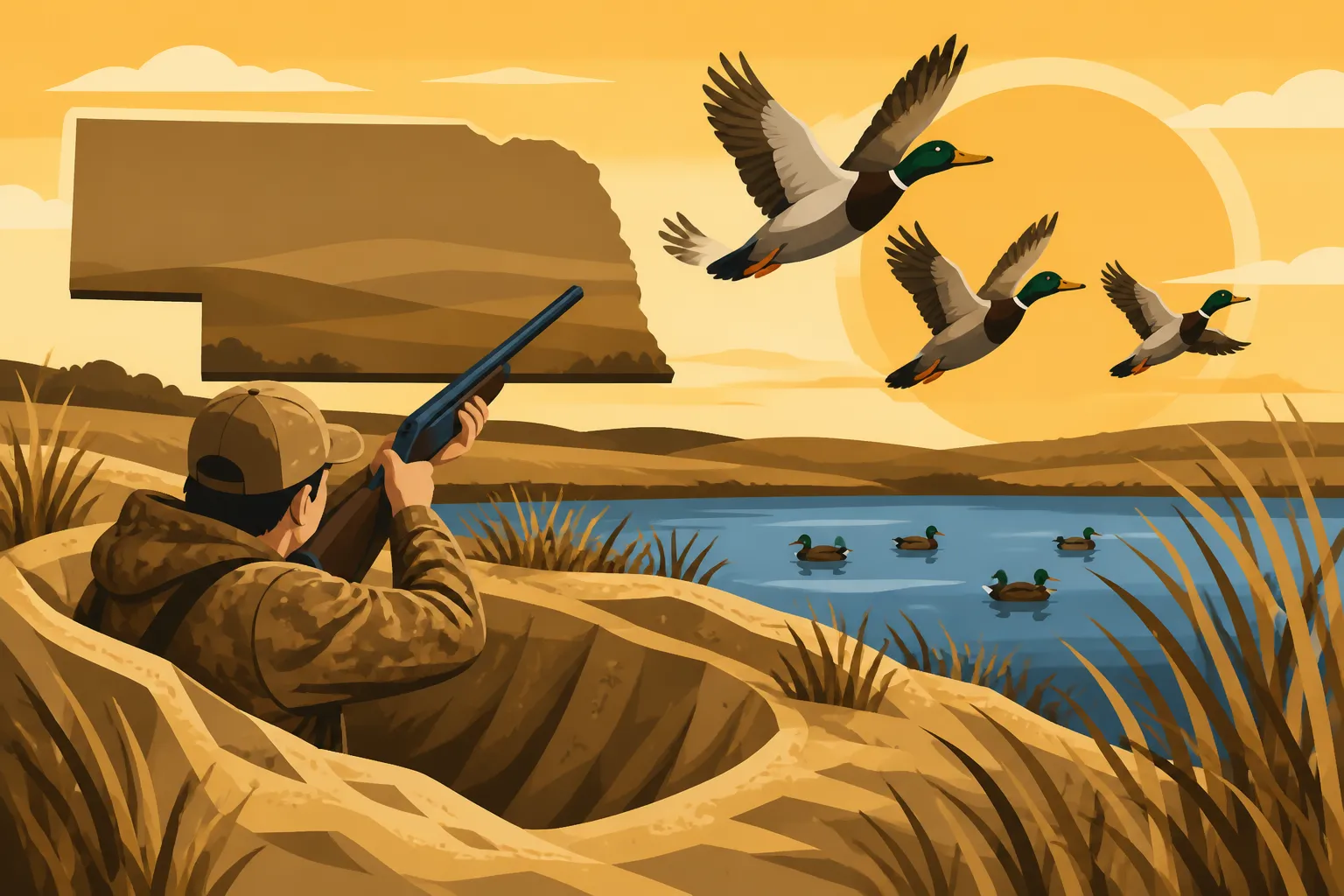
Hunting Nebraska Sandpits for Ducks
Hunting for ducks in Nebraska can sometimes feel like a puzzle, especially if you're trying to avoid the crowds on popular rivers or major reservoirs. It's frustrating to drive all that way only to find your preferred spot taken or the birds just aren't there. But don't despair! Nebraska's countless sandpits offer a fantastic, often overlooked opportunity for some incredible waterfowl action, and this guide is here to walk you through everything you need to know to make your next sandpit duck hunt a success.
The Allure of Nebraska Sandpits for Duck Hunters
Nebraska is known for its wide-open spaces, fertile farmlands, and winding rivers, but hidden gems for waterfowlers lie scattered across the landscape in the form of sandpits. These often-overlooked bodies of water can hold a surprising number of ducks, offering intimate hunting experiences away from the pressure of larger public areas.
What Exactly Are Nebraska Sandpits?
Many folks, especially those new to hunting in our great state, might not even know what a sandpit is, let alone why ducks love them. Imagine this: decades ago, many areas across Nebraska were prime locations for mining sand and gravel. As heavy machinery dug deep into the earth, it often hit the water table, creating deep, often irregularly shaped ponds and lakes. When the mining operations ceased, these water-filled excavations became what we affectionately call "sandpits."
What makes them unique is their structure. Unlike shallow, marshy wetlands that gradually taper off, sandpits often feature abrupt drop-offs and significant depths, sometimes 20-30 feet or more. The banks can be steep, eroded, or lined with various types of vegetation, from dense cattails to cottonwood saplings or cedars. Some are small, only a few acres, while others stretch for dozens of acres. This diverse topography, born from industrial activity, creates a surprisingly good habitat for ducks, offering them exactly what they need: deep, clear water, protection, and often, nearby food sources.
Why Sandpits Attract and Hold Waterfowl
So, why do ducks flock to these man-made depressions? It’s all about sanctuary and sustenance. Nebraska lies smack dab in the middle of the Central Flyway, a superhighway for migrating waterfowl. As ducks make their journey south, they need reliable places to rest, refuel, and escape predation and hunting pressure. While major rivers like the Platte and Missouri, or vast bodies like Lake McConaughy, certainly attract birds, they also concentrate hunters. Sandpits, on the other hand, often fly under the radar.
Ducks find shelter in the deep, calm waters of sandpits, especially when fierce Nebraska winds whip across the prairie. The steep banks and surrounding trees or heavy vegetation provide a natural buffer, allowing birds to loaf and conserve energy. Furthermore, many sandpits are surrounded by agricultural fields, meaning waste grain – corn, milo, soybeans – is often readily available as a high-energy food source. Ducks will spend their nights feeding in these fields and then retreat to the safety of the sandpits during the day to rest and digest. Comparing this to the vast, open nature of some Rainwater Basin Wetlands, sandpits offer a more contained, sheltered environment. The combination of deep water for safety, proximity to food, and protection from the elements makes these small bodies of water invaluable waypoints and wintering grounds for everything from mallards and gadwall to various diver ducks like ringnecks and bluebills.
Essential Gear and Strategic Setup for Sandpit Success
Hunting sandpits, while similar to other duck hunting, requires a slightly different approach regarding gear and setup. You're often dealing with deeper water, potentially steeper banks, and smaller, more confined spaces. Being prepared can make all the difference between an empty strap and a memorable hunt.
Decoy Spreads for Sandpit Ducks
When it comes to decoys on a sandpit, less can sometimes be more, especially if it’s a smaller pit. You don’t always need a massive spread of 100+ blocks. For many sandpits, a couple dozen well-placed decoys, perhaps 18-36, can be incredibly effective. Focus on quality over quantity. Mallard decoys are a must, as they're the bread and butter of Nebraska duck hunting. However, consider adding a few diver decoys—like ring-necked ducks, bluebills, or canvasbacks—if you've scouted the pit and seen those species using it. Divers often prefer deeper water, which sandpits provide.
Placement is crucial. The classic "J-hook" or "U-shape" spread works wonders, creating an inviting landing zone right in front of your blind. Always set your decoys so that ducks will approach and land into the wind, which is their natural instinct. Ensure your decoy lines are long enough to reach the bottom in deep water and that your anchors are heavy enough to prevent them from drifting, especially if a strong breeze picks up. Motion decoys, like spinning-wing or jerk-cord systems, can add vital realism, mimicking active birds and drawing attention from a distance, but always check current regulations regarding their use.
Blinds and Concealment
Effective concealment is paramount when hunting sandpits. Ducks have excellent eyesight, and the often-clear water of sandpits means they get a great view of their surroundings. Your choice of blind will largely depend on the specific sandpit and its available cover.
If the pit has natural vegetation along its banks—think dense cattails, stands of cottonwoods, or even cedar thickets—you can often build a natural blind. Use branches, grass, and whatever local vegetation is available to break up your outline. The goal is to blend seamlessly into the background. For open banks or areas adjacent to harvested fields, a layout blind is an excellent choice. These low-profile blinds allow you to lie flat, disappearing into the stubble or field edge. Make sure to brush them in thoroughly, as ducks will absolutely pick out an unbrushed layout blind. You can find excellent advice on Setting Decoys Around a Layout Blind to optimize your setup. Portable panel blinds, often made from camouflage fabric or netting, offer versatility. They're easy to move and adapt to different shorelines, making them ideal if you're hunting a new pit or need to adjust your setup based on wind shifts. Remember, no matter the blind type, movement is your enemy. Stay still and quiet until it's time to shoot.
Shotguns, Loads, and Calls
Your trusty 12-gauge shotgun is the standard for duck hunting in Nebraska and will serve you well in sandpits. A 20-gauge can also be effective, especially for younger or smaller-framed hunters, but the 12-gauge offers a bit more payload for those longer shots or tougher birds.
When it comes to ammunition, remember that nontoxic shot is always required for waterfowl hunting throughout Nebraska, including sandpits. Steel shot is the most common and affordable option, but bismuth or tungsten-based loads offer superior performance if your budget allows. For ducks, shot sizes #3, #2, or even BB are generally good choices, offering a balance of pattern density and kinetic energy. Always ensure your shotgun is chambered for the shell you're using.
As for calls, a good mallard call is your primary tool. Learn to make basic greeting calls, comeback calls, and feed chuckles. Sometimes, a simple quack is all you need. If you're seeing other dabblers like gadwall or pintails, adding a pintail whistle can be effective. While you might use Goose Calls for Open Prairie for geese, for ducks, focus on realism and restraint. Overcalling can scare birds away just as easily as it can attract them. Practice your calling before the season, and learn to read the ducks' reactions to your calls. Sometimes, silence is the best call of all.
Mastering Tactics for Productive Sandpit Hunts
Sandpits might seem straightforward, but mastering the tactics needed for consistent success takes observation, flexibility, and a deep understanding of waterfowl behavior. It's not just about setting out decoys; it's about making smart decisions before, during, and after the hunt.
Scouting is Non-Negotiable
This cannot be stressed enough: good scouting is the cornerstone of successful sandpit duck hunting. You can have the best gear and calling skills in the world, but if you're not where the birds want to be, you're just practicing.
Begin your scouting efforts by researching potential locations. The Nebraska Game and Parks Public Access Atlas is an invaluable resource for identifying public hunting areas, including many sandpits, across the state. Mapping applications like GoHunt can also be incredibly useful, allowing you to layer public land boundaries over aerial imagery to pinpoint promising pits and identify nearby agricultural fields where ducks might be feeding. Look for specific pits on areas designated as Public Hunting Land in Nebraska.
The best times to scout are during the late afternoon and evening, just before dark, or first thing in the morning. Observe where ducks are flying, where they're landing, and how they're using the pit. Are they concentrated in a certain corner? Are they flying over a particular point? Pay attention to any nearby fields – if ducks are flying from a sandpit to a cornfield at dusk, that's a clear sign of a feeding pattern. Note their flight paths, where they enter and exit the pit, and where they seem to feel safest. A pit that looks promising on a map might be completely devoid of birds on a given day, so "boots on the ground" scouting is always best. This kind of detailed reconnaissance, often done several days before your hunt, is crucial for gaining an advantage on pressured birds.
Understanding Wind and Sun
Duck hunting is a chess match with Mother Nature, and wind and sun are two of your most important pieces. Ducks always land and take off into the wind. This is a fundamental principle you must exploit. When setting up your decoys and blind, position yourself downwind of your spread so that incoming ducks will fly directly over or past your shooting position as they approach the landing zone. If the wind shifts significantly, be prepared to adjust your spread or even move your blind. This flexibility is what separates consistently successful hunters from those who struggle.
The sun's position is equally important. In the morning, you want the sun at your back, shining into the ducks' eyes. This makes it harder for them to see your blind and makes them silhouette nicely against the bright sky for easier identification and shooting. If the sun is in front of you, it will back-light your decoys, making them less visible, and worse, illuminate your blind and your face, making you much more visible to approaching birds. Again, be ready to adapt your setup. On the open prairie, understanding Wind Direction on Open Nebraska Prairie Stands for deer is one thing, but for ducks on water, it's about their flight path and landing zone.
Calling Strategies and Situational Awareness
Calling ducks effectively is an art form, not just a noise-making exercise. It's about communication, not just volume. Start with soft, inviting greeting calls or a few contented quacks. As birds respond and get closer, you might switch to a comeback call to encourage them. Once they're committed and circling, often silence is golden. Let the decoys do their work.
Reading duck behavior is key. If birds are circling high and wary, they've likely seen something amiss. Aggressive calling might flare them. If they're coming in low and steady, a little encouragement might pull them in those last few yards. Many experienced hunters will tell you that the most important part of calling is knowing when not to call. Overcalling is a common mistake that educates ducks quickly. Be patient, observe, and let the situation dictate your calling. Every flock is different, and every day brings new conditions.
Retrieving Birds and Safety Considerations
Bringing down a duck is only half the battle; retrieving it, especially from a deep sandpit, is the other. A well-trained retrieving dog is an absolute game-changer for sandpit hunting. They can quickly and safely fetch birds from deep, cold water or tangled shoreline vegetation. For training your furry companion, consider tips that apply to all waterfowl, even if it's not specific to Dog Vests for Cold Water Retrieves.
If you don't have a dog, be prepared. Waders are a must. Chest waders, suitable for Waders for Rainwater Basin Wetlands, will likely be needed for even moderate depths in a sandpit. A small, inflatable boat or kayak can also be invaluable for retrieving birds far from shore or on very deep pits. Never underestimate the cold water in a sandpit, especially late in the season. Hypothermia is a real risk. Always tell someone where you're going and when you expect to return. Be aware of potentially steep or unstable banks, and watch for submerged hazards that could cause a fall. Safety should always be your top priority. If you're hunting without a dog, extra care is necessary, and you might find useful tips in guides like Retrieving Birds Without a Dog.
Navigating Regulations and Ethical Considerations
Hunting Nebraska sandpits, like all hunting, comes with a set of rules and ethical guidelines that every responsible hunter must follow. Understanding these regulations is not only a legal requirement but also ensures the sustainability of our waterfowl resources and the positive public perception of hunting.
Licenses, Stamps, and Zone Awareness
Before you even step foot in a blind, ensure all your paperwork is in order. In Nebraska, you'll need a valid Nebraska Hunt Permit, a Nebraska Habitat Stamp, and a Federal Duck Stamp. Additionally, all waterfowl hunters are required to register with the Harvest Information Program (HIP). These stamps and permits directly contribute to conservation efforts, so it's vital to have them.
Nebraska is divided into different duck hunting zones, each with its own season dates and bag limits. The two main zones are the East Zone and the High Plains Zone. It's crucial to know which zone your chosen sandpit falls into and to adhere strictly to those dates. For example, knowing the specific Nebraska Duck Season Zone 1 Dates or Nebraska High Plains Duck Zone Dates for your hunting location is non-negotiable. Always consult the current Nebraska Game and Parks waterfowl regulations for the most up-to-date information on season dates, shooting hours, and daily bag limits, which can vary by species. Accurate species identification is also critical to ensure you're not exceeding limits or mistakenly shooting protected species.
Respecting Private Property and Other Hunters
Many sandpits in Nebraska are on private land. It is absolutely imperative that you obtain explicit permission from the landowner before you hunt. Trespassing is not only illegal but also harms the reputation of all hunters, making it harder for everyone to secure access in the future. Always know your property lines, and mapping tools like those offered by GoHunt, or by studying the Reading the Nebraska Public Access Atlas, can help you stay on legal ground. If a sandpit is partially private and partially public, be keenly aware of where the boundary lies. You can also refer to Nebraska Trespass and Permission Law for a full understanding of the requirements.
On public sandpits, respect other hunters. If you arrive and another group is already set up, find another spot or another pit. Don't crowd them, and give them ample space. Hunting is often about sharing the resource. Ethical considerations extend to shot selection – only take shots at birds within your effective range, ensuring clean kills and minimizing cripples. Quick retrieval of downed birds is also a key ethical responsibility, minimizing loss and showing respect for the game.
Specific Sandpit Rules and Lead-Free Shot
Beyond general waterfowl regulations, some specific public sandpits or Wildlife Management Areas (WMAs) may have additional rules. These can include restrictions on when you can set up blinds, rules about overnight camping, or prohibitions on certain types of decoys. Always check the specific area rules on the Nebraska Game and Parks website or the Public Access Atlas before you hunt.
As mentioned before, nontoxic shot is mandatory for all waterfowl hunting in Nebraska. This means no lead shot for ducks or geese. Steel shot is the most common alternative, but bismuth, tungsten, and other alloys are also available. Familiarize yourself with these requirements, as violating them can lead to significant penalties. You can refer to Nontoxic Shot Rules on Nebraska WMAs for more detailed information. Lastly, always practice good stewardship. Pack out all your empty shells, discarded decoy lines, and any trash you bring in. Leave the sandpit cleaner than you found it, ensuring it remains a beautiful and productive hunting spot for years to come.
Here's a quick checklist to help you prepare for your next sandpit duck hunt:
| Item Type | Essential Items | Notes |
|---|---|---|
| Permits/ID | Nebraska Hunt Permit, Habitat Stamp, Fed Duck Stamp, HIP Registration, Photo ID | All required for legal hunting. |
| Firearm | 12-gauge or 20-gauge shotgun | Clean, functional, appropriate choke. |
| Ammunition | Nontoxic shot (Steel, Bismuth, Tungsten) | #3, #2, or BB shot sizes for ducks. |
| Decoys | 18-36 mallard/diver decoys, motion decoy (optional) | Realistic, properly weighted, set for wind. |
| Blind | Layout blind, portable panel blind, natural camo | Brush in thoroughly, adapt to location. |
| Calls | Mallard call, specialty calls (optional) | Practice regularly, use sparingly. |
| Retrieval | Waders, retrieving dog, small boat/kayak (optional) | Essential for safety and bird recovery from deep water. |
| Optics | Binoculars, rangefinder (optional) | For scouting, identifying species, range estimation. |
| Navigation | GPS device or mapping app (GoHunt, OnX Hunt), Public Access Atlas | For property lines, public access, scouting. |
| Clothing | Warm, waterproof, layered, camo | Match conditions, stay dry, blend in. |
| Misc. | Headlamp, thermos, snacks, game bag, trash bag, first-aid kit | For comfort, safety, and leaving no trace. |
Disclaimer
The information provided in this guide is for informational purposes only and is not a substitute for official regulations. Hunting regulations in Nebraska are subject to change. Always consult the current Nebraska Game and Parks Commission regulations before planning and executing any hunting trip to ensure compliance with all applicable laws and safety guidelines.