Hunting Partridge on Nebraska Rangeland
Hunting partridge on Nebraska's vast rangeland can feel like chasing ghosts sometimes, can't it? These little dynamos are notoriously elusive, often found in patchy, remote areas, and they'll zip out of cover seemingly out of nowhere, leaving you flat-footed. If you've ever felt frustrated trying to pinpoint their preferred haunts or wondered how to approach them effectively, you're in the right place. This guide is all about demystifying the pursuit of Hungarian partridge in the Cornhusker State, giving you the insights and tactics you need to increase your odds of success.
Understanding Nebraska's Hungarian Partridge
When we talk about partridge in Nebraska, we're almost exclusively talking about the Hungarian partridge, often affectionately called "Huns." These aren't the most abundant upland game bird in the state, and their populations tend to be localized, making them a true hunter's challenge. Unlike the widespread pheasant or even the more common prairie grouse, Huns demand a specific understanding of their habitat and behavior.
Where Hungarian Partridge Thrive in Nebraska
Hungarian partridge are creatures of the open country, but they're not just anywhere on the rangeland. They have a distinct preference for areas with a mosaic of short to medium grasslands, interspersed with cultivated fields, particularly wheat, milo, or alfalfa. They really appreciate edges—think field borders, fencelines, old farmsteads, and the grassy margins of roads or drainages. You won't typically find them in dense timber or vast, unbroken expanses of tall prairie grass like you might with some grouse species.
Historically, Huns were introduced to North America from Europe and have adapted well to certain agricultural landscapes. In Nebraska, their strongest populations are generally found in the northern tier of counties, stretching from the Sandhills eastward into some of the more agricultural areas, and most notably in the Panhandle region. Areas with a mix of dryland farming and pastureland tend to hold the most birds. These birds need cover for nesting and protection from predators, but they also rely heavily on cultivated grains and seeds for food, which is why those agricultural interfaces are so critical. It's a delicate balance; too much intensive farming can eliminate their nesting cover, while too little can reduce their food sources.
Nebraska Partridge Season Dates and Bag Limits
Staying up-to-date on the regulations is paramount before you even think about heading afield. The Nebraska Game and Parks Commission (NGPC) sets the season dates and bag limits annually, and while they often align with other upland bird seasons, it's never a good idea to assume. Typically, Hungarian partridge seasons in Nebraska open concurrently with pheasant and quail season, usually in late October, and run through January.
For the most current information, always check the official NGPC hunting guide or their website before your hunt. As of recent seasons, the daily bag limit for Hungarian partridge has often been around 3 to 5 birds, with a possession limit typically two or three times the daily limit. These numbers are considerably lower than pheasant limits, reflecting their more delicate population status. Remember, harvesting a Hun is often a bonus to a pheasant or grouse hunt, rather than the primary target for most hunters due to their scarcity. Knowing the Upland Season Dates and Bag Limits for all species in your target area can help you plan a versatile hunt.
Finding Partridge on the Rangeland
Finding Hungarian partridge isn't as straightforward as locating a pheasant field or a grouse booming ground. Their preferred habitats are more nuanced, and their tendency to hold tight or flush wild adds to the challenge. Success often boils down to diligent scouting and knowing what subtle signs to look for.
Scouting Productive Partridge Habitat
Scouting is absolutely non-negotiable for Hungarian partridge. You can't just drive around hoping to stumble upon them. You need to identify areas that combine their specific needs: food, cover, and water. Focus your efforts on the Panhandle and northern Sandhills regions. When you're looking at maps, either physical or digital with services like GoHunt, zero in on the edges of cultivated fields adjacent to native rangeland. Look for:
- Crop Stubble: Wheat, milo, or corn stubble fields, especially those not heavily grazed or tilled immediately after harvest, are major food sources.
- Grassy Ditches and Fencelines: These provide critical escape cover and travel corridors between feeding and roosting areas. Don't overlook the humble fenceline; it can be a partridge highway.
- Alfalfa and Hay Fields: While active haying can disturb them, idle alfalfa fields offer excellent bugging habitat and cover, especially in early season.
- Brushy Draws and Small Patches of Cover: Unlike pheasants that love thick cattails, Huns prefer more open, scattered cover—think small clumps of plum thickets, yucca, or even just taller patches of grass.
- Water Sources: Though Huns can get much of their water from dew and vegetation, proximity to a reliable water source (stock tanks, small ponds, even temporary puddles) can concentrate birds, especially in dry weather.
Using aerial maps on your phone or computer, such as those integrated into the GoHunt app, allows you to meticulously examine these transitions before you ever set foot on the ground. Pay attention to how different cover types merge and create linear travel routes.
Accessing Partridge Hunting Grounds
One of the biggest hurdles for any hunter in Nebraska is access, and it’s no different for those seeking Hungarian partridge. Nebraska has a fair amount of public hunting land, but it's crucial to know where it is and how to use it. The Nebraska Public Access Atlas is your best friend here, detailing all the publicly accessible lands, including state wildlife management areas (WMAs), national forest and grassland tracts, and the invaluable Open Fields and Waters (OFW) program.
- Open Fields and Waters (OFW): This program enrolls private lands for public hunting access. Many of these tracts are specifically managed or contain the types of habitat that Huns prefer—often a mix of agricultural fields and adjacent grassland. Always respect the signage and specific rules for each OFW tract. Nebraska's Open Fields and Waters Program has opened up a lot of otherwise inaccessible ground.
- National Grasslands: The Oglala National Grassland in the Panhandle is a prime example of a vast public area where you could encounter Huns, especially in areas where it borders agricultural fields. However, these areas are huge, and finding Huns here often means covering serious ground. Hunting the Oglala National Grassland Hunting requires a different approach than smaller, private tracts.
- Wildlife Management Areas (WMAs): Certain WMAs, particularly in the Panhandle or northern Sandhills, might hold partridge, especially if they encompass diverse habitats similar to what Huns prefer.
Always check land ownership using your GoHunt app or other GPS mapping tools to avoid trespassing. Private land permission is, of course, the gold standard, and a friendly knock on a farmhouse door can often unlock some incredible hunting opportunities, especially in areas not covered by public access programs.
| Region | Primary Habitat Type | Typical Partridge Density | Access Challenges |
|---|---|---|---|
| Panhandle | Mixed grass prairie, wheat/milo flds | Moderate | Vast private land, scattered public |
| Northern Sandhills | Interspersed rangeland, hay fields | Low to Moderate | Remote, rough roads, large ranches |
| Northeast Agri-Mix | Crop fields, pasture edges | Low | Fragmented habitat, limited public access |
Tactics for Hunting Partridge
Hunting Hungarian partridge successfully requires a blend of strategy, patience, and often, a good bird dog. These birds are known for being exceptionally wary, but also for holding incredibly tight in certain situations.
Working the Edges with Dogs
The best way to hunt Hungarian partridge is with a well-trained bird dog, preferably a pointer or a close-working flushing dog. Huns have a reputation for being runners, especially in sparse cover, but they can also hold incredibly tight in dense patches of grass or brush. A dog's nose is invaluable for locating these birds, which are often heard before they're seen—their distinctive "kee-yak" call can be a dead giveaway.
When working a likely area, focus on the transition zones:
- Field Edges: Walk the edges where a harvested grain field meets rangeland, a shelterbelt, or a grassy ditch. Partridge often feed in the fields and retreat to cover along these lines. Walking Milo and Corn Stubble for Pheasants often yields Huns too.
- Fencelines: These act as natural travel corridors and often accumulate dense grass and weeds, providing excellent cover.
- Terrace Benches/Drainage Ditches: Subtle changes in topography, even small ones like terraced farm ground or shallow drainage cuts, can offer just enough cover and can hold birds.
- Small Isolated Coverts: Don't ignore small clumps of brush, old tree rows, or even piles of discarded farm equipment that have grown over. Huns will use these pockets.
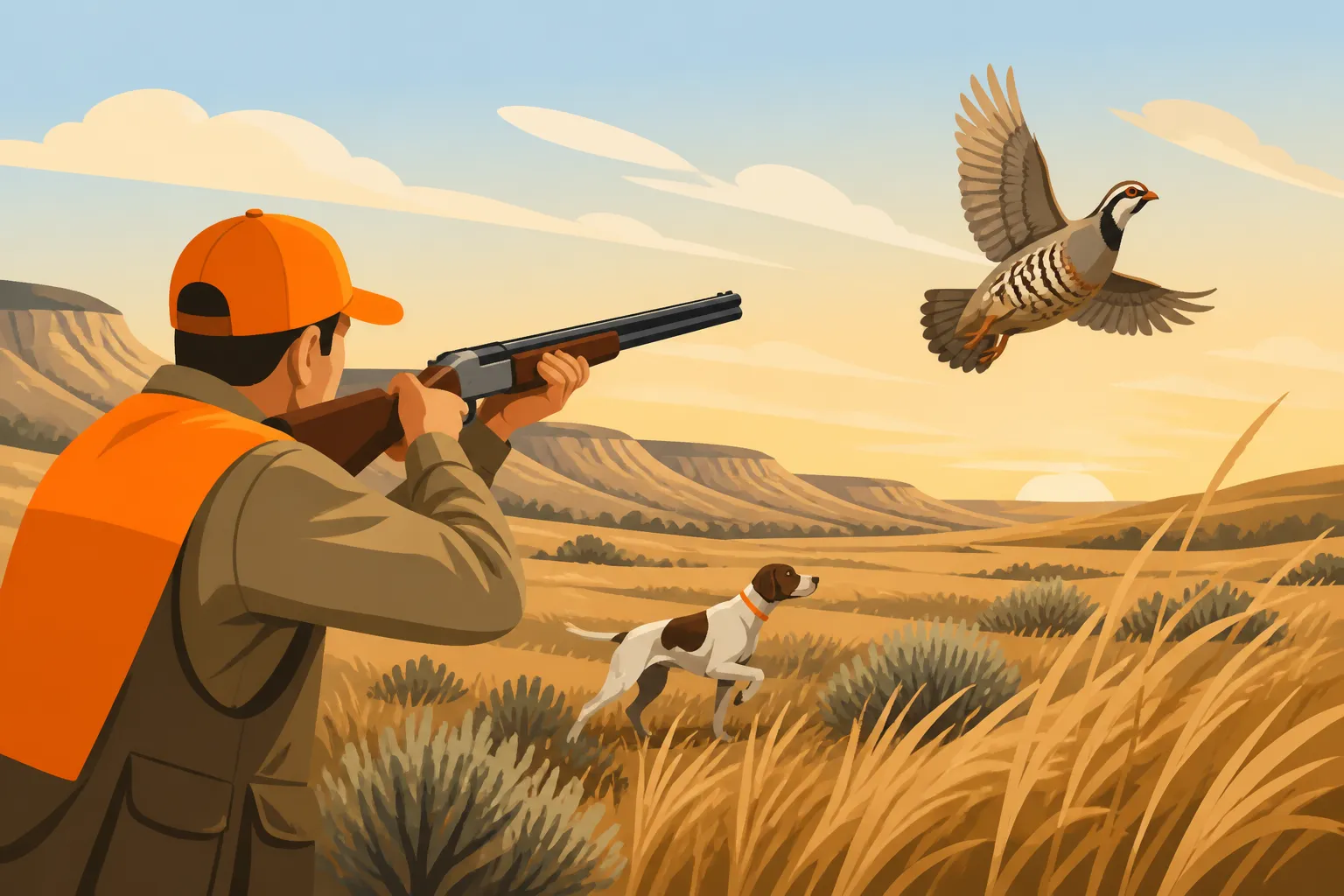
Walk at a steady, moderate pace, allowing your dog to methodically work the cover. When a dog goes on point, approach cautiously but swiftly. Huns can burst from cover with astonishing speed and often fly off as an entire covey, presenting a challenging shot.
Strategic Flushes and Approach
One of the biggest frustrations with Hungarian partridge is their tendency to flush wild, often well out of shotgun range. If a covey gets up far away, don't despair immediately. Watch their flight path carefully. Huns typically fly low and fast for a considerable distance, sometimes over a quarter-mile, before dropping back into cover. Mark where they land, and then plan your re-approach. They often land in similar cover to where they flushed, or they might seek a denser, more secure spot.
When you're closing in on a marked covey, consider using blocking tactics, similar to pheasant hunting. If you have multiple hunters, spread out to cover more ground and potentially block escape routes. If hunting solo, use the terrain to your advantage. Try to approach with the wind in your face to give your dog the best chance, and also to muffle your sound. A common tactic is to push the birds towards a natural barrier like a deep creek or a road, which can sometimes cause them to hold tighter before flushing. Their explosive flush is exhilarating, but requires quick reflexes.
Remember that Walking Nebraska Pheasant Cover With a Dog offers similar lessons for partridge, as both species prefer linear cover and can run before flushing. Be prepared for a long walk and cover a lot of ground.
Gear and Considerations for a Partridge Hunt
A successful partridge hunt isn't just about knowing where the birds are or how to approach them; it's also about being properly equipped for the terrain and conditions of Nebraska's rangelands.
Shotguns and Ammunition
For Hungarian partridge, a fast-handling shotgun is key. These birds are small and incredibly quick, offering a fleeting target. A 12-gauge or 20-gauge shotgun is standard, with an improved cylinder or modified choke being versatile choices for the unpredictable flush distances. Since Huns are smaller birds, lighter shot sizes are appropriate.
- Early Season: For early season hunts, when birds might hold tighter, 7.5 or 6 shot is generally effective.
- Late Season: If you're hunting later in the season when birds might flush at longer ranges, or if you're combining your hunt with pheasants, 6 shot offers a bit more punch and range.
When it comes to shells, you'll want something with a good velocity to catch these speedy birds. Keep in mind that on some public lands, particularly federal waterfowl production areas or certain WMAs, Nontoxic Shot Rules on Nebraska WMAs may apply, even for upland birds. Always check specific regulations for the area you plan to hunt.
Essential Field Gear
Nebraska's rangeland, particularly the Sandhills, can be deceptive. What looks like an easy walk on a map can quickly turn into a calf-burning trek through soft sand and rolling hills. Your gear needs to be up to the task:
- Boots: Invest in comfortable, supportive, and durable boots that can handle miles of walking. The terrain can vary from sandy two-tracks to uneven grassy tussocks. Check out Boots for Walking Nebraska Grass and Sand for specific recommendations.
- Clothing: Layering is critical. Nebraska weather can change on a dime, from warm, sunny mornings to chilly, windy afternoons. Wind-blocking outer layers are highly recommended. If you're hunting during the November firearm deer season, remember the Nebraska's 400-Square-Inch Orange Rule—you'll need to wear at least 400 square inches of blaze orange, often a vest and cap, for safety and legal compliance.
- Navigation: A reliable GPS unit or a smartphone with a robust mapping app like GoHunt is non-negotiable. It's easy to get disoriented in the rolling, often featureless rangeland. Pre-download maps for areas with spotty cell service.
- Water: Carry plenty of water for yourself and your dog, especially in early season or during warmer spells. Upland hunting is hard work, and dehydration can set in quickly. Bird Dog Gear for Nebraska Heat emphasizes the importance of canine hydration.
- First Aid Kit: A basic first aid kit for both yourself and your dog is always a good idea, especially when hunting in remote areas.
- Upland Vest/Pack: A good vest or small pack for carrying shells, water, snacks, a game bag, and any harvested birds is essential. Look for one with ample storage and comfortable weight distribution.
Hunting Hungarian partridge in Nebraska is a commitment, but the reward of a successful hunt—and the beauty of the vast rangeland—is truly special. With the right preparation, knowledge, and a little luck, you might just find yourself adding these elusive little birds to your bag.
Disclaimer
Please note that hunting regulations, season dates, and access programs in Nebraska can change annually. Always consult the most current Nebraska Game and Parks Commission regulations and maps before planning and undertaking any hunting activity. This guide is for informational purposes only and does not supersede official regulations.