Deep Snow and Deer Movement
When deep snow blankets the Nebraska landscape, it can feel like a whole new world for deer hunters. That familiar crunch underfoot might seem like a gift, making tracks incredibly visible, but it also completely reshapes how deer move, feed, and bed down. What worked just last week in a dusting might send deer scattering or, worse, make them disappear altogether when snow drifts stack up. This guide will walk you through the precise ways deep snow impacts deer behavior in Nebraska and offer proven strategies to adapt your hunting plans for winter success.
Understanding Deer Behavior in Heavy Snow Conditions
As snow piles up in Nebraska, especially the heavier, wet kind or the fine, powdery drifts that accumulate, deer face a significant challenge: energy conservation. Every step in deep snow requires more effort, more calories burned, and more exposure. Their survival instinct kicks in, dictating drastic changes in their daily routines.
Conserving Energy and Limiting Travel
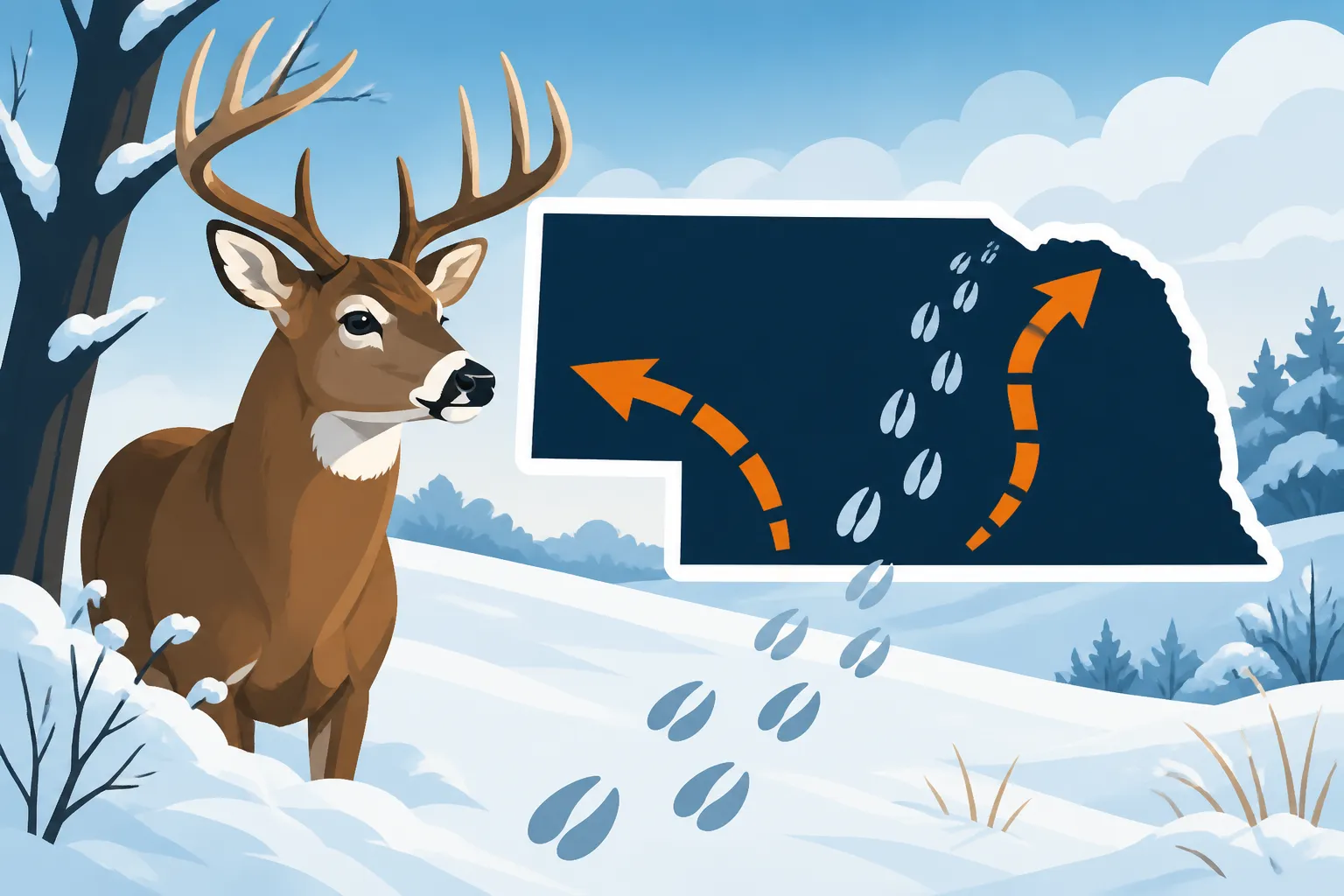
Imagine slogging through knee-deep snow; it’s exhausting, right? For a deer, this struggle is constant, and their very life depends on minimizing energy output during the lean winter months. When snow depth reaches 10-12 inches or more, deer movements become severely restricted. They'll actively seek out areas where travel is easier, which often means sticking to established trails or areas with less snow accumulation.
This means their entire pattern can shrink dramatically. Instead of wide-ranging movements between feeding and bedding, they’ll create a network of trails within a smaller, more accessible home range. You'll find these trails compacted, almost like miniature highways through the snow, connecting key resources. These paths often follow the path of least resistance: along ridge lines, down sheltered creek bottoms, or through dense stands of cover where the snow is shallower or interrupted by branches. This localized movement is crucial to understand; a deer that might typically cover a mile or two between its bed and its food source in moderate weather might only move a few hundred yards in deep snow. Hunting these confined areas becomes paramount.
Shifting Food Sources and Bedding Areas
Deep snow doesn't just make travel difficult; it also covers up traditional food sources. Lush green browse or acorns might be completely inaccessible. Deer are forced to adapt by seeking out whatever remains available above the snow line. This often means switching from ground-level forage to woody browse, such as dogwood, sumac, or young saplings. They'll also focus heavily on standing crops that haven't been harvested, like corn or milo, as these offer both food and some degree of cover from the elements.
When it comes to bedding, thermal cover becomes critical. Deer are looking for spots that provide shelter from biting winds and heavy snow. South-facing slopes are prime locations because they catch more sunlight, which can melt snow faster and warm the ground. Dense cover, such as thick cedar groves, stands of evergreens in the Nebraska Pine Ridge, or tangled river-bottom timber, provides insulation and breaks the wind. These areas not only offer a place to rest but also a haven from predators and the harsh winter chill. It’s not uncommon to find several deer "yarded up" in these protected pockets during prolonged periods of deep snow, making them high-value scouting targets. Understanding where deer yard up in a Nebraska winter can drastically improve your odds.
Locating Deer in Snow-Covered Nebraska Landscapes
The snow itself, while a challenge for movement, is also an incredible scouting tool. It paints a clear picture of deer activity, revealing movements that might otherwise go unnoticed. Learning to read these clues is essential for success.
Reading Tracks and Trails
A fresh snowfall is like a blank canvas, and deer are the artists. Every track, every disturbed patch of snow, tells a story. When you're out there, focus on differentiating fresh tracks from older ones. Fresh tracks will have crisp edges and won't be filled with fine snow or ice. They'll also show clear dew claw marks if the deer was moving quickly or in very deep snow. Pay attention to the size and stride; a bigger, wider track with a longer stride often indicates a mature buck.
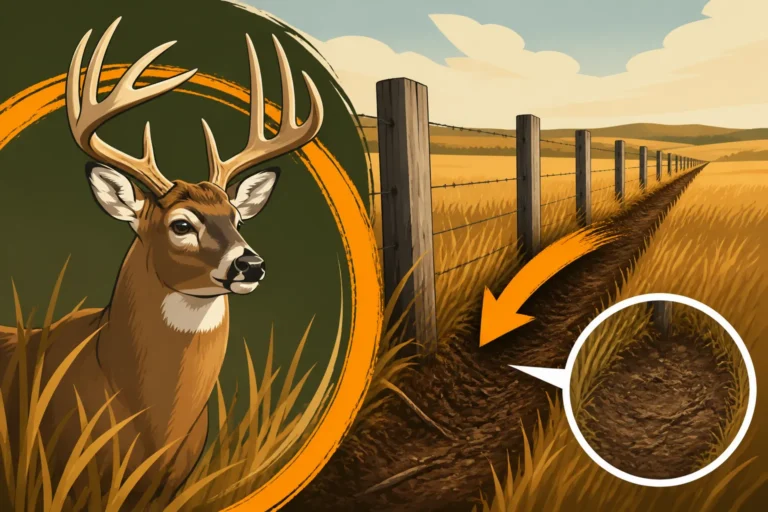
Beyond individual tracks, look for established trails. As mentioned, deer will create main thoroughfares through the snow, especially if the deep snow lasts for several days or weeks. These are your golden tickets. These trails connect bedding areas to feeding zones, or provide escape routes. They often hug the edges of cover, follow fence lines, or wind through the most accessible terrain. Following these trails slowly and quietly, especially on a still day, can lead you directly to where deer are concentrated. A good mapping app like GoHunt can help you visualize the terrain and predict where deer might establish these efficient travel routes between different cover types.
Identifying Thermal and Escape Cover
In winter, deer prioritize warmth and safety above almost everything else. This means they will gravitate toward specific types of cover that provide both. Thermal cover is any vegetation that helps shield deer from the wind and holds in warmth. Think about those dense cedar draws found in many parts of Nebraska, or the thick, brushy river bottoms along the Platte or Missouri rivers. These areas act like natural greenhouses, providing a significant temperature buffer compared to open fields.
Escape cover goes hand-in-hand with thermal cover. When deer are bedded, they want to be able to quickly disappear if a predator approaches. This means thickets, fallen timber, or dense stands of saplings that are difficult for hunters or coyotes to navigate quietly. South-facing slopes with dense cover are particularly appealing, offering the double benefit of warmth from the sun and security. Before a hunt, use aerial photos and topographical maps, perhaps through your GoHunt subscription, to pinpoint these specific habitat features. Then, be prepared to navigate difficult terrain to access them. Remember that even small patches of dense cover can hold deer that are trying to escape the elements.
Effective Hunting Tactics in Deep Snow
Hunting in deep snow requires a shift in strategy. The deer are behaving differently, so your approach needs to change too. Forget long sits in exposed treestands; this is a game of calculated movement and strategic positioning.
Still-Hunting and Tracking
This is where deep snow truly shines as a hunting advantage, transforming the landscape into a giant tracking sheet. Still-hunting becomes incredibly effective because the snow muffles your footsteps, allowing for quieter movement. The key is to move exceptionally slowly. Take a few steps, then stop for several minutes, scanning ahead with your binoculars, listening for any sound of movement. In deep snow, deer are often reluctant to move far or fast, so you might catch them bedded or moving at a leisurely pace. Focus on areas where you expect deer to be concentrated, such as those thermal cover pockets or along established trails.
Following fresh tracks can be incredibly exciting and productive. Once you find a track you want to pursue, commit to it. Pay close attention to the track's characteristics: is the deer walking, trotting, or bounding? A bounding track often means the deer is spooked. Look for signs the deer might be stopping to browse or bed, like disturbed snow where it pawed for food or a flattened area in a thicket. The goal is to catch the deer before it knows you're there. This might mean making a wide loop to get downwind and approach from an unexpected direction, or simply moving with painstaking slowness. This method is incredibly effective, especially in a snow-covered river bottom.
Setting Up on Key Winter Funnels
Because deer minimize travel in deep snow, they become incredibly predictable in their limited movements. This predictability creates ideal opportunities to ambush them in natural funnels and pinch points. Think about how deer will transition from a dense bedding area to a standing cornfield. They won't just walk straight across an open, snow-covered field; they'll use the path of least resistance and greatest cover.
Look for bottlenecks created by terrain, thick vegetation, or even man-made features like fencelines that deer are forced to cross at specific points. A narrow strip of timber connecting two larger woodlots, a saddle between two ridges, or a sharp bend in a creek that forces deer to cross are all prime examples. Often, these funnels will also contain the most established deer trails. Setting up a ground blind in open Nebraska country or finding natural cover near these concentrated travel corridors can be highly effective. The key is to identify the intersection of reduced travel, accessible food, and secure bedding, and position yourself accordingly. Remember, in deep snow, deer are less likely to skirt wide around perceived threats, making these funnels even more pronounced.
Utilizing Small Deer Drives
While generally not a primary tactic for solo hunters, small, organized deer drives can be incredibly effective in deep snow, particularly in smaller woodlots, cedar thickets, or dense shelterbelts. With deer concentrated in these areas and reluctant to move quickly, a well-executed drive can push deer out of cover and past waiting standers.
This strategy works best with two to four hunters. One or two hunters act as "pushers," moving slowly and deliberately through the thick cover where deer are likely bedded. The other hunters position themselves on the downwind side, typically at escape points or funnels that deer are expected to use when flushed. Communication is vital, and everyone must be aware of each other's positions for safety. The key is to move slowly enough that deer don't just blast out but rather sneak out, giving standers a better, safer shot opportunity. These can be particularly productive in Nebraska's smaller timber blocks or those thick pockets along creek beds that might hold several deer trying to escape the elements. Consider a two-person deer drive on small timber if you have a hunting partner.
Safety and Preparation for Winter Deer Hunts
Hunting in deep snow is exhilarating, but it also comes with increased risks. Cold weather, difficult terrain, and the sheer effort involved demand thorough preparation to ensure a safe and successful trip.
Essential Winter Gear and Clothing
The first rule of winter hunting is proper layering. Start with a moisture-wicking base layer that pulls sweat away from your body. Next, add insulating layers, such as fleece or down, to trap warmth. Finally, your outer layer needs to be windproof and waterproof to protect against the elements. A good quality, insulated jacket and bibs are non-negotiable for keeping warm during cold weather sitting strategy. Don't forget your extremities: a warm hat that covers your ears, insulated gloves or mittens, and thick, wool socks are crucial. Many hunters swear by chemical hand warmers that last a full sit, especially if you're stationary.
Footwear is equally critical. You'll need insulated, waterproof boots with excellent traction for navigating snow and ice. Consider a boot with a higher shaft to prevent snow from getting in, especially if you’re walking through drifts. Packing extra socks is always a good idea. Beyond clothing, carry emergency supplies: a first-aid kit, a headlamp with extra batteries, fire-starting materials, a knife, and high-calorie snacks. A fully charged phone or a GPS unit (and knowing how to use it) is also important for navigation, especially if visibility drops or you find yourself deeper in unfamiliar territory than planned. Your insulated boots for a firearm season sit will be your best friend.
Planning for Recovery and Extraction
Successfully harvesting a deer in deep snow is a fantastic accomplishment, but the work isn't over until the animal is safely recovered and processed. Tracking a deer can be easier in snow due to visible blood trails, but recovering a large animal through deep drifts can be incredibly physically demanding. A deer that runs into heavy cover or a deep ravine can become a monumental challenge.
Always have a plan for how you'll get the deer out. A sturdy deer sled or a game cart with large, wide wheels can be invaluable, allowing you to pull the animal over snow rather than drag it directly. If you're hunting with a partner, plan routes for extraction beforehand. Consider the terrain and potential obstacles. While cooling a deer in deep winter isn't usually an issue, protect the meat from excessive snow, dirt, and any potential predators during transport. Knowing how to efficiently field dress and cool game in warm weather isn't as critical now, but ensuring the meat stays clean and gets processed quickly is still important. Getting a deer out of a Nebraska Sandhills basin after a fresh snow can be a real test of endurance, so planning ahead is key.
Disclaimer
Please remember that hunting regulations and conditions can change. Always consult the latest Nebraska Game and Parks Commission regulations before heading afield. Safety should always be your top priority.