Loading and Keeping Powder Dry in December
The biting cold of a Nebraska December muzzleloader season can be both exhilarating and utterly frustrating, especially when you've done everything right except ensure your powder stays dry. There's nothing worse than hearing a soft click instead of a resounding boom when that buck of a lifetime steps out. This guide is all about equipping you with the practical, real-world knowledge you need to load your muzzleloader properly and keep your powder bone-dry, ensuring reliable ignition when it truly counts in the harsh Nebraska winter.
Understanding Nebraska's December Weather for Muzzleloaders
December in Nebraska isn't just cold; it's often a mix of raw, damp conditions, occasional heavy snow, or even days with freezing rain that can seep into every crevice. These aren't just minor inconveniences; they're direct threats to your muzzleloader's performance, particularly the delicate balance required for consistent powder ignition. You're dealing with temperatures that can plummet well below freezing, wind chills that make it feel even colder, and precipitation that seems determined to find its way into your breach.
The Impact of Cold and Moisture on Black Powder
Black powder and its synthetic substitutes (like Pyrodex, Triple Seven, or Blackhorn 209) are hygroscopic, meaning they love to absorb moisture from the air. Even a tiny amount of humidity can degrade their effectiveness, leading to hang-fires or, worse, complete misfires. In December, this isn't just about direct rain or snow; it's about condensation forming inside your barrel as temperatures fluctuate, or moisture being present in the air you're breathing around your rifle. The chemical composition that makes these powders ignite so powerfully is exactly what makes them vulnerable to water. A slight dampness can change the burn rate, reducing velocity and accuracy, or simply making it impossible for the primer to initiate the main charge.
Anticipating Common Weather Challenges
Think about a typical December day in Nebraska. You might start in the pre-dawn darkness with temperatures in the teens, a heavy frost coating everything. As the sun rises, it might warm just enough to create a misty fog, or perhaps a light snow begins to fall, gradually intensifying throughout the morning. Then, there's the relentless prairie wind, which can drive moisture into exposed areas of your rifle. These are the real-world scenarios that can ruin a hunt. You might be sitting in a ground blind waiting for deer to hit a Late-Season Food Sources in Nebraska, and while you're focused on the field, moisture is slowly but surely working its way into your powder charge. Or perhaps you're Still-Hunting a Snow-Covered River Bottom, moving through thickets, and every branch you brush against sheds snow directly onto your weapon. Being aware of these common challenges is the first step in effectively countering them.
Pre-Hunt Preparation: Loading for December Success
The foundation of a reliable muzzleloader hunt in December is laid well before you ever step foot in the field. Proper loading techniques, carefully chosen components, and meticulous attention to detail are paramount. This isn't just about getting powder down the barrel; it's about creating a waterproof, consistent ignition system.
Choosing the Right Powder and Projectile
When it comes to Muzzleloader Powder Choices for December, many seasoned hunters lean towards propellants known for their stability in varying temperatures and resistance to moisture. Blackhorn 209, for instance, is often praised for its cleaner burn and less hygroscopic nature compared to traditional black powder or some substitutes, which can be a real advantage in damp December conditions. However, if you're using Triple Seven or Pyrodex, you absolutely need to be extra diligent with your moisture-proofing efforts. For projectiles, consider those that load smoothly and seal well within the barrel. Saboted bullets are popular for their accuracy and ease of loading, but ensure the sabot itself isn't damaged or compromised before loading, as a good seal is critical to preventing moisture intrusion. The choice between Sabot Versus Conical for Deer can also impact how well your bore is sealed against the elements. A well-fitting conical can provide an excellent seal, but may be harder to load smoothly in cold conditions if tolerances are tight.
The Art of Sealing Your Charge
This is where many hunters fall short, and it's the most critical step for keeping powder dry.
- Use a Watertight Primer: This is non-negotiable. Modern 209 primers are often designed with some water resistance, but don't assume they're foolproof. Some manufacturers, like CCI or Winchester, offer primers specifically advertised for their weather resistance. Many hunters also go a step further and apply a small dab of non-petroleum-based sealant around the primer's base after it's seated. Nail polish, silicone caulk, or even specialized primer sealants (like those from Remington or GoHunt) can create an excellent barrier. Just make sure whatever you use is completely dry before heading out.
- Greased Patches or Wads (for Traditional Muzzleloaders): If you're shooting a patched round ball or a traditional conical, a well-lubricated patch or wad serves a dual purpose: it cleans the bore and, more importantly, creates a seal against moisture. Natural lubricants like bore butter or animal fat-based greases are excellent. For in-line muzzleloaders, ensure your sabot is seated firmly against the powder to create a consistent gas seal, preventing moisture from migrating down the barrel from the muzzle.
- Muzzle Protection: This is perhaps the most overlooked aspect. Water can just as easily get in through the muzzle as through the breach. A simple, yet incredibly effective, solution is a latex finger cot (yes, the kind from a first-aid kit or even a balloon) stretched over the muzzle. They're thin, don't interfere with the bullet's flight, and tear away cleanly upon firing. Electrical tape is another popular choice, wrapped tightly around the muzzle. Just make sure it's the flexible kind that doesn't leave sticky residue. Some hunters even use specialized muzzle caps that fit snugly. The goal is to completely seal the muzzle until the moment you take your shot.
Practicing Your Loading Routine
Don't wait until opening morning to figure out your cold-weather loading system. Practice it at home or at the range. Can you comfortably load a fresh charge with numb fingers? Is your powder measure reliable in the cold? Does your ramrod seat the bullet firmly without excessive force? Keeping a Muzzleloader Dry in Snow often starts with being efficient in your re-loading should you get an opportunity for a second shot. This might involve pre-measured powder charges in sealed tubes (often referred to as speed loaders) and pre-primed breach plugs. Being able to quickly and effectively reload, even if you don't anticipate a follow-up shot, builds confidence in your equipment and methods.
Field Tactics: Keeping Your Muzzleloader Dry While Hunting
Once you're out in the Nebraska wilderness, the environment becomes your main adversary in the battle against moisture. This section focuses on active strategies to protect your muzzleloader and ensure it's ready to fire when that buck appears.
Protecting Your Muzzleloader from Direct Precipitation
Direct exposure to rain, freezing rain, or heavy snow is a muzzleloader's worst enemy.
- Rifle Scabbards and Covers: When moving through dense cover or during heavy precipitation, a good rifle scabbard or a full-length rifle cover is invaluable. These can be made from waterproof fabrics like Cordura or even simple plastic bags secured with elastic bands. They protect the entire rifle, not just the action.
- Umbrellas and Bivvy Blinds: If you're hunting from a static position, particularly in a permanent treestand or a ground blind, a hunting umbrella or a small, tactical bivvy can provide surprising protection. They keep rain and snow off you and your weapon, allowing you to focus on the hunt. Think about Choosing a Treestand Site on Nebraska Farmland – if you're exposed, an umbrella is a game-changer.
- Keeping it Under Your Coat: This might sound basic, but if you're still-hunting or moving slowly in light precipitation, tucking the muzzle and action under your hunting coat or in a dedicated pocket can prevent a lot of moisture accumulation. Just be mindful of safety and accessibility. When hunting during Nebraska's Nine-Day November Firearm Deer Season, even as an archery hunter, you learn quickly how fast weather can change.
Guarding Against Ambient Moisture and Condensation
Even without direct precipitation, moisture can be a silent killer of muzzleloader reliability.
- Minimizing Temperature Swings: Rapid temperature changes can cause condensation to form inside your barrel. If you bring your cold rifle into a warm truck, then back out into the cold, you're inviting moisture. Try to keep your rifle at a consistent temperature if possible. If you must bring it into a warm space, allow it to warm slowly and thoroughly, then dry it thoroughly before taking it back out.
- Breach Plug Management: Modern in-line muzzleloaders rely on removable breach plugs. Some hunters swear by removing the breach plug at the end of each day, drying it thoroughly, and re-greasing the threads. This ensures no moisture is trapped and that your primer port is clear. Be sure to check your breach plug for any signs of corrosion or buildup. Nebraska Muzzleloader Deer Tactics in December often involve knowing every component of your rifle.
- The "Pocket Test": A simple trick is to keep a small, clean piece of cotton or a pipe cleaner in your pocket. Periodically, especially after exposure to damp conditions, remove your primer (if safe to do so with an uncharged rifle, or just during breaks if unloaded) and quickly swab the primer pocket and vent hole. If you see any moisture, you know you have a problem.
Practical Accessories for Moisture Control
Several small, inexpensive items can make a huge difference in the field.
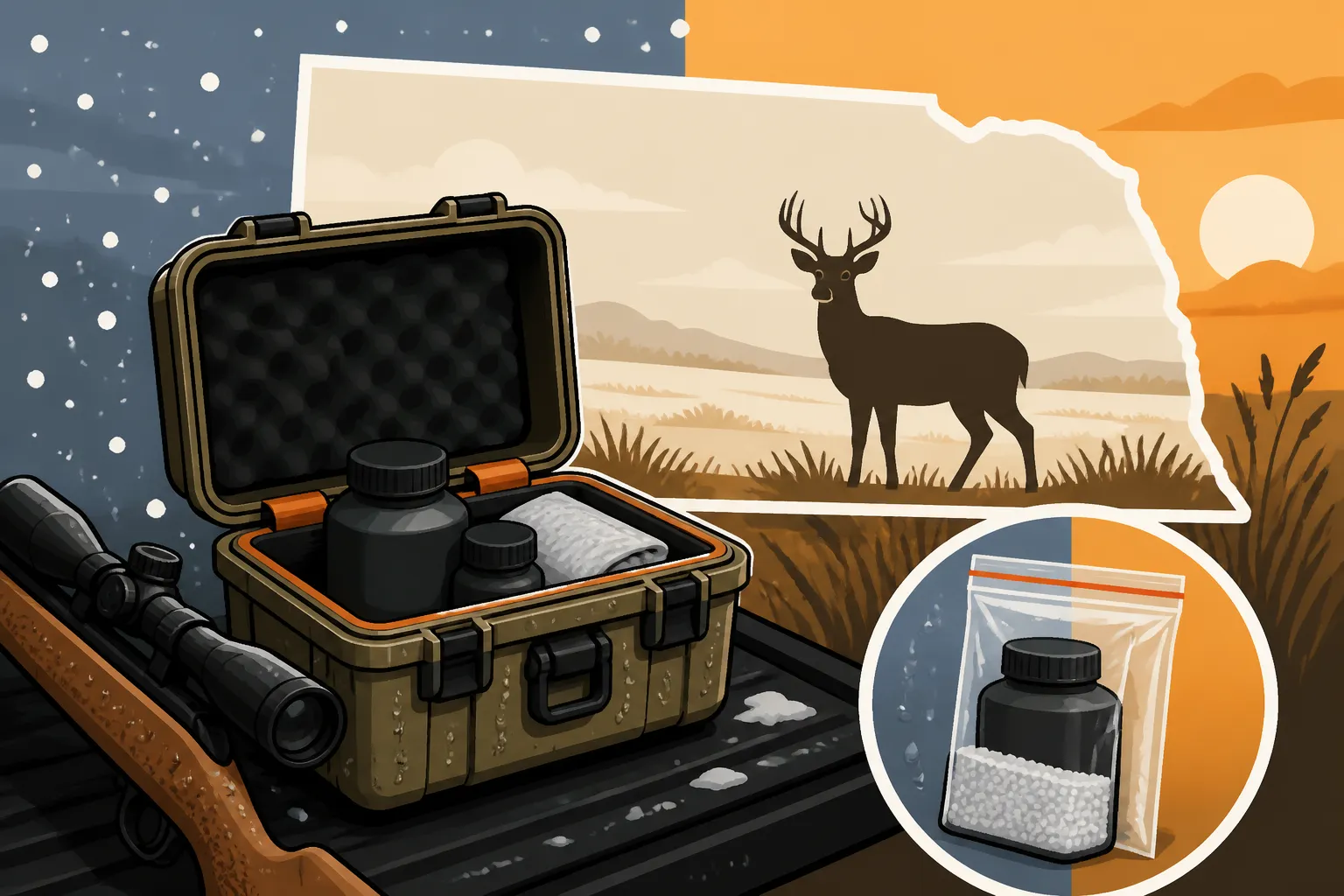
- Silica Gel Packs: Keep a few of these in your rifle case or blind bag. They absorb ambient moisture and can help keep your gear dry.
- Desiccant Canisters: Similar to silica gel, these can be reused by baking them in an oven. A small one placed in your closed rifle case or even a large ammo can with your loose powder can be incredibly effective.
- Gun Socks: A silicone-treated gun sock offers a layer of protection against scratches and moisture, especially if you're carrying your rifle in a vehicle or storing it in a damp shed overnight.
| Protection Method | Application | Key Benefit | Notes |
|---|---|---|---|
| Muzzle Covers | Muzzle of barrel | Prevents water entry, debris | Latex finger cots, electrical tape, specialized caps |
| Primer Sealants | Around primer base | Creates waterproof seal for ignition | Nail polish, silicone, specialized compounds |
| Greased Patches/Wads | Between powder & projectile | Seals bore, cleans, lubricates | Traditional muzzleloaders, ensures tight fit |
| Rifle Covers/Scabbards | Entire rifle | Full protection from elements, scrapes | Waterproof fabrics, simple plastic bags |
| Desiccant Packs | Rifle case, blind bag | Absorbs ambient humidity | Silica gel, reusable canisters |
| Breach Plug Drying | Primer channel, threads | Prevents corrosion, clear ignition path | Remove daily, clean, re-grease, ensure clear vent |
| Consistent Temp. | Rifle exposure | Minimizes condensation | Avoid rapid hot/cold transitions |
Post-Hunt Care: Ensuring Future Reliability
The hunt might be over, but your duty to your muzzleloader and its reliability isn't. Proper care after each outing, especially in December, is crucial for longevity and performance. Neglecting this step can lead to corrosion, rust, and misfires on your next adventure.
Thorough Cleaning After Every Hunt
Even if you didn't fire your muzzleloader, it's been exposed to moisture and temperature fluctuations. As soon as you get home, and certainly within 24 hours, give your rifle a thorough cleaning.
- Disassemble Safely: Remove the breach plug and thoroughly clean it. Pay close attention to the primer hole and vent liner. Use a small pick or drill bit (sized for your vent hole) to ensure it's completely clear.
- Bore Cleaning: Use a good quality muzzleloader bore cleaner to remove all powder residue. Even if using Blackhorn 209, which is less corrosive, moisture can still cause issues. Run patches until they come out clean.
- Wipe Down All Surfaces: Use a light gun oil on all metal surfaces, inside and out, to displace any lingering moisture and prevent rust. Don't forget the ramrod, sights, and trigger assembly.
- Dry Everything: Ensure every component is completely dry before reassembly. This is a critical step. Letting parts air dry in a warm, dry environment (like indoors) is often best.
Proper Storage Between Hunts
How you store your muzzleloader can also influence its readiness for the next trip.
- Temperature and Humidity Controlled Environment: Store your muzzleloader in a relatively consistent environment. Avoid damp basements or unheated sheds where humidity can fluctuate wildly. A climate-controlled gun safe or even a closet inside your home is ideal.
- Desiccants in the Safe: Placing a desiccant canister or multiple silica gel packs in your gun safe or cabinet will help absorb any ambient moisture, creating a drier environment for all your firearms. Brands like Hornady and Liberty Safe offer larger desiccant solutions perfect for safes.
- Gun Socks or Rust-Inhibiting Wraps: After cleaning and oiling, placing your muzzleloader in a silicone-treated gun sock or a rust-inhibiting VCI (Vapor Corrosion Inhibitor) bag can provide an extra layer of protection against moisture and dust. This is particularly useful if you're not going to be using the rifle for an extended period, perhaps before When Nebraska's Muzzleloader Deer Season Runs next year.
Following these comprehensive steps, from loading your rifle with care to protecting it meticulously in the field and cleaning it diligently afterward, will dramatically increase your chances of a successful and reliable muzzleloader hunt in Nebraska's challenging December conditions.
Disclaimer
This guide is for informational purposes only. Always consult the official Nebraska Game and Parks Commission regulations for the most current rules and safety guidelines before hunting. Ensure you have proper hunter education and understand safe firearm handling practices.