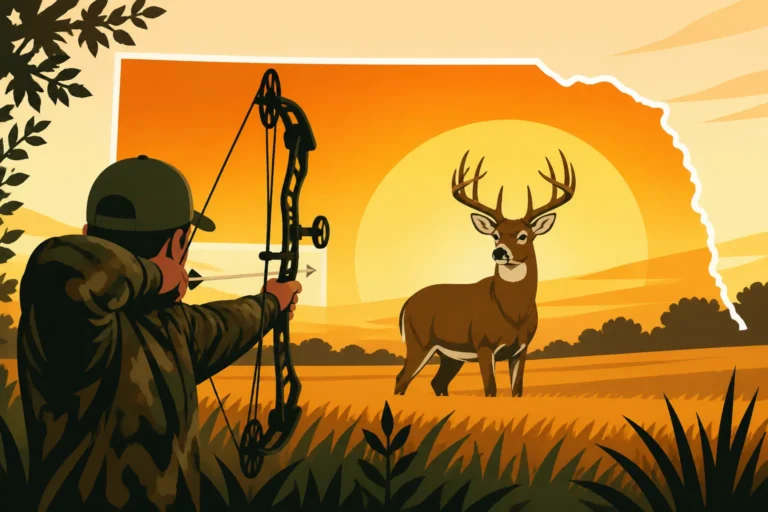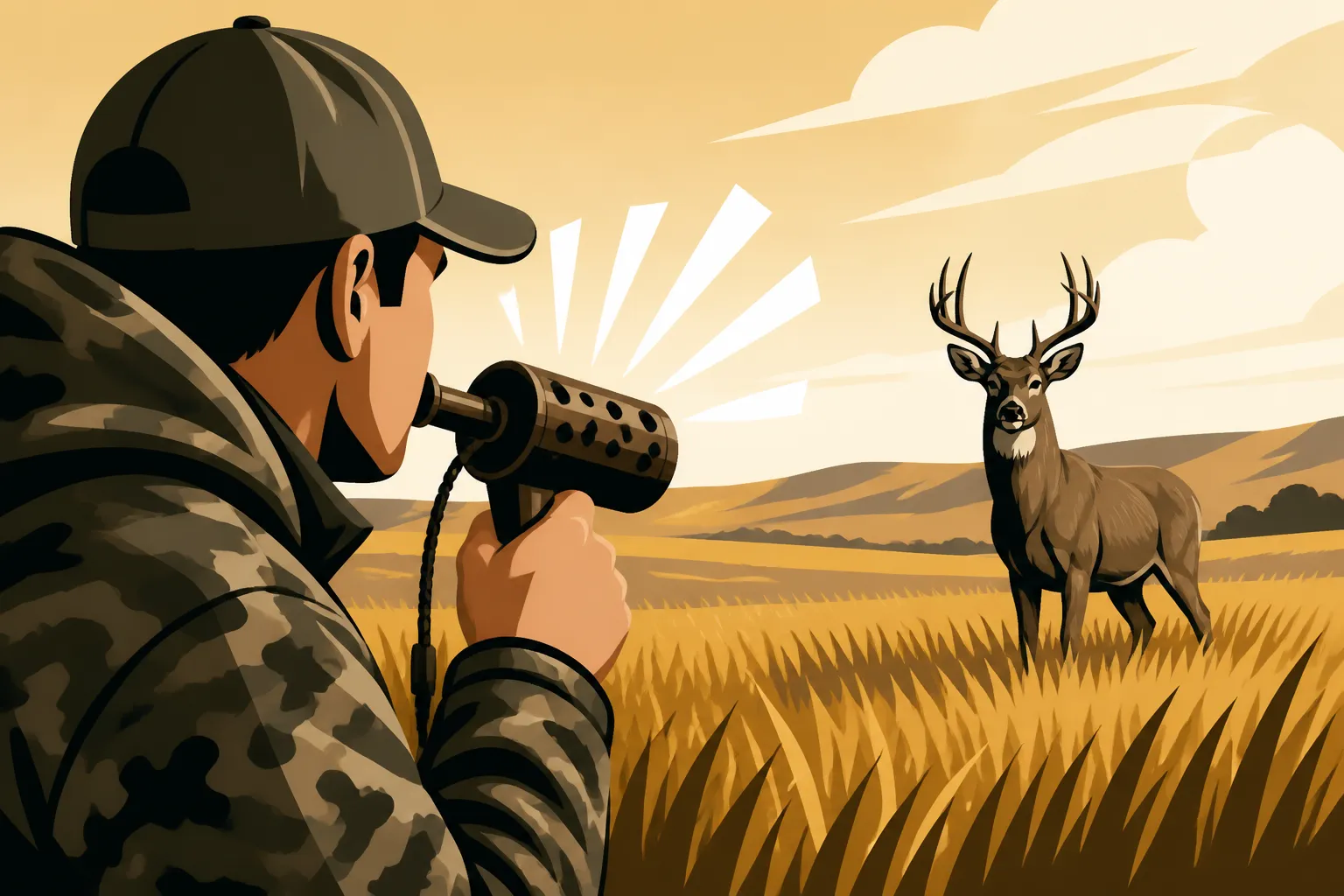
Rattling Volume for Open Country
Hunting in Nebraska's vast open country presents a unique challenge for deer hunters, especially when it comes to a tactic like rattling. What works in thick timber can fall flat, or worse, spook deer when sound carries for miles across the plains. This guide will walk you through the nuances of adjusting your rattling volume and strategy to effectively draw in bucks in Nebraska's expansive landscapes, helping you turn distant sightings into close encounters.
Understanding Sound Dynamics in Open Nebraska Country
When you're trying to replicate the sounds of a buck fight in the wide-open spaces of Nebraska, you quickly realize it's a completely different ballgame than calling in dense woods. The environment itself acts as a massive amplifier or, sometimes, a frustrating sound-swallower, depending on the conditions. It's crucial to grasp how sound interacts with this landscape before you even think about clashing your antlers.
How Sound Travels on the Plains
Imagine standing in a secluded river bottom or a dense cedar draw; the sound of a twig snapping feels incredibly close, and a grunt call resonates within a confined space. Now, picture yourself on a windswept Sandhills ridge, or overlooking a recently harvested cornfield stretching to the horizon. There are no thick stands of hardwoods, no dense underbrush to absorb or bounce sound. This lack of physical obstruction means sound waves can travel much further, much clearer, and often with less perceived volume decay than they would in a forest.
However, this doesn't always mean your rattling will carry perfectly. Subtle rises and falls in the terrain, even seemingly minor ones, can create sound shadows. A buck might be just over a crest, completely unaware of your efforts. On the flip side, a really aggressive sequence might carry so far that it reaches deer well beyond your comfortable shooting range, or worse, alarms a buck that's already in a wary mood. You have to consider the scale of the landscape; a rattle that sounds subtle to you might be a thunderclap to a deer a mile away.
The Impact of Wind on Rattling
Wind is arguably the single most critical factor when rattling in open country, and it’s often overlooked or misunderstood. In Nebraska, wind isn't just a nuisance; it's a force that dictates sound travel, scent dispersal, and ultimately, deer movement. Trying to rattle against a strong prairie wind is almost always a waste of time. The sound is simply shredded and carried away, dissipating into nothing before it reaches any significant distance.
The savvy hunter learns to use the wind to their advantage. If you're rattling, you want the wind to carry your sound towards the area you expect deer to be. This means careful planning of your approach and setup. You also need to consider the direction from which a deer might approach. Bucks, especially wary older ones, almost invariably try to circle downwind to scent-check the source of the sound before committing. This is where your concealment and exit strategy become paramount. You might have the perfect rattling sequence, but if a buck winds you because you didn't account for the crosswind, the hunt is over. Understanding the nuances of Wind Direction on Open Nebraska Prairie Stands can make or break your setup, ensuring your sound reaches its target effectively while minimizing your chances of being scented.
Adjusting Your Rattling Intensity for Open Terrain
One of the biggest mistakes hunters make in open country is rattling with a "one-size-fits-all" approach. The expansive nature of Nebraska's landscape demands a dynamic strategy when it comes to the intensity of your rattling. You wouldn't use a subtle tickle of antlers to draw a buck from a mile away, nor would you bash them together aggressively if a deer is already within a few hundred yards. It's about calibrating your volume to the situation.
Low-Volume, Subtle Rattling
There are definitely times in open country when less is more. Low-volume, subtle rattling is your go-to when you suspect deer are already relatively close, within a few hundred yards, or when conditions are extremely calm with little wind. This approach mimics smaller, less intense skirmishes between bucks, perhaps a young buck sparring or an older buck just lightly polishing his antlers.
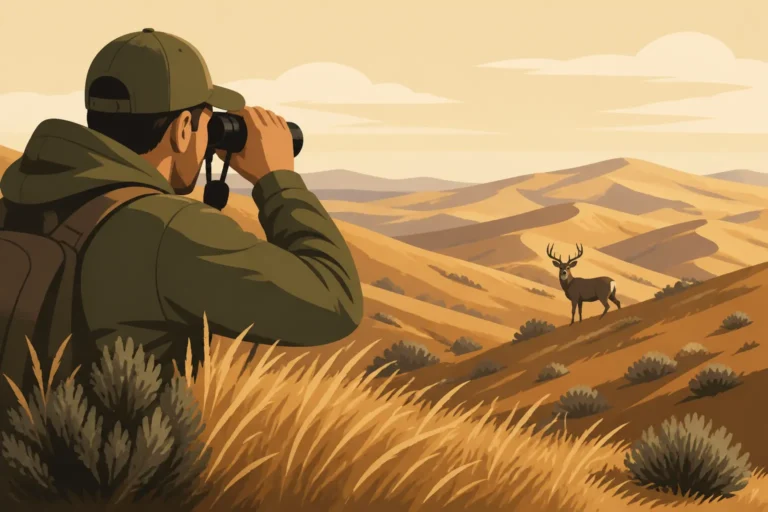
Think about a scenario where you're glassing a distant draw or a secluded shelterbelt and spot a lone buck casually feeding or cruising. He's not running, not actively searching, but he's within earshot if the sound is right. A soft tickle of antlers, perhaps just a few short, light clashes followed by some twig snaps and soft grunts, can be incredibly effective. This subtle invitation might be just enough to peak his curiosity without alarming him. It suggests "something is happening, but it's not a major brawl," making him more likely to investigate cautiously rather than bolt. This kind of delicate approach is also vital when hunting pressured public land, where aggressive tactics might already have educated the local deer. For serious hunters, scouting tools available through platforms like GoHunt can help pinpoint areas with higher buck densities, increasing the odds of a successful rattling setup.
High-Volume, Aggressive Rattling
When you need to reach out and touch a distant buck, or if the wind is considerable, it's time to crank up the volume. High-volume, aggressive rattling is designed to mimic a full-blown, intense buck fight. This is the sound of two mature bucks laying it all on the line, clashing antlers with authority. In open Nebraska country, where visibility can extend for miles, you often spot deer at incredible distances. To get their attention, you need a sound that travels.
This is where you truly lay into your rattling antlers, crashing them together with force, grinding them, and pushing them apart to simulate the full range of a real fight. Think 30-60 second sequences of intense clashing, followed by a minute or two of silence, and then repeating. The goal is to create a sound event so compelling that a buck a half-mile away, perhaps bedding down in a wash or crossing a wide-open pasture, simply can't ignore it. It taps into their primal instinct to investigate dominance, challenge rivals, or check out a potential breeding opportunity. When you're trying to pull a buck from afar, perhaps across the expansive landscapes you might encounter when Glassing the Nebraska Sandhills for Mule Deer, aggressive rattling can be your most powerful tool. Combine this with loud grunts and snort-wheezes to truly sell the illusion. Remember, the challenge here is that if a buck does respond, he might take a long time to cover the distance, and he'll likely try to circle downwind, so your concealment and patience must be top-notch.
Strategic Considerations for Rattling in Open Nebraska Landscapes
Rattling in open country isn't just about how loud you hit your antlers; it's a strategic chess game played out across vast distances. Every decision, from where you set up to how you read a buck's response, influences your chances of success.
Selecting Your Rattling Location
Choosing the right spot in open country is paramount. Unlike thick timber where you might just duck behind a tree, you need to think about cover, visibility, and how to use the terrain to your advantage. Look for natural funnels or travel corridors that bucks might use, even if they seem subtle. This could be a draw, a fence line, a slight change in elevation, or even the edge of a crop field. A prime example is hunting a creek crossing in the Sandhills or strategically positioning yourself on a terrace bench where deer are known to move between feeding and bedding areas.
Always prioritize cover that allows you to remain unseen while rattling and, crucially, while a buck approaches. A lone cedar tree, a clump of tall prairie grass, or a small washout can provide just enough concealment. Ground blinds can be exceptionally effective in open terrain, especially if brushed in well. Before you start rattling, ensure you have clear shooting lanes in the directions you expect a buck to approach, particularly downwind. This forethought is key, because once a buck commits to the sound, things can happen quickly. Having a good understanding of Using a Ground Blind on Nebraska Public Ground can provide you with excellent tips for effective concealment in these open environments.
Incorporating Grunts and Deer Vocalizations
Rattling alone can be powerful, but combining it with realistic deer vocalizations often creates an even more irresistible allure. Think of rattling as the main act, and grunts, bleats, and snort-wheezes as the supporting cast that truly brings the scene to life.
After an aggressive rattling sequence, adding a few deep buck grunts can mimic a buck chasing off a rival or expressing his dominance. A soft doe bleat immediately after a rattling sequence can imply a receptive doe watching the fight, which is a huge draw for any buck, especially during the rut. A snort-wheeze, particularly after a louder rattling session, can act as a direct challenge, often provoking a territorial buck into coming in to investigate or fight. The key is realism and timing. Don't just grunt randomly; make it sound like it's part of the ongoing interaction. Knowing how to effectively use Rattling and Grunting in Nebraska's Rut can dramatically increase your chances, as these vocalizations add another layer of authenticity to your calling efforts. Pay attention to the subtle cues from the deer—sometimes a soft grunt is all it takes to tip a wary buck into committing.
Reading Buck Response and Adapting
The vastness of open country means you'll often see a buck's initial reaction from a long distance. This gives you valuable time to read his body language and adapt your strategy. When you rattle, watch for any subtle changes: an ear flick, a raised head, a shift in his travel path.
- Distant interest: If a buck stops, looks in your direction, but doesn't immediately commit, he's interested but cautious. This might be the time for another, slightly less aggressive rattling sequence, or perhaps a few soft grunts to hold his attention.
- Circling downwind: This is a classic buck move. If he starts to arc downwind, he's trying to get your scent. You need to be completely still, concealed, and ready for a shot as he completes his circle. This is where your chosen setup location becomes critical, ensuring he comes into your shooting lane before he winds you.
- Direct approach: If a buck commits hard and starts coming straight in, be ready! This is when you should stop rattling, ensure your weapon is ready, and prepare for the shot. Don't overcall and risk spooking him once he's decided to commit.
Patience is a virtue in these situations. A buck might take 10-20 minutes or more to cover a half-mile of open ground, especially if he's being cautious. Resist the urge to keep rattling constantly. Intermittent sequences with periods of silence often work best, giving the buck time to process the sound and commit to investigating. Think about how a deer might navigate a specific feature, like when Reading a Cedar Draw for Deer Movement, and how his approach might change based on what he hears.
| Scenario | Distance (Yards) | Wind Speed (MPH) | Cover Available | Suggested Volume | Rationale |
|---|---|---|---|---|---|
| Close Encounter | 50-200 | 0-5 | Good | Low-Subtle | Avoids spooking close deer; mimics sparring or light sparring. |
| Moderate Distance | 200-500 | 5-10 | Moderate | Medium-Moderate | Projects sound effectively without being overly aggressive; maintains curiosity. |
| Long-Range Attractor | 500+ | 10-20 | Minimal | High-Aggressive | Carries sound over vast distances; simulates intense fight to draw attention. |
| Wary Buck/Pressured Area | <300 | Any | Excellent Concealment | Low-Subtle | Prevents alarming educated deer; piques curiosity. |
| Scouting/Drawing from Bed | Any | 0-5 | Good | Medium-High | Signals an event in a bedding area, prompting investigation. |
Gear and Tactics for Open Country Rattling Success
Having the right gear and a refined technique can truly set you apart when rattling in Nebraska's open environments. It's not just about slamming antlers together; it's a performance, a careful impersonation of nature designed to fool a cautious wild animal.
Choosing the Right Rattling Antlers or Call
The tools you use for rattling can influence the sound profile and, consequently, your effectiveness. Many hunters swear by real antlers, and for good reason. They produce that authentic, bone-on-bone sound that's hard to perfectly replicate. Real antlers are excellent for aggressive, high-volume rattling, as they can create a deep, resonant clash that carries far. If you're using real antlers, consider a larger set for more volume, and make sure they're sturdy enough to withstand aggressive clashing without breaking.
Alternatively, synthetic rattling calls like rattling bags or molded plastic antlers offer convenience and consistency. Rattling bags, such as those from Primos or Knight & Hale, are fantastic for subtle, low-volume work. They can mimic the sounds of light sparring, twig snaps, and subtle grinding without the bulk of real antlers. They’re also less likely to poke you in the eye while you're focused on a distant buck! For aggressive rattling, some synthetic options are designed to mimic the louder clashes of real antlers. Each has its place, and often, having both options available allows you to adapt to various scenarios. For instance, you might start with a soft bag rattle in a promising area, and if you spot a distant buck, switch to your real antlers for a more commanding performance. Tools like the advanced mapping features on GoHunt can help you identify these open stretches and plan your rattling approach accordingly, knowing which call might be most effective.
Setting Up for the Shot After Rattling
Perhaps the most critical aspect of rattling, especially in open country, is being absolutely ready to take a shot once a buck responds. It sounds obvious, but many hunters get so focused on the rattling sequence that they're caught off guard when a buck suddenly appears. Bucks in open terrain can appear as if from nowhere, covering ground at an astonishing speed, or they might creep in cautiously, using every fold in the terrain for cover.
Your setup needs to prioritize concealment and quick access to your weapon. Whether you're in a ground blind, tucked behind a cedar tree, or simply hunkered down in tall grass, ensure your bow or rifle is in hand, unmounted (if applicable), and ready to fire. Practice transitioning from rattling to shooting smoothly and quickly. Ensure you have clear shooting lanes downwind, as this is the most common approach vector for a cautious buck. Also, consider complementary tactics like Decoying a Nebraska Whitetail Buck. A well-placed decoy can draw a buck's attention away from you, providing those precious seconds needed to make a clean shot. Always assume the buck will appear sooner than you expect and from a direction you least anticipate.
Practice and Patience
Rattling is an art form that requires practice and, perhaps even more so in open country, immense patience. Don't expect every rattling sequence to bring a buck charging in. Deer behavior is notoriously unpredictable, and there are many variables at play: the specific buck's mood, the time of the rut, hunting pressure, and environmental factors.
Practice your rattling sequences at home. Experiment with different intensities, durations, and vocalizations. Record yourself and listen back to ensure it sounds natural. Pay attention to how long you maintain silence between sequences. This practice will build confidence and make your movements more fluid and less likely to spook game in the field.
In the field, embrace the waiting game. You might rattle for hours across various locations without a single response, only for a giant buck to appear out of nowhere on your very last setup of the day. Persistence is key. Learn from each outing: what worked, what didn't, and why. The vast, challenging landscapes of Nebraska demand not only skill but also a deep reserve of patience. With every call you make and every distant buck you attempt to draw, you're gaining valuable experience that will eventually lead to that unforgettable moment when a Nebraska buck finally commits to your carefully crafted illusion.
Disclaimer
Hunting is an inherently dangerous activity. Always prioritize safety, follow all local, state, and federal hunting regulations, and ensure you have the necessary permits and licenses. This guide is for informational purposes only and does not endorse unsafe hunting practices. Always hunt ethically and responsibly.