Field Dressing Knives Worth Carrying
There's nothing quite like the satisfaction of a successful hunt, but the work isn't over when the animal hits the ground. Field dressing can be a challenging, messy, and crucial step, especially when you're miles from the truck or facing rapidly changing Nebraska weather. The last thing you need is a dull, flimsy, or ill-suited knife turning a vital task into a frustrating ordeal. This guide will walk you through what to look for in a dependable field dressing knife, helping you choose the right tool for preparing your harvest efficiently and safely in the diverse hunting conditions Nebraska offers.
The Characteristics of a Superior Field Dressing Knife
When you're out in the field, whether you've just taken a trophy buck in the Pine Ridge or a plump pheasant in a corn stubble field, the knife you carry becomes one of your most critical tools. It's not just about having a knife; it's about having the right knife. A good field dressing knife isn't just sharp; it's a carefully crafted instrument designed for precision, durability, and most importantly, safety when you're working with slippery hands and cold temperatures. You're looking for something that can handle the grit and grime of the outdoors, perform flawlessly under pressure, and remain reliable year after year.
Blade Material: Balancing Sharpness and Durability
The heart of any good knife is its blade, and the material it's made from dictates much of its performance. In the world of hunting knives, you'll primarily encounter stainless steel and high-carbon steel. Stainless steel, often seen in grades like 440C or AUS-8, is highly resistant to rust and corrosion, a huge plus when you're dealing with blood, moisture, and variable weather. While it might not hold an edge quite as long as some carbon steels, it's easier to maintain and sharpen in the field, which can be a real benefit if you're Tracking a Deer in Sandhills Grass and need a quick touch-up.
High-carbon steel, on the other hand, is renowned for its exceptional edge retention and ability to take a razor-sharp edge. Steels like D2, 1095, or CPM-S30V are popular among those who prioritize a long-lasting, super-sharp cutting surface. The trade-off here is that carbon steel is more prone to rust and requires diligent cleaning and oiling, especially after field dressing. Imagine cleaning up a whitetail in a damp river bottom in eastern Nebraska; a carbon steel blade would demand immediate attention to prevent corrosion. For a deep dive into gear, platforms like GoHunt often have excellent articles comparing different blade steels and their practical applications in hunting.
Blade Geometry: Shape, Length, and Grind
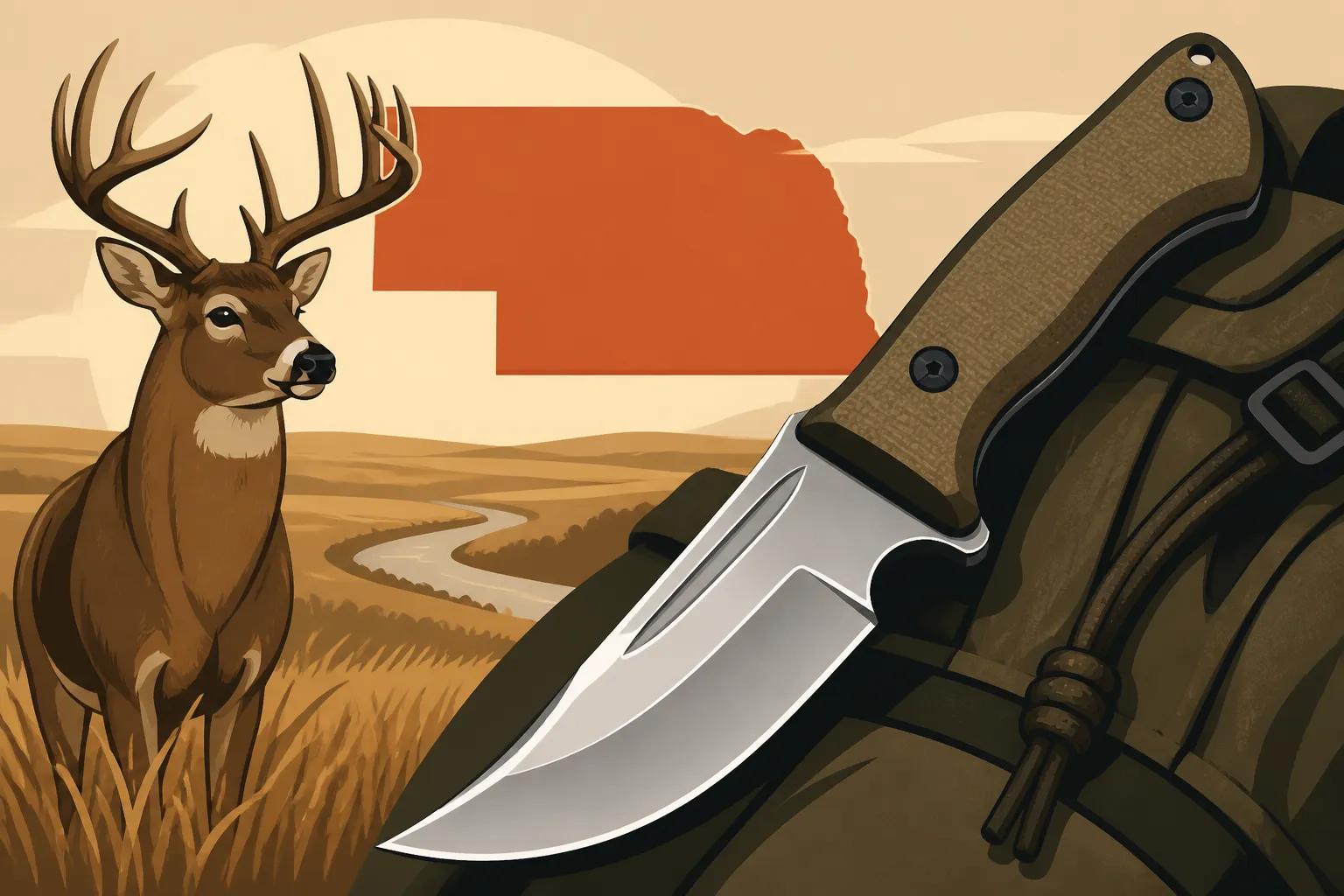
Beyond the material, the shape, length, and grind of the blade are equally crucial. A drop-point blade is perhaps the most popular and versatile for field dressing. Its curved belly is excellent for skinning, and the dropped point reduces the risk of piercing internal organs during the initial cuts. A slightly smaller blade, say 3 to 4.5 inches, offers better control and maneuverability for delicate work around internal organs, which is paramount for clean processing. Anything much longer can become cumbersome and increase the risk of an accidental cut, especially when your hands are cold or wet.
The grind of the blade refers to how the edges are shaped. A hollow grind or a full flat grind are common and effective. A hollow grind creates a very thin, sharp edge that slices beautifully but might be less durable for heavy work. A full flat grind offers a strong, versatile edge that can handle more abuse while still providing excellent cutting performance. Consider the tasks: you'll be making initial cuts through hide, separating muscle, and working around bone. A blade that can maintain its integrity through these varied tasks without quickly dulling or chipping is what you're after.
Handle Ergonomics: Grip, Safety, and Comfort
Don't underestimate the importance of the knife's handle. In the messy, often cold conditions of field dressing, a secure grip is paramount for safety. Materials like G-10, Micarta, Kraton, or even textured rubber offer superior grip, even when wet or bloody. Smooth, polished wood might look beautiful, but it can become a dangerous liability when your hands are slick. Many hunters prefer a handle with some ergonomic contouring that fits naturally in their hand, preventing fatigue during extended use.
The handle should also have a guard or finger choil that prevents your hand from slipping forward onto the blade, a critical safety feature. Think about it: you're often working quickly, sometimes in low light or with diminishing dexterity due to cold. A solid, non-slip handle with a reliable guard can literally be a lifesaver. Furthermore, consider the balance of the knife. A well-balanced knife feels like an extension of your hand, allowing for more precise and less tiring work. This is especially important when you're Field Dressing and Cooling Game in Warm Weather where speed is essential to preserve the meat.
Popular Knife Styles for Nebraska Hunters
With so many options out there, choosing a field dressing knife can feel overwhelming. However, by understanding the common knife styles and their strengths, you can narrow down the perfect tool for your Nebraska hunting adventures. Whether you're chasing mule deer in the Sandhills or tracking a fall turkey in river timber, each style offers distinct advantages.
Fixed Blades: Reliability When It Counts
Fixed blade knives are the tried-and-true workhorses of the hunting world. Because the blade extends completely through the handle (full tang) or at least partway (partial tang), there are no moving parts to break or fail. This inherent strength makes them incredibly reliable, especially for tougher tasks like breaking down a large deer or even light bone-splitting if necessary. Many experienced hunters prefer a fixed blade for its sheer dependability and the confidence it instills when you need to get the job done quickly and cleanly. They typically come with a sturdy sheath, often made of Kydex or leather, which protects the blade and allows for secure carrying on your belt or pack.
For instance, if you've harvested a mature whitetail in thick cover, the robust nature of a fixed blade means you can confidently make those initial cuts through tough hide and muscle without worrying about the blade folding or snapping. They are easy to clean since there are no crevices for blood and tissue to accumulate. However, they are less compact than folders, and their sheaths can sometimes be bulky. But for pure performance and durability in varied conditions, from a cold December muzzleloader hunt to an early archery season, a quality fixed blade is hard to beat.
Folding Knives: Practicality for Packability
Folding knives offer excellent practicality, particularly for hunters who prioritize compact gear. Modern locking mechanisms, such as the lockback, liner lock, or axis lock, are incredibly strong and secure, minimizing the risk of accidental closure during use. Their ability to fold down means they take up minimal space in your pack or pocket, making them a popular choice for day hunts or when weight is a concern. Many hunters will carry a folder as their primary field dressing knife or as a reliable backup.
However, the pivot point and internal mechanisms of a folding knife can accumulate blood and grime, making them a bit more challenging to clean thoroughly compared to a fixed blade. This is a crucial consideration for hygiene and preventing cross-contamination, especially if you're Getting a Deer Out of a Nebraska Sandhills Basin and trying to keep things clean. When selecting a folding knife, pay close attention to the locking mechanism's strength and ease of operation, especially with cold or gloved hands. Look for models designed specifically for hunting, as they often feature more robust construction and blade shapes suitable for field dressing.
Replaceable Blade Systems: Instant Razor Sharpness
A relatively newer but increasingly popular option, replaceable blade systems like those offered by Havalon or Outdoor Edge, provide unparalleled sharpness on demand. These knives use razor-sharp surgical or utility blades that can be easily swapped out when they become dull. This means you always have a fresh, perfectly sharp edge for every cut, eliminating the need for sharpening in the field. Imagine field dressing multiple animals, say during a late-season antlerless hunt, and never having to worry about a dull blade slowing you down.
The main advantages are obvious: always sharp, lightweight, and often very precise. The primary drawback is that these blades are typically very thin and brittle, meaning they can break if twisted or used for prying. They also require careful handling during blade changes to avoid cuts. For hunters who value a surgically precise edge and are meticulous in their knife use, these systems are fantastic. Always carry plenty of spare blades, as well as a small container for safely storing used blades until you can dispose of them properly.
Specialized Tools: Gut Hooks and Bone Saws
Sometimes, a general-purpose knife needs a little help. Specialized tools can make specific aspects of field dressing much easier. A gut hook, often found as a feature on the spine of a primary hunting knife or as a standalone tool, is designed to open the body cavity without piercing the intestines. This significantly reduces the risk of contaminating the meat, which is vital for preserving the quality of your harvest. Many hunters find them incredibly useful, especially for larger game like deer and antelope.
| Knife Style | Pros | Cons | Best For |
|---|---|---|---|
| Fixed Blade | Extremely durable, reliable, easy to clean, strong | Less compact, can be heavier | Heavy-duty tasks, reliability, multiple animal processing |
| Folding Knife | Compact, easy to carry, discreet | Harder to clean, potential for mechanical failure (rare with good locks) | Everyday carry, light tasks, backup knife |
| Replaceable Blade System | Always razor-sharp, lightweight, precise | Blades can be brittle, requires careful handling, not for prying | Precise cuts, avoiding sharpening, rapid processing |
| Gut Hook | Prevents puncturing organs, speeds opening cavity | Limited to specific task, not a primary cutting tool | Initial opening of deer/antelope body cavity |
| Bone Saw | Efficiently cuts through bone, saves blade edge | Bulky, specific use, not for delicate work | Quartering large game, pelvic bone cuts |
A small, foldable bone saw can also be incredibly useful, particularly for larger game. It allows you to quickly and cleanly cut through the pelvic bone or sternum, making cavity access much easier and preserving the edge of your primary knife. Using a bone saw instead of forcing your blade through bone not only protects your knife but also makes the process more efficient and less strenuous. When planning your gear, especially for big game hunts, consider how these specialized tools might streamline your field dressing process. GoHunt also provides reviews and guides on these types of supplementary tools.
Maintaining and Safely Carrying Your Field Dressing Knife
Having the right knife is only half the battle; knowing how to care for it and carry it safely is equally important. A well-maintained knife is not only more effective but also significantly safer to use. In the diverse and sometimes rugged environments of Nebraska, from the dusty Sandhills to frozen river bottoms, proper care and carry practices are non-negotiable for any responsible hunter.
Sharpening Strategies for a Keen Edge
A dull knife is a dangerous knife, requiring more force to cut, which increases the risk of slipping and injury. Regular sharpening is crucial. For fixed blades and traditional folders, invest in a quality sharpening system. This could be a set of Arkansas stones, a guided sharpening system, or even a simple pull-through sharpener for quick touch-ups in the field. When you're spending a full day hunting pheasants, you might need to touch up your knife after opening a bird or two. For more involved tasks like quartering a deer, a truly sharp edge is indispensable.
Learning proper sharpening techniques takes practice, but it's a skill every hunter should cultivate. Aim for a consistent angle and don't wait until your knife is completely dull; regular stropping or honing will maintain a razor edge much longer. In a pinch, even the ceramic rim of a coffee mug can provide a quick touch-up, but for true sharpness, a dedicated sharpener is key. Remember, a sharp knife works with you, making clean, efficient cuts, which is particularly important when preserving meat or needing to perform precise actions under pressure.
Post-Harvest Cleaning and Storage
After field dressing, immediate and thorough cleaning of your knife is paramount. Blood and tissue are highly corrosive, especially to carbon steel, and can harbor bacteria. As soon as possible, clean the blade and handle with warm, soapy water. Use a stiff brush to get into any crevices, especially on folding knives. Rinse thoroughly and dry completely to prevent rust. If you're using a carbon steel blade, apply a light coat of food-grade mineral oil to the blade and pivot points (for folders) before storing.
Proper storage is also vital. Store your knife in a clean, dry environment, preferably in its sheath. Avoid storing it long-term in a damp sheath, as this can trap moisture and lead to rust. If you're in the field for multiple days, like on an extended trip hunting Spot-and-Stalk Mule Deer in the Nebraska Sandhills, ensure your knife is cleaned daily, even if just wiped down and oiled, to maintain its condition. This diligence ensures your knife is always ready for your next hunt and prolongs its lifespan.
Safe and Accessible Field Carry
How you carry your knife in the field is just as important as its sharpness and cleanliness. For fixed blades, a well-fitting sheath is essential. It should secure the knife firmly, preventing it from falling out, yet allow for quick, easy draw with one hand. Many hunters prefer to carry their fixed blade on their hip or attached to their pack where it's easily accessible but out of the way of snagging on brush. When hunting in thick river bottoms, for example, snagging your knife on a branch is the last thing you want.
Folding knives should be carried in a secure pocket or with a strong pocket clip that ensures it won't be lost. Never carry an unclipped folder loose in a pocket with other items, as this is a recipe for losing it or, worse, for the blade to open accidentally. Consider the environment and your activities. If you're Walking Nebraska Pheasant Cover With a Dog, you want your knife securely stowed but within reach. Your choice of carry method should prioritize safety, accessibility, and retention, ensuring that your knife is there when you need it and safely out of the way when you don't. GoHunt and similar resources often cover various carry methods and their pros and cons.
Beyond the Blade: Supporting Field Dressing Gear
While your primary field dressing knife is the star of the show, there's a supporting cast of gear that can significantly improve the efficiency, cleanliness, and safety of the entire process. These additional items can turn a potentially messy and arduous task into a smoother operation, especially when dealing with the challenges of the Nebraska landscape, from its varied weather to its sometimes remote hunting locations.
Protective Gear: Gloves and Wipes
Working with game means dealing with blood, fluids, and potential pathogens. Carrying a few pairs of disposable nitrile or latex gloves is a simple yet crucial step for hygiene and personal protection. They provide a barrier against contaminants and help maintain a better grip on a slippery knife handle. When you're field dressing a deer in a remote area, perhaps after a successful Bowhunting Nebraska's Four-Month Archery Season outing, having gloves helps keep your hands clean and protects you from any bacteria.
Beyond gloves, a small pack of unscented wet wipes or a roll of paper towels can be invaluable for quick clean-ups of your hands, knife, and any accidental splashes. These might seem like minor details, but when you're done and want to pack up, being able to wipe down your hands and gear before reaching for your snacks or phone makes a big difference. Don't underestimate the comfort and cleanliness these simple items provide.
Illumination for Low-Light Situations
Many successful hunts occur during the prime hours of dawn and dusk, which often means you'll be field dressing in low light or even complete darkness. A reliable headlamp is an absolute must-have. It keeps your hands free to work while illuminating your work area effectively. Look for a headlamp with different brightness settings and, ideally, a red light option to preserve your night vision without spooking any nearby game. This is critical if you find yourself needing to do Blood Trailing After Dark in Nebraska and then field dressing once the animal is recovered.
Having a secondary light source, such as a small flashlight in your pack, is also a smart backup. Batteries can die, and gear can fail. Being prepared for low-light conditions ensures you can perform the field dressing correctly and safely, minimizing the risk of missed cuts or injuries. It's not just about seeing; it's about seeing well enough to do precise work in a challenging environment.
Game Bags and Essential Hauling Gear
Once your animal is field dressed, the next crucial step is cooling the meat and getting it out of the field. Quality game bags are essential for protecting the meat from dirt, insects, and birds. Breathable synthetic game bags are ideal as they allow air circulation, which is vital for rapid cooling, especially if the weather is still warm, common during early seasons. They also keep the meat clean while you're packing it out, whether you're loading it into a vehicle or Getting a Deer Out of a Nebraska Sandhills Basin on your back.
For larger game like deer or antelope, having a sturdy frame pack or at least some heavy-duty straps can make the hauling process significantly easier. Consider where you typically hunt: on flat farm ground, a drag might suffice, but in the rugged Pine Ridge or deep Sandhills canyons, quartering the animal and packing it out is often the most practical solution. Planning your pack-out strategy and having the right gear, including your clean game bags and a reliable pack, will ensure that all your hard work in the field results in delicious, well-preserved meat for your table. Always check Nebraska Deer Tagging and Checking Rules and Carcass Transport Rules Out of Nebraska to ensure you're compliant with all regulations.
Disclaimer
This article is for general informational purposes only and does not constitute professional advice. Laws, prices and regulations vary by location and change over time. Consult a qualified professional for guidance on your specific situation.