Sabot Versus Conical for Deer
You've just drawn that coveted Nebraska muzzleloader tag, and visions of December deer dancing through snowy timber fill your head. But as you start prepping your gear, a familiar question probably pops up: what kind of projectile should I be loading? The choice between sabots and conical bullets can feel like picking between two completely different tools, each with its own fan club and a whole lot of debate. This guide is here to break down the ins and outs of both types of muzzleloader projectiles, helping you understand their performance, practical implications, and ultimately, which one might be the best fit for your hunting style and the deer you're pursuing in the Cornhusker State.
Understanding Muzzleloader Projectiles for Deer
When it comes to modern muzzleloaders, especially the inline varieties that are so popular today, hunters have a couple of primary choices for deer projectiles: sabots and conical bullets. Both have their unique design philosophies, and understanding these differences is the first step to making an informed decision for your hunt. It's not just about what looks cool; it's about what performs best when that big Nebraska whitetail steps out.
The Basics of Sabots
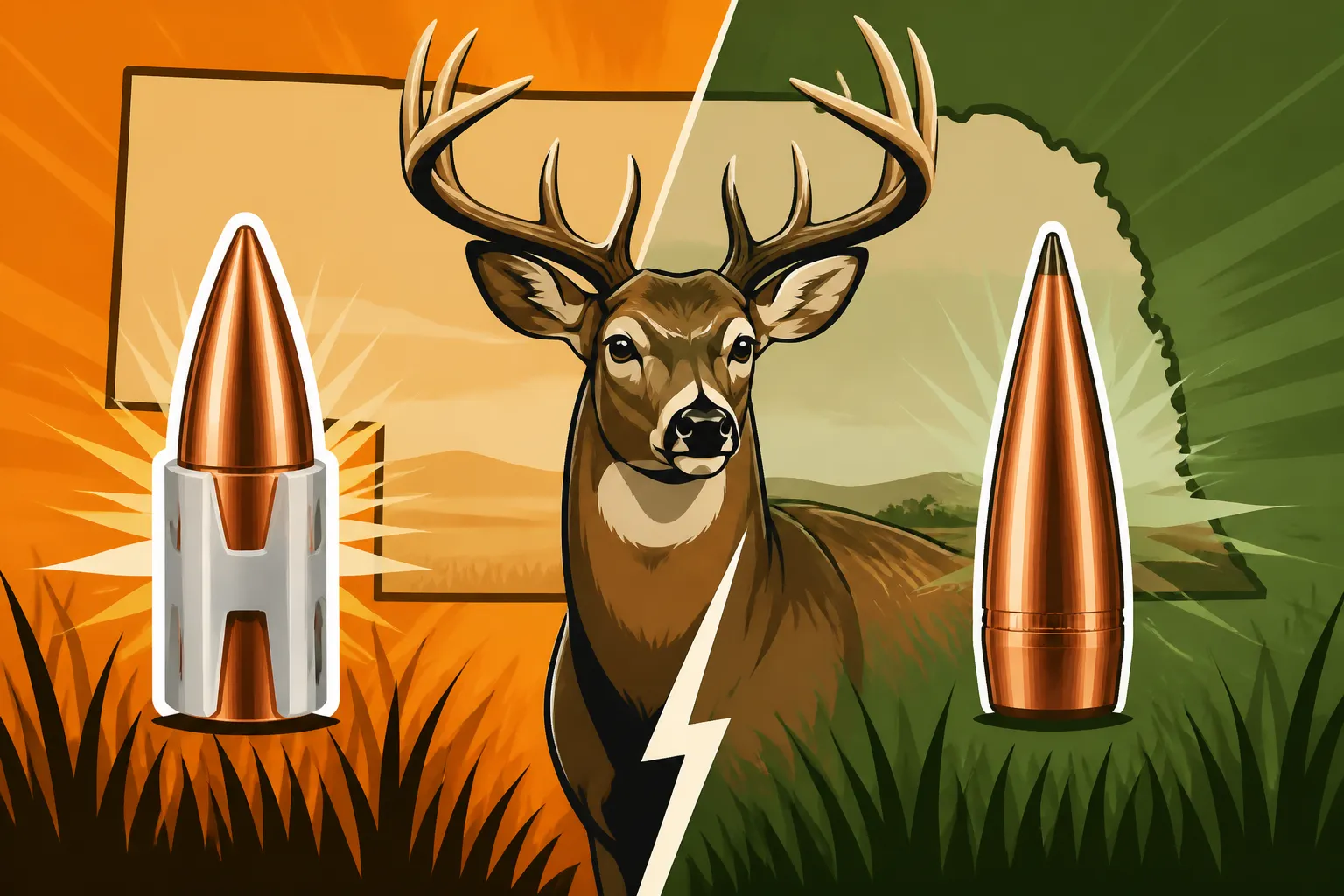
A sabot (pronounced "SAY-bow" or "SA-boh") is essentially a plastic sleeve or cup that holds a smaller-diameter bullet, allowing it to be fired through a larger bore. Think of it like a miniature carrier for a rifle bullet. For instance, a common setup for a .50 caliber muzzleloader uses a sabot to hold a .45 caliber bullet. When the gun is fired, the sabot engages the rifling of the barrel, imparting spin to the bullet. Once the projectile leaves the barrel, air resistance causes the plastic sabot to fall away, sending the smaller, more aerodynamic bullet on its way.
The primary benefit of this design is that you're essentially shooting a modern rifle bullet out of your muzzleloader. These bullets are often designed for high ballistic coefficients, meaning they fly flatter and retain energy better over longer distances. Many popular jacketed bullets, like those from Hornady's XTP or FTX lines, or Barnes' all-copper offerings, are adapted for sabot use. This means you get the benefit of excellent bullet expansion and penetration that those rifle bullets are known for. For hunters chasing deer across the more open agricultural fields or trying to reach across a wide Sandhills canyon, the flatter trajectory and increased accuracy that sabots often provide can be a huge advantage. They are a staple for many who pursue Muzzleloader Deer Hunting in Nebraska in December.
The Nature of Conical Bullets
Conical bullets, on the other hand, are the more traditional approach to muzzleloader projectiles. These are typically solid lead bullets, often weighing considerably more than their sabot-encased counterparts. The key characteristic of a conical is that it's designed to be the same diameter as the bore of the rifle, or just slightly oversized. When loaded, it forms a tight seal with the barrel, and as the powder ignites, the base of the soft lead bullet expands slightly (a process called obturation) to fully engage the rifling. This ensures a good gas seal and imparts spin to the projectile, stabilizing it in flight.
Classic examples include traditional round balls, although modern conical bullets are elongated and pointed for better aerodynamics, such as Hornady's Great Plains bullets or even some versions of PowerBelt (which, while having a plastic gas seal, are still full-bore diameter). The heavy weight of conical bullets means they carry a lot of momentum. While their ballistic coefficient isn't usually as high as a sabot's rifle bullet, meaning they don't fly as flat over long distances, they tend to be incredibly stable and hard-hitting at moderate ranges. For hunters still-hunting through thick river bottoms or pushing small timber where shots are typically under 100 yards, the sheer knockdown power and deep penetration of a heavy conical can be very appealing. They are reliable for the close-quarters challenges found in parts of River-Bottom Whitetail Hunting in Eastern Nebraska.
Performance Differences in the Field
The theoretical differences between sabots and conicals truly manifest when you take them to the shooting range and, more importantly, into the field after deer. Everything from how precisely they hit the mark to how they interact with the animal once they arrive at their destination can be influenced by your choice.
Accuracy and Ballistics
When it comes to raw accuracy, sabots often have an edge, especially with modern inline muzzleloaders. The smaller, jacketed bullets used in sabots are typically manufactured to tighter tolerances and have more aerodynamic shapes than most traditional conical bullets. This, combined with the way the sabot imparts spin, generally leads to a flatter trajectory and better grouping at longer ranges. Many muzzleloader hunters swear by sabots for consistently hitting pie plates at 150-200 yards, which can be critical in Nebraska's wide-open spaces. However, barrel twist rate is a huge factor here. Most modern inline muzzleloaders have a faster twist rate (e.g., 1:28 or 1:32 inches) designed to stabilize these lighter, shorter, sabot-encased bullets.
Conical bullets, particularly heavier ones, generally require a slower twist rate (e.g., 1:48 or 1:60 inches) to stabilize properly. While some modern inlines can handle lighter conicals with a faster twist, you'll often find better accuracy with conicals in rifles specifically designed for them, or with very careful load development. At shorter ranges, within 75-100 yards, a well-matched conical can be incredibly accurate and produce tight groups. Their heavier weight means they don't drift as much in a crosswind, which can be a real consideration on a blustery Nebraska day. When researching what combinations work best for your specific rifle, services like GoHunt can often provide valuable user feedback and testing data from other hunters. Understanding your rifle's twist rate is paramount before committing to one projectile over the other.
Terminal Performance on Deer
The way a projectile performs once it hits a deer is often the most critical factor for a hunter. Here, both sabots and conicals have their distinct characteristics. Sabots, using modern jacketed rifle bullets, are designed for controlled expansion. This means they'll mushroom out to create a larger wound channel, transferring a lot of energy to the animal, while still retaining enough weight to penetrate deeply. You can expect a good entry and exit wound, leading to a quick, ethical harvest and a more visible blood trail, which is especially helpful when Blood Trailing After Dark in Nebraska. Different bullet designs will expand differently, with some optimized for rapid expansion on thin-skinned game and others for bone-crushing penetration.
Conical bullets, being heavy and typically made of soft lead, deliver their energy through sheer mass and momentum. They often expand significantly, especially if unjacketed, creating a large, devastating wound channel. While they might not expand as symmetrically or retain weight as perfectly as some premium sabot bullets, their heavy weight often means exceptional penetration. They tend to punch through bone and tissue with authority, often delivering complete pass-throughs. For a close-range shot, particularly on a mature buck, the solid impact of a heavy conical is undeniable. Some hunters prefer the "thump" of a conical at impact, feeling confident in its ability to anchor a deer.
Practical Considerations for Nebraska Hunters
Beyond ballistic charts and wound channels, there are real-world implications for choosing between sabots and conicals. These practical aspects can significantly influence your hunting experience, from the shooting bench to the cold December stand.
Loading and Cleaning Challenges
Loading a muzzleloader quickly and efficiently, especially with cold fingers or under pressure, is crucial. Sabots, with their plastic jackets, tend to load fairly easily, often requiring consistent, but not excessive, force to seat them down the barrel. The plastic acts as a lubricant and ensures a consistent fit with the rifling. However, after several shots, the plastic from the sabot can build up in the rifling, known as plastic fouling. This can make subsequent loading difficult and, if not cleaned, can negatively impact accuracy. It means you might need to run a patch down the bore more frequently during a range session, or be prepared for a slightly tighter fit after your first shot in the field.
Conical bullets, on the other hand, often require a bit more effort to load. Since they are full-bore diameter, they need to be precisely matched to your barrel's internal dimensions. A conical that's too loose will compromise accuracy and a gas seal, while one that's too tight will be incredibly difficult, if not impossible, to ram down. Finding the right fit for your specific rifle often involves trying different brands and bullet diameters. Once you find that sweet spot, they typically load with consistent, firm pressure. Because they are lead, they can also cause lead fouling, but it's often a different type of cleanup than plastic fouling. Regardless of your choice, knowing how to properly clean your muzzleloader, especially how to remove specific types of fouling, is vital. This becomes even more important when trying to keep your Keeping Powder Dry in Wet Snow.
Cost and Availability
The cost of muzzleloader projectiles can vary quite a bit. Generally speaking, sabots, because they incorporate a precision-made jacketed bullet, tend to be more expensive per projectile than most conical bullets. Premium sabots with high-performance bullets can add up, especially if you plan on doing a lot of practice shooting. However, many hunters feel the increased accuracy and terminal performance are worth the investment. It's always a good idea to buy several packs of your chosen sabot to ensure you have enough for practice and hunting, as specific types might not always be readily available, particularly closer to hunting season. You can often find a good selection by checking various online retailers or specialty shops. Some hunters use platforms like GoHunt to find deals or compare prices on different bullet types.
Conical bullets, particularly those made of solid lead, tend to be more budget-friendly. This can be a significant advantage for hunters who want to practice extensively without breaking the bank. There's a wide variety of conical designs and weights, and while some specialized conicals can approach the price of sabots, generally they offer a more economical option. Both types of projectiles are widely available at sporting goods stores, dedicated gun shops, and online retailers. However, specific brands or bullet weights might be easier to find in some areas than others, so planning ahead is always smart.
Legality and Regulations
For deer hunting in Nebraska, the legalities around muzzleloader projectiles are fairly straightforward, but it's always critical to double-check the current regulations published by the Nebraska Game and Parks Commission. Generally, both sabots and conical bullets are legal for use during the muzzleloader deer season. Nebraska's regulations focus more on the type of firearm (muzzleloader) and the caliber (.45 caliber minimum for deer, with some exceptions for smaller calibers in specific circumstances, so always verify).
There typically aren't specific rules differentiating between sabots and conicals themselves. However, it's worth remembering that any component that allows a centerfire cartridge to be fired in a muzzleloader (like a breach plug adapter) is generally not permitted. Always ensure your setup adheres to the strict definition of a muzzleloader as defined by Nebraska Game and Parks. Before heading out for Nebraska Muzzleloader Deer Tactics in December, a quick review of the latest regulations will ensure you're compliant.
Making Your Choice: Sabot or Conical?
The ultimate decision between sabots and conicals often boils down to a blend of personal preference, your specific muzzleloader, the terrain you'll be hunting, and your expected shot distances. There's no single "best" answer, but rather a "best for you" answer.
When a Sabot Shines
Sabots are generally the go-to choice for hunters prioritizing accuracy and flatter trajectories at longer ranges. If your muzzleloader is a modern inline with a faster twist rate (most commonly 1:28 or 1:32 inches), it's likely optimized for sabots. This makes them ideal for hunting open country, like the vast expanses of the Nebraska Sandhills, large agricultural fields, or power line clearings where a shot might stretch out to 150 yards or more. The high ballistic coefficient of the rifle bullet within the sabot means less drop and drift, giving you a greater margin for error.
Many hunters also appreciate the reliable expansion and penetration offered by modern jacketed bullets. If you're particular about getting an exit wound for a good blood trail or want proven terminal performance on a larger buck, sabots generally deliver consistent results. They're a fantastic choice for those who want their muzzleloader to perform as close to a modern rifle as possible within legal constraints. Reading forum discussions on sites like GoHunt often shows a strong preference for sabots among long-range muzzleloader enthusiasts.
The Case for Conicals
Conical bullets still hold a very strong place in the muzzleloader world, especially for hunters who embrace the traditional aspects of muzzleloading or hunt in specific environments. If you're hunting dense timber, thick cedar draws, or river bottoms where shots are almost certainly going to be under 100 yards, the flatter trajectory of a sabot becomes less critical. In these scenarios, the heavy-hitting power and deep penetration of a large conical bullet can be incredibly effective.
Conicals are also an excellent choice for older, traditional-style muzzleloaders that often have slower twist rates (e.g., 1:48 or 1:60 inches). These rifles simply won't stabilize sabots effectively, leading to poor accuracy. If your rifle prefers a conical, or if you prefer the aesthetic and loading process of a full-bore lead bullet, then a conical is undoubtedly the right choice. Some hunters believe the heavy lead slug delivers a more profound shock to the animal at close range. For example, when you're perched in a stand during a Cold Weather Sitting Strategy and a whitetail walks in close, a conical can be a real confidence booster.
Here's a quick comparison to help solidify the differences:
| Feature | Sabots | Conical Bullets |
|---|---|---|
| Accuracy Potential | Generally higher, especially at longer ranges | Good at moderate ranges, can be excellent with match |
| Effective Range | Often 150-200+ yards, flatter trajectory | Typically under 125-150 yards, more rainbow-like |
| Loading Ease | Generally consistent, but plastic fouling can occur | Can be finicky to match bore, but consistent once found |
| Terminal Performance | Controlled expansion, deep penetration (rifle bullets) | Massive momentum, devastating wound, deep penetration |
| Barrel Fouling | Plastic fouling from sabot jackets | Lead fouling from soft lead |
| Cost Per Shot | Generally higher | Generally lower |
| Ideal Twist Rate | Faster (1:28 to 1:32) | Slower (1:48 to 1:60) for heavier versions |
Ultimately, the best way to make your decision is to spend time at the range. Purchase a few different types of sabots and conicals, and test them with your specific muzzleloader and preferred powder charge. Your rifle will tell you what it likes to shoot accurately. Once you find a combination that groups well and gives you confidence, you'll be ready for your Nebraska deer hunt, whether you're taking advantage of the long reach of a sabot or the formidable punch of a conical. Experimentation and understanding your gear are key to success in the December deer woods.
Disclaimer
This article is for general informational purposes only and does not constitute professional advice. Laws, prices and regulations vary by location and change over time. Consult a qualified professional for guidance on your specific situation.