Choke Choice for Blocking a Field
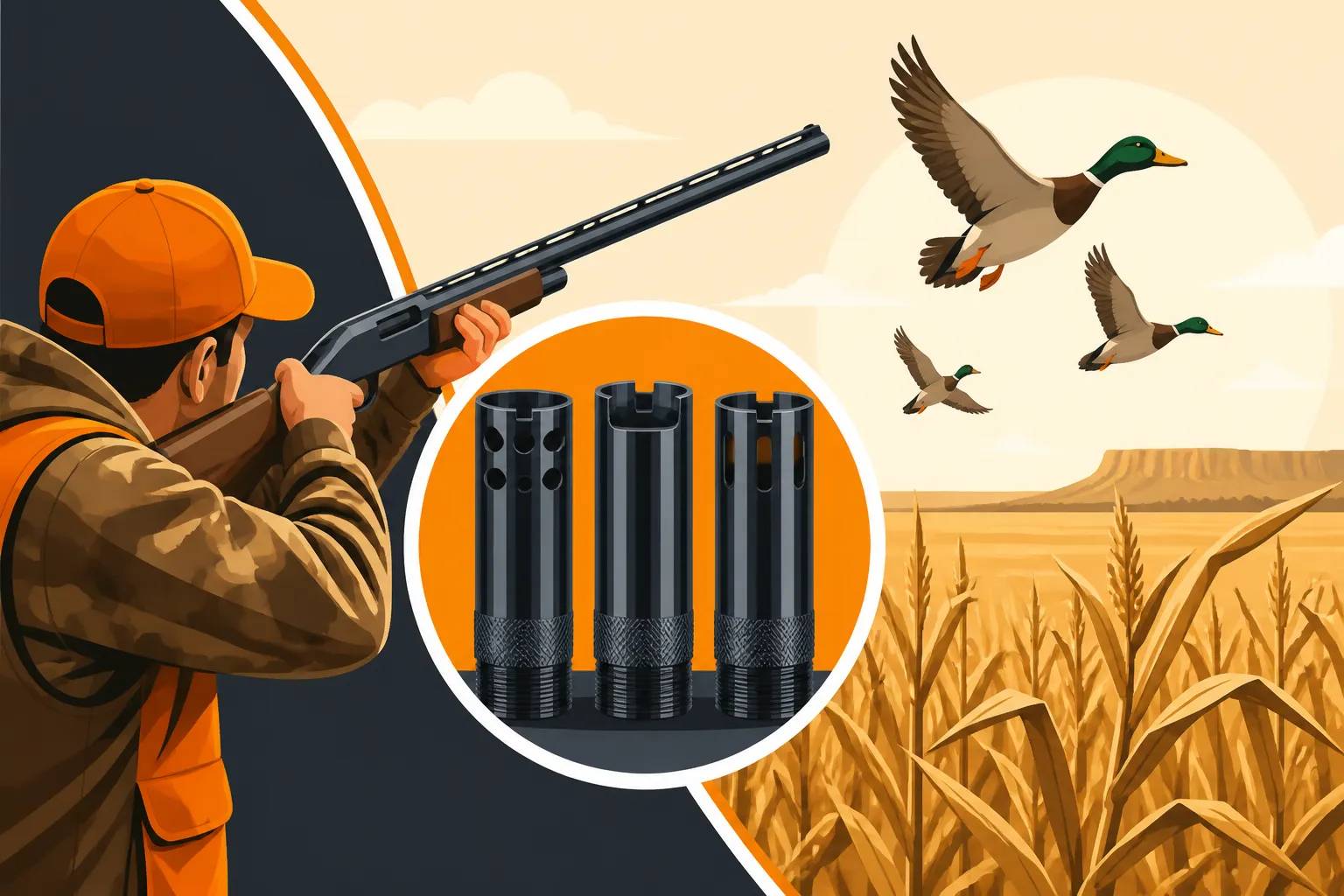
There's nothing quite like the rush of a field hunt for pheasants or grouse here in Nebraska, especially when you're part of a well-oiled machine, driving birds towards waiting blockers. But if you've ever stood on the end of a milo field, shivering slightly in the crisp November air, watching birds flare high and wide just out of range, you know the frustration of having the wrong choke in your shotgun. This guide is all about helping you pick the perfect choke for your role as a blocker, ensuring those hard-earned birds don't get a free pass over your head.
Understanding the Blocker's Crucial Role in a Field Hunt
Being a blocker isn't just about standing still and waiting; it's a strategic position that requires patience, anticipation, and the right gear. Your job is to seal off the end of the field, often a cornfield or milo stubble, and be ready for birds that flush far ahead of the drivers or try to sneak out wide. It's a different game than being one of the walkers pushing birds, where you might expect closer, more sudden flushes. As a blocker, you're often dealing with birds that have already felt pressure, are flying hard, and are trying to gain altitude or distance.
The Blocker's Unique Position and Responsibility
As a blocker, you're the last line of defense. The drivers are pushing birds, making noise, and working through the cover. The birds, being clever creatures, will try to escape the pressure. Many will flush ahead of the drivers, sometimes at the very end of the field, making a beeline for safety. Your position is to intercept these birds. This means you need to be prepared for shots that might be on the longer side, requiring a pattern dense enough to connect effectively without peppering the bird excessively at closer ranges. It's a fine balance, and choosing the right choke is paramount to success. You’re not just shooting; you’re executing a critical part of the hunting strategy, especially when Blocking and Driving a Nebraska Field.
There's also the responsibility of safety. When you're standing on the end, you need to be acutely aware of where the drivers are, where other blockers are, and what's beyond the field. Your shot needs to be clean and directed safely. This understanding of your position often informs the practical range you're willing to shoot at, which in turn influences your choke choice. You want to make ethical, clean kills, not just throw lead in the general direction of a departing pheasant. A good blocker is patient, observant, and decisive, knowing when a bird is within a safe and ethical range for their chosen setup.
Anticipating Bird Flight Paths and Distances
Birds that come to the end of a field, particularly pheasants, often do so with a burst of speed and a climb. They're not leisurely taking flight; they're in escape mode. This means they'll likely be higher and further out than a bird flushed by a dog right at your feet. You need to anticipate these longer shots, perhaps 30 to 45 yards, sometimes even further if they catch a good tailwind. Understanding how birds react to pressure is key. If you're Walking Milo and Corn Stubble for Pheasants, you'll notice birds often run ahead, then flush at the last possible moment, sometimes right at the field edge. As a blocker, you're waiting for that moment.
The shape of the field, the height of the cover, and the wind all play a role in how birds approach your position. In an open cornfield, birds might get up sooner, giving you a slightly longer shot. In dense milo, they might hold tighter, only flushing once they hit the very edge. Think about how the wind might push birds – a strong crosswind can make them drift, altering their flight path and challenging your lead. Your choke needs to be versatile enough to handle these varying scenarios, providing a tight enough pattern for longer shots while still offering a reasonable spread. For serious hunters, checking apps like GoHunt for detailed topo maps and wind conditions can really help predict these flight paths before the hunt even begins.
Matching Choke Constriction to Your Blocking Position
Now for the technical stuff: which choke to screw into your barrel. Given the typical scenario of a blocker—longer shots, fast-flying birds—a tighter choke is usually the sensible choice. We're talking Modified, Improved Modified, or even Full, depending on your comfort level and the exact conditions. The goal is to deliver a dense pattern of pellets to a bird that might be 40 yards out, maximizing your chances of a clean kill.
When to Choose a Tighter Choke (Modified, Improved Modified, Full)
For the blocker, tighter chokes are often your best friend. A Modified choke is a fantastic all-around choice for many blocking scenarios. It tightens your pattern more than an Improved Cylinder or Skeet choke, giving you effective range out to 35-40 yards. This is often the sweet spot for those pheasants that flush just as they clear the field edge. It provides enough density to ensure multiple pellet strikes on a bird at a moderate distance, which is critical for bringing them down cleanly.
If you anticipate even longer shots, or if you're hunting particularly cunning birds that tend to rocket high and fast, stepping up to an Improved Modified or even a Full choke can be beneficial. An Improved Modified offers a slightly tighter pattern than Modified, extending your effective range a bit further, perhaps to 40-45 yards. A Full choke really concentrates the pellet pattern, making it devastatingly effective on distant birds, potentially out to 50 yards or more. However, the trade-off with Full choke is a smaller effective pattern diameter, which means less room for error in your swing and lead. It demands precision, but when you connect, it connects hard. For those late-season roosters that have seen it all, a tighter choke can make all the difference, especially when considering Shot Sizes for Late-Season Nebraska Roosters.
Why an Open Choke Might Let You Down
You might be tempted to use a more open choke like an Improved Cylinder or Skeet, especially if you also hunt grouse or quail in tighter cover. And while those chokes are excellent for Choke Choice for Walking Birds where flushes are often close and sudden, they simply don't provide the pattern density needed for most blocking situations. If you're facing a pheasant at 40 yards with an Improved Cylinder, your pattern will be so spread out that you'll likely have large gaps, increasing the chance of crippling a bird or missing entirely.
Imagine a pheasant flushing at 35 yards, flying hard. With an open choke, by the time your pellets reach the bird, the pattern has expanded significantly. A few pellets might hit, but perhaps not enough to bring the bird down cleanly. This isn't just frustrating for you; it's unethical to wound game. Your role as a blocker is to intercept birds that are trying to escape, meaning they're often at the outer limits of effective shotgun range. Relying on an open choke for these shots is like bringing a knife to a gunfight—you're simply not equipped for the challenge. It’s a good idea to check resources like the GoHunt blog or forums for discussions on choke performance in various hunting scenarios, as real-world experience can be invaluable.
Balancing Pattern Density and Spread
The art of choke selection for blocking is finding that sweet spot between pattern density and pattern spread. You need enough density to ensure a sufficient number of pellets hit the vital areas of a bird at range, but you also want some spread to give you a bit of forgiveness for minor errors in aiming. This is why many experienced blockers gravitate towards Modified or Improved Modified. They offer a good compromise.
A Full choke, while offering maximum density, can feel like shooting with a rifle scope on a shotgun; it's very precise, but if your lead is off by just a little, you'll miss clean. Conversely, anything more open than Modified risks not putting enough pellets on target. It’s about understanding the average distance of your shots and choosing the choke that gives you the highest probability of a clean kill within that range. This balance is critical, and it's why pattern testing your shotgun with various chokes and loads before the season is always a smart move. You'd be surprised how much different brands of shells pattern through the same choke.
| Choke Constriction | Typical Effective Range (yards) | Pattern Density at 40 yards | Best Use for Blocker |
|---|---|---|---|
| Full | 40-50+ | Very Tight | Long shots, precise aim |
| Improved Modified | 35-45 | Tight | Most common blocker choice |
| Modified | 30-40 | Moderate to Tight | Versatile, good all-around |
| Improved Cylinder | 20-30 | Moderate | Too open for most blocking |
| Skeet / Cylinder | 15-25 | Wide | Not recommended for blocking |
Considering Shotgun Gauge and Shells for Blocking
Your choke choice is only one part of the equation; your shotgun gauge and the shells you load are equally important for a successful blocking setup. It all works together to deliver that dense, hard-hitting pattern downrange.
Gauge Considerations for Power and Pellets
When it comes to gauges, the 12-gauge shotgun is king for field blocking, and for good reason. Its ability to handle heavier shot charges means more pellets downrange, which directly translates to a denser pattern at longer distances. More pellets increase your probability of multiple strikes on a bird, leading to a quicker, cleaner kill. While a 20-gauge can certainly be effective, especially in the hands of a skilled shooter, its smaller shot payload means you're starting with fewer pellets, which can make those longer blocking shots more challenging.
Many hunters swear by the 12-gauge for pheasants in Nebraska, particularly when working with groups driving birds. The sheer volume of lead (or nontoxic shot, depending on regulations) you can send out gives you an edge when birds are trying to escape at speed. It’s also often easier to find a wider variety of specialized loads for 12-gauge, allowing you to fine-tune your setup even further for specific conditions or bird behavior. This power and pellet count is a significant advantage when you're the last line of defense in a field drive.
Shot Size and Payload for Distant Birds
For blocking, you'll want to lean towards larger shot sizes. For pheasants, #4, #5, or even #6 shot are common choices. Why larger? They retain energy better over distance, penetrate deeper, and are less affected by wind than smaller shot. While #7.5 or #8 shot might be fine for close-range quail, they simply don't have the knockdown power needed for a high-flying pheasant at 40 yards. A denser pattern of smaller pellets might look impressive on paper, but if those pellets don't have the energy to penetrate to the vitals, they're not effective.
Combine your larger shot size with a heavy payload—think 1 1/4 ounce or 1 3/8 ounce loads in a 12-gauge. This maximizes the number of those larger, harder-hitting pellets within your pattern, ensuring that when you connect with that Modified or Improved Modified choke, you're delivering a lethal blow. Experiment with different brands and velocities too. Sometimes, a slightly faster load can give you an edge in connecting with those fast-flying escape artists.
The Importance of Nontoxic Shot Compliance
This is critical, folks, and something we can't stress enough. Many public hunting areas in Nebraska, especially Wildlife Management Areas (WMAs) and Federal Waterfowl Production Areas, require the use of nontoxic shot for all upland game hunting. This isn't just for waterfowl; it extends to pheasants, grouse, and quail too. If you're blocking a field on one of these properties, you must be using steel, bismuth, or another approved nontoxic alternative. Ignoring this rule can lead to hefty fines and loss of hunting privileges. Always check the regulations for the specific area you'll be hunting. This is a key part of responsible hunting and ensures you stay compliant with rules like Nontoxic Shot Rules on Nebraska WMAs.
Nontoxic shot often behaves differently than lead. Steel, for instance, is lighter than lead, so you might need to go up a shot size or two (e.g., use #2 or #3 steel instead of #4 or #5 lead) to maintain similar energy and performance. Bismuth and other alloys are closer in density to lead and generally perform more similarly. It’s absolutely essential to pattern your shotgun with your chosen nontoxic loads and choke before the season. Don't assume your preferred lead load patterns will be identical. A quick scouting trip with your gear can save you a lot of heartache and missed birds later on. For finding these specific regulations on public lands, the GoHunt app often integrates public land boundaries with regulations, making it easier to stay informed.
Adapting to Field Conditions and Bird Behavior
Even with the perfect choke and ammo, hunting isn't a static sport. Nebraska weather, bird pressure, and group dynamics all demand flexibility from the blocker.
Wind, Cover, and Bird Speed
Nebraska is renowned for its wind, and that wind plays a massive role in how birds behave. A strong tailwind can make pheasants incredibly fast, causing them to cover ground quickly and challenge your lead. A crosswind can push birds sideways, making their flight path unpredictable. Understanding Reading Cover After a Nebraska Wind can help you anticipate these movements. In windy conditions, a slightly tighter choke or heavier, larger shot might give you a bit more edge in maintaining pattern integrity and energy on target.
The type and density of cover also influence bird behavior. Dense standing corn or milo gives birds more security, often causing them to hold tighter or run further before flushing. More open stubble might encourage earlier flushes. As a blocker, you need to quickly assess these conditions and be ready for the resulting bird behavior. If birds are routinely flushing early and high, confirming your tighter choke and appropriate shot size is key. If they're holding tight and then flushing low and fast, your swing and lead become even more critical.
Working with Other Hunters and Safety
A field hunt, especially with a line of blockers and drivers, is a team effort. Communication is vital. Know where your fellow hunters are at all times, especially the drivers coming towards you. Never shoot in the direction of another hunter or where there’s any doubt about what’s beyond the bird. Safety is always the absolute priority. The tighter your choke, the further your effective range, which also means your pellets will travel further. This makes situational awareness even more important.
Consider the size of the field. How Many Hunters a Nebraska Quarter Section Holds can dictate how spread out your blocking line needs to be. If it's a smaller field, you might find birds flushing closer, which could make an Improved Modified a better choice than a Full choke to avoid over-choking. If it's a massive tract, those birds will have more room to build speed and distance. Always remember the basic rules of firearm safety, and ensure everyone in your party understands their role and limitations. Don't be afraid to adjust your position slightly to maintain safety and maximize your shot potential, within the confines of the plan.
Practice and Patterning Your Shotgun
There's no substitute for practice. Before the season, take your shotgun, your chosen choke (or chokes), and your hunting ammunition to the range. Pattern your gun at 30, 40, and 50 yards. See how your specific choke and load perform. Are there gaps in the pattern? Is it too dense at closer ranges? This patterning exercise is crucial for understanding your effective range and building confidence in your setup. If you discover large gaps in your pattern at 40 yards with a Modified choke, you might consider stepping up to Improved Modified, or trying a different brand of ammunition.
Practice your swing, your lead, and your mounting of the gun. Those fast-flushing pheasants don't offer much time for hesitation. Being comfortable and proficient with your chosen setup means you'll make more ethical, clean kills when the opportunity arises. Remember, the choke is just a tool; it's your skill and preparation that ultimately seal the deal. Utilizing tools like GoHunt for scouting and planning, combined with solid range time, will put you in the best possible position for success on your next Nebraska pheasant hunt.
Disclaimer
This article is for general informational purposes only and does not constitute professional advice. Laws, prices and regulations vary by location and change over time. Consult a qualified professional for guidance on your specific situation.