Angled Versus Straight Spotting Scopes
Trying to decide between an angled and a straight spotting scope can feel like splitting hairs, but when you're perched on a Nebraska bluff, trying to pick apart a distant draw for deer or gauge the horns on an antelope, the choice can really impact your effectiveness and comfort. This guide will walk you through the nuances of each design, helping you understand which one best suits your hunting style and the vast, varied landscapes of our great state.
Understanding the Fundamental Differences
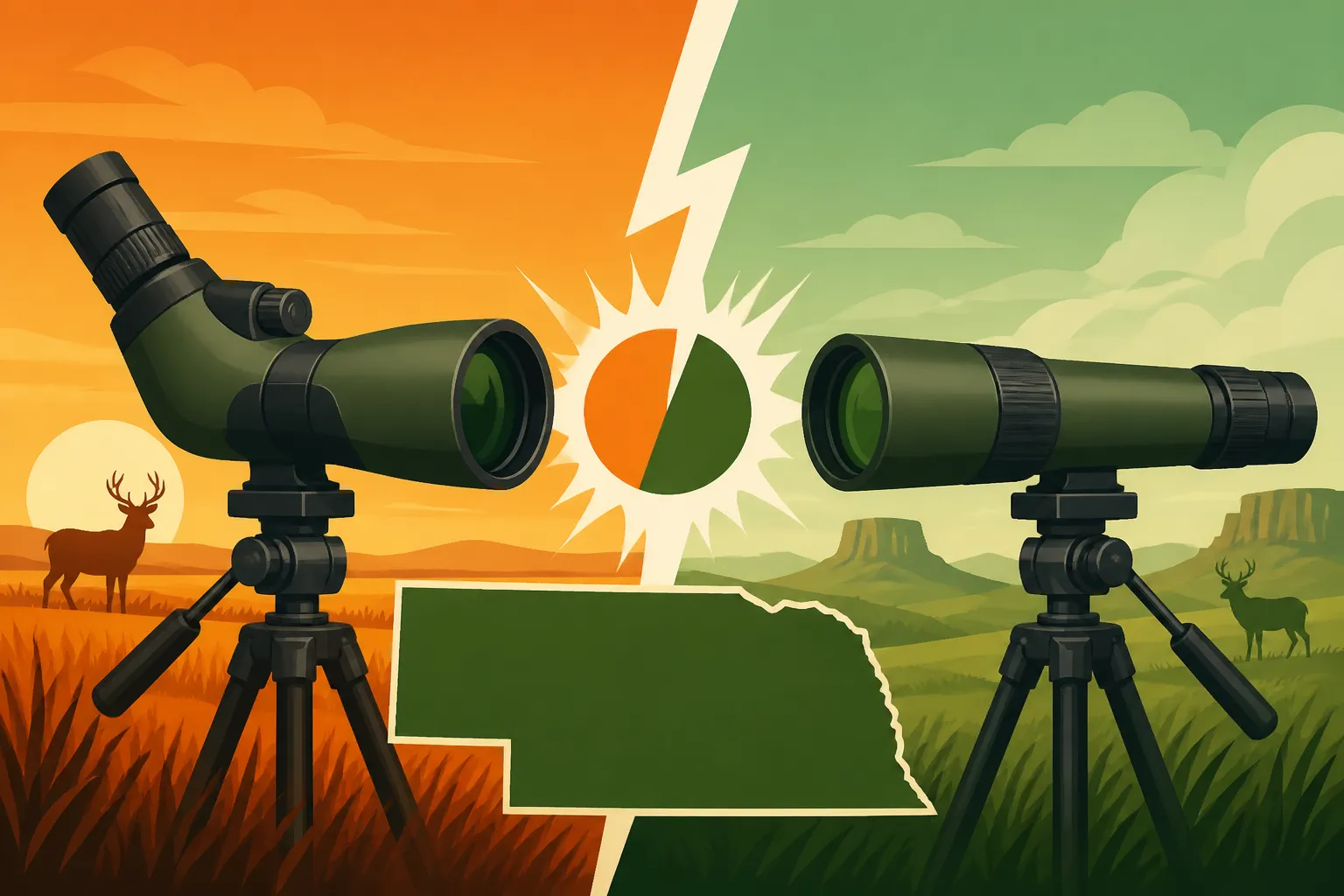
At its heart, the difference between an angled and a straight spotting scope lies in the eyepiece's orientation. On a straight scope, the eyepiece aligns directly with the objective lens, giving you a straight-line view, much like a rifle scope or a large pair of binoculars. An angled scope, however, has its eyepiece set at an angle, typically 45 degrees, relative to the main body of the scope. This seemingly small distinction creates a cascade of ergonomic and practical implications that can make a big difference when you're spending hours behind the glass.
The choice often comes down to how you plan to use the scope, the terrain you're hunting, and even how many people might be sharing the view. In Nebraska, where you might be glassing wide-open Sandhills country one day and thick river bottoms the next, having the right tool can really give you an edge. Many hunters, especially those new to advanced optics, might not even realize these options exist or what impact they have until they've spent a frustrating afternoon squinting through the wrong setup.
The Advantages and Disadvantages of an Angled Spotting Scope
Angled spotting scopes are incredibly popular, and for good reason. They offer several significant benefits, particularly for hunters who spend a lot of time glassing from a prone or seated position, or when sharing the view with others. However, they also come with a few drawbacks that are worth considering before you make a purchase.
Ergonomics and Comfort
One of the biggest selling points of an angled scope is the comfort it provides, especially during extended glassing sessions. When you're lying prone on a hillside, trying to stay low and out of sight, an angled eyepiece allows you to keep your head in a more natural, comfortable position. Instead of craning your neck to look straight through a scope that might be sitting higher on a tripod, you can simply lower your head slightly and look down into the eyepiece. This reduces neck strain, which can be a real blessing when you're glassing for hours on end, scanning every crease and shadow on a distant prairie. This comfort factor can dramatically extend how long you can effectively glass, helping you spot game that others might miss due to fatigue. It’s a huge plus when you’re trying to pick out a trophy buck in the rough terrain of the Pine Ridge or a distant antelope across the plains.
This ergonomic benefit also extends to uneven terrain. Imagine you're set up on a steep incline in the Wildcat Hills. With an angled scope, you can adjust the tripod height to a comfortable level for your body, rather than having to constantly adjust your body to meet the scope. This flexibility means you can often find a stable, comfortable position much faster, allowing you to get back to glassing with minimal fuss.
Versatility for Multiple Users
Another strong advantage of the angled design is its versatility when multiple people are using the same scope. Whether you're hunting with a buddy, introducing a youth hunter to the joys of glassing, or just sharing a view with family, an angled scope makes it much easier to quickly adjust for different heights. Instead of having to move the entire tripod up or down significantly for each person, a simple rotation of the scope body or a minor tripod adjustment is often all that's needed.
This is particularly useful when you're trying to quickly show someone a specific animal you've spotted. You can find the animal, hand the scope off, and they can easily adjust to their height without losing the target. This makes it a fantastic option for family hunts or when guiding someone new. It fosters a more collaborative and enjoyable experience, which is what hunting is often all about. Imagine pointing out a distant turkey to a youngster during Spring Turkey Calling in Nebraska's River Corridors – an angled scope makes that moment much easier to share.
Challenges with Target Acquisition
While comfortable, angled scopes can sometimes present a slight challenge when it comes to initial target acquisition. Because you're not looking straight through the scope, there's a disconnect between where your eye is naturally looking and where the scope is pointing. This can make it a bit trickier to quickly "find" an animal you've just spotted with your binoculars, especially if it's moving or in dense cover.
It often requires a bit more practice and a different technique. Many experienced users of angled scopes will point their scope roughly at the target, then look over the top of the scope body, aligning it with their naked eye before dropping down to the eyepiece. While this becomes second nature with practice, it's a hurdle for beginners and can add a few precious seconds when time is of the essence. In situations where you've only got a fleeting glimpse of a coyote during Coyote Calling on Winter Grassland, those extra seconds can be crucial.
The Advantages and Disadvantages of a Straight Spotting Scope
The straight spotting scope is the more traditional design, offering a direct line of sight through the optics. While perhaps not as flashy as its angled counterpart, it boasts its own set of strengths that make it a favorite for many hunters, especially those who prioritize speed and simplicity.
Rapid Target Acquisition
The most significant advantage of a straight spotting scope is its ease of target acquisition. When you spot an animal with your naked eye or binoculars, your instinct is to point directly at it. With a straight scope, that's exactly what you do. The eyepiece lines up perfectly with the objective lens, creating a natural point-and-shoot experience. This means you can get on target much faster, which is invaluable when an animal is on the move, or you're trying to pick it out from a fleeting moment in dense cover.
For hunters who frequently switch between binoculars and a spotting scope, or who are often on the move, this direct line of sight can be a huge time-saver. If you're quickly trying to confirm if that distant speck is indeed a mule deer or just a rock while Glassing Sandhills Blowouts for Mule Deer, the straight scope's intuitive aiming can give you an immediate answer. This simplicity makes it a favorite for many guides and solo hunters who rely on speed and efficiency.
Use with Window Mounts
Straight scopes also excel when used with window mounts, making them a great companion for vehicle-based scouting or hunting from a truck in areas where it's permitted. Because the eyepiece extends straight back, it can often sit comfortably inside the vehicle, allowing you to glass without having to lean out too far or strain your neck. This is particularly useful when you need to cover a lot of ground quickly, scanning from various vantage points along a ranch road in the Sandhills or Panhandle.
Imagine driving along a two-track, spotting a herd of antelope, and needing to quickly evaluate a specific buck. A straight scope on a window mount lets you do this with minimal fuss, keeping you warm and concealed inside your vehicle. It's a setup that maximizes efficiency and comfort when you're using your vehicle as a mobile glassing platform across Nebraska's vast open spaces. Companies like GoHunt, with their mapping and scouting tools, can help you identify these ideal glassing points before you even hit the road.
Less Ergonomic for Prolonged Use
On the flip side, the straight design can become less comfortable during prolonged glassing sessions, particularly if you're set up on a tripod at eye level while seated or lying prone. You'll often find yourself craning your neck, tilting your head at an awkward angle to get behind the eyepiece. This can lead to significant neck and back strain over time, diminishing your ability to stay focused and effective.
While it's great for quick checks, an hour or two of this kind of posture can really take its toll. This is where many hunters find themselves wishing for the angled design, especially when doing serious grid searches of vast terrain. If your hunting style involves long periods behind the glass, meticulously breaking down distant hillsides for Spot-and-Stalk Mule Deer in the Nebraska Sandhills, the ergonomic compromise of a straight scope is something to seriously consider.
Making Your Choice for Nebraska Hunting
Deciding between an angled and a straight spotting scope isn't about one being inherently "better" than the other; it's about matching the tool to your specific needs and hunting scenarios. Think about how you typically hunt in Nebraska, the species you pursue, and your personal preferences.
Consider Your Primary Hunting Style
If you're often setting up a fixed glassing point for extended periods, perhaps overlooking a vast canyon in the Pine Ridge for elk or mule deer, or patiently picking apart a large field for distant geese, an angled scope might be your best friend. The comfort it offers for long sessions will likely outweigh the slight learning curve for target acquisition. This is also true if you plan on hunting from a treestand or ground blind where space is limited and comfort is key. When you're trying to stay still and quiet for hours, anything that reduces physical strain is a win.
However, if your hunting involves a lot of quick scanning, covering vast distances by vehicle, or frequent repositioning for quick checks, a straight scope's rapid target acquisition and ease of use with window mounts could be more beneficial. This might be the case when scouting new areas, looking for late-season antlerless deer opportunities, or quickly identifying game while on the move. For hunters who prioritize getting on target instantly, the straight scope is hard to beat. GoHunt's mapping features can help you pre-plan routes where a straight scope would shine.
Think About Tripod Height and Position
The height at which you typically use your tripod also plays a role. If you prefer to keep your tripod low to the ground for stability, especially when lying prone, an angled scope is almost always more comfortable. It allows you to maintain a lower profile while still getting a good view. This is crucial in open country where concealment is paramount.
Conversely, if you often glass from a standing position, or use a taller tripod, a straight scope can work perfectly well. It becomes more like looking through a rifle scope, which many hunters are already accustomed to. If you often glass from the bed of a truck, or from a bipod attached directly to your pack while kneeling, the straight scope's design can feel very natural.
Table: Angled vs. Straight Spotting Scopes for Nebraska Hunters
Here's a quick comparison to help you weigh the pros and cons in the context of Nebraska hunting:
| Feature/Consideration | Angled Spotting Scope | Straight Spotting Scope |
|---|---|---|
| Ergonomics for Long Use | Excellent, less neck strain for seated/prone glassing | Can cause neck strain during extended sessions |
| Target Acquisition Speed | Can be slower initially, requires practice | Very fast and intuitive, natural point-and-shoot |
| Versatility (Multiple Users) | Superior, easy height adjustment for different users | Requires significant tripod adjustment for different users |
| Use with Window Mounts | Can be awkward, eyepiece may stick out | Excellent, fits well within a vehicle for quick glassing |
| Terrain Compatibility | Great for uneven ground, allows flexible setup | Best on relatively flat ground or standing positions |
| Concealment | Easier to maintain a low profile in open country | Requires more body movement to get behind eyepiece |
| Nebraska Best Use Cases | Extended glassing in Sandhills, Pine Ridge, river bottoms; shared viewing; low-profile setups. Optics for Glassing the Nebraska Sandhills | Quick target identification, vehicle-based scouting, hunting from designated blinds, rapid evaluation of distant game. Rifle Ranges Realistic in Open Country |
Your Gear and Preferences
Ultimately, the best way to choose is to try both. Head to a local outdoor retailer or find a friend who has one of each. Set them up on a tripod, look through them, and simulate some of your typical hunting scenarios. How does it feel to acquire a target 300 yards away? How comfortable is it after 15 minutes? Your personal comfort and the intuition of the scope's design will be huge factors. Don't forget that accessories like a good tripod are just as important as the scope itself, regardless of whether it's angled or straight. A sturdy tripod is crucial for maximizing the stability and effectiveness of any spotting scope, especially when trying to judge a trophy at long distances. Tripods and Glassing From a Vehicle touches on this.
Think about other gear too. If you use a rangefinder, does the scope's design interfere with your ability to quickly transition between optics? What about your packing strategy? Some hunters find angled scopes pack a little more compactly, but this can vary by model. Exploring options and reading reviews on specialized hunting platforms like GoHunt can provide additional insights from experienced users in similar terrain. The important thing is to invest in quality glass, whether angled or straight, because it will truly enhance your ability to scout, identify, and ultimately be more successful in the field.
Disclaimer
This article is for general informational purposes only and does not constitute professional advice. Laws, prices and regulations vary by location and change over time. Consult a qualified professional for guidance on your specific situation.