Bird Dog Gear for Nebraska Heat
There’s nothing quite like watching a well-trained bird dog work a field, nose to the ground, tail wagging with anticipation, until that explosive flush that makes your heart pound. But let's be real, Nebraska’s early upland seasons can throw some curveballs, and often, that curveball comes in the form of scorching heat. Many of us have felt that pang of worry as our loyal companions start to lag, their tongues practically dragging, and it's a stark reminder that managing our bird dog's well-being in the heat isn't just a good idea—it's absolutely critical for their safety and our continued hunting enjoyment. This guide is all about equipping you with the knowledge and gear to keep your feathered partner safe, hydrated, and ready for action, even when the thermometer is pushing summer limits.
Understanding Nebraska's Early Season Heat and Its Impact on Dogs
Nebraska, while known for its harsh winters, can dish out some seriously hot and humid conditions, especially during the early weeks of hunting season. Whether you're chasing pheasants in October or Hunting Grouse in September Heat, the reality is that those first few hunts can easily see temperatures climb into the 80s or even 90s, with humidity making it feel even worse. This isn't just uncomfortable for us; it poses a significant health risk to our four-legged hunting partners.
The Reality of Early Season Temperatures
When that pheasant season opener rolls around, or you're out early for grouse and partridge, it's easy to get caught up in the excitement. You've been waiting all year! But the ground is still warm, the sun can be relentless, and even a light breeze doesn't always cut it when your dog is working hard. Picture a typical October morning in central Nebraska: it might start crisp, but by 10 AM, the sun is high, and the temperature is quickly rising. Your dog, clad in a fur coat, is running through thick cover, using energy, and generating internal heat. Unlike humans who sweat all over, dogs primarily cool themselves by panting, which isn't always efficient enough to counteract the combined effects of ambient heat, humidity, and strenuous exercise. This is especially true for dogs working dense cover where air circulation is limited. The ground itself can be radiating heat, adding to the challenge.
Signs of Heat Stress in Bird Dogs
Recognizing the early signs of heat stress is paramount. Your dog can't tell you they're overheating, so it's on us to be vigilant. The first sign is often excessive panting – beyond what's normal for their activity level. Their breathing might become labored, or you might notice their gums turning a darker red or even purple, which is a severe sign. Other red flags include staggering, confusion, vomiting, diarrhea, or even collapsing. If you see any of these, especially early on, stop immediately. Do not push your dog "just one more time." Ignoring these warnings can lead to heatstroke, which is a life-threatening emergency that can cause organ damage or even death very quickly. Many seasoned hunters have heartbreaking stories of losing a beloved dog because they misjudged the conditions or didn't recognize the signs soon enough.
Why Certain Breeds Are More Vulnerable
While all dogs can suffer from heat stress, some breeds are simply more predisposed due to their physiology. Brachycephalic (short-nosed) breeds like bulldogs are at a much higher risk, though they aren't typically used as bird dogs. However, even within common bird dog breeds, differences exist. Dogs with thick double coats, like some retrievers, can struggle more than, say, a short-haired pointer, especially if their undercoat hasn't shed completely. Older dogs, puppies, and dogs with underlying health conditions (like heart or respiratory issues) are also more vulnerable. A dog that is overweight or poorly conditioned will also struggle significantly more than a fit, lean athlete. Understanding your specific dog's vulnerabilities is a critical part of pre-hunt planning, because what one dog can handle, another might not, even if they're the same breed.
Essential Hydration Strategies and Gear
Keeping your dog properly hydrated isn't just about offering water when they look thirsty; it's a proactive strategy that starts before you even leave the house. Dehydration can quickly compromise their performance and lead to serious health issues, especially when coupled with the exertion of hunting. Water and Heat Risk for Bird Dogs is a very real concern that demands attention.
Portable Water Solutions
You can never have too much water when hunting with a dog in the heat. For short walks, a simple collapsible bowl and a large water bottle or two might suffice. However, for longer hunts, especially when Walking Nebraska Pheasant Cover With a Dog for hours on end, you'll need more robust solutions. Insulated water bottles or small hydration packs designed for dogs can keep water cool longer. Some hunters carry a dedicated hydration pack on their back, allowing them to carry several liters of water for themselves and their dog. Look for dog bowls that fold flat or roll up, making them easy to stash in a vest pocket. I personally love the soft-sided bowls that can be quickly unfurled and filled. A small pump sprayer or even a squirt bottle can be surprisingly effective for quickly getting water into a dog's mouth if they're hesitant to drink from a bowl, or for simply wetting down their fur to aid cooling.
Here's a quick look at common portable water solutions:
| Solution Type | Pros | Cons | Best Use Case |
|---|---|---|---|
| Collapsible Bowl | Lightweight, compact, easy to carry | Can spill, small capacity | Quick drinks, short hunts, easily refillable sources |
| Insulated Bottle | Keeps water cool, durable | Heavier, bulky | Longer hunts, hot days, limited refills |
| Hydration Pack | Large capacity, hands-free | Can be cumbersome for some dogs | Very long hunts, multiple dogs, remote areas |
| Pump Sprayer/Bottle | Quick cooling, easy to administer | Not for primary hydration, can scare some dogs | Emergency cooling, encouraging reluctant drinkers |
| Soft-Sided Bowl | Very flexible, packs tiny, easy to clean | Less stable than rigid bowls | Backpacking, quick field stops, general use |
Electrolytes and Recovery
Just like human athletes, working dogs can benefit from electrolyte supplementation, especially after intense exertion in hot weather. Electrolytes help replace vital salts and minerals lost through panting and urination, which are crucial for maintaining proper muscle function and hydration. There are several commercial electrolyte powders and liquids specifically formulated for dogs. These can be mixed into their water or food after a strenuous hunt. It's important to use products specifically designed for canines, as human sports drinks can contain ingredients harmful to dogs. Don't overdo it, and generally, these are best used as recovery aids rather than constantly during the hunt, unless specifically advised by your vet. The key is to support their system and help them bounce back, rather than relying on them as a magic bullet to prevent heat stress during the hunt itself.
Training and Conditioning for Heat Tolerance
The best defense against heat stress starts long before opening day. A well-conditioned dog is simply better equipped to handle the demands of hunting in the heat. Begin a gradual conditioning program weeks, if not months, before the season starts. This means regular exercise that builds stamina and muscle, ideally mirroring the type of work they'll be doing in the field. If you plan on Working Sharptails and Prairie Chickens on Foot for miles, start walking those miles with your dog well in advance. Gradually introduce them to warmer temperatures, but always err on the side of caution. Never push a dog to exhaustion, especially when it's hot. Early morning or late evening training sessions are ideal during the summer months. Consistency is key, and just like us, a dog coming off the couch is much more susceptible to problems than one that has been steadily building its fitness.
Protecting Paws and Bodies from Harsh Terrain
Beyond the heat from the air, the ground itself can be a major factor in early season discomfort and injury for your dog. Nebraska's terrain, from abrasive corn stubble to sandy trails, can be tough on paws, and direct sun can heat surfaces to dangerous temperatures.
Booties and Paw Protection
Imagine walking barefoot on hot asphalt—that's what your dog's paws might be experiencing on sun-baked dirt roads or dark crop stubble. Beyond the heat, the sharp edges of harvested corn or milo stalks can cause painful cuts and abrasions. This is where dog booties become invaluable. There's a learning curve to getting your dog used to them, but it's worth the effort. Start by putting them on for short periods at home, gradually increasing the time. When choosing booties, look for durable, well-fitting options that stay on without chafing. Brands like Ruffwear or Muttluks are popular for their robust designs. Having a couple of spare booties is always a good idea, as they can wear out or get lost in thick cover. Don't forget to condition your dog's pads naturally throughout the year by exposing them to various terrains, and consider paw balms to help toughen and moisturize pads, preventing cracks and dryness. Refer to Bird Dog Boots and Cut Pads for more detailed information on specific products and conditioning tips.
Cooling Vests and Bandanas
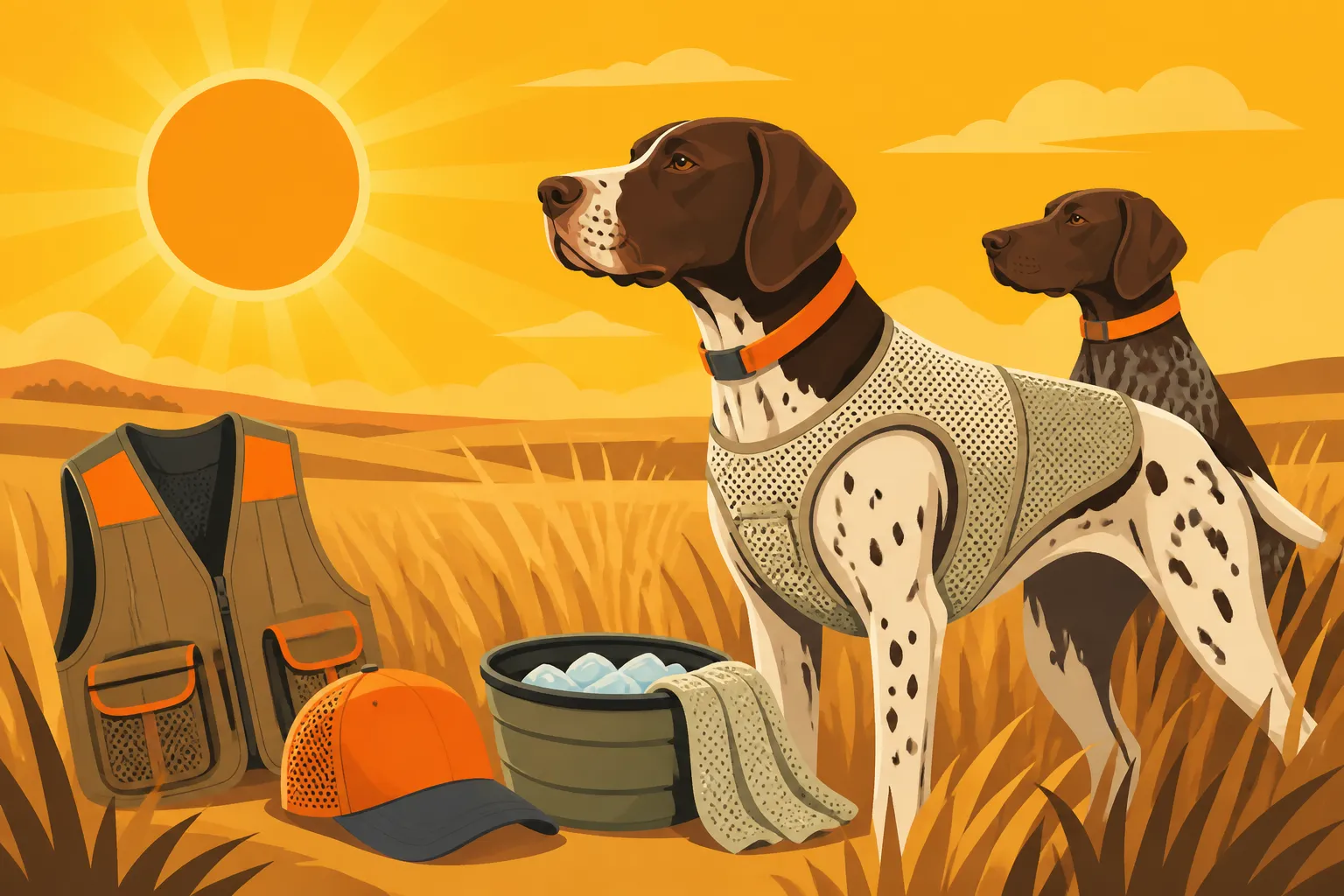
While a dog's fur coat is for insulation, sometimes we need to add a little extra help to cool them down. Cooling vests and bandanas work by holding water that evaporates slowly, drawing heat away from the dog's body. These aren't just for fashion; they can be a real game-changer on a hot day. Simply wet them thoroughly with cool water, wring out the excess, and put them on your dog. As the water evaporates, it creates a cooling effect. Some vests even come with gel packs that can be frozen, providing an extra boost of cooling. These are particularly effective around the chest and neck, where major blood vessels are close to the surface, helping to cool the blood circulating through their body. Just be sure the vest or bandana isn't too restrictive or heavy, which could add to their workload. It's about aiding natural cooling, not impeding movement.
Managing External Parasites in Warm Weather
Warm weather isn't just uncomfortable; it's also prime time for ticks, fleas, and other external parasites that can not only annoy your dog but also transmit serious diseases. Hunting through tall grasses, brush, and Walking Milo and Corn Stubble for Pheasants puts your dog right in the thick of it. Before the season starts, ensure your dog is up-to-date on a broad-spectrum preventative medication that targets ticks and fleas. There are many options, from topical treatments to oral medications, so discuss the best choice for your dog with your veterinarian. During and after a hunt, perform thorough tick checks, paying close attention to ears, armpits, groin, and between the toes. Carry a tick remover tool in your first aid kit. Beyond the discomfort, diseases like canine ehrlichiosis or anaplasmosis, transmitted by ticks, can severely impact your dog's health and hunting career. Consistent prevention and post-hunt checks are non-negotiable.
GPS Tracking and Communication in Expansive Cover
Hunting in Nebraska often means wide-open spaces, dense thickets, and rolling terrain where a dog can quickly disappear from sight. In hot weather, a lost dog faces even greater risks. Effective tracking and communication systems are vital tools for peace of mind and safety.
The Indispensable Role of GPS Collars
If you hunt with bird dogs, a GPS collar isn't an optional luxury; it's a critical piece of safety gear, especially when you're working large tracts of land or thick cover where visibility is limited. Imagine your dog chasing a bird over a rise or through a heavy cedar draw – in a matter of seconds, they can be out of sight and earshot. In hot weather, if they become disoriented, injured, or succumb to heat stress, knowing their exact location could be the difference between life and death. GPS collars from companies like Garmin (with their Alpha or Astro series) or SportDOG allow you to track your dog's precise location and movement in real-time, often providing distance, speed, and even their "status" (on point, treed, running). The handheld unit gives you a map view, letting you know exactly where to go, even if you can't see them. This technology is incredibly reassuring, especially when Open Fields Tracts Best for Pheasants or other public lands often mean vast distances.
Handheld Units and Satellite Communication
The handheld unit that pairs with your GPS collar is your lifeline to your dog. Many modern systems integrate mapping capabilities, allowing you to see your location relative to your dog on detailed topographic maps or aerial imagery. This is where tools like GoHunt come in handy, as many serious hunters use scouting applications to understand terrain, identify potential cover, and mark waypoints even before stepping foot in the field. While GoHunt itself is primarily a scouting platform for bigger game draws and planning, the principles of map-based navigation and understanding terrain are directly applicable to bird hunting and coordinating with your GPS collar's unit.
Beyond the GPS tracking, consider other communication devices, especially if you're hunting with a partner or in areas with no cell service. Two-way radios are simple, reliable, and excellent for coordinating drives or simply checking in. For truly remote areas, a satellite messenger device can be a lifesaver. These devices allow you to send texts even without cell signal and have an SOS feature that can alert emergency services if you or your dog face a critical situation far from help. This comprehensive approach to tracking and communication drastically increases safety in the field.
GoHunt for Scouting and Tracking
While GoHunt is primarily known for its comprehensive platform for big game hunt planning, especially in western states, its underlying principles of mapping, identifying public land, and understanding habitat can certainly be applied to Nebraska bird hunting. Before you even head out, using such a robust mapping tool for Scouting Nebraska Public Ground Before Opening Day can give you an edge. You can use aerial imagery to pinpoint potential cover, analyze terrain features like shelterbelts, creek bottoms, or field edges that might hold birds, and understand access points.
While GoHunt doesn't directly track your dog's movements in real-time (that's where your dedicated GPS collar comes in), its ability to provide detailed land ownership maps and overlays can be invaluable if your dog does go out of range and you need to navigate unfamiliar territory to find them. Knowing precisely where public ground ends and private property begins is crucial when a chase takes your dog further than expected. Integrating detailed mapping information from resources like GoHunt into your pre-hunt strategy complements the real-time tracking provided by your dog's GPS collar, making for a safer, more informed hunting experience.
First Aid and Emergency Preparedness for Hot Hunts
No matter how well you prepare, accidents and emergencies can happen, and in hot weather, they can escalate rapidly. Being prepared to administer immediate first aid can make a critical difference.
Assembling a Heat-Specific Dog First Aid Kit
Your general hunting first aid kit for yourself needs to be supplemented with specific items for your dog, especially for hot weather. This isn't just a band-aid and gauze affair. Include sterile saline solution for flushing eyes or wounds, antiseptic wipes, vet wrap or self-adhering bandages, and medical tape. For heat-specific issues, pack instant cold packs (the kind you break to activate), a small bottle of rubbing alcohol (to help cool paws, carefully), and a small bottle of hydrogen peroxide (for inducing vomiting if your dog ingests something toxic, but only under vet guidance). Don't forget pain relief for dogs (again, vet-prescribed, never human pain relievers), and certainly a tick removal tool. Keep a pair of blunt-nosed scissors for cutting bandages or removing matted fur. All of this should be in a waterproof bag that's easily accessible in your vest or pack.
Emergency Cooling Techniques
If your dog shows signs of severe heat stress, immediate cooling is paramount. Get them into the shade immediately. If there's a water source nearby, gently submerge them in cool (not ice-cold) water up to their neck. If no natural water is available, douse them thoroughly with any water you have, focusing on their head, neck, armpits, and groin—areas where blood vessels are close to the surface. Use your hands to massage their muscles to help circulate the cooled blood. Use those instant cold packs you brought, placing them in the armpits or groin. Fan them vigorously. Offer small amounts of water, but don't force them to drink if they're struggling. Keep them moving as little as possible. The goal is to bring their core temperature down as quickly and safely as possible without causing them to shiver, which can actually increase heat production.
Knowing When to Call It Quits (and Vet Contact)
This is perhaps the hardest, but most important, lesson for any bird hunter: knowing when to stop. Your dog's health and safety must always take precedence over filling your bird vest. If your dog is showing persistent signs of heat stress, is slowing down significantly, or just isn't acting right, call it a day. It's not a failure; it's responsible ownership. Pushing a dog too far can have long-term consequences, or worse. Before you head out, have the phone number of a local veterinarian saved in your phone, especially if you're hunting in an unfamiliar area. Even better, identify the nearest emergency vet clinic along your route. If you've administered first aid and your dog isn't rapidly improving, or if they've collapsed, get them to a vet immediately. Prompt professional care is crucial for heatstroke victims. Many hunting seasons begin with high temperatures around the Pheasant Season Opening Date, making this vigilance extra important. A live, healthy dog means more hunts together in the future.
Disclaimer
This article is for general informational purposes only and does not constitute professional advice. Laws, prices and regulations vary by location and change over time. Consult a qualified professional for guidance on your specific situation.