Road Right-of-Way Hunting in Nebraska
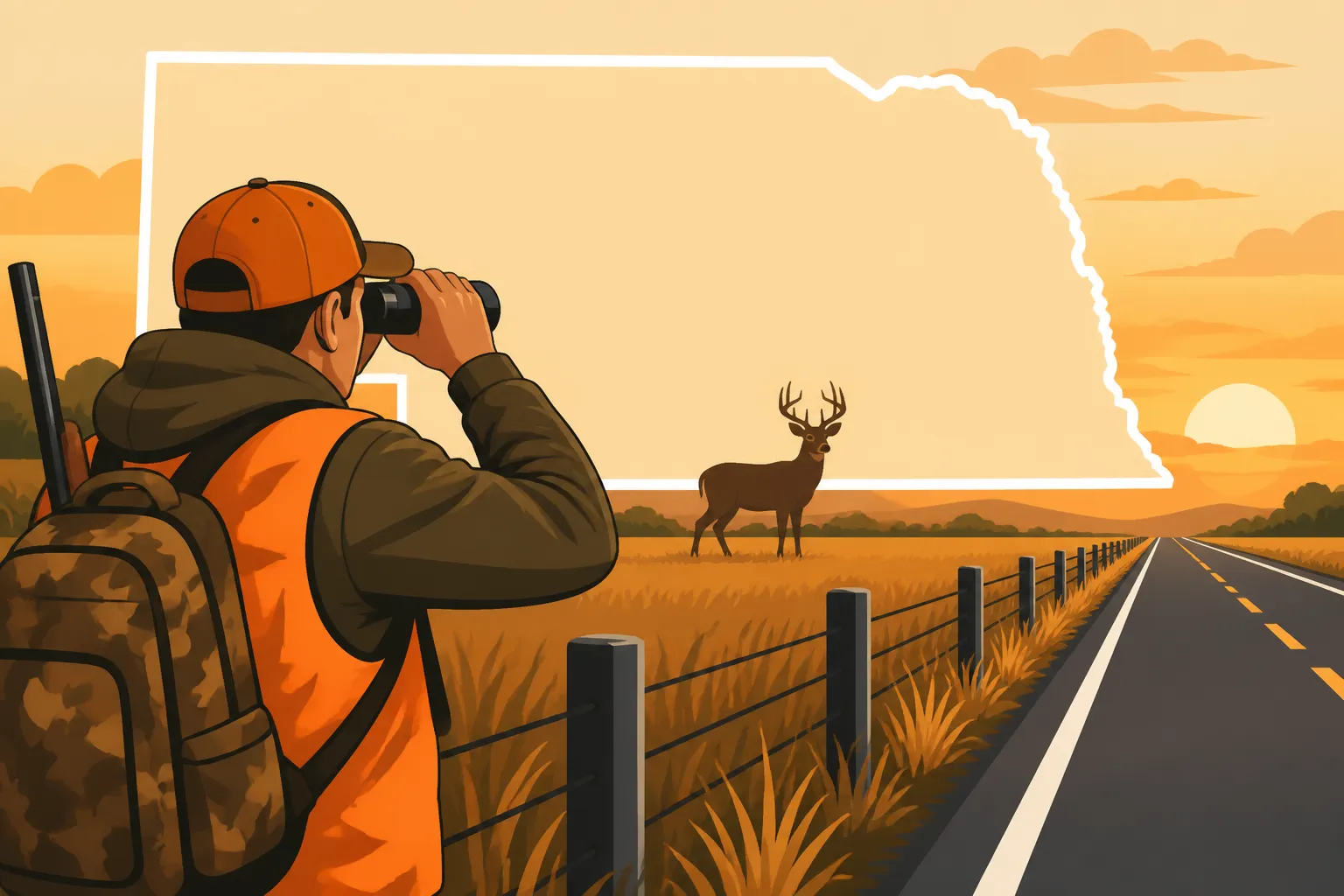
It’s a scenario every hunter in Nebraska has faced: you're driving down a rural road, maybe scouting, maybe heading to a known hunting spot, and you see tantalizing cover in the road ditch or along the fence line. It's not posted, it looks like prime habitat, and a little voice in your head asks, "Can I hunt that?" This question of hunting road right-of-ways in Nebraska is a common one, fraught with legal nuances, ethical considerations, and safety concerns. This guide will unravel those complexities, helping you understand the rules and make informed, responsible decisions when you encounter these tempting roadside strips.
Understanding Nebraska's Road Right-of-Way Laws
The legalities surrounding road right-of-ways in Nebraska can feel like navigating a maze, especially since many people assume all ditches are public domain. The reality is more complicated, and getting it wrong can lead to serious consequences, from fines to losing your hunting privileges, and even damaging valuable landowner relationships.
What Exactly is a "Right-of-Way"?
At its core, a road right-of-way (ROW) is a strip of land that has been granted (or acquired) for public use, primarily for transportation. This public use typically means the county or state has an easement for the road itself, maintenance of utility lines, drainage, and other infrastructure. However, an easement for public passage or utility doesn't automatically mean the public owns the land outright or has the right to hunt it. In many cases, especially in rural Nebraska, the land under the road and extending into the ditches and even beyond, remains privately owned. The public simply has the right to travel across it. Think of it like a path through someone's garden – you can walk the path, but you don't own the garden or have rights to pick the flowers.
This distinction is crucial. While the public has the right to use the road itself for travel, and often the shoulder and ditch for specific non-hunting activities (like retrieving a child's lost ball), the underlying ownership of the land usually belongs to the adjacent landowner. This means that if you step off the maintained road surface and into the ditch or beyond, even if it's within the right-of-way, you could potentially be on private property, and therefore subject to trespass laws if you don't have permission. It's a subtle but profoundly important difference in how we perceive public access.
State vs. County Roads: Are the Rules Different?
While the fundamental principle of private ownership often underlying a public easement remains, there can be subtle differences in how state and county authorities manage their respective road networks. State highways typically have more clearly defined and usually wider rights-of-way, with specific regulations enforced by the state patrol or Nebraska Department of Transportation. County roads, particularly those gravel or minimum-maintenance roads winding through rural areas, often have less defined boundaries, and the right-of-way might simply extend to the fence line or a less obvious marker.
The legal interpretation of hunting within these differing rights-of-way also varies. Some states have specific statutes regarding hunting on road allowances; Nebraska's law is more focused on the general act of hunting on private land without permission, which includes land within the right-of-way unless specified otherwise. This is where understanding local county ordinances can become important, as some counties might have specific rules about discharge of firearms near roads or within certain areas. However, even if no local ordinance explicitly forbids hunting a particular stretch of road ditch, the underlying private ownership principle almost always takes precedence. Always remember that simply because a road is publicly maintained, it doesn't automatically grant you permission to hunt the adjacent land, even if that land falls within the "right-of-way" easement.
The "Posted Land" Dilemma and Implicit Permission
This is where the waters get really muddy for many hunters. We're often taught that if land isn't posted with "No Hunting" or "No Trespassing" signs, it's fair game. While this might hold true in some specific historical contexts or for certain types of public lands, it's a dangerous assumption to make when it comes to road right-of-ways in Nebraska.
Posted Signs and Their Meaning
In Nebraska, the law regarding posted land is quite clear: land is considered legally "posted" if signs prohibiting hunting or trespassing are placed at conspicuous points, no more than 660 feet apart, along the boundaries of the land. These signs must be at least 11 inches by 14 inches and have lettering at least 2 inches high. This is the gold standard for landowners to establish legal control over their property. However, the absence of such signs doesn't automatically grant permission to hunt.
Many landowners choose not to post their property for various reasons – perhaps they don't hunt, or they don't mind local folks occasionally retrieving a dog or cutting across a field. But this does not translate to an open invitation for everyone to hunt. When you're dealing with a road right-of-way, the adjacent land is usually private. Therefore, even if that ditch isn't plastered with "No Hunting" signs, you're still hunting on what is legally considered private property unless you have explicit permission from the landowner. It's not about what is posted, but what isn't explicitly permitted. The onus is always on the hunter to know if they have legal access. For more details on landowner responsibilities and hunter etiquette, check out Nebraska Posted Land Signage Rules.
The Concept of "Implied Permission"
This is a tricky concept often debated among hunters. Does the absence of "No Hunting" signs imply permission to hunt? In Nebraska, the short answer is generally "no," especially concerning private land that forms the right-of-way. While some states operate under an "implied permission" model where hunting is allowed on private land unless expressly forbidden, Nebraska largely follows the opposite: hunting is not allowed on private land unless expressly permitted. This is why getting permission from landowners is so vital.
The perception of "implied permission" often stems from older traditions or regional differences, where rural communities might have had a more relaxed approach to hunting unposted lands. However, as land values increase, liability concerns rise, and hunting pressure grows, landowners are increasingly protective of their property. Relying on "implied permission" for hunting a road right-of-way is a risky gamble that can quickly turn into a trespassing charge. It's best to operate under the assumption that if you don't have explicit permission, you don't have permission at all, especially when approaching a fence line or a ditch that borders private fields.
When in Doubt, Ask: The Golden Rule
This cannot be stressed enough: when in doubt about whether you can hunt a particular stretch of road right-of-way, ask the adjacent landowner for permission. It truly is the golden rule, and it protects you legally, ethically, and often opens doors to future hunting opportunities. Most Nebraska landowners appreciate the respect shown when a hunter takes the time to knock on their door and ask politely. They might say no, and that's their right, but often they'll say yes, or even direct you to other areas on their property where you can hunt.
Many hunters find success by stopping at the nearest farmhouse, explaining what they're hoping to do (e.g., "I saw some pheasants flushing from the ditch along your south field, would it be okay if I walked that stretch?"), and offering to share a contact number. Always respect their decision, whether it's a yes or a no. Building good relationships with landowners is paramount for preserving hunting access in Nebraska. Sometimes, a friendly conversation can transform a questionable roadside ditch into a legitimate hunting opportunity, fostering goodwill that benefits all hunters. For tips on how to approach this, consider the advice in Asking a Nebraska Farmer for Permission.
Safety First: Practical Considerations for Road Hunting
Even if you do secure permission to hunt a specific road right-of-way, safety must always be your absolute top priority. Hunting near roads brings unique hazards that demand extreme caution and awareness.
Shot Angles and Backgrounds
Hunting close to a public road, especially one with even moderate traffic, presents immediate and obvious dangers regarding shot angles and backgrounds. Every time you pull the trigger, you are responsible for where that projectile goes, and that responsibility extends far beyond the immediate target. A shotgun pellet or rifle bullet can travel much further than you might imagine, and roads are often flanked by homes, barns, vehicles, and even other people.
When considering a shot in a road ditch, you must be absolutely certain of your background. Is there a hill behind your target? An open field where no one could possibly be? Or is it flat ground with potential for a ricochet or a stray projectile to travel down the road or into a nearby residence? If there's any doubt, do not take the shot. Prioritize safety over an opportunity at game every single time. This is also why many ethical hunters choose to avoid hunting close to roads altogether, even with permission – the risks often simply outweigh the reward.
Vehicle Proximity and Discharge Laws
Nebraska has laws against shooting from a public road or the adjacent right-of-way. This means you generally cannot shoot across, from, or on a public highway or road. While the exact definition of "public road" can sometimes be debated in very remote, minimum-maintenance settings, the spirit of the law is clear: don't endanger the public using the road. Furthermore, there are specific regulations about discharging a firearm within certain distances of occupied dwellings or public buildings, which might apply even if you have permission to hunt a right-of-way.
Another aspect to consider is the proximity of your own vehicle. It's generally illegal to shoot from a vehicle, whether it's moving or parked. If you're hunting a road ditch, you need to exit your vehicle, close the door, and ensure you are legally positioned before you even think about raising your firearm. The safest practice is to park your vehicle well off the traveled portion of the road, ensure it's not obstructing traffic or landowner access, and then proceed on foot, maintaining full awareness of your surroundings and any approaching vehicles.
Visibility and Hunter Orange
In Nebraska, during certain firearm seasons, specific hunter orange requirements are in place to ensure visibility and prevent accidents. For example, during the November firearm deer season, hunters (even archers in the field) must wear at least 400 square inches of blaze orange on their head, chest, and back. When hunting road rights-of-way, especially during seasons when other hunters might be out, or even just around general traffic, wearing hunter orange is a critical safety measure, regardless of specific legal requirements for a particular season or game animal.
Even if you're hunting pheasants in the ditch, having that bright orange makes you infinitely more visible to passing motorists, other hunters, and even the landowner who might be driving by. It's a simple, effective way to reduce the risk of being mistaken for game or being unseen by someone else. Think of it as a courtesy to the public and a crucial component of your personal safety gear. For detailed rules on orange requirements during deer seasons, refer to Orange Requirements for Archers in November.
| Right-of-Way Type | Typical Ownership | Public Hunting Presumption | Key Considerations |
|---|---|---|---|
| Paved Highway | Private (easement) | Never assumed | High traffic, extreme danger, rarely allowed. |
| Gravel Road | Private (easement) | Never assumed | Moderate traffic, potential for more cover, always require permission. |
| Minimum Maint. Road | Private (easement) | Never assumed | Low traffic, often deep cover, permission still required. |
| "Section Line" | Private (easement) | Never assumed | Often overgrown, sometimes no discernible road, private land, permission needed. |
Note: "Public Hunting Presumption" refers to whether hunting is automatically allowed without explicit permission. In Nebraska, for private land within a ROW, it is never assumed.
Species and Strategies: What You Can Realistically Hunt
Given the tight restrictions and safety concerns, what game animals are realistically hunted in Nebraska road rights-of-way, even with permission? The options are quite limited, and usually focus on animals that inhabit dense, linear cover or those that might opportunistically cross into these areas.
Upland Birds: Pheasants and Quail in Ditches
The most common game animals associated with road rights-of-way are upland birds, particularly pheasants and quail. Nebraska's roadside ditches, especially those with good stands of tall grasses, weeds, or even small brush, provide vital nesting, loafing, and escape cover for these birds. It's not uncommon to see pheasants flush from a ditch as you drive by, or to hear a covey of quail burst from a shelterbelt bordering a county road.
If you secure permission from the landowner to hunt these specific ditch lines, the strategy is usually a simple walk-up hunt. Hunters, often with a good bird dog, will walk parallel to the road, keeping an eye on the ditch bottom and the field edge. The linear nature of the cover can funnel birds, sometimes leading to exciting flushes. However, even with permission, the presence of the road means you must be acutely aware of safe shooting lanes, always pointing your shotgun away from the road and ensuring any shots are taken with a clear, safe background. This kind of hunting is usually a quick pass-through, rather than a sustained effort. You might even find birds in cover bordering cultivated fields, a strategy detailed in Walking Milo and Corn Stubble for Pheasants.
Small Game and Predators
Cottontail rabbits and various predators, like coyotes or even foxes, might occasionally be found in road rights-of-way, especially in more overgrown or remote sections. Cottontails thrive in brushy cover often found in ditches or along fence lines, offering a quick opportunity for a small game hunter. For predators, a roadside ditch can be a travel corridor or a place to intercept prey moving between larger cover blocks.
Hunting these species in a ROW is still governed by the same strict rules of permission and safety. For rabbits, it's typically a walk-up or jump-shooting scenario, similar to pheasants. For predators, a hunter might use calls from a stationary position, being extremely mindful of the direction of fire and ensuring they have a safe, unobstructed view of the area. However, due to the inherent risks of hunting near roads, many predator hunters would opt for more expansive, unpressured private or public lands rather than focusing on narrow road right-of-ways. For those interested in predators, learning Coyote Calling on Winter Grassland might be more effective in larger, safer areas.
Deer and Big Game: A Risky Proposition
Hunting deer or other big game (like antelope) within a road right-of-way in Nebraska is almost universally discouraged, even if you theoretically secured permission from the landowner. The reasons are numerous and compelling:
- Safety: Deer are large animals, and a missed shot or a ricochet from a rifle can travel for miles. The risk of injuring someone or damaging property along a road is exponentially higher than in a wide-open field or timber block.
- Ethics: Actively hunting deer in such a confined, public-facing area can create a very negative perception of hunters among non-hunters and landowners alike. It feeds into the "road hunter" stereotype (which we'll discuss next) and can erode public support for hunting.
- Practicality: Even if a deer is legally harvested in a ditch, retrieving it can be a logistical nightmare, often requiring you to work dangerously close to traffic. What if it runs onto private land without permission for retrieval? Retrieving Game From Private Land highlights this exact problem.
- Regulations: Specific rules often prohibit shooting big game from a public road or within a certain distance of one, further limiting any real opportunity.
While deer might certainly use road ditches for cover or travel, targeting them there is rarely a good idea from a safety, ethical, or practical standpoint. The vast majority of deer hunting in Nebraska should occur far from road edges, in larger, more suitable habitats where proper shot placement and safe backgrounds can be assured.
Ethical Hunting and Public Perception
How you conduct yourself while hunting, especially in visible areas like road rights-of-way, has a ripple effect that impacts all hunters. Maintaining a high ethical standard isn't just about following the law; it's about being a good ambassador for our sport.
The "Road Hunter" Stereotype
Let's face it: the term "road hunter" often carries a negative connotation. It conjures images of individuals lazily cruising backroads, shooting from vehicles, trespassing, or otherwise taking shortcuts that disrespect landowners and the game animals they pursue. Whether fair or not, this stereotype exists, and it's heavily influenced by visible actions near public roads.
When you hunt a road right-of-way, you are inherently more visible to the non-hunting public, other hunters, and landowners. Your actions in that space are magnified. If you are seen driving carelessly, shooting irresponsibly, or even just acting suspiciously, it reinforces negative stereotypes. Being a responsible hunter in these visible areas means going above and beyond to demonstrate ethical behavior: always seeking permission, prioritizing safety, being discreet, and leaving no trace. Your conduct is a reflection on the entire hunting community, and we want that reflection to be positive.
Landowner Relations and Future Access
Good landowner relations are the lifeblood of hunting access in Nebraska, especially in a state with such a high proportion of private land. Every interaction, every request for permission, and every act of courtesy builds or erodes that relationship. Hunting a road right-of-way without permission, or doing so in a way that creates a nuisance or concern for the landowner, can have far-reaching consequences.
A landowner who has a negative experience with a "road hunter" might decide to post their entire property, deny access to everyone, or become less inclined to grant permission in the future, even to polite, responsible hunters. Conversely, a positive interaction – a knock on the door, a respectful request, an offer to share game, or simply a thank you – can foster goodwill and potentially open up access to other parts of their property. Remember, the future of hunting access in Nebraska depends heavily on the collective behavior of hunters and their respect for private property rights. The Nebraska Trespass and Permission Law is there to protect landowners, but building trust goes beyond mere legal compliance.
Using Tools for Clarity: onX Hunt and GoHunt
In today's digital age, tools like onX Hunt and GoHunt have become invaluable resources for hunters trying to navigate land ownership boundaries, especially in areas where public and private land might intertwine or where road right-of-ways are ambiguous. These mapping applications allow you to see property lines, landowner names, and often public land designations right on your phone or GPS device.
Before you even step out of your truck, you can use onX Hunt to clearly identify who owns the land adjacent to a road ditch you're interested in. This makes it infinitely easier to know whose door to knock on for permission, or to definitively determine if you are on legitimate public land or within a specific public access program area like Open Fields and Waters. For example, some Open Fields and Waters tracts might border roads and be clearly marked for public hunting, but the vast majority of ditch lines will be private. GoHunt also provides detailed data that can help in planning hunts, offering insights into specific units and draw odds, and while not directly about ROW access, it helps plan where to apply for permits that grant you access to larger, less ambiguous hunting grounds. These apps remove much of the guesswork, reducing the risk of accidental trespassing and empowering you to be a more informed and respectful hunter.
Potential Pitfalls and Legal Ramifications
Despite the best intentions, hunting road rights-of-way can be fraught with potential pitfalls. Understanding these risks is crucial for staying out of trouble and hunting responsibly.
Trespassing: An Easy Mistake to Make
Perhaps the most common and easily made mistake when hunting road rights-of-way is unintentional trespassing. As discussed, the public easement for the road doesn't always extend far into the ditch, and the actual property line might be much closer to the road surface than you think. A slight misstep, a bird that flushes just past an invisible boundary, or simply misjudging the extent of the easement can instantly put you on private land without permission.
If you are found hunting or even just walking on private land without permission, you can be cited for trespassing. The consequences can range from fines to confiscation of game and equipment, and even loss of hunting privileges. It's a risk that underscores the importance of not only asking for permission but also using tools like onX Hunt to precisely know where those property lines fall. Ignorance of the boundary is rarely an acceptable defense in the eyes of the law. You might find more information on the nuances in Nebraska Trespass and Permission Law.
Local Ordinances and Restricted Areas
Beyond state-level hunting and trespassing laws, local ordinances can add another layer of complexity. Counties, cities, or even specific rural communities might have their own rules regarding the discharge of firearms within certain distances of populated areas, schools, parks, or even specific roads. These local rules can sometimes be more restrictive than state law. For example, a county might prohibit shooting within 100 yards of any dwelling, regardless of permission, making hunting a roadside ditch near a farmhouse problematic even if the landowner said it was okay.
Before hunting any specific road right-of-way, it's wise to do a quick check for local regulations. This might involve contacting the county sheriff's office or the local game and parks conservation officer. While this might seem like overkill for a ditch hunt, it's a small step that can prevent a significant headache.
Game Retrieval Beyond the Right-of-Way
What happens if you legally shoot a pheasant in a road ditch where you have permission, but it sails over the fence and lands in the adjacent field, which is clearly private property and for which you do not have permission? This is a common dilemma and a significant pitfall of hunting road rights-of-way.
In Nebraska, you generally cannot retrieve downed game from private land if you do not have permission to be on that land. Even if you made a legal shot and the game is clearly visible, stepping onto someone else's property to retrieve it without their explicit consent is considered trespassing. This puts hunters in a tough spot: leave the game and let it waste, or risk a trespassing charge. This is another reason why comprehensive permission, extending to retrieval rights, is so important when hunting areas bordering private land. Many landowners, if asked politely, will grant permission to retrieve downed game, but it must be requested before the situation arises. Never assume that a landowner will be okay with you crossing their property, even if it's just to pick up a bird. The advice in Retrieving Game From Private Land is essential reading for this scenario.
Disclaimer
This article is for general informational purposes only and does not constitute professional advice. Laws, prices and regulations vary by location and change over time. Consult a qualified professional for guidance on your specific situation.