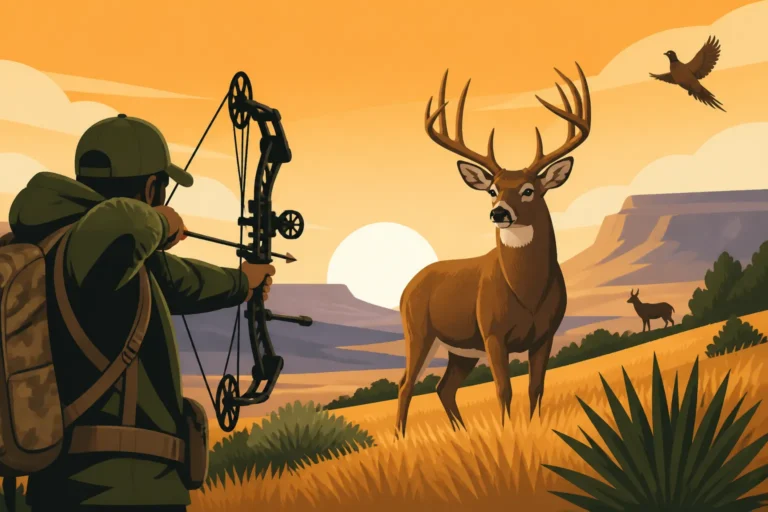
Nebraska’s Wildcat Hills Hunting Access
The Wildcat Hills, nestled in Nebraska's Panhandle, present a unique hunting experience that can feel a world away from the state's rolling prairies and agricultural fields. It's a place where steep canyons, pine-covered ridges, and rocky outcroppings challenge hunters accustomed to flatter ground, making public and private land access a bit of a puzzle. This guide aims to demystify hunting access in this rugged, beautiful region, helping you understand where you can roam and how to navigate the landscape effectively.
Understanding the Wildcat Hills Landscape and Its Unique Challenges
The Wildcat Hills are a distinct geological feature in western Nebraska, characterized by dramatic bluffs, steep canyons, and a mix of ponderosa pine, cedar, and grassland. This isn't your typical Nebraska flatland; it's an area that demands a different approach, both in hunting tactics and in understanding land access. The terrain itself is often the first challenge, but knowing how public and private parcels intertwine is paramount to a successful hunt.
Topography That Demands Respect and Planning
Hunting in the Wildcat Hills isn't for the faint of heart or the unprepared. The elevation changes are significant, with deep ravines cutting through high plateaus. You'll find yourself climbing steep, rocky slopes, navigating dense cedar breaks, and traversing open, often wind-swept ridges. This varied landscape provides incredible cover for game, making them feel secure, but it also makes for incredibly demanding hunting. It's easy to get turned around in the draws and canyons if you're not paying attention, and a short walk on a map can quickly become an arduous trek in person. This ruggedness means scouting is even more critical than usual, and having a solid understanding of the terrain before you set foot on it can save you a lot of frustration and wasted effort.
Moreover, the dense vegetation in some areas can limit visibility, forcing you to adjust your typical glassing strategies. Instead of wide-open vistas where you can see for miles, you might be working smaller pockets, peeking over ridges, or carefully still-hunting through timber. It's a challenging but deeply rewarding environment for those who embrace its unique character.
A Patchwork of Public and Private Ownership
One of the biggest hurdles for hunters in the Wildcat Hills is the intricate mosaic of public and private land ownership. Unlike some areas where vast tracts of public ground are easily identifiable, the Wildcat Hills often feature smaller, interspersed parcels. You might encounter public land surrounded by private ranches, or narrow corridors of accessible ground. This can be incredibly frustrating when you see game disappear onto what appears to be inaccessible property.
It's a common scenario: you're glassing a beautiful canyon, spot a nice buck, and then realize it's bedded just over the fence on a section of private land that you haven't secured permission for. This is where meticulous planning and the right tools become invaluable. Knowing exactly where property lines lie is not just helpful, it's essential for staying legal and avoiding uncomfortable encounters with landowners. Without this knowledge, you might unintentionally trespass or miss out on legitimate hunting opportunities simply because you weren't aware of a small, accessible public parcel tucked away.
Navigating Public Land Opportunities in the Wildcat Hills
Despite the challenges of fragmented ownership, the Wildcat Hills do offer some excellent public hunting opportunities. These areas are magnets for hunters, especially during peak seasons, so understanding their characteristics and how to best utilize them is key.
Key Wildlife Management Areas and State Recreation Areas
The Wildcat Hills are home to a few dedicated public lands that offer significant hunting access. The Wildcat Hills State Recreation Area and Wildlife Management Area itself is a prime example. While some portions are reserved for non-hunting recreational activities or refuges, significant sections are open to hunting. This area is known for its rugged terrain, providing cover for white-tailed deer and mule deer, as well as turkey and upland birds. It’s not uncommon to find yourself climbing steep inclines and descending into thick draws, so come prepared for a physical hunt.
Another notable area is the Nine Mile Creek Wildlife Management Area, which offers a different but equally challenging hunting experience. These WMAs are managed by the Nebraska Game and Parks Commission and are often marked with distinctive signs. They represent crucial access points in an otherwise predominantly private landscape. Hunters should always check the most current regulations for specific WMA rules, as some may have unique restrictions on vehicle access, camping, or target shooting. While Nebraska Wildlife Management Area Rules outlines general guidelines, always verify specifics for your chosen location.
Utilizing the Open Fields and Waters Program
Beyond the dedicated WMAs, Nebraska's Open Fields and Waters (OFW) program is a godsend for hunters seeking access in areas like the Wildcat Hills. This program partners with private landowners to open their property for public hunting, fishing, or trapping. The beauty of OFW is that it can fill in some of those gaps in access, providing hunters with opportunities on land that would otherwise be off-limits. You might find OFW tracts adjacent to or surrounded by larger private ranches, offering crucial stepping stones or access to areas previously difficult to reach.
These tracts are typically marked with bright yellow signs. However, the exact locations and sizes of OFW properties can change from year to year as landowner agreements are updated. This means that a parcel you hunted last season might not be available this year, or a new parcel might open up. This dynamic nature underscores the importance of consulting the latest The Nebraska Public Access Atlas or the digital mapping tools like onX Hunt regularly. Programs like OFW are vital for expanding public access, but require diligent planning to stay current on what's available.
Mastering Navigation and Landowner Relations
Hunting the Wildcat Hills successfully requires more than just understanding the terrain; it demands a proactive approach to navigation and a respectful attitude toward private landowners. In a region with such a mixed bag of ownership, clear boundaries and good relationships are everything.
Essential Tools for Pinpointing Property Lines
The absolute cornerstone of hunting in the Wildcat Hills is knowing exactly where you stand, literally. Given the checkerboard nature of land ownership, relying on general knowledge or outdated paper maps is a recipe for trouble. This is where modern mapping applications like onX Hunt become indispensable. These apps overlay public and private land boundaries onto detailed topographic maps, often showing landowner names, allowing you to see at a glance where public ground begins and ends. Using such a tool can prevent accidental trespass, which is not only illegal but can severely damage hunter-landowner relations in the area.
Imagine you're tracking a deer in a deep draw. Without a precise GPS-enabled map on your phone or handheld device, you might unknowingly cross onto private property. With onX Hunt, you get real-time feedback on your location relative to property lines, even without cell service if you've downloaded the maps beforehand. This kind of technology gives you the confidence to navigate complex areas and fully utilize the public ground available. It truly empowers you to hunt smarter and more ethically. GoHunt, while more focused on draw odds and hunting strategy, also offers valuable mapping resources and landowner information in certain states, which can complement your onX Hunt usage.
Approaching Private Landowners for Permission
While public land exists, much of the prime hunting in the Wildcat Hills is on private property. Securing permission from landowners is often the golden ticket to some of the best hunting experiences. This isn't always easy, and it requires patience, respect, and good timing. The best approach is usually in person, well in advance of the season, and certainly not the day before opening morning. Start by identifying landowners whose property looks promising using your mapping app. Knock on doors, introduce yourself, explain your intentions clearly, and be prepared for rejection – but don't let it deter you.
Many landowners are tired of being asked at the last minute or dealing with hunters who don't respect their land. Showing up early, clean, and courteous, offering to help with chores, or even just leaving your contact information can make a difference. Emphasize that you will treat their land with the utmost respect, pack out all your trash, close gates, and be mindful of livestock. It's about building a relationship, not just getting access for one season. Remember, Nebraska's Posted-Land and Trespass Rules are clear: always have permission if you're not on designated public land. A polite request, even if it's a "no," is always better than trespassing.
Game Species and Seasons in the Wildcat Hills
The rugged landscape of the Wildcat Hills offers diverse hunting opportunities, primarily known for big game, but also providing decent prospects for certain upland species. Understanding what you can hunt and when is crucial for planning your trip.
Mule Deer and Whitetails: A Tale of Two Deer
The Wildcat Hills are one of Nebraska's premier destinations for mule deer. The broken terrain, pine ridges, and extensive draws provide ideal habitat for these iconic western deer. Hunters often employ spot-and-stalk tactics, using high-quality optics to glass distant slopes and then carefully plan an approach. Spot-and-Stalk Mule Deer in the Nebraska Sandhills offers great insights into this method, much of which translates well to the Wildcat Hills. Mule deer permits in this region can be highly sought after, often requiring participation in the state's lottery system. Nebraska Mule Deer Harvest Recovery gives a good overview of their recent status.
While mule deer are the stars, white-tailed deer are also present, often preferring the thicker river bottoms and creek corridors that weave through the hills. You might find whitetails in the denser cedars or near agricultural fields on the fringes of the hills. Hunting methods for whitetails here might include still-hunting, setting up ground blinds, or even strategically placed treestands in more timbered areas. Knowing the subtle differences in habitat preference between these two species can greatly increase your chances of success.
Turkey and Upland Birds: Adding Variety to Your Hunt
Beyond big game, the Wildcat Hills offer exciting opportunities for wild turkeys. Merriam's turkeys, in particular, are at home in the ponderosa pine forests, though hybrid populations with Eastern and Rio Grande subspecies are also found. Spring turkey hunting here can be an exhilarating experience, calling gobblers through steep canyons and thick timber. Fall turkey seasons also provide a chance to fill your freezer, often with more relaxed hunting pressure. Calling Spring Gobblers in Nebraska Timber can provide tactical advice that adapts well to the Wildcat Hills' unique environment.
For upland bird enthusiasts, pheasants and quail can be found, though perhaps not in the same densities as Nebraska's prime agricultural zones. Look for pheasants in creek bottoms and edges of agricultural fields adjacent to the hills, while quail might be found in brushy draws and shelterbelts. The steep terrain can make flushing birds a real workout, but the reward of a wild rooster or a covey flush in this stunning landscape is truly something special. Remember that Upland Season Dates and Bag Limits vary year to year, so always confirm before you go.
| Species | Primary Habitat in Wildcat Hills | Common Hunting Methods | Permit/Season Considerations |
|---|---|---|---|
| Mule Deer | Pine ridges, steep canyons, open slopes | Spot-and-stalk, glassing | Often draw-only, check unit-specific regulations |
| White-tailed Deer | River bottoms, creek corridors, thick cedar breaks | Still-hunting, ground blinds, treestands | Combo permits, draw or over-the-counter options |
| Wild Turkey | Ponderosa pine forests, timbered draws | Calling, spot-and-stalk | Spring and Fall seasons, specific permit requirements |
| Pheasant | Creek bottoms, field edges, dense herbaceous cover | Walk-up with dogs, blocking | Small game permit, habitat stamp required |
| Quail | Brushy draws, shelterbelts, transition areas | Walk-up with dogs, covey flushes | Small game permit, habitat stamp required |
Essential Gear and Tactics for Wildcat Hills Hunting
Hunting in the Wildcat Hills requires a specific gear list and a refined set of tactics. The challenging terrain, variable weather, and the nature of the game itself demand careful preparation.
Footwear, Optics, and Outerwear for the Rugged Terrain
Your gear choices can truly make or break a hunt in the Wildcat Hills. First and foremost, invest in high-quality, supportive boots that are broken in. You'll be doing a lot of climbing, descending, and traversing uneven, rocky ground. Ankle support and good traction are non-negotiable. Pair these with moisture-wicking socks to prevent blisters, because a foot injury out here can end your hunt quickly.
Optics are another critical component, especially for mule deer hunting. A good pair of 10x or 12x binoculars are essential for glassing the vast expanses and pinpointing game. Many hunters also carry a spotting scope and tripod for detailed evaluation of distant animals. Optics for Glassing the Nebraska Sandhills provides excellent advice that applies perfectly to the Wildcat Hills. Since the weather can change quickly, layering is key for outerwear. Start with moisture-wicking base layers, add insulating mid-layers, and top it off with a windproof and waterproof outer shell. Temperatures can swing dramatically from early morning to midday, and the wind on those exposed ridges can be relentless.
Tactics for Spot-and-Stalk and Still-Hunting Success
The predominant tactic for big game in the Wildcat Hills, particularly mule deer, is spot-and-stalk. This involves finding a high vantage point, patiently glassing the terrain for hours, identifying game, and then meticulously planning an approach to get within shooting range. This isn't a quick process; it demands patience, keen observation, and the ability to read the wind and terrain to stay undetected. You'll want to use terrain features like draws, ridges, and timber to conceal your movement as you close the distance.
For whitetails or in denser cover, still-hunting can be highly effective. This involves moving slowly and deliberately through the timber and draws, stopping frequently to observe and listen. Every step is calculated, every movement minimal. Focus on small pockets of cover, thick cedar breaks, and the edges where different habitats meet. When still-hunting, pay close attention to wind direction and thermals, as deer rely heavily on their sense of smell. Still-Hunting Nebraska Cedar Draws is an invaluable resource for perfecting this technique in similar environments. Remember, the game here is wild and wary; your success hinges on your ability to blend in and be patient.
Planning Your Wildcat Hills Adventure
A successful hunt in the Wildcat Hills isn't just about what happens in the field; it begins long before you pack your truck. Proper planning, from understanding local nuances to ensuring your safety, is paramount.
Scouting and Preparation: The Key to Unlocking Access
Before you even consider setting foot in the Wildcat Hills with a weapon, you need to scout, and I mean thoroughly. This region is too complex to show up blind. Use satellite imagery on your onX Hunt app to identify potential public land access points, parking areas, and likely game habitat like steep draws, timbered ridges, and water sources. Look for pinch points, travel corridors, and bedding areas. Understanding Where Mule Deer Feed at First Light and Where Nebraska Whitetails Bed in Row-Crop Country can help you interpret the satellite images and topo maps to pinpoint prime locations.
If possible, make a pre-season trip to walk some of the ground. This will give you invaluable insight into the actual terrain, the density of the cover, and how game might move through it. Pay attention to fence lines, water access, and areas that might hold fresh sign. Scouting isn't just about finding game; it's about understanding the land so you can navigate it efficiently and safely once the season opens. This level of preparation also helps you understand where to focus your efforts for asking private land permission.
Safety and Respecting the Environment
Hunting in the Wildcat Hills means embracing a degree of solitude and self-reliance, which also means prioritizing safety. Let someone know where you're going and when you expect to return. Carry a reliable GPS device (your phone with downloaded maps from onX Hunt can work), extra water, a first-aid kit, and enough layers for changing weather. Cell service can be spotty in the draws, so don't count on it as your primary communication method.
Respecting the environment is equally important. Pack out everything you pack in – and then some. Leave no trace of your presence. If you're on private land, strictly adhere to the landowner's rules. Close all gates, avoid driving off established trails unless explicitly permitted, and be mindful of livestock. Fires can be a serious hazard in the pines, so exercise extreme caution. This dedication to ethical hunting and environmental stewardship ensures that these unique hunting opportunities remain available for years to come. Remember to adhere to Nebraska Blaze Orange Square Inches requirements, especially during any overlapping firearm seasons, even if you're bowhunting.
Disclaimer
This article is for general informational purposes only and does not constitute professional advice. Laws, prices and regulations vary by location and change over time. Consult a qualified professional for guidance on your specific situation.