Telling a Sharptail From a Prairie Chicken
There's a special kind of excitement that comes with chasing upland birds across Nebraska's vast prairies, but also a common head-scratcher: how do you really tell a sharp-tailed grouse from a greater prairie-chicken? It's a question many hunters grapple with, and misunderstanding the subtle differences can impact your hunt, from where you focus your efforts to ensuring you're compliant with regulations. This guide is here to untangle that confusion, offering clear, actionable ways to identify these magnificent birds in the field.
The Feathered Finer Points: Visual Identification
When you're out in the field, whether with binoculars in hand or as a bird flushes at your feet, visual cues are your first line of defense in identifying grouse and prairie chickens. These birds, while sharing some general characteristics, have distinct markings that, once you know what to look for, become quite obvious.
Decoding the Plumage and Body Markings
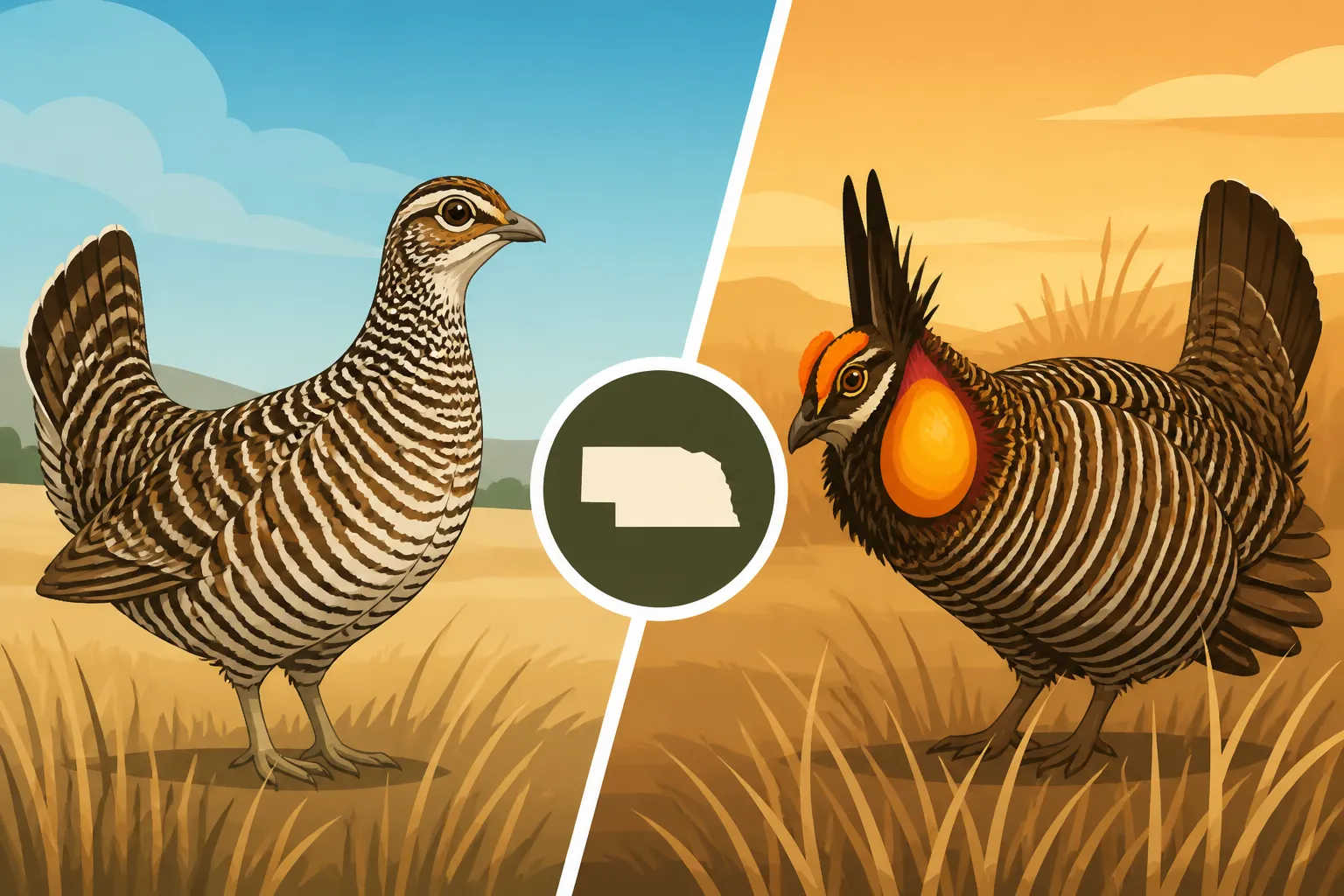
At first glance, both sharp-tailed grouse and greater prairie-chickens might appear as mottled brown birds blending perfectly into the prairie landscape. However, a closer look at their breast and flank feathers reveals clear distinctions. The greater prairie-chicken sports bold, horizontal barring across its breast and belly. These dark bands are relatively wide and run straight across the body, giving it a somewhat striped appearance. It's a strong, clean pattern that stands out.
In contrast, the sharp-tailed grouse has more V-shaped or U-shaped markings on its breast, often appearing as an arrow-like pattern pointing towards the head. The overall barring on a sharp-tail is typically finer and more broken, creating a more mottled or speckled effect rather than distinct stripes. Think of it as a subtle camouflage designed for different types of grass and brush. This difference in feather pattern is a reliable indicator once you've trained your eye to see it.
The Tail Tells a Tale
Perhaps the most definitive visual characteristic, especially when the bird is flying away or on display, is the tail. The sharp-tailed grouse, as its name suggests, has a pointed tail. The central tail feathers are elongated and stiff, giving the tail a distinct V-shape or "pin-tail" appearance. When it flies, you'll often see flashes of white on the outer tail feathers, a clear beacon against the brown prairie. This pointed tail is one of the easiest ways to distinguish it in flight.
The greater prairie-chicken, on the other hand, possesses a broad, rounded tail. The feathers are uniformly dark, without the white outer feathers seen on a sharp-tail, and the overall shape is much more fan-like or squarish when spread. When a prairie chicken flushes, its dark, rounded tail is a key identifier. Observing this tail shape is often the quickest way to make a positive identification, particularly if the bird is startled and takes flight, giving you that crucial rear view.
Head, Neck, and Display Features
Beyond the main body and tail, paying attention to the head and neck region, especially during the spring breeding season, can provide crucial clues. Both sexes of greater prairie-chickens have distinctive feather tufts on the sides of their neck, known as "pinnae." During courtship rituals on a lek, the males erect these pinnae, almost like horns, and inflate large, vibrant orange-yellow air sacs on their neck. This display is incredibly unique and unmistakable.
Sharp-tailed grouse also have small, less prominent purplish air sacs that they inflate during their courtship dances, but they lack the prominent pinnae feathers of the prairie chicken. Instead, male sharp-tails might raise a small crest of feathers on their head. Their overall head and neck profile is smoother and less adorned than a displaying prairie chicken. If you're lucky enough to witness a spring lek, these features are truly the clincher for identification. You can learn more about these fascinating displays by researching Finding Prairie Chickens on a Lek Range or Sharptail Lek Behaviour in Spring.
Beyond Appearance: Behavioral Clues in the Field
While visual cues are critical, understanding the behavioral differences between sharp-tailed grouse and greater prairie-chickens can further solidify your identification, even when direct visual confirmation is difficult. These birds have different preferences in terms of where they live, how they communicate, and even how they react to pressure.
Preferred Haunts and Habitat Sweet Spots
One of the most reliable indicators of which grouse species you're encountering is the habitat itself. Sharp-tailed grouse are primarily birds of the more open, mixed-grass prairies and Sandhills rangeland in Nebraska. They thrive in areas with a mosaic of native grasses, some scattered brush, and perhaps even some short cedar trees, providing cover and food sources. When you're walking vast, rolling Sandhills meadows, especially those with some open canopy, you're likely in prime sharp-tail country. You might find them along fence rows with a bit of brush or in draws with a mix of grass and forbs. Walking Nebraska Sandhills Meadows for Sharptails often puts you right where they want to be.
Greater prairie-chickens, conversely, prefer taller, denser native grasslands. They favor larger tracts of unbroken prairie, where the grasses provide ample cover for nesting and roosting. While their ranges can overlap, especially in areas where these two habitat types meet, prairie chickens generally prefer the more pristine, robust grassland environments. Think less brush, more unbroken expanse of tall, waving grass. Understanding Sharp-Tailed Grouse Range in Nebraska versus Greater Prairie-Chicken Range in Nebraska can give you a strong head start on identification before you even see a feather.
The Sound and Dance of Courtship
During the spring, the sounds emanating from a lek (their communal breeding grounds) are perhaps the most striking behavioral difference. The greater prairie-chicken is famous for its deep, resonant "booming" call. This sound, produced by the male inflating his orange-yellow neck sacs and rapidly stamping his feet, can carry for miles across the open prairie. It's a low-frequency, almost mournful sound that is utterly unique. Their dance involves strutting, rapid foot stomping, and head bobbing, all designed to attract hens.
Sharp-tailed grouse have a very different vocal repertoire and dance style. Their calls are typically described as a series of coos, hoots, and rattles. While not as loud or far-reaching as the prairie chicken's boom, it's still distinctive. Their dance involves a more elaborate, almost frenetic foot-stomping display, with rapid turns and tail fanning, producing a dry rattling sound with their tail feathers. If you're near a lek in the spring, the auditory experience alone can often tell you precisely which species is present.
Flight Patterns and Flushing Behavior
How these birds react when flushed can also offer a clue. Sharp-tailed grouse tend to flush in larger, looser coveys, often scattering in multiple directions. Their flight is typically more erratic, with rapid wingbeats followed by glides, and they might gain altitude quickly before leveling off. Those tell-tale white outer tail feathers are often visible as they dart away. Their overall flight might appear a bit more "wild" or unpredictable.
Greater prairie-chickens, especially when pressured, tend to hold tighter, often allowing you to get quite close before exploding from cover. When they do flush, they typically have a strong, direct flight path, often flying low for a distance before gaining altitude. Their wingbeats are powerful and steady, and they tend to fly in a straighter line than a sharp-tail. They are less likely to scatter widely and may regroup relatively quickly. Working Sharptails and Prairie Chickens on Foot might reveal these subtle differences in how they behave under pressure.
Putting It All Together: Practical Tips for Hunters
Knowing the characteristics is one thing, but applying that knowledge effectively in the field is another. Here are some practical tips to help you confidently identify sharp-tailed grouse and prairie chickens during your Nebraska hunting adventures.
Leveraging Your Optics for Distant Identification
The open expanse of Nebraska's grouse country means that often, your first sighting of a bird might be at a considerable distance. This is where quality optics become indispensable. A good pair of binoculars, like those recommended by GoHunt for spotting distant game, allows you to observe crucial details like tail shape, breast markings, and even neck feathers without disturbing the birds. Many serious hunters, relying on resources like GoHunt, understand the crucial role reliable optics play in effective scouting and hunting.
Carrying a compact spotting scope, especially in the Sandhills, can further enhance your ability to make a positive identification on a distant bird. Set up on a ridge or high point, you can methodically scan the terrain and zoom in on any potential grouse. Remember to pay close attention to the features we've discussed: is the tail pointed or rounded? Can you discern V-shaped or horizontal barring on the breast? Even if you only catch a glimpse, a quick scan with binoculars can often provide enough information. For more on selecting the right tools, check out Binocular Magnification for the Sandhills.
Scouting Smarter for Grouse Sign
Even without seeing the birds, smart scouting can tell you a lot about what species might be present. Look for physical signs on the landscape. Grouse, like most game birds, create dusting bowls where they roll in dry soil to clean their feathers. The size and location of these bowls, along with any feathers left behind, can provide clues. Sharp-tail feathers might show more V-barring, while prairie chicken feathers would have the characteristic horizontal stripes.
Droppings can also be a subtle indicator. Beyond these subtle cues, actively scouting for lekking grounds in the spring or even just asking local landowners about historical lek locations can tell you a lot. Prairie chicken leks tend to be on higher, drier ground in dense grass, while sharp-tail leks might be on slightly more varied terrain, sometimes near scattered brush. Using advanced scouting tools, perhaps those highlighted on platforms like GoHunt, can further assist in pinpointing prime habitat areas, increasing your chances of finding these birds.
Regional Nuances and Seasonal Shifts
Nebraska offers unique ecological zones, and understanding these regional nuances can aid in identification. The Sandhills, for example, are predominantly sharp-tailed grouse country. While prairie chickens exist there, sharp-tails are generally more abundant in that vast grassland expanse. Conversely, in the tallgrass prairie remnants of eastern Nebraska, particularly where conservation efforts have preserved larger tracts of native grass, you might be more likely to encounter prairie chickens.
Seasonal shifts also play a role. During the spring breeding season, the male birds are in full display, making identification much easier due to their distinct vocalizations and visual presentations on the lek. However, come fall hunting season, the birds are often in larger coveys, and their calls are less frequent and less distinct. In the late season, after heavy frosts or snow, both species might seek out denser thermal cover, making flushing and identification a bit more challenging. Hunting Grouse in September Heat presents different challenges than a late-season hunt.
Why Correct Identification Matters for Your Hunt
It might seem like a minor detail to some, but correctly identifying sharp-tailed grouse versus greater prairie-chickens is not just about bragging rights; it has real-world implications for responsible hunting, conservation, and your overall experience in the field.
Understanding Regulations and Bag Limits
This is perhaps the most critical reason for accurate identification. Sharp-tailed grouse and greater prairie-chickens are managed as separate species in Nebraska, and often have different season dates, bag limits, and sometimes even unit-specific regulations. Accidentally harvesting a bird of the wrong species, or exceeding the limit for one while misidentifying it as another, can lead to fines and legal penalties. The Nebraska Game and Parks Commission sets these regulations carefully based on population data for each species.
For instance, one species might have a more conservative bag limit or a shorter season due to lower population numbers or specific conservation concerns. Knowing your target and being confident in your identification ensures you're hunting ethically and legally. Always consult the current Upland Season Dates and Bag Limits for Nebraska before heading out to ensure you are up-to-date on all regulations for both sharp-tailed grouse and greater prairie-chickens.
Contributing to Conservation Efforts
Accurate reporting of harvests and keen observation by hunters are vital components of wildlife management. When you can correctly identify the species you're pursuing, you contribute to better data collection, which in turn helps wildlife agencies make informed decisions about habitat management and population control. The populations of Greater Prairie-Chickens and Sharptails in Nebraska are constantly monitored, and your participation as a knowledgeable hunter directly supports these efforts.
Beyond reporting, simply knowing which species inhabits which particular patch of prairie deepens your appreciation for the specific habitat requirements of each bird. This knowledge can inspire you to support conservation organizations or land management practices that directly benefit the specific grouse species you cherish, helping to ensure healthy populations for future generations of hunters. Accessing detailed species information, often compiled by reliable sources such as GoHunt, can be invaluable for this broader understanding.
Deepening Your Connection to the Land
Finally, and perhaps most importantly, mastering the art of distinguishing these two iconic prairie birds elevates your entire hunting experience. It transforms a generic "grouse hunt" into a more nuanced and appreciative endeavor. Each flush becomes an opportunity for observation and learning, deepening your connection to the landscape and the intricate ecosystems these birds inhabit.
Knowing the difference fosters a deeper respect for the subtle beauty and unique adaptations of each species. It encourages you to learn more about their specific behaviors, their habitat needs, and the challenges they face. This level of engagement goes beyond simply filling a bag; it's about becoming a more skilled, informed, and conservation-minded outdoorsperson, truly understanding the wild places and creatures of Nebraska.
Here’s a quick overview of the key differences:
| Feature | Sharp-tailed Grouse | Greater Prairie-Chicken |
|---|---|---|
| Tail Shape | Pointed, V-shaped, often with white outer tail feathers | Broad, rounded, dark, no white outer feathers |
| Breast Bars | V-shaped or U-shaped, mottled brown | Horizontal, distinct dark barring |
| Neck Feathers | Subtle, sometimes a small crest | Prominent "pinnae" that erect during display |
| Air Sacs (male) | Small, purplish | Large, vibrant orange/yellow, inflates during display |
| Habitat | Open mixed-grass prairie, Sandhills rangeland, scattered brush | Tall, dense native grasslands, larger unbroken tracts |
| Lek Call | Hooting, cooing, rattling | Deep, resonant "booming" sound |
| Flight | Erratic, rapid wingbeats with glides, often scatters | Strong, direct, powerful wingbeats, often flies straight |
Disclaimer
This article is for general informational purposes only and does not constitute professional advice. Laws, prices and regulations vary by location and change over time. Consult a qualified professional for guidance on your specific situation.