Hunting Railroad Right-of-Way in Nebraska
Finding quality hunting ground in Nebraska can feel like a never-ending quest, especially when you're a responsible hunter trying to do everything by the book. It's frustrating to drive past promising-looking areas, wondering if that strip of land next to the railroad tracks holds a hidden gem, only to be left guessing about its legality. This guide is here to clear up the common misconceptions and provide clear, actionable insights into the realities of hunting railroad right-of-way in Nebraska, helping you avoid legal trouble and find ethical hunting opportunities.
Understanding Railroad Right-of-Way in Nebraska
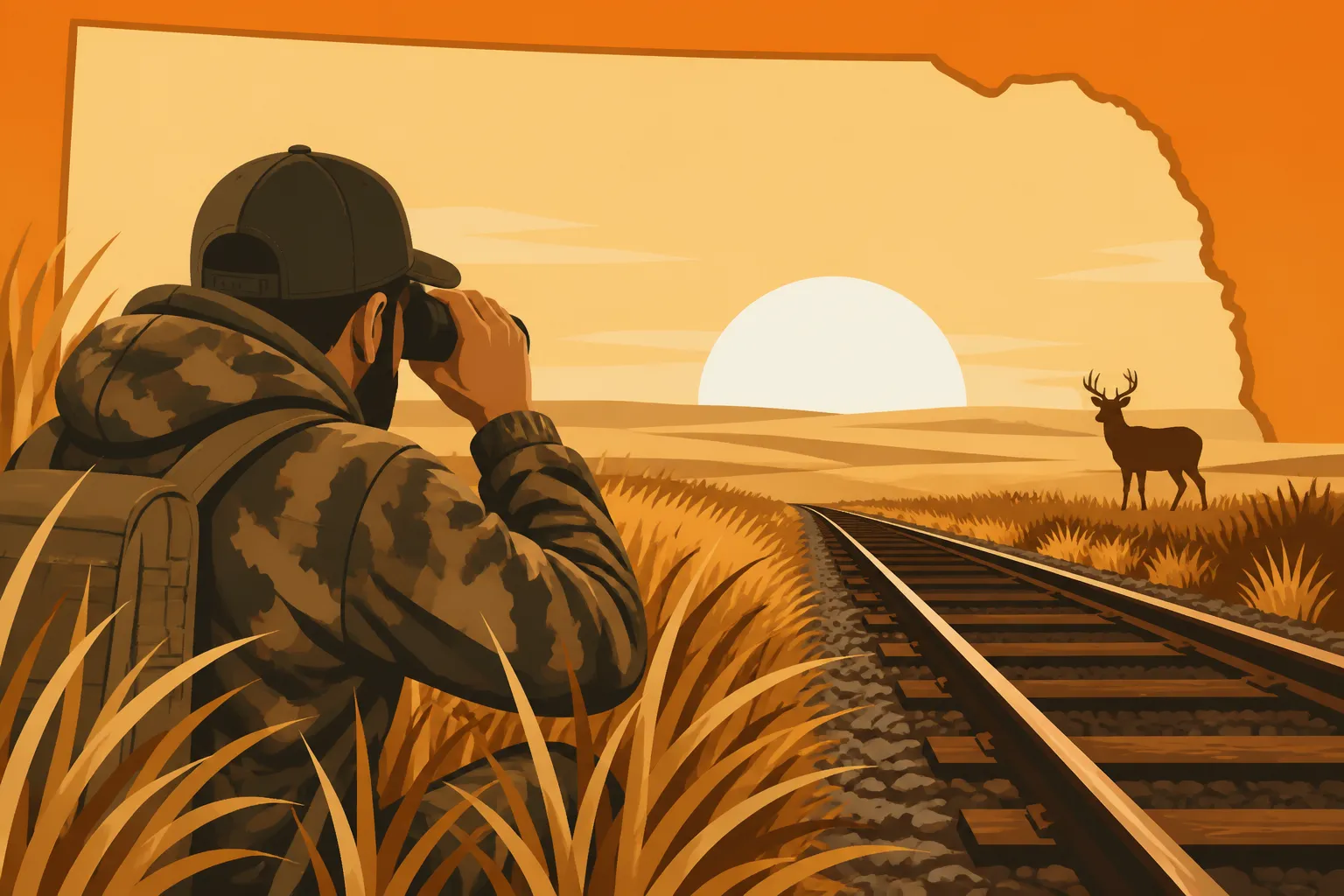
That ribbon of land bordering railroad tracks often catches a hunter's eye. It might look like undisturbed cover, a natural travel corridor for deer, pheasants, or even turkeys, especially in areas where other cover is scarce. It's a natural inclination to wonder if this overlooked territory could be a viable hunting spot. However, the legal status of railroad property is far more complex than it appears, and assuming it's fair game can lead to serious consequences.
What Exactly is a Railroad Right-of-Way?
A railroad right-of-way isn't just the tracks themselves; it's a strip of land, often much wider than you'd expect, that the railroad company owns or holds an easement over. This land is essential for their operations, including maintenance, safety, and future expansion. It can vary significantly in width, from a narrow shoulder in some places to a considerably broader swath in others, sometimes including ditches, fences, and even small tree lines or brush thickets adjacent to the railbed. It's all managed with a very specific purpose in mind: railroad operations.
The important thing to remember is that this land, regardless of how wild or unkempt it appears, is private property. It's not public land in the same way a state WMA or a federal forest might be. While it might sometimes cut through what seems like open country, it's still under the control and ownership of the railroad company. This distinction is absolutely critical for any hunter considering these areas.
The Legal Status of Railroad Property for Hunting
In almost all cases, hunting on railroad right-of-way in Nebraska is illegal without explicit permission from the railroad company. And let me tell you, that permission is virtually impossible to get. Railroad companies have stringent rules against public access for a multitude of reasons, primarily safety and liability. Active train tracks are inherently dangerous places, and they simply cannot risk trespassers, especially armed ones, on their property.
Think about it from their perspective: even if you're the most careful hunter in the world, the presence of someone with a firearm on their right-of-way represents a massive liability risk. They also have security concerns and want to prevent vandalism or interference with their infrastructure. Therefore, their default stance is a strict "no trespassing" policy, which extends to hunting. It doesn't matter if there's no "No Hunting" sign, or even a "No Trespassing" sign visible; the law assumes you know it's private property.
The Dangers and Liabilities Involved
Beyond the legal ramifications, the actual act of hunting near or on railroad tracks carries immense danger. Trains move faster and quieter than most people realize, especially modern freight trains. They cannot stop quickly, and the engineers often have limited visibility, especially around curves or in dense cover. A train moving at 50 mph covers a football field in about three seconds – a blink of an eye when you're focused on game.
Even if you're not directly on the tracks, the right-of-way can present hazards like uneven terrain, discarded materials, or structures that aren't apparent from a distance. Furthermore, discharging a firearm near active tracks could lead to ricochets, damage to railroad property, or even accidentally striking the train itself or its crew. The liability for any accident or injury, whether to yourself, others, or railroad property, would fall squarely on you. It's simply not worth the risk, for your safety and your legal standing.
Navigating the Complexities of Access and Permission
The allure of potentially unpressured game along a railroad corridor is strong, but the reality of gaining legal access is a harsh one. It's not just a matter of asking a farmer; you're dealing with major corporations with well-established policies.
Why Getting Permission is So Difficult
Unlike asking a local landowner for access to their fields, getting permission from a railroad company is a monumental task, if not impossible. Railroads operate on a national scale, often owning thousands of miles of track across multiple states. Their land management policies are centralized and designed to minimize risk and ensure uninterrupted operations. They aren't set up to handle individual requests for hunting access, nor do they have local representatives who can grant such permissions.
Any attempt to contact a railroad company for hunting permission will almost certainly be met with a polite but firm refusal. Their corporate lawyers and safety departments simply won't entertain the idea. It's not personal; it's just the nature of their business. They prioritize safety, security, and the movement of goods over recreational access. This is why you rarely, if ever, hear of anyone legally hunting on railroad rights-of-way.
When Hunting Near Tracks Might Be Legal
There are extremely limited circumstances where hunting near railroad tracks might be permissible, but it's crucial to understand the distinction: you can never hunt on railroad property itself. The only scenario where you might legally hunt adjacent to a railroad right-of-way is if the land you are standing on is either legitimate public hunting ground or private property where you have explicit permission from the landowner.
For instance, if a section of a Nebraska Wildlife Management Area or an Nebraska's Open Fields and Waters Program tract happens to border a railroad right-of-way, you could potentially hunt the public land. However, you would need to be absolutely certain of your position and guarantee that any shot fired would not cross onto or impact railroad property. This often means maintaining a significant buffer zone and exercising extreme caution. It's a challenging proposition, even for seasoned hunters. Always verify your location with tools like The Nebraska Public Access Atlas or a reliable GPS app.
Tools for Identifying Land Ownership
Given the complexities, knowing exactly where you stand is paramount. Relying on guesswork around railroad property is a recipe for trouble. Thankfully, modern technology offers excellent tools to help. Mapping applications like onX Hunt are invaluable for this purpose. You can pull up detailed property lines, showing who owns what, whether it's private land, public access, or railroad right-of-way. This allows you to clearly delineate where you can and cannot be.
Similarly, other mapping services and apps, or even checking county plat maps, can help confirm property boundaries. Services like GoHunt also provide detailed mapping resources that can aid in identifying land ownership. Before you even consider stepping foot near a railroad, consult these resources. Pay close attention to the fine lines that separate parcels. If a parcel is marked as railroad property, consider it strictly off-limits. This due diligence is critical not just for railroad land, but for any hunting area where property lines are unclear. Finding Nebraska Property Lines is a skill every hunter needs.
Practical Advice and Alternatives for Nebraska Hunters
Since hunting railroad rights-of-way is essentially a non-starter for responsible hunters, let's shift our focus to safe, legal, and effective alternatives in Nebraska. There are plenty of fantastic opportunities out there that don't involve the risks of railroad property.
Prioritizing Safety Around Active Railroads
Even if you're hunting legally on adjacent private or public land, it's vital to maintain a high level of awareness regarding nearby railroad tracks. Treat all tracks as active, even if you rarely see trains. The sound of an approaching train can be muffled by wind, terrain, or the sounds of the hunt. Be especially cautious when retrieving game that might run towards or onto railroad property. Never, under any circumstances, venture onto the right-of-way to retrieve an animal. If your game goes down on railroad property, you'll need to contact the railroad company for assistance, which could take a very long time and likely won't result in immediate recovery. Your game is simply not worth your life or legal trouble.
| Scenario | Legal Status for Hunting | Safety/Legal Risk | Recommended Action |
|---|---|---|---|
| On Railroad Tracks/Bed | Illegal | Extreme | Absolutely never do this. |
| Within Railroad Right-of-Way | Illegal | High | Never trespass. Seek permission (impossible). |
| Adjacent Public Land | Legal (if within bounds) | Moderate | Verify boundaries with map; avoid shooting onto ROW. |
| Adjacent Private Land (with permission) | Legal (if within bounds) | Moderate | Verify boundaries with map; avoid shooting onto ROW. |
| Abandoned Tracks | Likely Illegal | Moderate | Still private property; seek owner permission (difficult). |
Focusing on Legitimate Public Access
Nebraska offers a wealth of public hunting opportunities that are both legal and safe. Instead of stressing about the grey areas around railroad tracks, direct your energy towards exploring Public Hunting Land in Nebraska. The state has an impressive network of Wildlife Management Areas (WMAs), State Recreation Areas (SRAs), and federal lands like National Forests and Grasslands, all specifically designated for public recreation, including hunting.
The Nebraska Public Access Atlas is your best friend here. It's updated annually and provides maps and information on thousands of acres open to hunters, including both publicly owned lands and private lands enrolled in the Open Fields and Waters program. These areas are actively managed for wildlife and hunter access, meaning you can focus on the hunt rather than worrying about trespassing. You'll find diverse habitats supporting everything from deer and turkeys to pheasants and waterfowl. Scouting Nebraska Public Ground Before Opening Day is a great way to maximize your success on these legitimate opportunities.
The Importance of Private Land Permission
While public lands are fantastic, many of Nebraska's prime hunting spots remain on private property. Building relationships with landowners and securing permission is a cornerstone of ethical hunting in the state, and a far more productive use of your time than trying to navigate railroad access. Getting Private Land Permission in Nebraska requires respect, good communication, and often a bit of networking.
Start by knocking on doors, offering to help with chores, or simply introducing yourself well in advance of the season. Offer to share some of your harvest. Many landowners are receptive to responsible hunters, especially if they have crop damage or want help managing deer numbers. When you're on private land with permission, you have clear boundaries and a direct line of communication, eliminating the legal ambiguities that plague hunting near railroads. This approach not only provides you with access but also fosters positive relationships between hunters and landowners, which is vital for the future of our hunting heritage. If you're looking at smaller timber blocks for deer, consider tactics like Two-Person Deer Drives on Small Timber on private land where you have full landowner trust.
Common Misconceptions and Legal Consequences
Despite the clear dangers and legal prohibitions, some misunderstandings persist about hunting near railroads. Let's dispel these myths and emphasize the serious consequences of ignoring the rules.
The "Abandoned Track" Myth
One common misconception is that if a railroad track appears abandoned or disused, it's automatically open to public access or hunting. This is almost never the case. Even tracks that haven't seen a train in years are usually still owned by a railroad company or a successor entity. The right-of-way easement or ownership doesn't simply disappear because the tracks are no longer actively used for rail traffic.
Converting an abandoned rail line into a public trail or recreational area is a lengthy legal process that involves official transfer of ownership or easements, often to local government or conservation groups. Unless there are clear, official signs indicating public access (like a designated "Rails-to-Trails" pathway), you should assume that any disused track and its surrounding right-of-way remain private property. Don't be fooled by overgrown tracks or missing ties; if it looks like a railroad, it's probably still railroad property and off-limits for hunting.
Penalties for Trespassing on Railroad Property
Trespassing on railroad property, especially with a firearm, can lead to severe legal penalties. In Nebraska, trespassing is a criminal offense, and while specific fines and sentencing can vary based on circumstances (like whether you were armed, if property was damaged, or if you resisted), it's never a minor infraction. You could face significant fines, confiscation of your hunting equipment (including your firearm), and even jail time.
Beyond the immediate legal trouble, a trespassing conviction can have long-lasting effects. It could jeopardize your ability to obtain hunting permits in the future, damage your reputation as a responsible sportsman, and even impact other aspects of your life. Railroad companies take these violations very seriously, often employing their own police forces with full law enforcement authority. Nebraska Hunting Violation Penalties are real, and they apply strictly to railroad property. It's simply not worth risking your hunting privileges, your freedom, or your wallet.
Reporting Suspicious Activity
If you witness someone trespassing or engaging in suspicious activity on railroad property, whether hunting or otherwise, it's best to report it to the proper authorities. Railroad companies often have dedicated hotlines for reporting such incidents. You can also contact local law enforcement or the Nebraska Game and Parks Commission. Providing details like location, time, and a description of the individuals or vehicles involved can help prevent accidents, deter illegal activity, and protect everyone's safety. As hunters, we have a responsibility to uphold ethical conduct and respect property rights, and that includes discouraging illegal activities by others. If you're out calling for predators on Coyote Calling on Winter Grassland and see something amiss near tracks, make the call.
Disclaimer
This article is for general informational purposes only and does not constitute professional advice. Laws, prices and regulations vary by location and change over time. Consult a qualified professional for guidance on your specific situation.