Nebraska Deer Tagging and Checking Rules
You’ve just made the shot, the adrenaline is coursing, and that buck or doe is on the ground. It’s a moment of immense satisfaction, the culmination of scouting, patience, and skill. But then, almost immediately, a new set of questions can flood your mind: "What do I do now? How do I make sure I’m following all the rules? What if I mess up the tagging or checking process?" It’s a common worry, and frankly, the regulations can feel a bit overwhelming in the heat of the moment. This guide is here to walk you through Nebraska’s deer tagging and checking rules, ensuring you confidently navigate the post-harvest process.
Understanding Nebraska's Deer Tagging Basics at the Kill Site
The immediate aftermath of a successful deer hunt is a whirlwind of emotions and tasks. You've got to ensure the animal is indeed down, safe for approach, and then the real work begins. One of the very first, and most critical, steps is legally tagging your deer. It might seem like a small detail in the grand scheme of things, but improper tagging can lead to serious legal headaches, even if it’s an honest mistake born from excitement or confusion.
When you purchase a deer permit in Nebraska, you receive a physical tag or access to an electronic one, depending on how you choose to carry your permits. This tag is more than just a piece of paper; it’s proof that you’ve legally harvested an animal. The moment that deer is down and you're absolutely certain it's your harvest, you need to turn your attention to getting that tag properly filled out and affixed.
Filling Out Your Deer Permit Tag Accurately
This isn't the time for guesswork or rushing. Every piece of information requested on your tag serves a purpose, whether it's for game management, law enforcement, or harvest data. You'll need to accurately record:
- Date of Kill: The exact day you harvested the deer. Double-check your calendar or phone.
- Time of Kill: The specific time of day. This is important for tracking hunting effort and success patterns.
- Sex of the Deer: Clearly mark whether it was a buck (antlered) or a doe (antlerless). If it was an antlered buck, you may need to specify the number of points, depending on the permit type and unit regulations. For example, some units have antler point restrictions to help manage the age structure of the buck population.
- County of Kill: Pinpoint the county where the harvest occurred. This is crucial for Nebraska Game and Parks to track harvest data at a local level, which directly informs future permit allocations and management strategies. Sometimes you might be right on a county line; make sure you know which side you're on.
I’ve heard countless stories of hunters, especially first-timers or those hunting in a new area, accidentally rushing this part. They might forget a detail or write illegibly, only to realize later it could cause issues. Take a deep breath, pull out a pen or permanent marker that works in cold and damp conditions, and fill in every field clearly. A small piece of advice from an old-timer: tape a small pencil or permanent marker to your hunting license or permit holder so you're never caught without it.
Properly Attaching the Tag to Your Deer
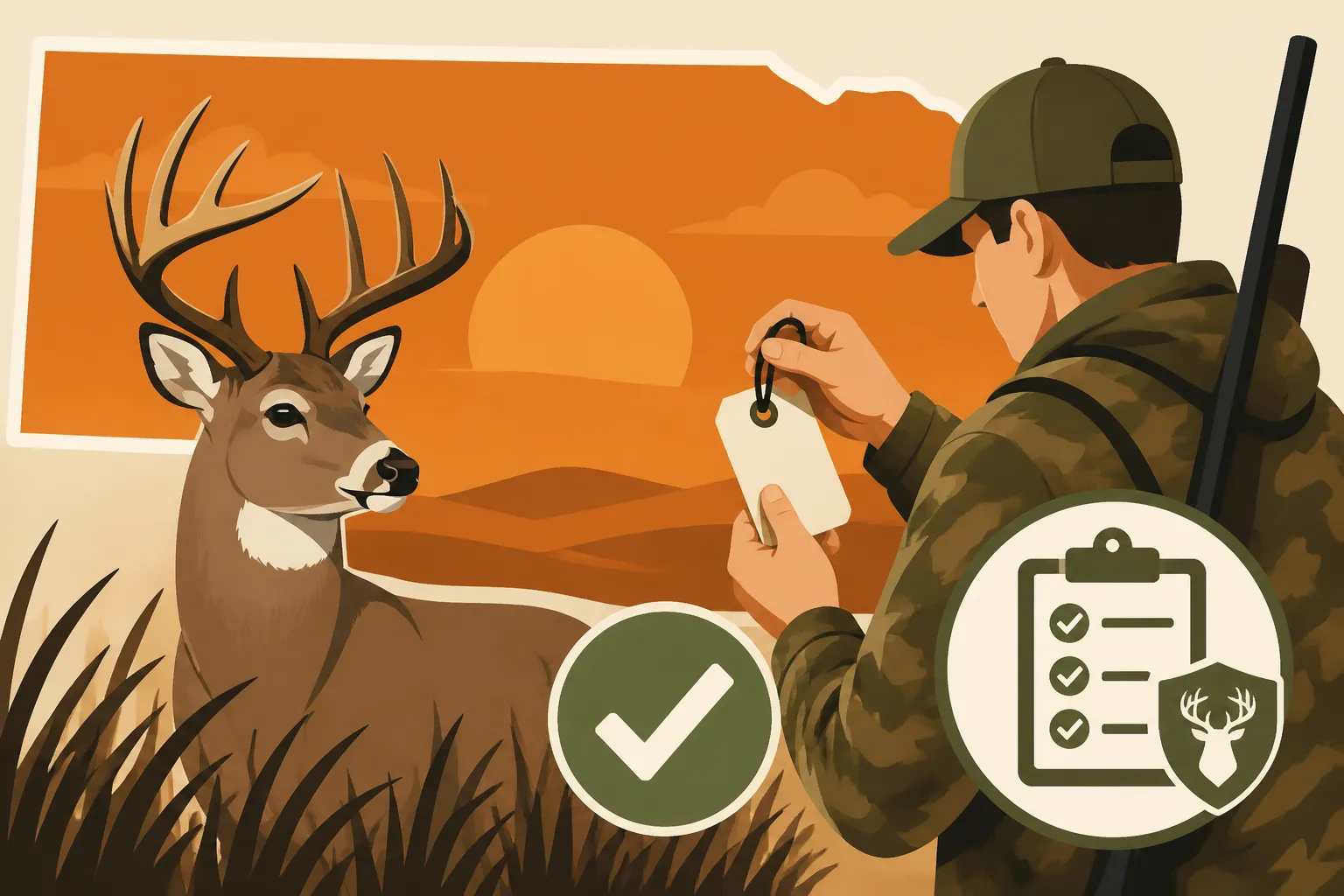
Once the tag is filled out, it must be immediately affixed to the deer. "Immediately" is the key word here, not "when I get back to the truck" or "after I take a few photos." The tag needs to be secured to the deer in a visible and tamper-proof manner.
Nebraska regulations typically require the tag to be attached to the carcass, usually to an ear or antler, or around a leg tendon. The goal is that the tag stays with the animal through field dressing, transport, and initial processing. Most physical tags come with some kind of self-locking strap or strong zip tie for this purpose. If you're using an electronic permit, you'll still need to follow the tagging instructions that come with it, often involving printing a temporary tag or carefully noting down a confirmation number to be used with a physical means of attachment until you can complete the online check-in.
Imagine you're deep in a cedar draw in central Nebraska, miles from the truck, and you've just taken a nice whitetail. You field dress the animal, and then, in the excitement, forget to attach the tag securely. Later, a game warden might check your harvest, and if the tag isn't properly affixed or filled out, you could be cited. It’s a preventable situation, and taking those extra few minutes at the kill site makes all the difference. Remember, this initial tagging is what legally validates your harvest right there in the field.
The Harvest Reporting System: Online and Offline Options
After you've successfully tagged your deer in the field, the next crucial step is to report your harvest to the Nebraska Game and Parks Commission. This isn't just a formality; it's how the state collects vital data that informs deer management decisions, permit allocations, and understanding overall herd health. Think of it as your civic duty as a hunter to contribute to the conservation efforts that make future hunts possible.
Nebraska offers convenient ways to report your harvest, primarily through their online system, but also with an alternative for those who might not have immediate internet access. It’s essential to complete this step within 48 hours of harvesting the animal. Missing this deadline, even by a few hours, can put you out of compliance with state regulations.
Online Harvest Reporting: The Digital Lifeline
For most hunters today, the online harvest reporting system is the easiest and quickest method. You can access it directly through the Nebraska Game and Parks website. Many hunters, especially those who use digital tools for scouting and planning, find this integrated approach seamless.
To report online, you'll need your permit number and some basic information about your harvest:
- Permit Number: This unique identifier links the harvest to your specific permit.
- Date and Time of Kill: The same information you wrote on your physical tag.
- County of Kill: Again, match what's on your tag.
- Method of Take: Indicate whether you used archery, firearm, or muzzleloader. This helps Game and Parks understand harvest pressure across different seasons.
- Sex of Deer: Buck or doe.
- Antler Points (if applicable): For antlered deer, you'll typically need to report the number of points on one or both sides, depending on the permit type.
- Deer Management Unit: The specific unit where you harvested the deer. This is crucial for local population management.
Once you submit this information, the system will generate a confirmation number. This number is your official proof that you've reported your harvest. You should immediately write this confirmation number on your physical tag (if you used one) or on a temporary tag you've created, and keep it with the carcass. This is essentially the second, final layer of legal compliance for your harvest. It's a good idea to also snap a photo of the confirmation screen on your phone or email it to yourself for backup.
Many modern hunting apps and platforms, like those you might use for mapping and scouting, integrate features that make tracking this information easier. If you're using a system like GoHunt to manage your permit applications and plan your hunts, you can usually easily transfer the harvest details directly into your hunting log after reporting. This helps keep all your hunt data in one place, which is invaluable for planning future excursions.
Offline Reporting: When Technology Fails
While the online system is convenient, Nebraska understands that not everyone has cell service deep in the Sandhills or in a remote river bottom. For these situations, the Game and Parks Commission provides a phone-in reporting option. The number is typically listed on your permit or on the Game and Parks website.
This option is vital if you're hunting in areas with poor connectivity. You might have to wait until you're back in range, but remember that 48-hour window! Make a note to call as soon as you have service. The process is similar to online reporting; you’ll provide the same harvest details to an operator or an automated system, and they will give you a confirmation number. It's just as legally binding as the online method.
I remember one year, a buddy of mine harvested a beautiful mule deer way out on the Oglala National Grassland. No cell service for miles. He had to drive nearly an hour back towards Crawford before his phone even got a whisper of a signal. He pulled over on the side of the highway, shivering, and called in his harvest before the 48 hours were up. The key is to be prepared and know your options before you head into the field. Whether online or by phone, prompt and accurate reporting is non-negotiable for all hunters. This data is critical for understanding Nebraska Whitetail Population Trends and Nebraska Mule Deer Harvest Recovery, ensuring sustainable hunting for generations.
Transporting Your Harvest and CWD Considerations
Once your deer is tagged and reported, the next step is getting it out of the field and home. This phase of the hunt has its own set of rules, particularly regarding how you transport the carcass and, increasingly important, how you manage the risk of Chronic Wasting Disease (CWD). Nebraska, like many states, has specific regulations in place to prevent the spread of CWD, which is a fatal neurological disease affecting deer, elk, and moose.
Understanding these rules is not just about avoiding a citation; it's about being a responsible hunter and contributing to the health of the deer herd. The regulations around transporting deer can vary slightly depending on whether you're staying within Nebraska or crossing state lines, so pay close attention.
Carcass Transport Rules Within Nebraska
For hunters staying within Nebraska, the rules are generally straightforward. You can transport your legally tagged and reported deer (or portions of it) throughout the state. The critical thing is that the proof of legal take – your properly filled-out tag with the confirmation number – must remain affixed to the carcass until it reaches its final destination for processing.
This means if you're hauling a whole deer in the back of your truck or on a game carrier, the tag needs to be clearly visible and attached. If you've field-dressed the animal and boned it out, ensuring the meat is clearly separated from the spinal column and brain material, you’d still carry the tag with the largest portion of the carcass or the head/antlers. The intention is that if a game warden stops you, they can quickly verify the legality of your harvest.
It’s always a good idea to have your hunt permit and driver's license readily available, even if you’re just transporting meat. This is particularly true if you’ve harvested your deer on public land, such as an Open Fields and Waters tract, where wardens might be more visible during peak season. You can also refer to Nebraska Deer Transport Requirements for more detailed legal specifics.
Navigating CWD Regulations for In-State Transport
Nebraska has designated CWD Management Zones where the disease is more prevalent. While you can generally transport a whole deer throughout Nebraska, there are specific rules if you harvest a deer in a CWD Management Zone and wish to transport certain parts out of that zone.
Hunters are generally allowed to transport the following deer parts out of a CWD Management Zone:
- Boned-out meat: This is meat that has been completely separated from the bone.
- Hides: The skin of the deer.
- Antlers: If completely removed from the skull plate.
- Skull plates with antlers: But only if all brain and nervous tissue has been removed.
- Cleaned teeth: Teeth free of any tissue.
- Finished taxidermy products: Professionally prepared mounts.
The key takeaway is to remove any high-risk parts that could carry the CWD prions, which are concentrated in the brain, spinal cord, lymph nodes, and spleen. This is why boning out your meat in the field can be a smart move, especially if you’re in a CWD-affected area or just want to make transport easier. This method is also excellent for Field Dressing and Cooling Game in Warm Weather.
Interstate Transport: Crossing State Lines with Your Deer
This is where CWD regulations become even more critical. If you're a nonresident hunter, or a resident heading to another state, you must be aware of the specific CWD import restrictions of your destination state. Many states have very strict rules about what deer parts can be brought across their borders from a CWD-positive state like Nebraska.
Generally, most states will only allow the following to be imported from a CWD-positive area:
- Boned-out meat: As described above, completely free of bone and nervous tissue.
- Cleaned hides: Without any head or spinal column attached.
- Cleaned skulls: Skulls must be completely free of brain and nervous tissue. This often means boiling or pressure washing the skull.
- Antlers: If detached from the skull or with a skull plate that's completely clean.
- Finished taxidermy products.
It's your responsibility to check the regulations of your home state before you hunt in Nebraska. Don't assume anything. A quick call to your home state's wildlife agency or a check of their website will provide the most accurate and up-to-date information.
For example, a hunter from Iowa harvesting a deer in Nebraska’s CWD zones would need to ensure all high-risk parts are removed before bringing the deer back to Iowa. This might mean field-dressing extensively and then boning out the animal right there at the check station or a local processor. Some processors in Nebraska are well-versed in these rules and can help ensure your harvest is compliant for interstate travel. You can find more specific guidance on Carcass Transport Rules Out of Nebraska.
CWD Sampling and Your Role
Nebraska Game and Parks also conducts CWD surveillance. In certain units or during specific times, they may request or require hunters to submit deer heads for CWD testing. If you harvest a deer in a designated surveillance area, you'll be provided with instructions on where and how to submit samples. Participating in this is vital for understanding the spread and prevalence of the disease. Checking in on CWD Sampling for Hunters information annually is a good practice. This collective effort ensures that the management strategies are based on the most current data, protecting the future of hunting in Nebraska.
Common Pitfalls and How to Avoid Them
Even with the best intentions, mistakes can happen in the excitement and exhaustion of a deer hunt. Understanding the common pitfalls that trip up hunters when it comes to tagging and checking rules can help you avoid them. A little foresight and preparation go a long way in ensuring your hunt remains a positive, legal experience from start to finish.
1. Forgetting to Tag Immediately
This is probably the most common oversight. You’re thrilled, you’re tired, you might be focused on getting photos or field dressing, and the physical act of filling out and attaching the tag gets delayed.
- How to Avoid: Make it a non-negotiable habit. The absolute first thing you do after you confirm the animal is deceased and you’ve safely approached it, even before taking out your phone for pictures, is to pull out your permit, fill it out, and attach it. Keep a pen or permanent marker attached to your license holder. Consider practicing this routine mentally before the season.
2. Inaccurate or Incomplete Information on the Tag
Maybe you rushed, or your pen ran out of ink, or you weren't quite sure of the exact time or county line.
- How to Avoid: Take your time. Use a pen that won't smudge or freeze. If you're unsure about a county line, use a mapping app like OnX Hunt or even a general GPS to pinpoint your exact location. It’s better to double-check than to guess. For instance, knowing the specific unit for your Nebraska Deer Permit Types by Unit is crucial.
3. Missing the 48-Hour Harvest Reporting Deadline
Life happens. You get home late, you're exhausted, you have work the next day, or you're simply in an area with no cell service. Before you know it, the 48 hours have passed.
- How to Avoid: Set a reminder on your phone the moment you've tagged the deer. Make reporting a priority. If you’re in a remote area, plan your exit route to pass through a place with cell service or make a mental note to call as soon as you get home. It might mean a slight detour or delaying dinner, but it’s worth it.
4. Not Keeping the Confirmation Number with the Carcass
You reported it online, got the number, but then forgot to write it down or keep it with the deer.
- How to Avoid: Immediately after receiving your confirmation number (whether online or by phone), write it clearly on your physical tag (if applicable) or on a temporary tag that stays with the deer. Take a screenshot on your phone and email it to yourself. This number is your proof, and it needs to accompany the animal until it's processed and stored at home.
5. Misunderstanding CWD Carcass Transport Rules, Especially for Nonresidents
This is a big one that can lead to significant fines, particularly when crossing state lines.
- How to Avoid: Do your homework before you hunt. If you're a nonresident, call your home state's wildlife agency or visit their website for their specific CWD import regulations. When you arrive in Nebraska, make a plan for processing your deer if you harvest it in a CWD-affected zone and need to transport specific parts. Local meat processors are often well-versed in these rules and can help. Consider having the animal professionally processed in Nebraska if there's any doubt, or be prepared to bone it out yourself in the field. This also ties into the Carcass Transport Rules Out of Nebraska which are quite specific.
6. Not Knowing Unit-Specific Rules (Antler Point Restrictions, etc.)
Some units in Nebraska have antler point restrictions or other specific rules that affect what deer you can harvest.
- How to Avoid: Thoroughly read the Nebraska Big Game Guide before your hunt. Understand the specific regulations for the Deer Management Unit where your permit is valid. Don’t rely on hearsay or assumptions. Apps like GoHunt also often provide this kind of regulatory detail for specific units, helping you plan effectively.
7. Inadequate Field Dressing and Cooling
While not directly a tagging rule, proper field dressing and cooling are critical for meat preservation, especially during warmer early seasons. If you lose meat due to spoilage, all the tagging and checking in the world won't matter.
- How to Avoid: Always prioritize efficient field dressing. Carry the right tools: sharp knife, game bags, and a plan for cooling the carcass. In early season hunts, this might mean having ice chests ready at the truck. Remember that Field Dressing and Cooling Game in Warm Weather is a crucial skill for every hunter.
By being mindful of these common mistakes and preparing adequately, you can ensure that the post-harvest experience is as smooth and rewarding as the hunt itself. It’s all part of being a responsible and ethical hunter in Nebraska.
Understanding the Importance of Accurate Harvest Data
It might seem like a bureaucratic step, but the data collected from your deer harvest report is incredibly valuable. It’s not just a tally; it’s a living snapshot of Nebraska’s deer populations, hunter effort, and the health of the ecosystem. Every piece of information you provide helps wildlife managers make informed decisions that directly impact the future of deer hunting in the state.
Informing Deer Population Management
When you report the date, time, sex, and location of your harvest, you’re providing critical data points. This information allows the Nebraska Game and Parks Commission to:
- Estimate Population Sizes: By correlating harvest data with other surveys (like aerial counts or spotlight surveys), biologists can get a clearer picture of deer numbers in specific units. For instance, they use this to refine Nebraska Whitetail Population Estimates or track Nebraska Mule Deer Population Estimates.
- Assess Herd Health: Changes in harvest success, average age of harvested bucks, and doe-to-fawn ratios can signal shifts in herd health, disease prevalence, or habitat quality.
- Identify Trends: Are hunters taking more antlerless deer in a certain area? Is buck harvest declining in another? These trends help identify areas that might need more antlerless permits to reduce populations or areas where populations might need protection to rebuild.
Without accurate and complete harvest data, wildlife managers would be flying blind, making decisions based on assumptions rather than facts. This would inevitably lead to less effective management, potentially harming deer populations or reducing hunting opportunities in the long run.
Guiding Permit Allocations and Season Structures
Your harvest report directly influences future hunting seasons and permit availability. If harvest numbers are consistently low in a particular unit despite high hunter effort, the Commission might consider reducing permit numbers or adjusting season dates. Conversely, if an area shows a robust deer population and high harvest rates, more permits might be allocated in subsequent years.
This data also helps evaluate the effectiveness of specific regulations, like antler point restrictions in certain units or the impact of Nebraska's nine-day firearm deer season on overall harvest. It's a continuous feedback loop: data is collected, analyzed, policies are adjusted, and then more data is collected to see the impact.
TABLE: Nebraska Deer Harvest Reporting Checklist
| Step | Description | Deadline | Key Information Needed |
|---|---|---|---|
| 1. Field Tagging | Immediately after confirming the kill, accurately fill out and affix your physical or electronic permit tag to the deer's carcass. Ensure all fields are legible. | Immediate (at kill site) | Date, Time, Sex, County of Kill, Permit Number |
| 2. Harvest Reporting (Online/Phone) | Report your harvest to the Nebraska Game and Parks Commission. Obtain a confirmation number. | Within 48 hours of kill | Permit #, Date, Time, Sex, County, Method of Take, Antler Points (if applicable), Deer Mgmt. Unit |
| 3. Confirmation Number on Tag | Write your harvest confirmation number directly on your physical tag or temporary tag affixed to the deer. | Immediately after reporting | Harvest Confirmation Number |
| 4. Carcass Transport (In-state) | Transport your deer with the tag and confirmation number affixed. If boning out in CWD zones, remove high-risk parts. | Until processed/stored | Tag with Confirmation #, Hunter ID |
| 5. Carcass Transport (Out-of-state) | If crossing state lines, ensure all CWD-restricted parts (brain, spinal cord, lymph nodes, spleen) are removed from the carcass before leaving Nebraska, as per your destination state's import regulations. | Before crossing state lines | Tag with Confirmation #, Destination State's CWD Rules |
| 6. CWD Sampling (if requested/required) | If your harvest occurs in a designated CWD surveillance unit, follow instructions to submit samples. This may be mandatory or voluntary, but always helps the state monitor disease spread. | Per specific NGPC instructions | Location of harvest, potentially specific deer parts |
By diligently following these rules and understanding why they exist, you become an integral part of Nebraska's wildlife management success story. It’s about more than just filling a tag; it’s about ensuring a healthy, sustainable future for our deer and our hunting traditions.
Disclaimer
The information provided in this guide is for general informational purposes only and is subject to change. Hunting regulations, including tagging, checking, and CWD rules, are updated annually by the Nebraska Game and Parks Commission. It is the responsibility of every hunter to consult the most current Nebraska Big Game Guide and official Nebraska Game and Parks Commission resources before heading afield. Failure to comply with regulations can result in fines, penalties, and loss of hunting privileges.