Calling a Nebraska Gobbler Off the Roost
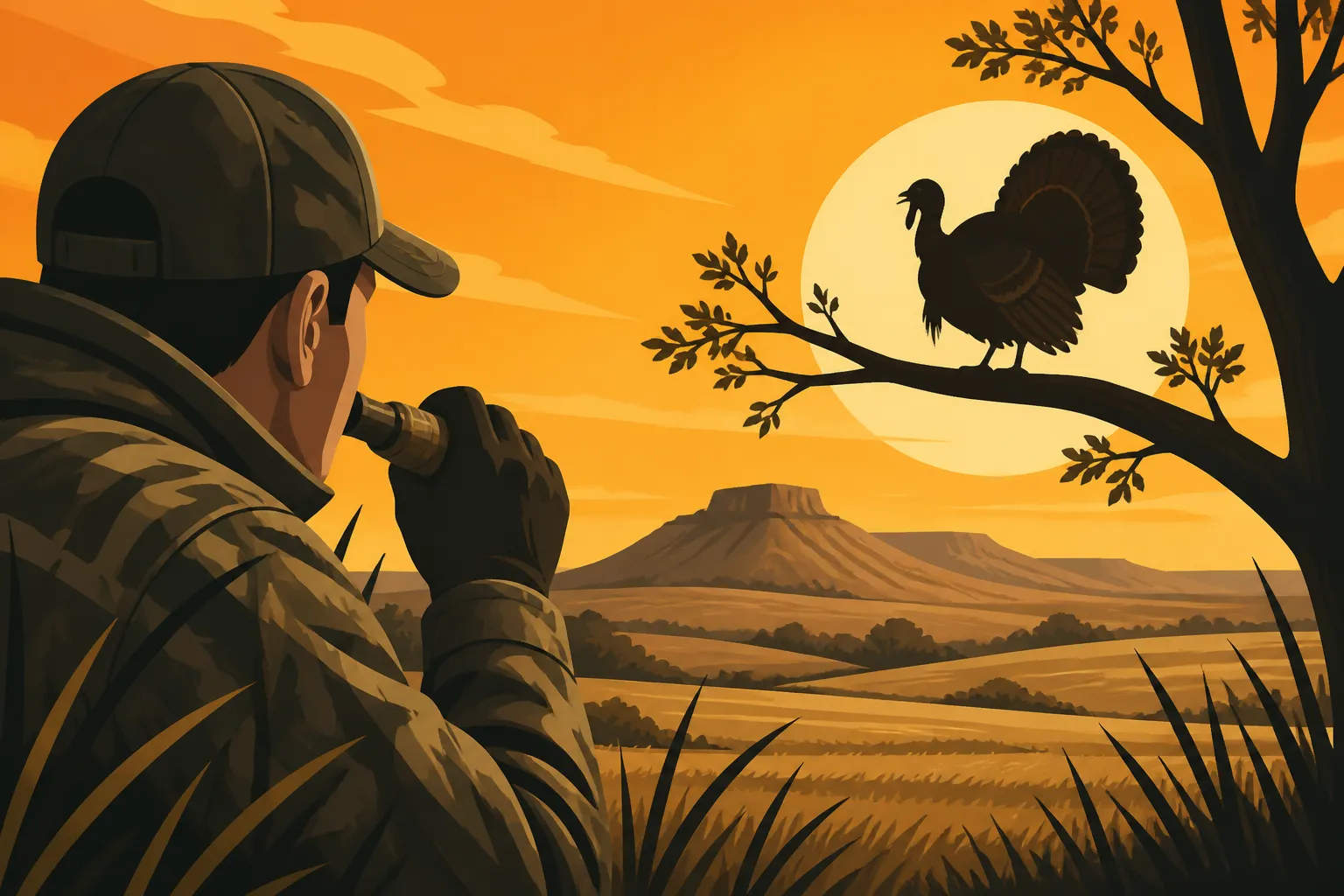
There’s almost nothing more frustrating in spring turkey hunting than hearing that booming gobble from the roost, knowing a big tom is just a few hundred yards away, but then watching him fly down and head the other direction. It’s a gut punch, right? You’ve put in the time, you’re in position, and he just won’t commit. This guide is all about tackling that common challenge, diving deep into the art of luring a Nebraska gobbler off the roost and into your setup.
Understanding the Morning Roost and Gobbler Behavior
The pre-dawn anticipation of a gobbler hammering on the roost is what draws so many of us to the spring woods. It’s an electric feeling, hearing that first declaration of his presence cut through the quiet morning air. But while that sound is thrilling, it also marks the beginning of a delicate dance. Getting a tom to commit to your calls while he’s still high in a tree, or even immediately after he hits the ground, is a nuanced affair that requires more than just making turkey noises. It demands an understanding of his priorities and the forces pulling him in other directions.
Why Gobblers are Stubborn on the Roost
Let's be honest, it feels like gobblers are often just plain stubborn when they’re still in the tree. You call, they gobble back, and then… nothing. The primary reason for this frustrating stand-off, more often than not, is hens. Those girls are his number one priority. If a gobbler wakes up with a harem of hens already with him in the roost tree, or if he knows where they're roosting nearby, he's far less likely to abandon them for a lone hen call from an unknown location. He knows exactly where his ladies are, and he's going to fly down and join them, likely collecting any other hens on the way. Your calls become background noise, merely confirming his dominance to the hens he already possesses. He expects them to come to him, not the other way around.
Beyond the influence of hens, gobblers also have a strong sense of security and territoriality while roosted. A tom in a tree has a commanding view of his surroundings, making him feel safe from ground predators. Flying down means exposing himself to potential danger, especially if he has to cross open ground or move into unfamiliar territory to reach your calls. Furthermore, these birds are very territorial. They often have established fly-down areas and routines. If your setup is outside of that comfortable, safe zone, or if he perceives your calls as coming from an area that’s not ideal for his morning strut, he might simply opt for his usual spot or wait for the hens to come to him there. It’s not personal, it’s just ingrained instinct and habit.
Scouting Before the Morning Hunt
Success in pulling a gobbler off the roost starts long before you even set foot in the woods on hunt day. It begins with meticulous scouting. You absolutely need to know where these birds are roosting, their general fly-down paths, and where they typically head first thing in the morning. This isn't just about finding a tree with droppings; it's about understanding the entire morning routine of the birds you're targeting. Are they roosting in a thick cottonwood bottom along the Platte River? Or perhaps a stand of cedars in the Sandhills? Knowing these details allows you to predict their movements and position yourself accordingly.
Tools like the Public Access Atlas are invaluable for pre-season scouting, especially when trying to pinpoint potential roosting areas on public ground. Many hunters also swear by mapping applications like GoHunt, which can overlay property boundaries, topo maps, and satellite imagery, making it easier to identify likely roost trees, potential travel corridors, and optimal setup locations. You can mark specific trees or small timber blocks where you’ve heard birds gobbling at dusk or dawn. This digital reconnaissance, combined with boots-on-the-ground investigation, paints a much clearer picture.
Observing fly-down patterns during scouting trips is incredibly insightful. If you can sneak in before light and watch (from a safe distance, without disturbing them) where a gobbler typically flies down and which direction he immediately heads, you've hit the jackpot. Does he land in an open field to strut, or does he immediately drop into a creek bottom? Does he move towards a specific ridge or a known feeding area? This information is gold. It tells you exactly where to set up to intercept him or position yourself to be on his preferred path, rather than trying to pull him completely off course. A good understanding of Calling a Nebraska Gobbler Off the Roost is often directly linked to how much pre-hunt scouting you've done.
Strategic Calling from Fly-Down to Mid-Morning
The way you call a gobbler needs to evolve as the morning progresses. There’s a distinct difference between trying to elicit a response from a bird still on the limb and engaging one that has hit the ground. Your calling strategy is a dynamic conversation, not a static monologue. Mastering this shift is key to turning those thrilling roost gobbles into a successful harvest.
The Art of the Soft Wake-Up Call
When the woods are still shrouded in that deep pre-dawn gloom, and you’re waiting for the first hint of light, your calling needs to be subtle, gentle, and above all, natural. The goal isn't to shock him into gobbling but to gently suggest there's a hen in the vicinity waking up. Think of those soft, contented tree yelps and clucks. A single, sleepy-sounding yelp, or a series of soft clucks, just enough to let him know you’re there without overdoing it. You're mimicking a hen just stretching her wings and clucking to herself as the world awakens.
Timing is absolutely critical here. You don’t want to start calling too early, or too loudly. Begin your soft calling about 15-20 minutes before fly-down, when you expect the first gray light to filter through the canopy. If you start too soon, he might gobble, but he won't be ready to fly down, and you risk overcalling him before the game even truly begins. The idea is to keep him engaged and curious, but not pressured. A soft tree yelp from your diaphragm call, or a muted cluck on a pot call, is perfect.
The biggest mistake many hunters make at this stage is overcalling. A gobbler on the roost, especially if he’s with hens, can easily be spooked or simply put off by aggressive calling. If you're hammering him with loud yelps and cutts while he's still 30 feet up, he might just decide that "hen" sounds too frantic or too far away, and simply ignore you. He might even associate the perceived aggression with a threat. Keep it sparse and soft. A few calls, then a long pause to listen. Let him do most of the talking from the tree, and only respond with just enough to maintain his interest. This patient approach sets the stage for what happens once he hits the ground.
Aggressive Calling Post-Fly-Down (and When Not To)
Once those birds hit the ground, the rules of the game can change dramatically. If a gobbler flies down alone, or if he’s split from his hens, this is often the time to ramp up your calling intensity. He's now looking for company, and he's vulnerable. Louder, more enthusiastic yelps, a series of excited cutts, or even some aggressive clucks can now be exactly what he wants to hear. You're trying to sound like a hot hen, ready for action, urging him to come investigate. This is where a dynamic calling sequence, mixing yelps, clucks, and purrs with some sharp cutting, can really pull him in.
However, a crucial caveat: if he flies down with hens, or if you can see or hear other hens nearby, aggressive calling can actually be detrimental. In this scenario, those real hens are your competition. They’ll often start calling back, perhaps even aggressively, essentially telling your fake hen to back off. If your calls are too loud or too demanding, the gobbler will likely stick with the real hens who are already there. You might need to back off your calling, perhaps even go silent for a bit, and let the real hens unwittingly push him towards you as they move, or try to mimic a subordinate hen. Sometimes, the best tactic when a gobbler is henned up is to try a "run-and-gun" approach, moving to get ahead of his travel path and intercept him, but often this requires a more subtle calling strategy as you move.
Knowing when to hold 'em and when to fold 'em, or rather, when to call aggressively versus staying quiet, is a skill honed over many mornings. Watch his body language if you can see him, or listen intently to his gobbling rhythm. Is he gobbling frequently, moving quickly, and seeming eager? Then maybe more aggressive calling is warranted. Is he gobbling sporadically, staying put, and you hear other hens? Then it’s time to scale back the intensity and think about a different tactic, perhaps even waiting him out until the hens wander off. Remember, the goal is to convince him to come to you, not to challenge the hens he’s already with.
Decoy Placement and Positioning
Using decoys is a powerful psychological tool in turkey hunting, but like calling, their effectiveness hinges on proper placement and understanding the birds' perspective. A well-placed decoy can provide the visual confirmation a gobbler needs to commit, especially if he's hesitating just out of range. He’s heard your calls, but seeing a "hen" (or a rival jake) can often tip him over the edge and draw him those final, crucial yards.
There are different types of decoys for different scenarios. A single feeding or contented hen decoy is often effective early in the season or when you want to appear non-threatening. Adding a jake decoy alongside a hen can be a powerful attractant for a dominant gobbler, as it appeals to his desire to assert dominance and breed. A full-strut gobbler decoy, while effective, can also be intimidating to subordinate toms or those that aren’t feeling particularly feisty, so use it wisely. A popular tactic in Nebraska is to use a single hen, sometimes paired with a jake, positioned about 20-30 yards from your setup, facing generally towards where you expect the bird to approach. This gives the gobbler a visual target, and ideally, puts him in easy shooting range as he approaches the decoy.
Strategic placement is not just about distance; it's about visibility and shot angles. You want your decoys visible from where you expect the gobbler to appear, but you also want him to approach them in a way that gives you a clean, ethical shot. Avoid placing decoys directly in line with thick brush or trees that could obstruct your view or his approach. Consider the terrain – a decoy placed on a slight rise in a pasture or along a field edge in eastern Nebraska will be much more visible than one hidden in a dip. Also, think about the sun. If you can, position your decoys so the sun is at their back, making them glow and appear more realistic to an approaching gobbler, while keeping the sun out of your eyes. Proper decoy strategy, combined with subtle calling, can often seal the deal.
Adapting to Challenging Scenarios
Not every turkey hunt goes according to plan. In fact, most don't. You'll encounter scenarios where gobblers are just plain finicky, or the presence of other birds completely changes their behavior. Knowing how to adapt in these challenging situations is what separates a successful hunter from one who goes home empty-handed.
Dealing with Hung-Up Gobblers
The "hung-up" gobbler is a classic spring turkey hunting frustration. You’ve called, he's gobbled, he's gotten close, and then… he stops. He's at 80 yards, perhaps just out of sight behind a small rise or a patch of timber, and he just won't come any closer. Why does this happen? Often, it's a combination of perceived danger, the desire for the hen to come to him, or a visual obstruction that prevents him from seeing the "hen" he's hearing. He wants to see her before he fully commits to closing the distance.
When a gobbler hangs up, your first instinct might be to call louder or more aggressively. Resist this urge. Sometimes, the best strategy is the "silent treatment." Go completely quiet. He’s expecting you to call, and when you don’t, his curiosity (or impatience) might get the better of him. He might just decide to take those extra few steps to see what happened to that hen. Wait at least 10-15 minutes, listening intently. If that doesn't work, try a very soft, subtle call – perhaps a series of soft purrs or clucks, mimicking a hen that's losing interest or just moving off slightly. This can sometimes make him think you're leaving, prompting him to close the gap.
Another tactic, if the terrain allows and you can do it undetected, is to try and circumvent the bird. This is especially effective if he's hung up on a ridge or a creek bank. Try to use the terrain to your advantage, slipping around to a different position that either cuts off his escape route or presents him with a new, closer approach. If you have a hunting partner, one person can stay put and make minimal calls while the other tries to circle around. However, be extremely careful not to spook the bird, as he's already on high alert. Moving silently and using every bit of available cover is paramount. The key is to break his routine and give him a reason to take those last few steps into range.
The Impact of Hens and Hunting Pressure
Hens are both a blessing and a curse in spring turkey hunting. They're what bring the gobblers out, but they're also your biggest competition. If a gobbler is with hens, he's typically not interested in leaving them for your calls. He'll strut and gobble for his real-life audience, and you'll be left listening to his taunts. In these situations, mimicking a "hot hen" can sometimes work, making him think a more eager hen is just waiting for him. But often, the real hens will simply usher him away. Another approach is to mimic a "satellite gobbler" – softer, less dominant gobbler sounds or even jake yelps – which might draw him in for a fight if he’s a dominant bird looking to assert himself.
Hunting pressure, particularly on popular public lands, adds another layer of complexity. Birds that have been called at constantly will become "call-shy" or "call-educated." They’ve heard it all, and they’ve learned to associate certain sounds with danger. In areas seeing significant pressure, like some of the more accessible WMAs in eastern Nebraska, these birds become incredibly wary. They might gobble from the roost, but they’ll often fly down and head directly away from any calling, or they’ll simply go silent. When you're dealing with pressured birds, less is often more. Minimal calling, focusing on realistic, soft sounds, and relying heavily on good camouflage and setup location can be far more effective than aggressive calling. Sometimes, simply knowing Second Season Pressure on Nebraska Public Ground can help you adjust your expectations and tactics.
A tactic for heavily pressured birds, or those constantly henned up, is to simply wait. Let the hens lead the gobbler away from the roost, and then try to intercept him later in the morning after the hens have gone off to nest or feed. This might involve setting up along a travel corridor or a field edge where you know birds often congregate later in the day. Patience is key in these scenarios. Using scouting tools like GoHunt to analyze terrain and potential movement patterns can give you an edge, helping you predict where these birds might go after the initial fly-down excitement.
Essential Setup Considerations
The best calling in the world won't matter if your setup isn't solid. Where you position yourself relative to the roost, the sun, and potential travel routes can be the difference between success and a frustrating morning.
Choosing the Right Setup Location
Your setup location is paramount, especially when trying to call a gobbler off the roost. The perfect spot offers a balance of concealment, visibility, and a clear shooting lane. You need to be able to see the bird as he approaches, but he shouldn't be able to easily see you. Utilize natural features like the base of a large tree, a thick cedar, or a fallen log. In Nebraska's diverse landscape, this could mean tucking into the timber along a river bottom, finding a thick fenceline in farm country, or using a deep creek bank in the Sandhills for cover. The goal is to blend in seamlessly with your surroundings, breaking up your silhouette completely.
Consider the terrain and how it will influence the gobbler's approach. Turkeys prefer to walk up slight rises to get a better view, and they'll often avoid thick brush or heavy obstacles if there's an easier path. If you're hunting near a creek crossing in the Sandhills, position yourself where he has to come into your shooting lane to get around it. If you're in open country, a ground blind might be your best bet, brushed in naturally to conceal your movements. Think about the sun’s position. You want the sun at your back, making it harder for the gobbler to pick you out, while making your decoys (if used) glow invitingly. Avoid having the sun in your eyes, as it can severely impair your ability to see an approaching bird.
Lastly, always consider your entry and exit routes. You need to be able to get to your setup before light without disturbing any roosting birds, and you need a way to leave without spooking anything later. This often means approaching from a direction that keeps the wind in your favor and utilizes existing cover. A quiet approach is just as important as a good setup. A stealthy entry ensures the birds never know you're there until you want them to.
Mastering Your Calls
While proper setup and understanding turkey behavior are critical, having confidence and skill with your calls is the backbone of successful turkey hunting. There's a wide array of calls available, each with its own advantages, and mastering a few can make you a versatile hunter. Diaphragm calls offer hands-free operation, allowing you to keep your shotgun mounted and ready. They produce a wide range of sounds, from soft tree yelps to aggressive cutting. Pot calls (slate, glass, aluminum) are excellent for consistently realistic yelps, clucks, and purrs, offering good volume control. Box calls are loud and can carry a long distance, perfect for making initial contact or getting a distant bird’s attention.
Practice, practice, practice! It's not just about making turkey sounds; it's about making realistic turkey sounds that convey emotion and intent. Listen to real turkeys, study online videos, and spend time in the off-season refining your cadence, tone, and volume. A gobbler can often tell the difference between a practiced, realistic hen call and a flat, unconvincing one. Vary your calling. Don't just stick to one type of yelp or cluck. Mix in purrs, clucks, and cutting to create a compelling, lifelike conversation.
Adjusting call volume and tone is also key. When a gobbler is still on the roost and the woods are quiet, soft, sleepy yelps and clucks are appropriate. As the light increases and birds hit the ground, you can gradually increase volume and add more excitement if the situation warrants it. If a gobbler is hung up, dropping your volume to a whisper can sometimes draw him in. The ability to adapt your calling to the specific situation, and to sound like a truly confident, alluring hen, is what truly defines a master turkey caller. And don't forget, sometimes Calling Spring Gobblers in Nebraska Timber requires a slightly different approach than calling in open fields.
Here's a quick reference for adjusting your calling intensity based on a gobbler's behavior:
| Gobbler Proximity/Behavior | Recommended Calling Intensity | Common Call Types | Notes |
|---|---|---|---|
| On Roost (Pre-Fly Down) | Soft, Sparse | Tree Yelps, Soft Clucks | Goal is to wake him up, not pressure him. |
| Just Flew Down (Alone) | Moderate to Aggressive | Yelps, Cutts, Clucks, Purrs | He's looking for hens, make yourself heard. |
| Just Flew Down (With Hens) | Soft, Subtle, or Silent | Soft Purrs, Clucks, Distant Yelps | Don't compete with real hens; let them move him. |
| Hung-Up (80-100 yards) | Silent, then Very Soft/Sparse | Soft Purrs, Faint Clucks | Play hard to get, or try to sound like you're leaving. |
| Approaching (Under 50 yards) | Soft, Minimal | Soft Purrs, Clucks, Lost Yelps | Let him commit, don't overcall. |
| Later Morning (Seeking) | Aggressive, Intermittent | Loud Yelps, Cutts, Gobbles (if confident) | Mimic a "hot hen" or dominant tom. |
Disclaimer
Hunting is an inherently dangerous activity. Always prioritize safety, understand and obey all local, state, and federal hunting regulations. Ensure you have proper licenses and permits before hunting. The information provided in this guide is for informational purposes only and should not replace professional instruction or personal judgment. Always hunt ethically and responsibly.