Rifle Ranges Realistic in Open Country
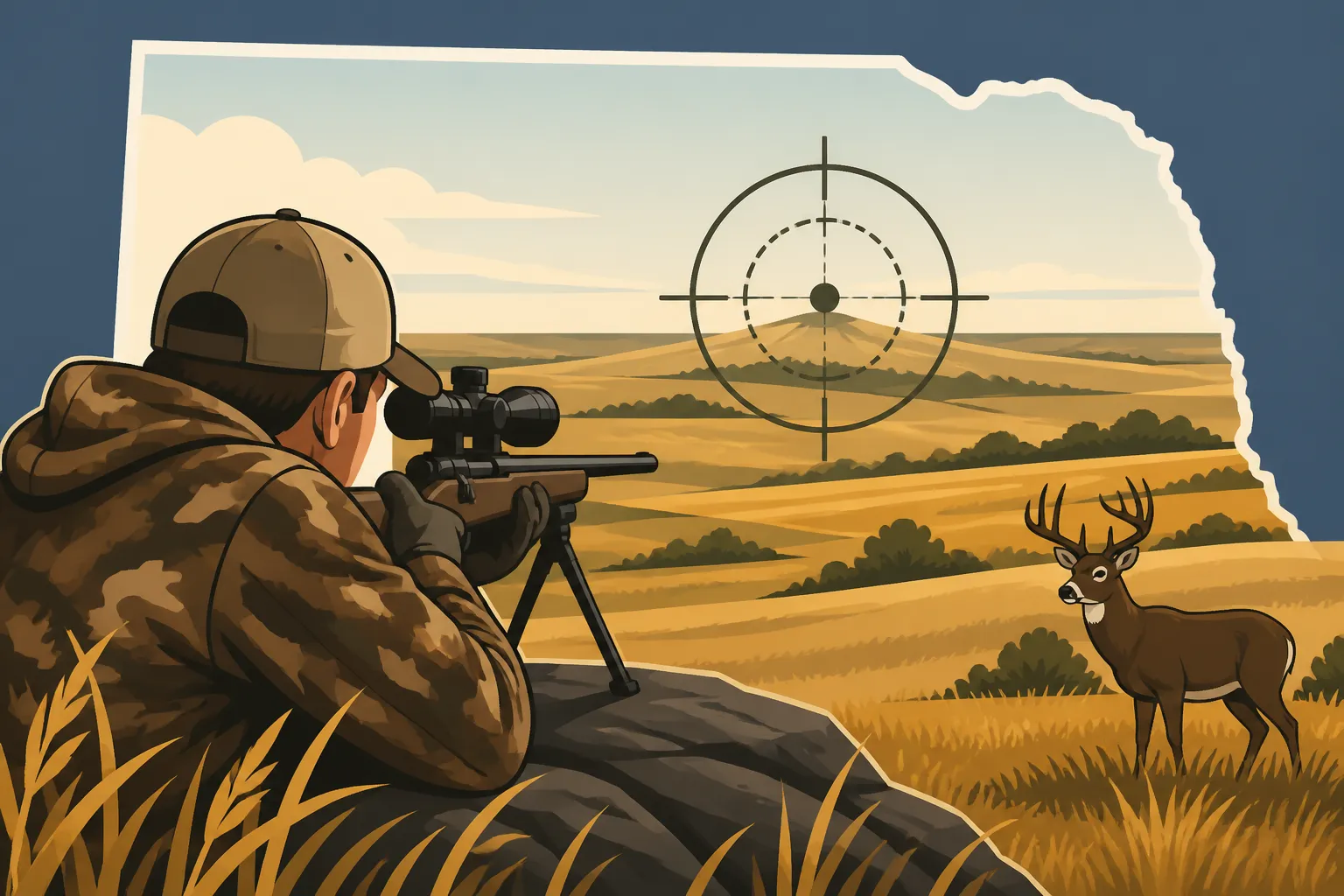
Hunting in the vast, open landscapes of Nebraska presents a unique set of challenges, especially when it comes to accurately judging distances and making ethical shots. What looks like an easy 200-yard shot in a timber stand can easily stretch to 400 yards or more in the rolling Sandhills or across a wide-open prairie. It's a common frustration many hunters face: feeling confident on the range, only to be confounded by the deceptive expanse of the Great Plains. This guide aims to pull back the curtain on what truly constitutes realistic rifle ranges when you're hunting deer, antelope, or even coyotes in Nebraska's expansive country, offering practical advice to sharpen your skills and ensure clean, ethical harvests.
The Deceptive Expanse of Nebraska's Open Country
It's easy to be fooled by the sheer scale of Nebraska's open lands. A distant cedar draw or a lone cottonwood tree might seem closer than it is, especially when you're caught up in the excitement of spotting game. This optical illusion is a significant hurdle for many hunters, leading to misjudged shots and, unfortunately, missed opportunities or, worse, wounded animals. Understanding this inherent deceptiveness is the first step toward becoming a more effective open-country hunter.
Why Distances Are So Hard to Judge
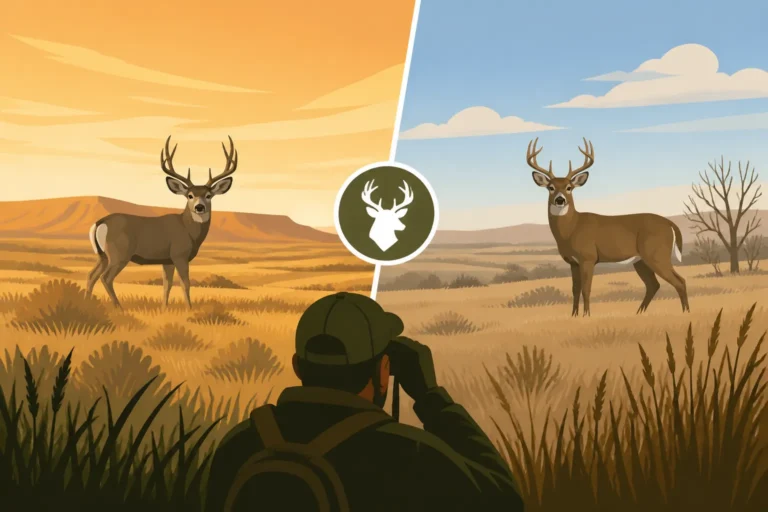
Imagine sitting on a rise in the Sandhills, glassing a distant basin for a mule deer buck. There are no trees, no houses, no familiar landmarks to give you a sense of scale. The rolling terrain, often uniform in color and texture, makes it incredibly difficult to gauge how far away that buck really is. The human eye struggles without reference points, and what might look like a few hundred yards could easily be double that. This is particularly true when hunting in areas like the Oglala National Grassland or the vast stretches of private ranch land in western Nebraska. It's not a failure of your vision; it's simply how our brains process distance in an environment devoid of familiar indicators. The absence of vertical structure and the subtle undulations of the prairie create a "flat" perspective that shrinks perceived distance.
Wind: The Unseen Force on the Plains
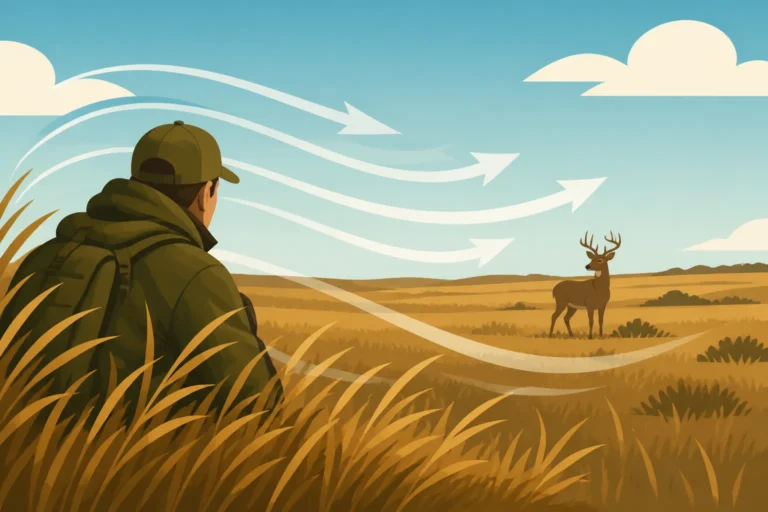
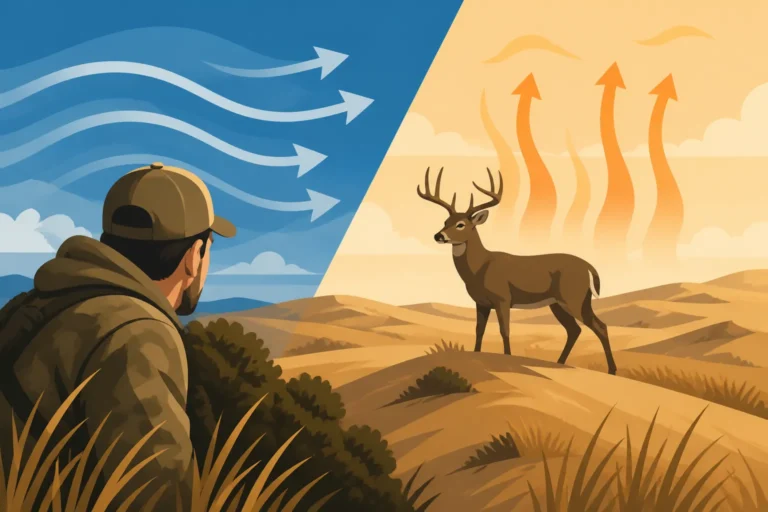
Beyond the visual trickery, wind is arguably the most significant variable an open-country hunter in Nebraska must contend with. The state is renowned for its persistent breezes, which can turn into sustained gales with little warning. A bullet, once it leaves the barrel, is immediately subject to the laws of physics, and wind is a major player in its trajectory. What might be a perfect shot on a calm day becomes a wild guess when a 20 mph crosswind is pushing your bullet sideways.
This isn't just about big gusts; even a gentle 5-10 mph breeze can cause significant drift at longer ranges, especially with lighter bullets or less aerodynamic calibers. Over 300-400 yards, even a slight crosswind can push your point of impact several inches off target, enough to miss a deer's vital zone entirely. Learning to read the wind – watching grass sway, dust move, or even the mirage through your optics – becomes as crucial as knowing your rifle's ballistics. This is why discussions around topics like Reading Wind on the Nebraska Plains are so critical for success.
Factors Defining Your Ethical Shooting Range
Your realistic, ethical shooting range isn't a fixed number; it's a dynamic calculation based on a combination of your personal skill, your equipment, and the environmental conditions of the moment. Ignoring any of these factors is a recipe for disappointment.
Your Personal Shooting Proficiency
Let's be honest: the biggest factor in what constitutes a "realistic" range is you. How consistently can you place shots in a grapefruit-sized target at various distances, not just from a bench rest, but in field conditions? Can you do it when your heart is pounding after a long stalk, or when you're bracing against a strong gust of wind? Most hunters can shoot groups at 100 yards, but extending that confidence to 300, 400, or even 500 yards requires a significant investment in practice and honest self-assessment.
Consider your comfort zone. For many, a 200-yard shot on a deer is relatively routine. Pushing beyond that often requires different techniques, more stable shooting platforms, and a deeper understanding of your rifle's capabilities. If you can consistently hit a 6-inch steel plate at 300 yards off shooting sticks, that's a good indicator of your maximum ethical range. If you can't, then your ethical range is shorter, and that's perfectly okay. It's far better to know your limits and pass on a shot than to take one that risks wounding an animal. This personal evaluation is far more important than any arbitrary number.
Rifle and Cartridge Limitations
The rifle you carry and the cartridge you feed it play a huge role in your realistic effective range. Not all rifle setups are created equal for long-range accuracy. When thinking about Rifle Setups for Nebraska's Open Country, you'll quickly realize that a robust, accurate rifle chambered in a cartridge known for good ballistic coefficients will naturally extend your effective range compared to a lightweight brush gun.
- Caliber Choice: While a .223 might be perfectly adequate for coyotes out to 250 yards, it's generally not considered an ethical deer cartridge beyond shorter ranges, especially in windy conditions. Cartridges like the 6.5 Creedmoor, .270 Winchester, .30-06 Springfield, and .300 Winchester Magnum are popular choices for deer and antelope in Nebraska due to their flatter trajectories and better wind resistance. For specific recommendations, consider diving into Best Rifle Caliber for Nebraska Mule Deer.
- Ammunition: High-quality, consistent ammunition is paramount. Factory match-grade ammunition or carefully crafted handloads will always outperform bulk hunting loads at extended distances. Bullet design, especially its ballistic coefficient (BC), directly impacts how well it resists drag and wind drift.
- Scope and Mounts: A quality scope with clear glass, repeatable adjustments, and a suitable reticle for holdovers or dialing is non-negotiable. Don't skimp here. Robust, properly installed scope mounts are also crucial to maintain zero under recoil and field abuse. Your scope needs to be able to handle the magnifications required for precise long-range aiming, which is covered more in depth in Rifle Scopes for Long Nebraska Shots.
- Rifle Accuracy: What kind of groups does your rifle consistently shoot? If your rifle shoots 2 MOA (minutes of angle) groups (2 inches at 100 yards, 4 inches at 200, 6 inches at 300), then at 400 yards, your groups are 8 inches. That's pushing the limits of reliably hitting a deer's vital zone (roughly 8-10 inches in diameter). A rifle that consistently shoots 1 MOA or better gives you a much larger margin for error.
Environmental Conditions
As mentioned, wind is a major factor. But it's not the only one. Light conditions, mirage, and temperature can all affect how far you can ethically shoot.
- Wind: We've covered this, but it cannot be overstated. A variable wind, swirling in the valleys or gusting intermittently, is far harder to compensate for than a steady crosswind.
- Mirage: On hot days, heat rising from the ground can create a "mirage" effect, making your target appear to shimmer or move. This makes precise aiming incredibly difficult at longer ranges. Learning to read mirage can help with wind calls, but it also degrades target clarity.
- Light: Early morning and late evening light can make precise aiming challenging. While good optics help, low light reduces contrast and target definition, making it harder to pick a precise aim point, especially on animals that blend into the landscape, like a mule deer in the bluffs of Hunting Mule Deer in the Nebraska Pine Ridge.
- Angle: While Nebraska is relatively flat compared to mountainous regions, you will encounter angled shots, especially in river breaks or the Pine Ridge. Shooting uphill or downhill changes the effective ballistic distance, requiring compensation.
Practical Application and Field Strategies
Knowing the theoretical limits is one thing; applying that knowledge in the field is another. Here’s how you can make more precise, ethical shots in Nebraska's open country.
Mastering Rangefinding and Holdovers/Dialing
This is where the rubber meets the road. You simply must know the exact distance to your target.
- Rangefinders: A good quality laser rangefinder is an absolute necessity for open country hunting in Nebraska. Forget guessing; it will be wrong more often than not. Get one with good reflective capabilities and a wide field of view. Some rangefinders, like those discussed in Rangefinders in Open Nebraska Country, even offer angle compensation.
- Ballistic Solutions: Once you have the range, you need a way to compensate for bullet drop.
- Holdovers: Many hunters prefer holding over the target using their scope's reticle. This requires extensive practice to know exactly where to hold at different distances.
- Dialing: More precise hunters will "dial" their scope's elevation turret to compensate for bullet drop. This method is generally more accurate for longer shots but requires time, which isn't always available when hunting. You need a scope with reliable, repeatable turrets and a clear understanding of your ballistic chart. Many modern hunters use apps like those found in a GoHunt membership, which provide real-time ballistic solutions based on current environmental data. This means inputting range, temperature, altitude, and wind, and the app tells you precisely how many clicks to adjust your turret or where to hold.
- Ballistic Data: Spend time at the range validating your ballistic charts. Don't just trust the manufacturer's data; your rifle and ammo might perform slightly differently. Create a range card for your specific setup, listing bullet drop and wind drift at various intervals (e.g., 50-yard increments) out to your maximum ethical range.
Stable Shooting Positions Are Paramount
You can have the best rifle and ammunition in the world, but if your shooting position isn't stable, you won't hit your target at extended ranges.
- Prone: This is hands-down the most stable field shooting position. If terrain and cover allow, get as low as possible. Use a bipod, backpack, or even your hunting pack as a rest. This significantly reduces shooter error.
- Shooting Sticks/Tripods: In open country where getting prone isn't possible due to tall grass, uneven terrain, or a lack of cover, shooting sticks or a tripod are invaluable. They offer a much more stable platform than shooting freehand or off a flimsy tree branch. Items like the lightweight tripods often recommended by hunting resources like GoHunt can make all the difference in quickly stabilizing a shot in a crucial moment. For more on these tools, check out Shooting Sticks and Bipods on Grass.
- Improvised Rests: Always be looking for natural rests: a fence post, a large rock, the hood of your truck (if legal and safe), or even a sturdy branch. The key is to eliminate as much movement as possible. Even a seated position with elbows rested on knees is better than standing freehand for anything beyond 150-200 yards.
| Shooting Position | Stability Rating (1-5, 5 being highest) | Typical Ethical Range (for proficient shooter, avg conditions) | Considerations |
|---|---|---|---|
| Prone (with bipod) | 5 | 400+ yards | Requires low cover, relatively flat ground. |
| Kneeling (supported) | 3 | 200-300 yards | Good compromise, quick to set up. Use a rest. |
| Standing (shooting sticks) | 3 | 200-350 yards | Excellent for tall grass, quick deployment. |
| Standing (freehand) | 1 | 100-150 yards | Very difficult, only for close range. |
| Off Backpack/Rest | 4 | 300-400+ yards | Highly stable, dependent on available rest. |
Note: These ranges are highly dependent on individual skill, rifle setup, and specific environmental conditions.
Reading the Wind on the Prairie
This is an art form, honed over years of experience. You can't just guess.
- Wind Flags: Watch for subtle cues. Grasses, small branches, dust, or even the shimmer of heat waves (mirage) can indicate wind direction and speed. Pay attention to changes closer to you, midway to the target, and right at the target. Often, the wind can be different at various points along the bullet's path. This is especially true when hunting deer in areas with varied topography, which often makes it a challenge when considering Wind Direction on Open Nebraska Prairie Stands.
- Kestrel/Weather Meters: For serious long-range shooting, a Kestrel weather meter can provide precise wind speed, direction, temperature, and atmospheric pressure data, which can then be fed into a ballistic calculator. Many dedicated long-range hunters subscribe to services like GoHunt for tools and resources that aid in this type of environmental data analysis.
- Practice, Practice, Practice: The only way to get good at reading wind is to practice. Shoot in windy conditions at the range. Observe how your bullets drift and compare it to your wind calls. Over time, you'll develop an intuitive sense for it.
Gear and Practice for Open Country Success
Having the right tools and dedicating time to practice are non-negotiable for extending your ethical range in Nebraska's challenging open terrain.
Choosing the Right Optics
Your binoculars, spotting scope, and rifle scope are your eyes in the field. They need to be top-notch.
- Binoculars: For glassing the vast expanses of the Sandhills or scouting for deer in the Pine Ridge, a good pair of 10x or 12x binoculars is essential. They help you spot game at great distances, evaluate trophies, and plan your approach. Don't underestimate the value of quality glass for prolonged viewing sessions, as detailed in Optics for Glassing the Nebraska Sandhills.
- Spotting Scope: If you plan on doing serious long-range hunting or scouting for antelope where precise judgment of horn length is crucial, a spotting scope is incredibly useful. It allows for much higher magnification to pick apart distant cover and evaluate animals without disturbing them.
- Rifle Scope: As discussed, your rifle scope is paramount. Look for:
- Clear Glass: Bright, clear optics are critical in low light and for resolving detail at long distances.
- Appropriate Magnification: Too much magnification can make it hard to find your target, while too little won't allow for precise aiming. A good variable power scope (e.g., 3-15x, 4-16x, or 5-25x) offers versatility.
- Reliable Turrets: If you plan to dial for elevation, your turrets must track accurately and consistently.
- Useful Reticle: A reticle with hash marks (MOA or MRAD) allows for quick holdovers, while a simple duplex is fine if you only ever dial. An illuminated reticle can be a huge asset in low light conditions.
The Importance of Consistent Practice
You can't expect to perform under pressure if you haven't put in the hours at the range.
- Extended Range Practice: Don't just shoot at 100 yards. Push yourself out to 200, 300, 400, and even 500 yards (if your range allows). Understand your rifle's trajectory at these distances.
- Field Position Practice: Practice shooting from prone with a bipod, off shooting sticks, and from kneeling. Simulate hunting scenarios. Get your heart rate up before a shot.
- Wind Practice: Shoot on windy days. Observe how your bullet impacts. This is invaluable for learning to compensate.
- Timed Drills: Practice acquiring your target, ranging it, and making a shot within a realistic timeframe. Hunting opportunities rarely last forever.
- Zeroing Your Rifle: Regularly check and confirm your rifle's zero. Even slight changes in temperature or handling can affect it. Re-zeroing is a critical component of Zeroing a Rifle for Open Country.
Utilizing Ballistic Calculators and Advanced Tools
In today's age, technology can significantly aid the open-country hunter.
- Ballistic Apps: Smartphone apps like Ballistic AE or Applied Ballistics are incredibly powerful tools. They take into account cartridge data, bullet type, muzzle velocity, temperature, atmospheric pressure, and wind to give you precise come-ups (how many clicks to dial) or holdover points.
- Integrated Systems: Some rangefinders and scopes now integrate with ballistic solvers, streamlining the process even further. For hunters looking to truly optimize their performance and gain an edge in complex open-country scenarios, platforms like GoHunt offer advanced mapping tools, harvest data, and integrated ballistic solutions that can be game-changers for planning and executing precise shots.
- Scouting Tools: Beyond shooting, utilize online mapping and scouting tools to understand terrain and potential shot angles before you even step foot in the field. This forethought ties directly into successful trips, whether you're focusing on Scouting Nebraska Public Ground Before Opening Day or private lands.
Ultimately, your realistic rifle range in Nebraska's open country is a personal responsibility. It's not about being able to shoot a mile; it's about confidently and ethically making the shot that's in front of you. By understanding the challenges, honestly assessing your abilities, mastering your equipment, and putting in the practice, you can expand your effective range and increase your success in the field.
Disclaimer
Hunting is an inherently dangerous activity. Always prioritize safety, adhere to all local, state, and federal hunting regulations, and ensure you have the appropriate licenses and permits. This guide is for informational purposes only and does not substitute for hands-on training, professional instruction, or personal judgment regarding ethical shot distances and safe firearm handling. The author and publisher assume no liability for any accidents, injuries, or legal infractions that may occur.