Hunting Mule Deer in the Nebraska Pine Ridge
Hunting mule deer in Nebraska might not be the quintessential western hunt, but for those who discover the rugged beauty and challenging terrain of the Pine Ridge, it offers a deeply rewarding experience. Many hunters struggle to find accessible, quality mule deer hunting closer to home, often overlooking Nebraska's Panhandle. This comprehensive guide will illuminate the unique opportunities and essential strategies for successfully pursuing mule deer in the breathtaking, often underestimated, Pine Ridge region of Nebraska.
Understanding the Nebraska Pine Ridge Environment
The Pine Ridge, nestled in the northwestern corner of Nebraska, is a stark contrast to the state's rolling Sandhills or flat farmlands. This isn't your typical Nebraska landscape; it's a dramatic confluence of ponderosa pine forests, steep canyons, jagged buttes, and vast expanses of shortgrass prairie. This unique ecosystem, running roughly from Crawford east to Chadron, and stretching south to the Niobrara River, creates an ideal, albeit challenging, habitat for mule deer. Understanding this environment is the first step to successful hunting here.
The Unique Terrain and Vegetation
The Pine Ridge is characterized by its dramatic elevation changes, a geological anomaly in a generally flat state. Here, you'll find deep canyons carved by ancient waterways, often choked with dense stands of ponderosa pines, Rocky Mountain junipers, and scattered bur oaks. Between these timbered breaks are open, windswept grasslands, creating a mosaic of cover and feeding grounds. This varied terrain forces mule deer into predictable patterns, offering hunters opportunities for both close-quarters stalking within the timber and long-range glassing on the open hillsides. The dense pine forests provide crucial bedding cover, especially during colder months or when pressured, while the interspersed meadows and prairie patches serve as primary feeding areas. Water sources, though often hidden, are also critical, particularly in the drier parts of the season.
Mule Deer Behavior in a Rugged Landscape
Mule deer in the Pine Ridge exhibit behaviors shaped by their environment. Unlike their whitetail cousins who prefer to sneak through thick cover, mule deer are masters of using topography to their advantage, often disappearing over a ridge line or into a canyon with surprising speed. They tend to bed on elevated benches or in dense timber patches within the breaks, allowing them to watch their backtrail and survey the landscape below. During the early morning and late evening, they'll typically move from these bedding areas to more open feeding grounds, like grassy slopes or agricultural fields bordering the ridge. The rut, usually peaking in November, can bring bucks out of the timber in search of does, making them more visible. Pay close attention to how the wind and thermals play in these canyons; understanding air currents is paramount for a successful stalk.
Scouting and Strategy for Pine Ridge Mule Deer
Hunting mule deer in the Pine Ridge requires a blend of patient observation and aggressive, calculated stalking. This isn't a sit-and-wait kind of hunt; it demands mobility, keen eyes, and the ability to adapt to changing conditions. Pre-season scouting is crucial, but in-season tactics are where you'll truly seal the deal.
Effective Glassing Techniques
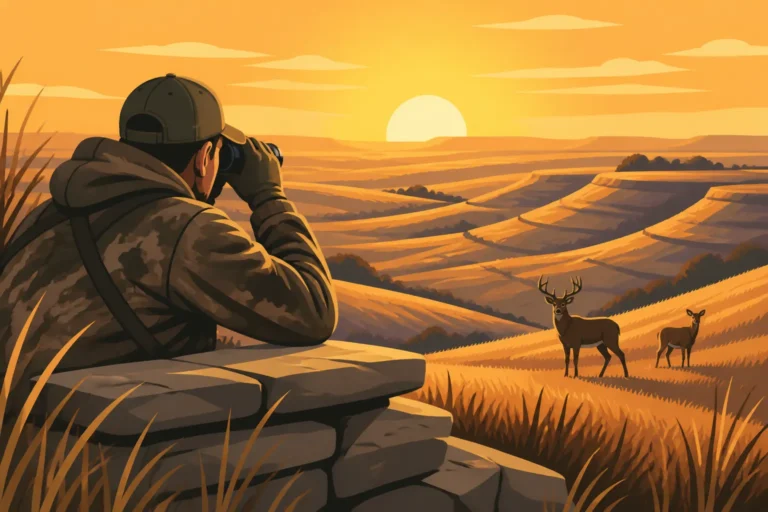
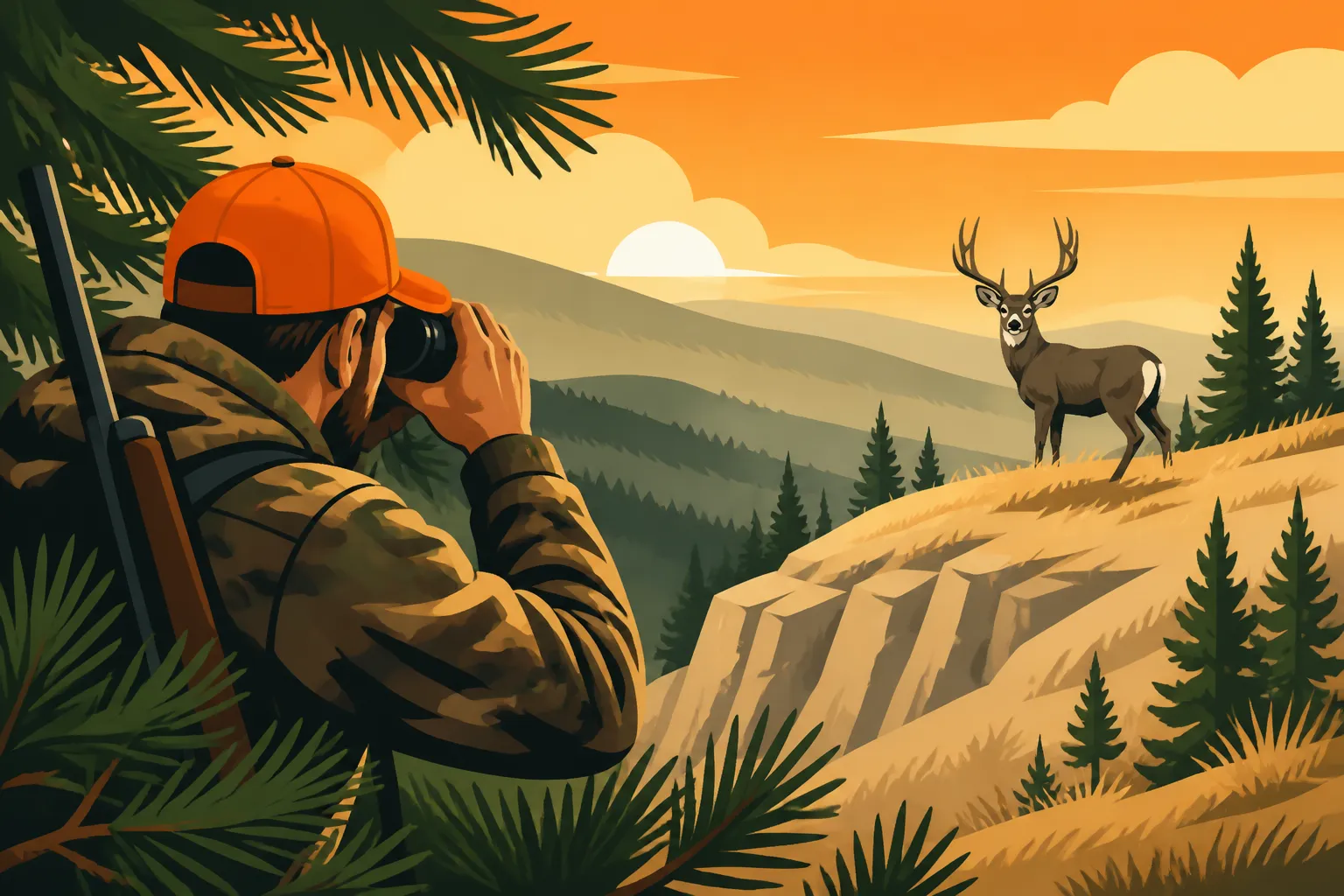
The open nature of many Pine Ridge areas makes glassing your most potent weapon. Invest in quality binoculars, preferably 10x or 12x magnification, and a spotting scope mounted on a sturdy tripod. Don't just scan; methodically pick apart the landscape, grid by grid. Focus on shaded areas where deer might bed, edges where timber meets open ground, and south-facing slopes that warm up in the sun. Early mornings and late evenings are prime glassing times when deer are most active. Position yourself on a high vantage point before first light and spend hours patiently dissecting the terrain. Look for antlers, ears, or the horizontal line of a deer's back against the vertical lines of trees. A good digital mapping system, like those offered by GoHunt, can help you identify potential vantage points and plan your approach routes before you even set foot on the ground. For more on optimizing your viewing, check out our guide on Optics for Glassing the Nebraska Sandhills, which shares many applicable principles.
Stalking and Tracking in Pine Ridge Terrain
Once you've spotted a buck, the real work begins. Stalking mule deer in the Pine Ridge can be incredibly challenging due to the steep, often rocky, and brush-choked terrain. Plan your approach meticulously, using all available cover—ridges, draws, timber patches—to mask your movement. Wind direction is critical; mule deer have an incredible sense of smell. Move slowly, deliberately, and be prepared to take a shot quickly if the opportunity arises. Sometimes, a "slow stalk" where you move a short distance and then re-glass is more effective than a direct approach. If you lose sight of a deer, don't panic. Mule deer often follow predictable paths down into draws or around ridge lines. Look for tracks, broken vegetation, and droppings to confirm their direction of travel. Always be aware of your surroundings, especially if you're hunting in areas like Pine Ridge Public Land in Nebraska, where other hunters might be present.
Understanding Mule Deer Movement and Patterns
Mule deer patterns in the Pine Ridge are heavily influenced by food availability, weather, and hunting pressure. During the early archery season, they might be more concentrated near water sources and lush vegetation. As the season progresses into rifle season, deer will often seek out the dense cover of the timbered canyons for refuge. Post-rut, bucks tend to go into recovery mode, seeking out secluded areas with ample food to regain energy. Snow can significantly alter their movement, pushing them to lower elevations or south-facing slopes where forage is more accessible. By understanding these seasonal shifts and how they impact Where Nebraska Mule Deer Range, you can better anticipate their movements and position yourself for success.
Essential Gear for Pine Ridge Mule Deer Hunting
A successful Pine Ridge mule deer hunt hinges not just on strategy but also on having the right gear. The rugged landscape and variable weather demand durable, reliable equipment that can withstand the elements and facilitate both long-range glassing and strenuous stalks.
Rifle and Optics Setup
Given the often-open country of the Pine Ridge, a flat-shooting rifle is a distinct advantage. Calibers like the .270 Winchester, .30-06 Springfield, 6.5 Creedmoor, or even a .300 Win Mag are popular choices, capable of ethically taking mule deer at extended ranges. Precision is key, so pair your rifle with a high-quality scope that has clear glass and reliable turrets for making adjustments. Many hunters zero their rifles for 200 or 300 yards to account for the potential for longer shots. Be sure to practice shooting from various field positions, as you rarely get a bench rest in the Pine Ridge. A good set of shooting sticks or a bipod is almost indispensable for steadying your shot on uneven ground. For a deeper dive into rifle choices, consider our guide on Rifle Setups for Nebraska's Open Country. Remember, it’s critical to know the legal firearms for your chosen season, especially if considering straight-wall cartridges which have specific rules.
| Gear Type | Recommended Specs/Considerations | Why it's Important in the Pine Ridge |
|---|---|---|
| Rifle | .270 Win, .30-06, 6.5 Creedmoor; accurate, reliable | Potential for long shots in open terrain. |
| Rifle Scope | Clear glass, 3-9x or 4-16x, reliable turrets | Precision at range, low light performance. |
| Binoculars | 10×42 or 12×50; lightweight, durable | Extensive glassing is key to locating deer. |
| Spotting Scope | 60-80mm objective, 20-60x or higher zoom, sturdy tripod | Critical for identifying bucks at extreme distances. |
| Rangefinder | Capable of 1000+ yards; reliable on varied terrain | Accurately judging distance for ethical shots in open country. |
| Boots | Sturdy, ankle support, waterproof, good traction | Navigating steep, rocky, uneven, and potentially muddy terrain. |
| Clothing | Layered system (base, mid, outer); windproof, waterproof, warm | Highly variable weather, extreme temperature swings, strong winds. |
| Backpack | 30-50L day pack; comfortable, capable of carrying essentials + meat | Hauling optics, water, food, extra layers, and potentially boned-out meat. |
Clothing and Footwear
The weather in the Nebraska Pine Ridge can be notoriously unpredictable, with significant temperature swings from morning to afternoon, and the potential for strong winds, rain, or even early snow. Layering is non-negotiable. Start with a moisture-wicking base layer, add insulating mid-layers like fleece or down, and top it off with a windproof and waterproof outer shell. Good quality wool or synthetic socks are a must to prevent blisters. For footwear, you'll need sturdy, ankle-supporting boots with excellent traction to navigate the steep, rocky slopes and uneven terrain. Waterproofing is also highly advisable, as creek crossings or wet grass can quickly lead to cold, miserable feet. Don't forget a blaze orange vest and hat during firearm seasons, as outlined in rules like Orange Requirements for Archers in November (though that's for archers, the principle of visibility applies).
Navigation and Field Essentials
Even with advanced mapping apps, a traditional compass and paper map can be a lifesaver in areas with spotty cell service. A GPS unit or a reliable phone app like GoHunt Maps, with downloaded offline maps, is absolutely essential for navigating the complex topography and ensuring you know where public and private lands begin and end. Always carry enough water, high-energy snacks, a first-aid kit, a headlamp, and fire-starting materials. A sharp knife, game bags, and a bone saw are critical for field dressing and packing out your harvest, especially if you're deep in a canyon. Consider a quality frame pack if you anticipate having to pack out a whole deer quartered, as the terrain can make dragging impossible.
Permits, Seasons, and Regulations for Pine Ridge Mule Deer
Successfully hunting mule deer in the Nebraska Pine Ridge isn't just about strategy and gear; it's also about understanding and adhering to the specific permits, seasons, and regulations set forth by the Nebraska Game and Parks Commission. These rules are designed to manage the deer population and ensure fair chase.
Obtaining Your Mule Deer Permit
Nebraska offers various deer permits, and it's crucial to understand which one applies to mule deer in the Pine Ridge. Generally, mule deer are managed within specific units in the Panhandle, and some permits might have restrictions, such as "Any Deer" permits or "Whitetail Buck Only" permits. For non-residents, obtaining a mule deer permit in the desired unit often means applying through the lottery draw system, which has specific application dates, usually in June. Competition can be steep for desirable units. Be sure to thoroughly research the current regulations and unit-specific rules for Which Nebraska Units Have Mule Deer Restrictions. For a comprehensive overview of how to acquire your permit, our guide on Nebraska Big Game Permits and How to Get One provides detailed information. GoHunt's platform can also be an invaluable resource for analyzing draw odds and unit statistics.
Key Season Dates and Legal Considerations
The Pine Ridge mule deer season typically aligns with the statewide archery, firearm, and muzzleloader seasons, but always double-check the most current Nebraska Game and Parks regulations for exact dates. The archery season usually runs from September through December, offering hunters a long window, including the pre-rut and rut. The firearm season, commonly a nine-day period in November, sees increased hunter pressure but also coincides with the peak of the rut, making bucks more active. The December muzzleloader season provides another opportunity, often in colder, snowier conditions. Regardless of the season, understanding legal shooting hours, blaze orange requirements (especially during firearm seasons), and carcass tagging/transport rules is paramount. Always be aware of property boundaries; Nebraska law requires permission to hunt on private land.
Unit-Specific Rules and CWD Testing
It's vital to know the specific regulations for the deer management unit you plan to hunt in the Pine Ridge. Some units might have antler point restrictions or other specific rules designed to manage the local deer population. Additionally, Chronic Wasting Disease (CWD) is a concern in some areas of Nebraska, including parts of the Pine Ridge. The Nebraska Game and Parks Commission often has mandatory or voluntary CWD testing requirements or recommendations for harvested deer. Familiarize yourself with these protocols, including how to submit samples and any carcass transport restrictions from CWD management zones. Always remember that legal hunting is ethical hunting, and understanding these rules is part of being a responsible hunter.
Disclaimer
Please note: Hunting regulations, season dates, and permit requirements in Nebraska are subject to change. Always consult the most current Nebraska Game and Parks Commission regulations and official publications before planning and undertaking any hunting activity. The information provided here is for general guidance and educational purposes only.