Decoy Numbers for a Cut Corn Field
Oh, the age-old question that haunts every goose hunter staring out at a vast, empty cut corn field: "How many decoys do I really need?" It’s a classic dilemma. You’ve put in the time scouting, located the birds, got permission, and now you’re wondering if your precious dozen full-bodies are enough to pull in a wary flock, or if you should have mortgaged the house for a trailer full of fakes. This guide is going to strip away the guesswork, diving deep into the art and science of decoy numbers for cut corn fields, helping you build more effective spreads and coax those magnificent birds into range.
The Psychology Behind Decoy Numbers in Cut Corn
Hunting geese in a cut corn field isn't just about throwing out some plastic. It's about convincing highly intelligent, wary birds that your spread is a safe, inviting place to land and feed. This psychological game hinges significantly on the visual impact of your decoy numbers. Too few, and you might as well wave a white flag; too many, and you could inadvertently create an unnatural, intimidating scene.
Visual Impact in a Sea of Stubble
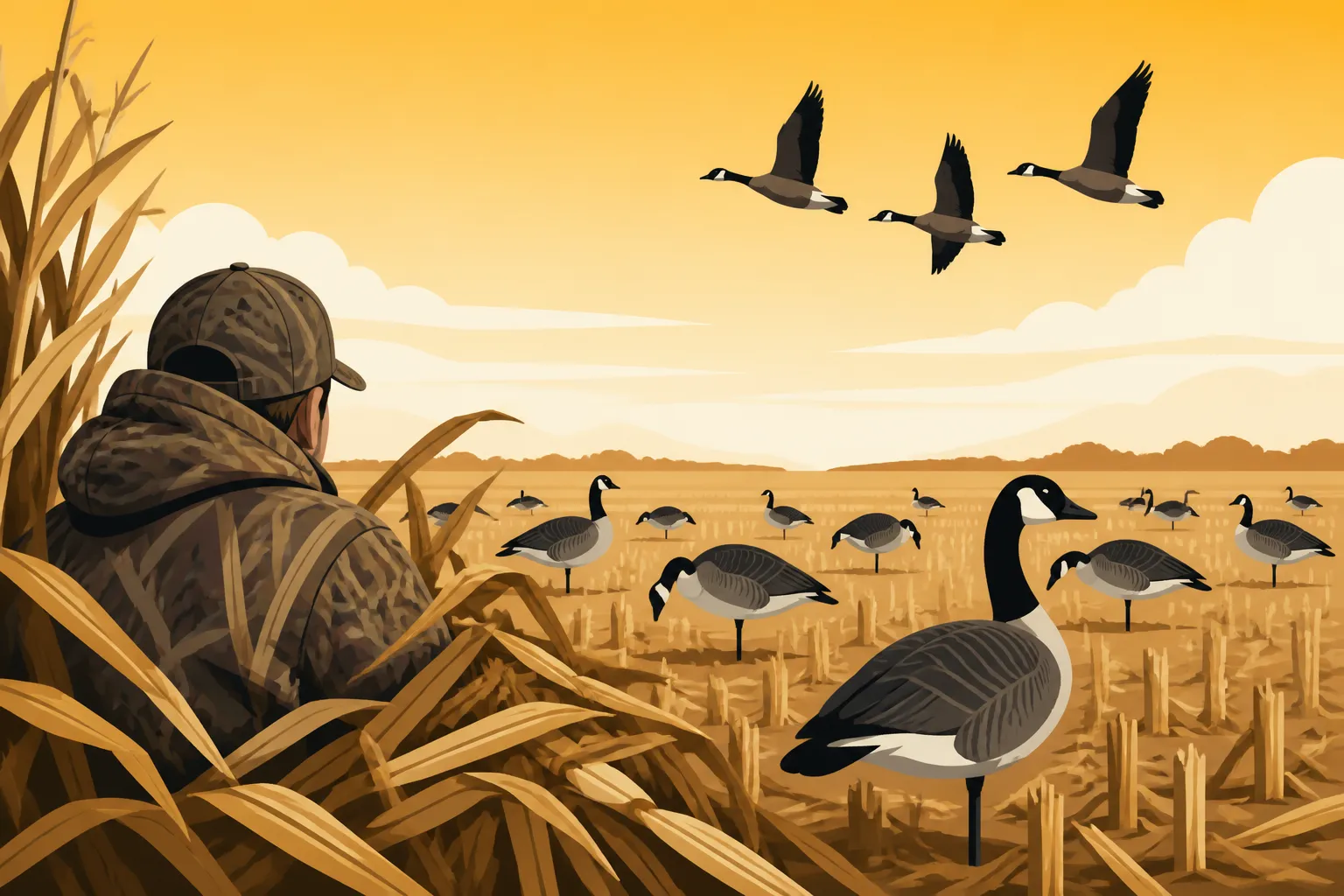
Imagine a goose flying high, scanning the immense, flat expanse of a harvested cornfield in Nebraska. What stands out? A small cluster of a dozen decoys might look like a few stragglers, easily dismissed or overlooked, especially on a windy day when they might blend into the stubble and shadows. But a larger spread, spread out to mimic a natural feeding pattern, creates a much more significant visual footprint. It broadcasts a clear message: "Food here! Safety here!" This is especially crucial when you're targeting geese that have been educated by previous hunts. They've seen it all, and they're looking for any reason to flare. Your spread needs to communicate confidence and security.
Mimicking a "Safe" Feeding Flock
Geese are social creatures, and there's safety in numbers. A large, actively feeding flock suggests a successful foraging spot, free from predators and human disturbance. When you deploy a generous number of decoys, you're not just putting out plastic; you're creating the illusion of a thriving, unbothered community. A handful of decoys, conversely, might suggest a nervous, smaller group that could be on edge or a prime target for predators. This subtle psychological cue can be the difference between birds cupping their wings for a landing and banking away at the last moment. Whether it's Canada geese or the vast migrations of snow geese, understanding this innate social behavior is paramount to success.
Key Factors Influencing Your Decoy Spread Size
There’s no magic number that guarantees success every time. The optimal decoy count is a dynamic target, shifting based on several critical factors you need to assess before (and even during) your hunt. Ignoring these can lead to frustration, regardless of how many decoys you've got out there.
Hunting Pressure and Wary Birds
Nebraska sees its fair share of hunting pressure, especially on public lands or popular flyways. Early in the season, before birds have been shot at repeatedly, they might be more forgiving of a smaller spread. But as the season progresses, and particularly after the initial few weeks, geese become incredibly wary. They've learned to spot anomalies, unnatural patterns, and anything that looks too good to be true. Highly pressured birds demand a larger, more realistic spread that exudes confidence. A bigger spread, coupled with proper concealment, can help overcome their skepticism. If you're hunting in an area that gets hit hard, like parts of the Rainwater Basin Wetland Access, you'll want to lean towards more decoys to draw birds in.
Local Bird Numbers and Migration Patterns
The sheer volume of geese in your hunting area is a huge factor. If you're fortunate enough to be hunting during a peak migration, with thousands of birds in the air, you might need a substantial spread to stand out from the real flocks. Conversely, if local goose numbers are sparse, or you're targeting resident birds in smaller groups, an overwhelming spread might look out of place and even scare them off. Pay attention to the size of the feeding flocks you're seeing while scouting. Are they huge groups, or smaller family units? Tailor your spread to match the prevailing behavior. For example, if you're witnessing the incredible numbers during the Hunting the Light Goose Conservation Order, you might need hundreds, if not thousands, of decoys to make an impression.
Weather Conditions and Visibility
Weather plays a huge role in how effective your decoys appear. On bright, calm days, geese have excellent visibility and can scrutinize your spread from a long distance. In such conditions, a larger, well-spaced spread is often more effective, as it provides a broader target and a more convincing visual. However, on foggy, overcast, or windy days, visibility is reduced. In these scenarios, while a good number of decoys is still important for initial attraction, it might not need to be as colossal, as the birds simply can't see as far or as clearly. Wind, in particular, can be your friend or foe; it adds natural movement to your decoys, making a modest spread look more alive, but it can also make it harder for birds to commit.
Scouting is King: Understanding Real Bird Behavior
You can have a thousand decoys, but if you're not putting them where the birds want to be, you're just decorating a field. Scouting is, without a doubt, the most critical element. Before you even think about decoy numbers, spend time observing real geese. Where are they landing? How many are in their feeding groups? What are their flight paths? Are they feeding tightly packed or widely spread? Tools like those offered by GoHunt, with their detailed mapping and land ownership overlays, can be invaluable for pinpointing active feeding grounds and understanding access. By observing the real thing, you get crucial clues for building an authentic spread. This involves not just finding a field, but truly understanding the specific patterns and numbers of birds using it, whether you're trying Reading Roost-to-Field Flight Lines or watching them leave a local roost.
Practical Decoy Count Guidelines for Nebraska Geese
Let's get down to some practical numbers. While flexibility is key, these guidelines can help you decide how many decoys to pull from the trailer for your next hunt in a Nebraska cut corn field.
Small Spreads: 1-3 Dozen (12-36 Decoys)
A smaller spread is often ideal for early-season hunts, targeting less pressured, local Canada geese, or when hunting smaller fields where a massive spread might look unnatural. This is also a good starting point if you're new to goose hunting or have limited gear.
- When to use: Early season, resident Canada geese, light hunting pressure, smaller groups of birds, compact fields.
- What it conveys: A small, contented feeding group.
- Tactics: Focus on realism and movement. Use a few full-body decoys mixed with shells or silhouettes. Pay extra attention to your hide. You'll need good calling to compensate for the smaller visual impact.
- Considerations: Birds will scrutinize this spread more closely. Ensure your decoys are clean, well-maintained, and set up to look like they're actively feeding.
Medium Spreads: 4-8 Dozen (48-96 Decoys)
This is often considered the workhorse spread for most Canada goose hunting scenarios in Nebraska. It provides a significant visual presence without being overly cumbersome to set up and take down. A medium spread can represent a healthy, established flock, giving wary birds the confidence to commit. This is often the sweet spot when you're truly Setting a Goose Spread in Harvested Corn for success.
- When to use: Mid-season, moderate hunting pressure, general Canada goose hunting, average-sized fields.
- What it conveys: A substantial, safe feeding flock.
- Tactics: Mix your full-bodies with more shells and silhouettes to boost numbers. Create distinct "family" groups and open landing zones. Incorporate a few motion decoys or flags for added realism.
- Considerations: This spread requires more effort, but the increased visual appeal often pays off. Distribute your decoys realistically, considering how real geese would spread out while feeding.
Large Spreads: 9+ Dozen (108+ Decoys)
Now we're talking serious commitment! Large spreads are often employed for late-season, highly pressured Canada geese, or when targeting vast flocks of snow geese during the Conservation Order. For snow geese, especially, you might need hundreds, even thousands, to truly mimic their immense feeding congregations. This is where Full-Body Decoy Spreads for Geese mixed with enormous numbers of cheaper decoys truly shines.
- When to use: Late season, high hunting pressure, large migratory flocks, snow geese, huge cut corn fields.
- What it conveys: An irresistible, massive feeding frenzy.
- Tactics: Utilize a combination of full-bodies, shells, silhouettes, and even wind socks or rags for volume. Create a "kill hole" or landing zone within the spread. Focus on making the spread look dynamic and active.
- Considerations: This requires significant time, effort, and equipment. You'll likely need multiple hunters to help set up and retrieve. Scouting with tools like GoHunt can help identify vast feeding areas where such an effort is justified.
Here’s a quick overview to help you visualize the general guidelines:
| Goose Species/Scenario | Decoy Number Range | Key Considerations |
|---|---|---|
| Early Season Canada Geese | 12-36 (1-3 dozen) | Less pressure, focus on realism, good calling crucial |
| Mid-Season Canada Geese | 48-96 (4-8 dozen) | Standard effective spread, good balance of effort/impact |
| Late Season/Pressured Canadas | 100-200+ | Wary birds, needs strong visual, movement helps |
| Snow Geese (Conservation Order) | 500-1000+ | Mimic massive flocks, volume is key, often wind socks |
| Mixed Bag (Canadas & Specs) | 75-150 | Create distinct zones, adjust based on species present |
Beyond the Numbers: Making Your Decoys Count
While the sheer number of decoys is important, it's far from the only factor. How you deploy and manage your spread can be just as, if not more, critical than the exact count. Think about the overall presentation.
Placement and Realism
It’s not enough to just scatter decoys haphazardly. Observe how real geese feed. They don't typically form perfect lines or circles. They cluster in family groups, spread out to forage, and leave open pockets for new arrivals. Create these natural-looking feeding pockets and clearly defined landing zones. Use a mix of feeder, sentry, and resting decoys to add authenticity. Vary the direction they face; not every goose has its head down, and some are always looking around for danger. This nuanced placement makes a world of difference.
Adding Movement
Still decoys are good, but moving decoys are better. Geese are constantly shifting, flapping, and stretching. Adding motion to your spread can be a game-changer, especially on calm days. Wind socks, flags, and even battery-operated flappers create that crucial illusion of life. A single flag, used effectively to mimic a landing bird, can draw the eyes of an entire flock and give them the confidence to come closer.
Blinds and Concealment
All the decoys in the world won't matter if the geese spot you. Superior concealment is non-negotiable, especially in open cut corn fields. Layout blinds are your best friend here. Brush them in meticulously with surrounding stubble, corn stalks, and any available cover. The goal is to disappear completely into the field, becoming just another lump in the landscape. A poorly hidden hunter will flare birds every time, no matter how perfect the spread. Remember, those eyes in the sky are incredibly sharp. Layout Blinds for Nebraska Cut Corn are essential gear for this very reason.
Calling Integration
Your goose calls are the auditory complement to your visual spread. They work hand-in-hand. Use calls to grab attention, offer reassurance, and guide birds into your landing zone. A compelling hail call can draw distant birds, while softer clucks and murmurs communicate contentment to those circling overhead. Don’t overcall, though; let the birds dictate the cadence. Combine your calling with the visual cues of your spread to create an irresistible invitation. Practicing your goose calling in Nebraska winter or during other seasons will make a big difference.
Continuous Scouting and Adjustment
Even after you've set your spread, the work isn't over. Keep observing. Are birds working the edges but not committing? Are they flaring at a particular spot? Be ready to make adjustments. Move decoys, tweak your landing zone, or change your calling rhythm. Every hunt is a learning experience. Use powerful hunting apps like GoHunt to mark successful spots, track movements, and plan future hunts. They often provide valuable insights into land features that influence how birds approach your spread. Once those birds commit, make sure you're ready with the right Waterfowl Loads for Nebraska Geese to finish the job ethically.
Ultimately, the "right" number of decoys for a cut corn field in Nebraska is a blend of scientific observation and artistic presentation. Start with these guidelines, but always be willing to adapt and learn from the birds themselves.
Disclaimer
This article is for general informational purposes only and does not constitute professional advice. Laws, prices and regulations vary by location and change over time. Consult a qualified professional for guidance on your specific situation.