Rifle Barrel Length for Prairie Wind
When you're out on the wide-open Nebraska prairie, chasing mule deer or antelope, or even just tucked into a sparse cedar draw looking for a whitetail, one thing is almost guaranteed: wind. That relentless, swirling, gusting wind can turn a seemingly straightforward shot into a gut-wrenching guessing game. It's a common frustration for hunters trying to thread a bullet through the invisible currents, and many wonder if their rifle's barrel length is helping or hindering them. This guide aims to clear up some of the confusion surrounding rifle barrel length and its impact when battling that notorious Nebraska breeze.
The Real Challenge of Prairie Wind: What Barrel Length Does (and Doesn't) Do
Let's be honest, the wind is probably the most frustrating variable a hunter faces in Nebraska. You practice at the range, your rifle is dialed, your scope is perfect, and then you get out into the field, and suddenly your perfectly placed shot is pushed a foot off target by an unseen gust. It’s enough to make you pull your hair out! Many hunters immediately jump to assumptions about their gear, and rifle barrel length often comes into question. Does a longer barrel "cut" the wind better? Does a shorter barrel get pushed around more? The reality is a bit more nuanced than that.
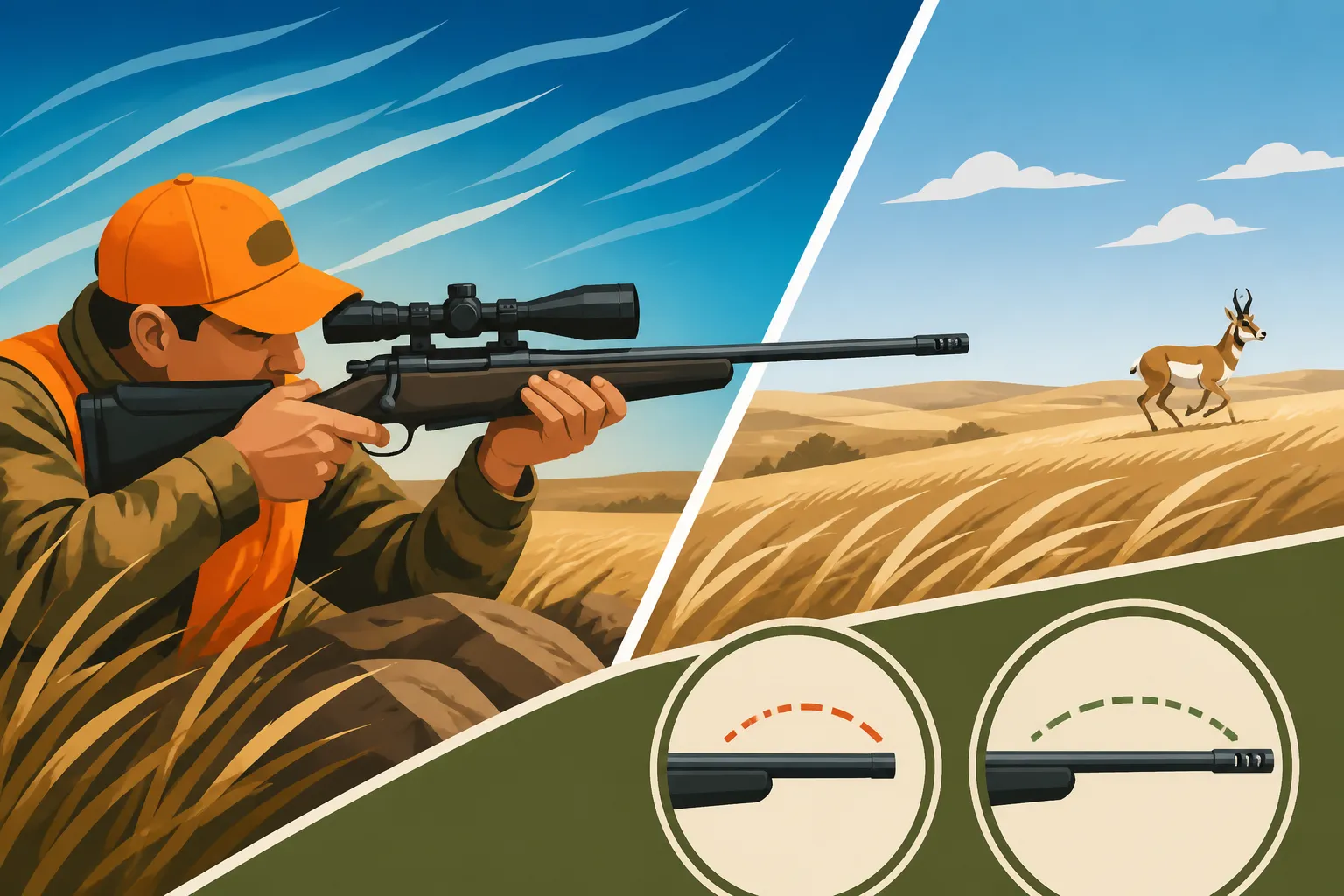
First, let's talk about what barrel length doesn't directly do regarding wind drift. The length of your barrel doesn't, in itself, make your bullet more or less susceptible to being pushed by the wind. Wind drift is primarily a function of how long the bullet is exposed to the wind (time of flight) and its ballistic coefficient (how aerodynamically efficient it is). A heavier, more streamlined bullet will resist wind better than a lighter, less efficient one, regardless of the barrel it came out of.
However, barrel length indirectly plays a role by influencing bullet velocity. And velocity does impact time of flight. A bullet that reaches the target faster spends less time in the air, giving the wind less opportunity to push it off course. So, while a longer barrel doesn't magically "cut" the wind, it can contribute to higher muzzle velocity, which can then reduce overall wind drift. It's a subtle but important distinction. The core challenge for hunters remains reading the wind correctly, understanding how it interacts with the terrain, and making accurate hold-off adjustments. This is where experience on the ground, coupled with smart gear choices, truly pays off. For those unfamiliar with the terrain, using resources like the Nebraska Public Access Atlas Mobile App can help you visualize open areas where wind will be a constant factor.
Barrel Length and Ballistics: Understanding Velocity and Trajectory
When we talk about rifle ballistics, especially for those longer shots often found in the Nebraska Sandhills or out chasing antelope, velocity is king. It's the speed at which your bullet leaves the muzzle, and it dictates a lot about how that bullet will perform downrange. Generally speaking, a longer barrel allows more time for the burning gunpowder gases to act on the bullet, accelerating it to a higher velocity. Think of it like a slingshot: the longer the elastic is stretched and allowed to accelerate the projectile, the faster it will fly.
For many common hunting cartridges, adding an inch or two of barrel length can translate to an additional 20-30 feet per second (fps) in muzzle velocity. While this might not sound like much, over several hundred yards, those extra feet per second can add up to a flatter trajectory and, crucially, less time for the wind to exert its force. A bullet that travels faster reaches the target sooner, reducing the "exposure time" to crosswinds. This is particularly relevant when you're glassing for a big mule deer buck in a blowout and then need to make a shot across a valley. A flatter-shooting rifle means less guesswork for elevation, and faster bullet speed means less wind deflection.
However, there's a point of diminishing returns. You can't just keep adding barrel length indefinitely and expect huge velocity gains. Each cartridge has an optimal barrel length where most of the powder is consumed and maximum efficiency is achieved. Beyond that, the gains become minimal, and sometimes even negligible, while the practical drawbacks increase. For example, a .30-06 might gain considerably from 22 to 24 inches, but very little from 24 to 26 inches. Similarly, many of the newer, more efficient magnum cartridges are designed to perform well in barrels typically ranging from 24 to 26 inches. Knowing the characteristics of your chosen caliber, perhaps by researching ballistics data or using tools often found on sites like GoHunt, is key to making an informed decision about barrel length. This data can help you visualize how different barrel lengths might affect your Rifle Ranges Realistic on the Nebraska Prairie.
| Barrel Length (Typical) | General Pros | General Cons | Common Use Cases |
|---|---|---|---|
| 16-20 inches | Very maneuverable, lighter, easier to store | Lower velocity, more muzzle blast/flash | Thick timber, brush, ground blinds, compact setups for treestands. |
| 20-22 inches | Good balance of velocity and handling | Moderate muzzle blast | All-around hunting rifle, effective in varied terrain, good compromise for whitetails in river bottoms or open country. |
| 24-26 inches | Higher velocity, flatter trajectory, less wind drift | Less maneuverable, heavier, noticeable length | Open prairie hunting, long-range shooting, magnum calibers, varmint hunting. Ideal for Spot-and-Stalk Mule Deer in the Nebraska Sandhills. |
| 26+ inches | Max velocity, minimal wind drift, often for specific long-range cartridges | Cumbersome, heaviest, difficult in tight spaces | Dedicated long-range precision rifles, extreme distance hunting, benchrest shooting. |
Handling and Maneuverability: The Practical Side of Barrel Length in the Field
While ballistics are crucial, they aren't the only factor. Out in the real world of Nebraska hunting, practicality and handling often dictate what feels "right." That sleek, long-barreled rifle might look great on the bench, but try swinging it around in a cramped pickup cab, negotiating dense river-bottom brush, or making a quick adjustment in a ground blind when a deer suddenly appears. The frustrations of a long, unwieldy rifle can quickly outweigh its ballistic advantages.
Consider the typical Nebraska hunting scenarios:
- Driving Two-Tracks and Field Roads: Many of us hunt from our vehicles, driving slowly along two-tracks, glassing, and then quickly deploying the rifle when game is spotted. A shorter barrel is simply easier to get in and out of a truck or ATV without banging it on the doorframe or roof. Every hunter has experienced the agony of a cold rifle barrel hitting metal.
- Timber and Brush Hunting: If you're hunting whitetails in the tangled cottonwood bottoms along the Platte River, or trying to still-hunt through a Nebraska Cedar Draw, a longer barrel can snag on every branch. This not only makes noise but can also throw off your balance and affect your stealth. A compact rifle is far easier to navigate through dense cover, allowing for quicker, quieter movements.
- Ground Blinds and Treestands: In a pop-up ground blind, every inch of barrel length can feel like a mile. A shorter barrel allows for easier manipulation within the confined space, helping you get that shot out the window without a big, noisy swing. Similarly, in a treestand, while not as restrictive, a shorter rifle is less prone to catching on branches when you're getting into position or trying to orient yourself for a shot. For example, when you're considering Choosing a Treestand Site on Nebraska Farmland, you'll often be dealing with some kind of cover, and a more compact rifle can be a real asset.
On the other hand, a longer barrel can provide a more stable swing, especially for follow-up shots on running game or when trying to hold steady on a distant target without a rest. The increased weight out front can help dampen some of the natural wobble. This is a trade-off that each hunter needs to consider based on their specific hunting style and the terrain they typically cover. For a walk-and-stalk hunter on wide-open ground, the slightly extra length might be less of a burden than for someone Still-Hunting Nebraska Cedar Draws.
Finding Your Sweet Spot: Balancing Performance and Practicality
So, how do you find the right barrel length for your Nebraska hunting adventures? It really comes down to balancing ballistic performance with practical handling. There's no one-size-fits-all answer, but there are some considerations that can guide you.
Consider Your Primary Hunting Style and Terrain
Are you primarily a long-range prairie hunter, spending hours glassing and making careful, rested shots on antelope or mule deer across vast expanses? Then a 24-inch or even 26-inch barrel might be your preferred choice to maximize velocity and minimize wind drift. For this kind of hunting, a ballistic calculator or mapping app from a provider like GoHunt can be invaluable for understanding range and environmental factors.
Or are you mostly chasing whitetails in thick river timber, often still-hunting or using ground blinds, where shots are typically shorter and quicker? In that case, a 20-inch or 22-inch barrel will offer superior maneuverability and be much less frustrating to carry and deploy. Even for Bowhunting Nebraska's Four-Month Archery Season where you use a different weapon, the principles of navigating thick cover remain.
Caliber and Cartridge Type
Some cartridges are simply designed for longer barrels to achieve their full potential. Magnum cartridges, like the 7mm Rem Mag or .300 Win Mag, often benefit from 24-inch or 26-inch barrels to burn their larger powder charges efficiently and achieve the high velocities they are known for. Standard cartridges, such as a .308 Winchester or .270 Winchester, can perform exceptionally well in 20- to 22-inch barrels with only minor velocity losses that are often negligible in real-world hunting scenarios under 300 yards. When comparing options, check out resources like Best Rifle Caliber for Nebraska Mule Deer to see common barrel lengths paired with popular calibers.
Suppressors and Muzzle Devices
If you're considering adding a suppressor (and many hunters are for hearing protection and recoil reduction), remember that it effectively adds length to your barrel. A 20-inch barrel with a 7-inch suppressor now handles like a 27-inch barrel. This can push an already long rifle into the "cumbersome" category for certain hunting situations. Conversely, a shorter barrel becomes much more manageable when suppressed.
Personal Preference and Fit
Ultimately, the "best" barrel length is often the one you shoot most accurately and feel most comfortable handling. If you're constantly fighting your rifle's length, you're less likely to make a clean shot. Go to the gun store, shoulder different barrel lengths, and see how they feel. Spend time at the range, practicing from various positions you might encounter in the field – off-hand, kneeling, from a rest, even from inside a simulated blind. Practice with your chosen setup and learn its quirks. Tools available on platforms like GoHunt can also help you track your shooting data, including performance in windy conditions, to truly understand your rifle's capabilities.
The Nebraska wind will always be a factor, but by understanding the relationship between barrel length, velocity, and practicality, you can choose a rifle that gives you the best chance of success, whether you're taking a long shot across a windswept prairie or navigating dense cover in pursuit of your next trophy. The key is knowledge, practice, and choosing gear that truly suits your hunting style and the unique challenges of our great state.
Disclaimer
This article is for general informational purposes only and does not constitute professional advice. Laws, prices and regulations vary by location and change over time. Consult a qualified professional for guidance on your specific situation.