Is a .243 Enough for Nebraska Deer?
The question of whether a .243 Winchester is truly "enough" for Nebraska deer is one that echoes across many hunting camps, often sparking lively debates among seasoned hunters and creating real anxiety for those just starting out or considering a new rifle. You’re not alone if you've pondered this, especially when envisioning those vast Sandhills landscapes or the thick river bottoms where a big whitetail buck might be lurking. This guide aims to cut through the noise, providing a realistic look at the .243's capabilities and how to use it effectively and ethically when pursuing deer across the diverse terrain of Nebraska.
Understanding the .243's Capabilities and Limitations for Deer
The .243 Winchester has earned a reputation as a fantastic deer cartridge over the decades, beloved by many for its mild recoil and flat trajectory. But like any tool, it has its sweet spots and its limits, and understanding these is key to ethical hunting.
Ballistics and Bullet Construction for Deer
At its core, the .243 is a necked-down .308 Winchester cartridge, firing a relatively light, small-diameter bullet at high velocity. This combination gives it a very flat trajectory, which is incredibly helpful for maintaining accuracy over the longer distances sometimes encountered in Nebraska's more open areas. The typical bullet weights for deer in a .243 range from about 80 to 100 grains. Lighter bullets, often used for varmints, are generally not recommended for deer. For deer, you want to be on the heavier end of that spectrum, opting for 90 to 100-grain bullets.
However, sheer velocity isn't the only factor. Bullet construction plays a monumental role in how a .243 performs on deer. A standard cup-and-core bullet might expand rapidly upon impact, delivering a lot of energy but potentially lacking the deep penetration needed to reach the vitals of a larger deer, especially if it encounters bone. This is where modern bullet technology shines. Bonded bullets, which fuse the lead core to the copper jacket, or monolithic copper bullets (like Barnes TSX or Hornady GMX) are designed to hold together better, penetrate deeper, and retain more weight, creating a more consistent wound channel. These advanced bullets can truly transform the .243 from a "maybe" to a "yes" for deer, assuming proper shot placement.
Ethical Considerations and Shot Placement
Let's be blunt: no caliber, no matter how powerful, can compensate for poor shot placement. The most important factor in a clean, ethical kill is putting that bullet exactly where it needs to go: into the heart and lung vitals. The .243, with its lighter bullet, demands this precision even more acutely than some larger calibers. A well-placed shot from a .243 on a broadside deer will absolutely put it down quickly.
The challenge comes when shots are less than ideal. A strong shoulder bone, a steeply angled shot, or a deer that's slightly quartering away can all present difficulties for a .243 if you're not using the right bullet or if the shot placement is off. Many hunters using a .243 for deer consciously avoid attempting extreme quartering shots or aiming directly through the shoulder on larger animals, instead waiting for a high-percentage broadside shot that offers a clear path to the heart and lungs. This isn't a limitation of the caliber itself, but rather a responsible hunter understanding the tool they are using and its capabilities. It's about patience and discipline, ensuring the highest likelihood of a swift and humane harvest.
Nebraska Deer Species and Hunting Scenarios
Nebraska offers a diverse array of hunting opportunities, and the type of deer you're pursuing, along with the specific terrain, can certainly influence your gear choices, including your rifle caliber.
Whitetails vs. Mule Deer in Nebraska
Nebraska is home to two primary deer species: white-tailed deer and mule deer. While both are deer, their typical size, habitat preferences, and behavior can differ significantly, which in turn can influence your shot opportunities and requirements.
White-Tailed Deer Across Nebraska are generally smaller in body size than mule deer, though a mature Nebraska whitetail buck can still be a substantial animal, especially in the fertile river bottoms and agricultural areas of the eastern part of the state. These whitetails often inhabit thicker cover, like dense timber, creek beds, and cedar draws, which means shot distances are frequently shorter, perhaps 50-150 yards. In these environments, the .243 is generally considered more than adequate, particularly with a well-constructed bullet. The challenge in these areas is often getting a clear shot through brush, not necessarily reaching out to extreme distances.
Mule Deer in the Nebraska Sandhills and Panhandle, on the other hand, are typically larger-bodied, with some mature bucks weighing considerably more than their whitetail cousins. They also inhabit much more open terrain—the rolling grasslands of the Sandhills or the rugged canyons and rimrock of the Pine Ridge. Here, shot distances can stretch considerably, often to 200, 250, or even 300 yards or more. This is where the debate around the .243 for deer really heats up. While a .243 can certainly make these shots with the right shooter and ammunition, the combination of potential longer distances and larger-bodied animals means there's less margin for error compared to hunting whitetails in dense cover.
Common Hunting Environments and Shot Distances
The varied landscapes of Nebraska dictate a wide range of hunting scenarios and thus, potential shot distances. Imagine hunting the Platte River bottoms, where thick stands of cottonwoods and cedars might limit your visibility to 75 yards, or tracking deer through standing corn, where shots are often up close and personal. In these situations, the .243 is truly in its element.
Now, shift your mental image to glassing a wide-open Sandhills basin. You might spot a trophy mule deer buck bedded 400 yards away. While you'd likely try to close the distance, a 250-yard shot might be the best you can get. Rifle Ranges Realistic on the Nebraska Prairie can be quite substantial. The flat trajectory of the .243 is a definite advantage here, as it minimizes bullet drop over these distances compared to a slower, heavier bullet. However, wind drift also becomes a significant factor on the open prairie, and lighter .243 bullets can be pushed around more than heavier, larger-diameter projectiles. This highlights the need for precise rangefinding, understanding windage, and knowing your rifle's ballistic performance inside and out. It's not just about hitting the target; it's about delivering enough energy to ensure a clean kill at that distance.
Maximizing the .243's Effectiveness in Nebraska
If you’ve decided the .243 is the right tool for your Nebraska deer hunt, you’re in good company. Many successful hunters rely on this caliber year after year. The key is to maximize its effectiveness through smart choices in ammunition, diligent practice, and solid hunting tactics.
Ammunition Selection for Deer
This is arguably the most critical factor when using a .243 for deer. Forget the cheap varmint loads. For deer, you need premium hunting ammunition designed for controlled expansion and deep penetration. As mentioned before, look for bullets in the 90-100 grain range.
Modern advancements in bullet technology mean there are excellent choices out there. Bonded core bullets, like Federal Fusion or Hornady InterLock, offer excellent performance by preventing core-jacket separation, which helps retain bullet weight and drive it deeper. Monolithic copper bullets, such as Barnes TSX, Hornady GMX, or Nosler E-Tip, are another fantastic option. These bullets typically retain nearly 100% of their weight, create a sharp cutting action, and penetrate exceptionally well, even through bone, making them ideal for the .243 on deer. They expand reliably and consistently. Don't skimp on ammunition; investing in a quality deer hunting round will pay dividends in performance and confidence. Pay attention to how different Bullet Weight for Windy Conditions might perform on the open prairie.
Practice, Precision, and Confidence
The most powerful rifle in the world is useless if you can't hit what you're aiming at. This is where practice comes in. Regular trips to the shooting range are essential, not just for sighting in, but for becoming intimately familiar with your rifle's feel and performance at various distances and from different shooting positions. Practice shooting from a prone position, kneeling, and using shooting sticks or a bipod, as these are common field positions you'll encounter in Nebraska.
Don't just shoot at 100 yards; push your comfort zone. Practice at 200, 250, and even 300 yards. Learn your bullet's drop and drift. Many hunters use ballistic apps (often found on platforms like GoHunt) to help understand their specific ammunition's trajectory. Knowing exactly where your bullet will impact at 200 yards versus 250 yards will build immense confidence. Zeroing at 200 Yards is a common strategy for prairie hunting, giving you a relatively flat trajectory out to considerable distances with minimal holdover. Your confidence in your rifle and your ability to place that shot precisely is more important than any numerical ballistic advantage.
Gear and Tactics to Complement the .243
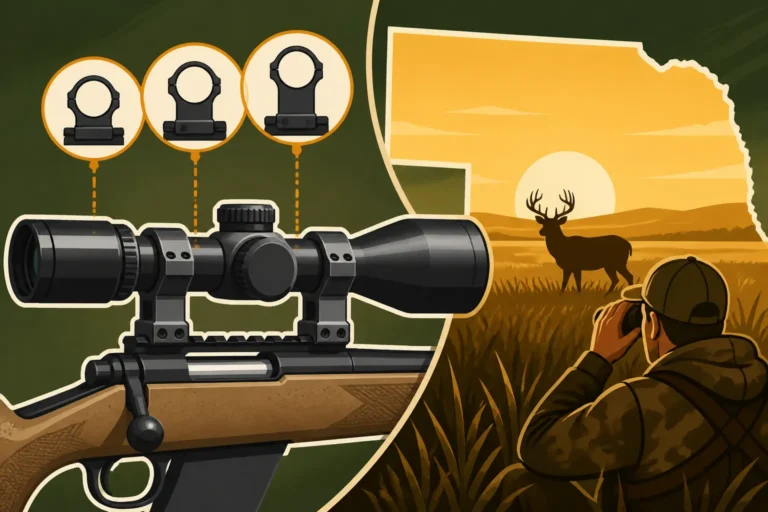
To truly excel with a .243 in Nebraska, it’s not just about the rifle and bullet; it’s about the supporting cast of gear and smart hunting tactics. Good optics are non-negotiable. Invest in a quality rifle scope that offers clarity and reliability. Many hunters prefer a scope with a versatile magnification range (e.g., 3-9x or 4-12x) for both close timber shots and longer prairie distances. Rifle Scopes for Long Nebraska Shots should be clear and hold zero reliably.
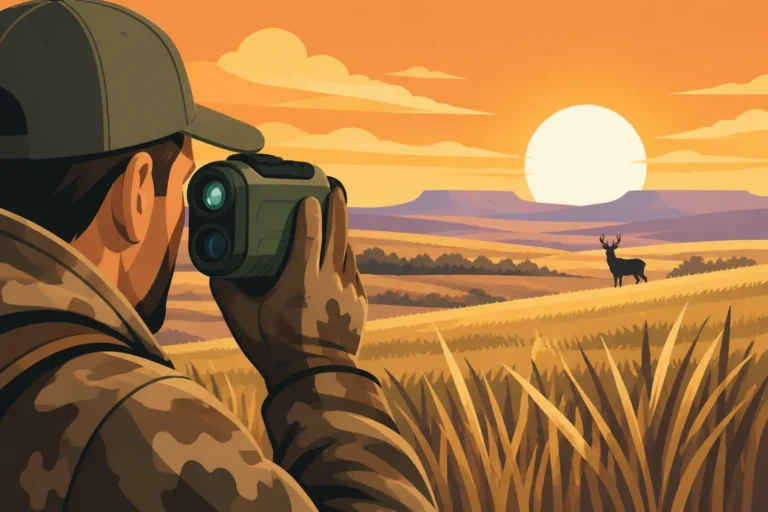
A rangefinder is an absolute must, especially in open country. Accurately knowing the distance to your target eliminates much of the guesswork regarding bullet drop. You don't want to be guessing if that mule deer is 200 or 250 yards away when a few inches of drop could mean the difference between a hit and a miss, or worse, a wounded animal. Rangefinders in Open Nebraska Country are essential tools.
Finally, consider a stable shooting platform. For open-country hunting, a bipod attached to your rifle or a sturdy set of shooting sticks will provide a much more stable platform than trying to freehand a shot. This stability helps you make that precise shot that the .243 demands. Patience is also a tactic: wait for the best possible shot opportunity, especially when hunting larger deer or in windy conditions. You can also leverage resources like GoHunt to research optimal setups and tactics for your specific hunt unit.
When to Consider a Different Caliber (or Tactics)
While the .243 Winchester is undeniably effective for deer, there are scenarios where either a different caliber might be a more forgiving choice, or your tactics need to adapt significantly. It’s about being honest with yourself and the conditions.
Scenarios Where the .243 Might Be Less Ideal
The .243 can certainly handle shots out to 300 yards, sometimes even a bit further, especially with modern premium ammunition and in the hands of a skilled marksman. However, when you start pushing beyond that 250-300 yard mark, particularly on larger mule deer, its limitations become more pronounced. At extreme distances, the lighter .243 bullet sheds kinetic energy more rapidly than heavier bullets. While it might still have enough energy to be lethal, the margin for error shrinks considerably, and penetration can become less reliable. Strong crosswinds, common on the Nebraska plains, can also drift lighter .243 bullets more dramatically, further complicating long shots.
Another consideration, although less about the caliber itself and more about hunting style, is extremely thick cover. If you anticipate very close-range, fast-action shots where a quick, devastating impact is paramount, some hunters prefer a heavier, larger-diameter bullet that creates a wider wound channel. However, this is largely mitigated by proper shot placement; a .243 through the vitals at 50 yards is just as effective as a .30-06. The primary concern truly lies with extending range and size of game without perfect broadside presentation.
Alternative Calibers for Nebraska Deer
If you frequently find yourself in situations where long shots on larger deer are the norm, or if you simply prefer a bit more "insurance" in terms of kinetic energy and bullet weight, there are many excellent alternatives that shine in Nebraska.
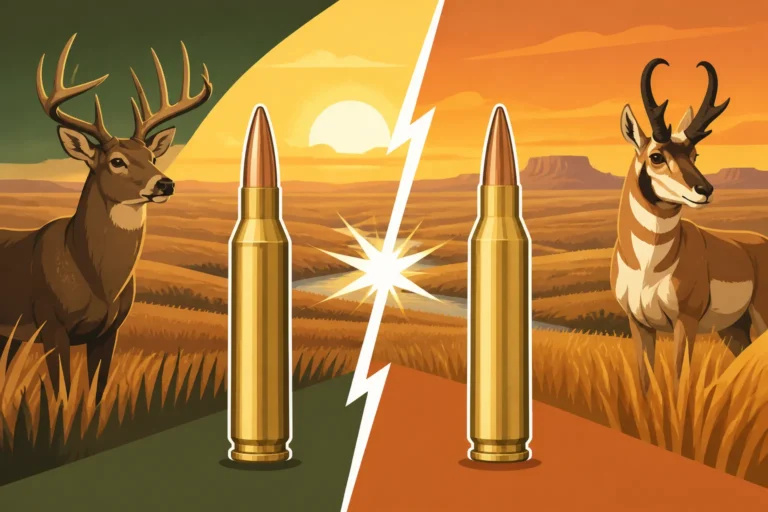
Calibers like the 6.5 Creedmoor for Prairie Deer have gained immense popularity for their flat trajectory, moderate recoil, and excellent performance at longer ranges with heavier, high-ballistic-coefficient bullets. The .270 Winchester is a classic choice, offering a great balance of speed and power, while the .308 Winchester is known for its versatility and effectiveness on deer-sized game and beyond. For those who want more punch, the .30-06 Springfield is a perennial favorite, and for truly long-range work or larger mule deer, cartridges like the 7mm Rem Mag or .300 Win Mag are powerful options. You can compare various options, like the .308 Versus .270 in Open Country, to see how they stack up.
The table below offers a quick comparison of the .243 with some popular alternatives for Nebraska deer hunting. Ultimately, the best caliber is the one you shoot most accurately and confidently.
| Caliber | Typical Bullet Weight (gr) | Recoil Level | Trajectory (relative) | Primary Advantage | Potential Disadvantage | Ideal Nebraska Scenarios |
|---|---|---|---|---|---|---|
| .243 Winchester | 80-100 | Low | Very Flat | Low recoil, flat shooting, accurate | Less energy/penetration at extreme range | Whitetails in timber, shorter-range mule deer in open |
| 6.5 Creedmoor | 120-140 | Moderate | Very Flat | Excellent long-range ballistics, moderate recoil | Less common than older calibers | Long-range mule deer, all whitetail scenarios |
| .270 Winchester | 130-150 | Moderate | Flat | Excellent all-around deer cartridge | Can be slightly more recoil than .243/6.5 | All Nebraska deer, versatile for varying terrain |
| .308 Winchester | 150-180 | Moderate | Good | Versatile, good energy, widely available | Slightly more arc than .243/6.5/.270 | All Nebraska deer, good for heavier cover or larger animals |
In conclusion, the .243 Winchester is absolutely "enough" for Nebraska deer, provided you select the right ammunition, dedicate yourself to precision shooting, and understand the limitations of the cartridge in specific hunting scenarios. For many, its light recoil and accuracy make it a joy to shoot and an ethical choice for deer across the state.
Disclaimer
This article is for general informational purposes only and does not constitute professional advice. Laws, prices and regulations vary by location and change over time. Consult a qualified professional for guidance on your specific situation.