Layout Blinds for Nebraska Cut Corn
Hunting Nebraska's vast cut cornfields can feel like trying to hide an elephant in a bathtub. The flat, wide-open spaces, stripped bare after harvest, offer precious little natural cover, leaving you feeling exposed to the sharp eyes of wary geese and deer. This guide will walk you through everything you need to know about mastering the art of concealment with layout blinds, ensuring you blend seamlessly into the stubble and significantly increase your chances of success.
Why Layout Blinds Are Essential for Hunting Nebraska's Cut Corn
When the combines roll through Nebraska, they leave behind an endless tableau of stubble, a landscape that, while holding incredible numbers of migrating waterfowl and resident deer, offers absolutely nowhere to hide. This is where the humble layout blind transforms from a piece of gear into an indispensable ally for hunters.
The Challenge of Open Fields
Imagine trying to set up a traditional pop-up blind or even a simple camouflaged tarp in the middle of a freshly harvested cornfield. It sticks out like a sore thumb against the uniform brown and gold. Geese, with their legendary eyesight, will spot anything out of place from hundreds of yards away, flaring long before they're in range. Deer, too, are masters of detecting anomalies in their environment, especially after the security of standing crops has been removed. The frustration of carefully planning a hunt, only to have your efforts foiled by a glaring lack of cover, is a feeling most Nebraska hunters know all too well. These fields are magnets for feeding birds and deer, but accessing them effectively, especially on public or permission-based land, demands a different approach than the timbered river bottoms or rolling Sandhills.
The Advantage of Laying Low
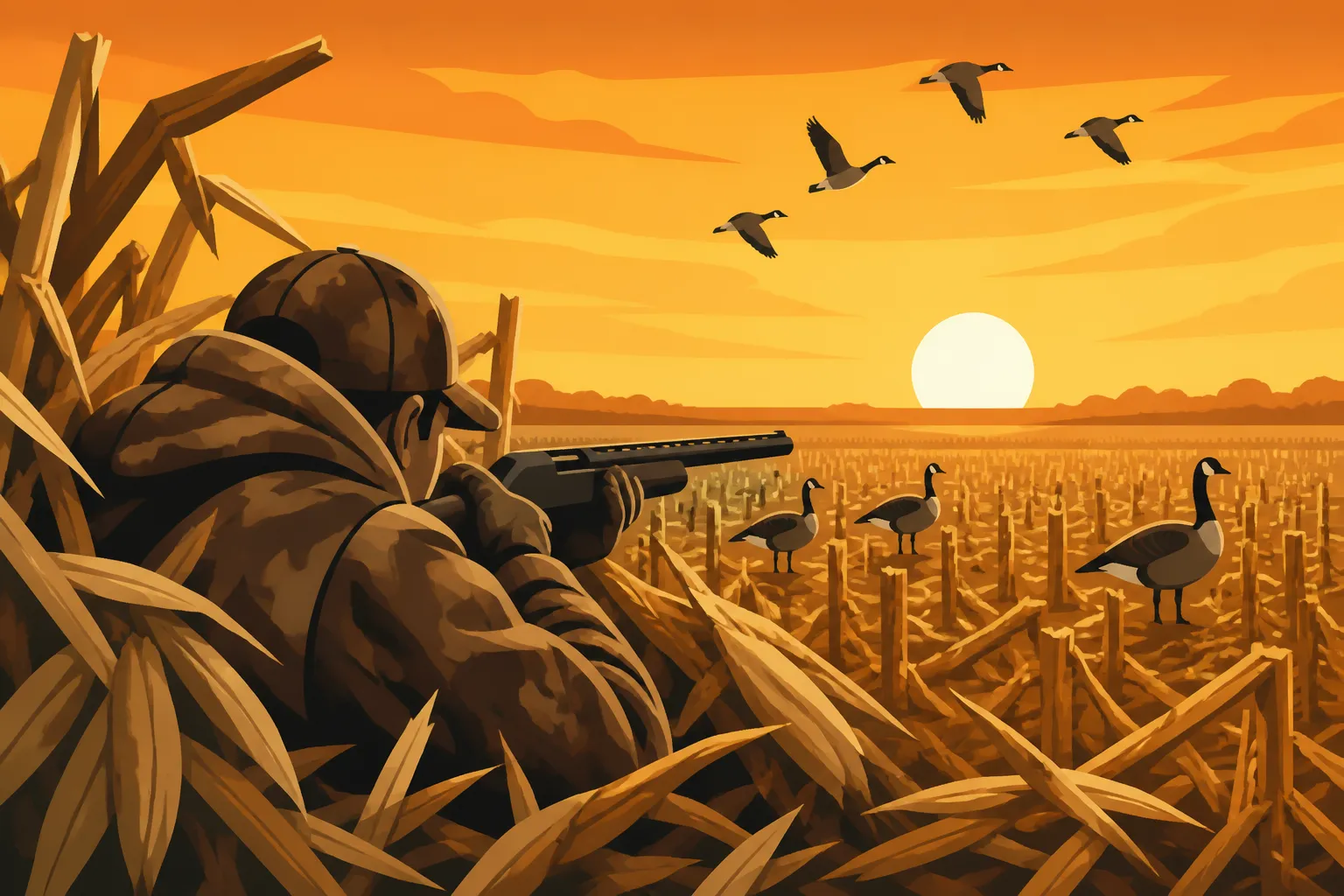
Layout blinds solve this problem by taking you out of the vertical dimension entirely. Instead of trying to hide behind something, you're hiding within the field itself. These low-profile shelters allow you to lie down, just inches above the ground, mimicking a natural rise or a pile of agricultural debris. When properly brushed in (and we'll get to that crucial step soon!), a good layout blind becomes virtually invisible to incoming birds circling overhead or deer cautiously picking their way across the field. This ground-level perspective also gives you an incredible sense of immersion, letting you truly feel like part of the landscape. It's not just about hiding; it's about becoming part of the environment, a critical element in fooling those notoriously wary Nebraska geese. For a deeper dive into setup, check out Setting a Goose Spread in Harvested Corn.
Versatility Beyond Waterfowl
While layout blinds are synonymous with goose hunting, their utility extends far beyond chasing honkers and specklebellies. In Nebraska's vast agricultural landscape, they can be surprisingly effective for other species too. Picture this: you've identified a coyote travel corridor cutting through a stubble field, or a prominent turkey roost edge where gobblers fly down into open feeding areas. A well-placed and camouflaged layout blind can give you the advantage in these scenarios. You're low to the ground, minimizing your silhouette, and able to wait out your quarry. Some adventurous deer hunters even use layout blinds in certain cut fields, particularly during late antlerless seasons, to blend into hay bales or other field structures. It's about adapting the fundamental principle of concealment to whatever species you're pursuing in these open environments.
Key Features to Look For in a Nebraska Layout Blind
Choosing the right layout blind for Nebraska's unique conditions isn't just about picking a camo pattern you like. It's about finding a blind that can stand up to the elements, provide superior concealment, and keep you comfortable through long hours in the field.
Durability and Weather Resistance
Nebraska weather doesn't mess around. You could be hunting in mild, sunny conditions one day and facing freezing rain, howling winds, or a surprise snowstorm the next. Your layout blind needs to be built tough. Look for heavy-duty, waterproof or water-resistant fabrics that can shed moisture and resist tears from sharp cornstalks or abrasive stubble. The frame is equally important; strong, lightweight aluminum or fiberglass poles are essential to withstand the relentless prairie winds without bending or breaking. Think about reinforced stitching at stress points and heavy-duty zippers that won't fail when you need to deploy quickly. A cheap blind might save you a few dollars upfront, but it'll cost you comfort and effectiveness when it fails in the middle of a hunt. Consider this an investment in many seasons of successful hunting.
Concealment and Low Profile
The whole point of a layout blind is to disappear, so superior concealment is paramount. The lowest profile possible is generally best to prevent silhouetting against the flat horizon. Pay attention to the blind's shape and how it integrates with the ground. Many quality blinds feature stubble straps or pockets stitched into the fabric, allowing you to easily weave in natural vegetation from the surrounding field – cornstalks, milo stubble, weeds, or even dirt clods. This brushing-in capability is what truly makes a blind disappear. The camo pattern itself is important, but remember, actual vegetation from the field will always outperform a printed pattern alone. Look for patterns that mimic corn stubble, dried grass, or open dirt to start, and then be prepared to enhance it. Tools like GoHunt can assist in scouting potential spots beforehand, giving you an idea of the ground cover you'll need to match.
Comfort and Portability
Hunting from a layout blind often means hours of waiting, sometimes in less-than-ideal conditions. Comfort makes a huge difference in your ability to stay focused and still. Look for blinds with well-padded headrests and backrests, and consider the internal dimensions – can you shift positions slightly without bumping the sides? Is there enough room for your essentials like calls, shells, and a drink? Entry and exit should be quick and smooth, especially when it's time to sit up and shoot.
Portability is another key factor for Nebraska hunters who often move spots or adjust their spread. A blind that folds down compactly and has comfortable shoulder straps or handles is a huge plus. You might be walking a long distance across a muddy field or through deep snow to get to your chosen spot. Ease of setup and takedown also contributes to portability; you don't want to wrestle with a complicated blind in the pre-dawn dark. A balance between robustness and a manageable packed size is ideal.
Setting Up Your Layout Blind for Maximum Effectiveness
The best layout blind in the world is useless if it's not set up correctly. This isn't just about throwing it down; it's about strategic placement and meticulous concealment, turning your blind into an extension of the field itself.
Scouting the Right Location
Before you even think about deploying a blind, you need to know where to put it. This starts with thorough scouting, often long before opening day. For waterfowl, look for active feeding fields – spots where geese or ducks are regularly flying in to eat. Pay attention to flight paths, entry points, and even specific areas within a large field where birds concentrate. For deer, identify travel corridors between bedding areas and food sources, or pinch points that funnel movement. This is where modern scouting tools really shine. Using resources like GoHunt to study satellite imagery can help you identify subtle terrain features, old farm tracks, or even changes in stubble height that might offer a slight advantage for blind placement. Always prioritize recent sign and observed activity over assumptions. Scouting Nebraska Public Ground Before Opening Day is a great resource for understanding how to pinpoint productive areas.
Brushing In for Invisible Concealment
This is arguably the most critical step in successful layout blind hunting. Your blind should not look like a blind; it should look like part of the field. After you've set up your blind and decoys, take the time—and we mean serious time—to brush it in. Gather local vegetation: corn stalks, milo stubble, dead weeds, even clumps of dirt. Weave these into the stubble straps of your blind, covering every inch of the fabric. Pay special attention to the edges, breaking up the straight lines of the blind's profile. Don't be afraid to overdo it; "too much" brushing is always better than "not enough."
- Mimic Natural Clumps: Don't just lay stalks flat. Stand some up, lay others across, create variations in height and texture.
- Cover All Sides: Remember that birds will be circling and approaching from different angles. Concealment must be 360 degrees.
- Avoid Uniformity: Nature is rarely uniform. Create a messy, natural look.
- Mud is Your Friend: If the ground is muddy, embrace it. Smearing a little mud on the fabric can help it blend in.
A well-brushed-in blind is nearly impossible to spot from above, even for the sharpest eyes. Neglect this step, and you might as well wave a flag.
Strategic Placement Within Your Spread
Where you position your layout blind within your decoy spread can make or break your hunt. For waterfowl, the general rule of thumb is to set your blinds at the "kill hole" or landing zone – the open area within your decoy spread where you want the birds to commit.
Consider these factors:
- Wind Direction: Geese and ducks almost always land into the wind. Your blind should be positioned downwind of your decoys, allowing birds to approach over the spread, offering clear shots as they cup their wings.
- Sun Position: Whenever possible, try to position your blinds so the sun is at your back, shining into the eyes of approaching birds. This makes it harder for them to spot you.
- Shooting Lanes: Think about your shooting angles. Ensure you have clear sightlines and arcs of fire for incoming birds without shooting over your decoys or hitting your partners.
- Hiding in Plain Sight: Look for slight depressions, taller stubble patches, or natural irregularities in the field that can provide a bit of extra cover, even after brushing in. Sometimes, simply putting your blind where a large clod of dirt or a few extra stalks naturally lay can make a difference. For tips on managing your decoy setup, see Decoy Spreads for Rainwater Basin Geese.
Techniques for Hunting from a Layout Blind in Cut Corn
Hunting from a layout blind demands patience, discipline, and a keen understanding of your quarry. It's a different rhythm than sitting in a treestand or still-hunting, requiring you to be incredibly still and observant.
Calling and Decoy Spreads
Your layout blind is the command center for your calling efforts. From a prone position, you can easily operate various goose or turkey calls, directing sounds effectively across the open field. When setting up a decoy spread, especially for geese, aim to create a natural-looking feeding flock. A typical spread might involve several "family groups" of decoys, with a clear landing zone upwind of your blinds. For more specific calling advice, check out Goose Calls for Open Prairie.
- Motion Decoys: Incorporate motion decoys, like spinning wing decoys for ducks or flappers for geese, to add realism and attract attention from a distance.
- Calling Sequence: Learn realistic calling sequences. For geese, a series of clucks and moans, followed by contented feeding chatter, often seals the deal. For turkeys, soft clucks, purrs, and yelps can entice a gobbler to investigate.
- Reading the Birds: Pay close attention to how incoming birds react to your calling and spread. Adjust your calls, volume, and even decoy positions if they're acting hesitant. Sometimes, going silent is the best call of all.
Patience and Situational Awareness
Lying low in a layout blind means your field of view is limited, often just to what's directly in front and above you. This makes patience and constant situational awareness absolutely crucial.
- Scan Continuously: Use your peripheral vision and subtle head movements to scan the sky and horizon. You'll often hear birds before you see them, so listen intently.
- Stay Still: Movement is the ultimate bust. Resist the urge to sit up, check your phone, or fidget. Practice making slow, deliberate movements when necessary.
- Team Communication: If hunting with partners, establish clear communication signals before the hunt. A raised fist or a specific call can indicate incoming birds, "take 'em," or "hold."
- Identify the Shot: Don't sit up until the birds are committed, cupping their wings, and within effective range. Premature movement will send them flaring every time. It's tough to stay hidden when you're popping up at the wrong moment.
Safety Considerations
Safety is paramount, especially when hunting in open fields with limited visibility from a prone position.
- Blaze Orange: If you're hunting during an overlapping firearm deer season, or simply as a general safety precaution, ensure you have appropriate blaze orange visible when not actively concealed in your blind. Many hunters will keep an orange vest on the blind's flag door, or wear a small orange hat that is only visible when they sit up to shoot. For specific regulations, be sure to review Orange Requirements for Archers in November and other relevant state guidelines.
- Shooting Lanes: Before the hunt begins, establish clear shooting lanes and zones of fire with your hunting partners. Know where everyone is and what direction they'll be shooting. Never shoot across another hunter's line of fire.
- Unload When Moving: Always unload your firearm or un-nock your arrow before moving your blind or walking through the field.
- Know Your Backstop: Even in open fields, be aware of where your shot will travel. Ensure there are no roads, farmhouses, or livestock in your line of fire.
Maintaining and Storing Your Layout Blind
A layout blind is an investment, and like any good piece of gear, it needs proper care to last. Neglecting post-hunt cleaning and storage can drastically shorten its lifespan and even lead to mold or mildew issues.
Post-Hunt Cleaning and Drying
After a day in a Nebraska cornfield, your layout blind is likely to be covered in mud, dirt, cornstalk debris, and possibly even some bird blood. Don't just toss it in the truck and forget about it.
- Remove Debris: Shake out all loose cornstalks, leaves, and dirt clods. Use a stiff brush or broom to get into corners and crevices.
- Rinse Off Mud: If it's heavily muddied, take it to a car wash or use a hose to gently spray off the mud. Avoid high-pressure washers, which can damage fabric coatings.
- Spot Clean: For bloodstains or stubborn grime, use a mild soap (like dish soap) and water with a soft brush or cloth. Avoid harsh chemicals or bleach, which can damage camouflage patterns and waterproof coatings.
- Thoroughly Dry: This is critical! Layout blinds are often made of synthetic materials that can hold moisture. Hang your blind opened up in a well-ventilated area, preferably out of direct sunlight, until it is completely, bone-dry. Even a little residual moisture can lead to mildew, which not only smells terrible but will eventually degrade the fabric. Don't rush this step – it might take a day or two depending on humidity.
Repairs and Longevity
Even with the best care, your blind will eventually show signs of wear and tear. Being proactive with small repairs can prevent minor issues from becoming major problems.
- Patching Tears: Small tears or punctures can be easily repaired with heavy-duty fabric repair tape (often found at outdoor gear stores) or a patch kit specific to your blind's material. Address these immediately before they spread.
- Frame Inspection: Regularly check the frame poles for any cracks, bends, or loose connections. Many manufacturers offer replacement parts for common components like poles or connectors.
- Zipper Care: Zippers can get gummed up with dirt and mud. Clean them regularly and apply a silicone-based lubricant to keep them running smoothly. A malfunctioning zipper can ruin a hunt.
- Proper Storage: Once clean and dry, store your blind in a cool, dry place, ideally in its carry bag. Avoid storing it in direct sunlight or in a damp basement or shed, which can accelerate deterioration. Some hunters even hang their blinds from rafters to ensure good air circulation. By investing a little time in maintenance, your layout blind will provide many seasons of reliable service in the challenging but rewarding cut cornfields of Nebraska.
| Layout Blind Style | Profile | Concealment (Brushed In) | Comfort | Portability (Packed) | Ideal for |
|---|---|---|---|---|---|
| Clamshell | Very Low | Excellent | Good | Good | Geese, ducks, quick deployment |
| Wedge | Low | Excellent | Good | Excellent | Geese, ducks, smaller spreads |
| Coffin | Medium-Low | Very Good | Excellent | Fair | Geese, ducks, longer hunts, more gear |
| Chair Style | Medium | Good (requires more brush) | Excellent | Good | Turkeys, coyotes, limited mobility |
Disclaimer
This article is for general informational purposes only and does not constitute professional advice. Laws, prices and regulations vary by location and change over time. Consult a qualified professional for guidance on your specific situation.