Nebraska Sandhills Access and Roads
The vast, seemingly endless expanse of the Nebraska Sandhills holds incredible promise for hunters, offering opportunities for everything from deer to grouse, but actually navigating this unique landscape to reach your hunting spot can be a daunting challenge. Many hunters arrive unprepared, quickly finding themselves confused by the patchwork of land ownership, intimidated by the "roads" that are barely more than tire tracks in the sand, or simply lost in the rolling terrain with no cell service. This guide is designed to cut through that confusion, giving you a clear roadmap to understanding, accessing, and safely enjoying the incredible hunting opportunities within the Nebraska Sandhills.
Understanding the Unique Challenges of Sandhills Access
Hunting in the Nebraska Sandhills isn't like hunting anywhere else. This isn't a place with grid-patterned roads, convenient trailheads, or clearly marked boundaries at every turn. It's a vast, dynamic environment that demands respect, careful planning, and a deep understanding of its unique characteristics. Failing to appreciate these elements can quickly turn a hopeful hunting trip into a frustrating, or even dangerous, ordeal.
The Vastness and Scale of the Sandhills
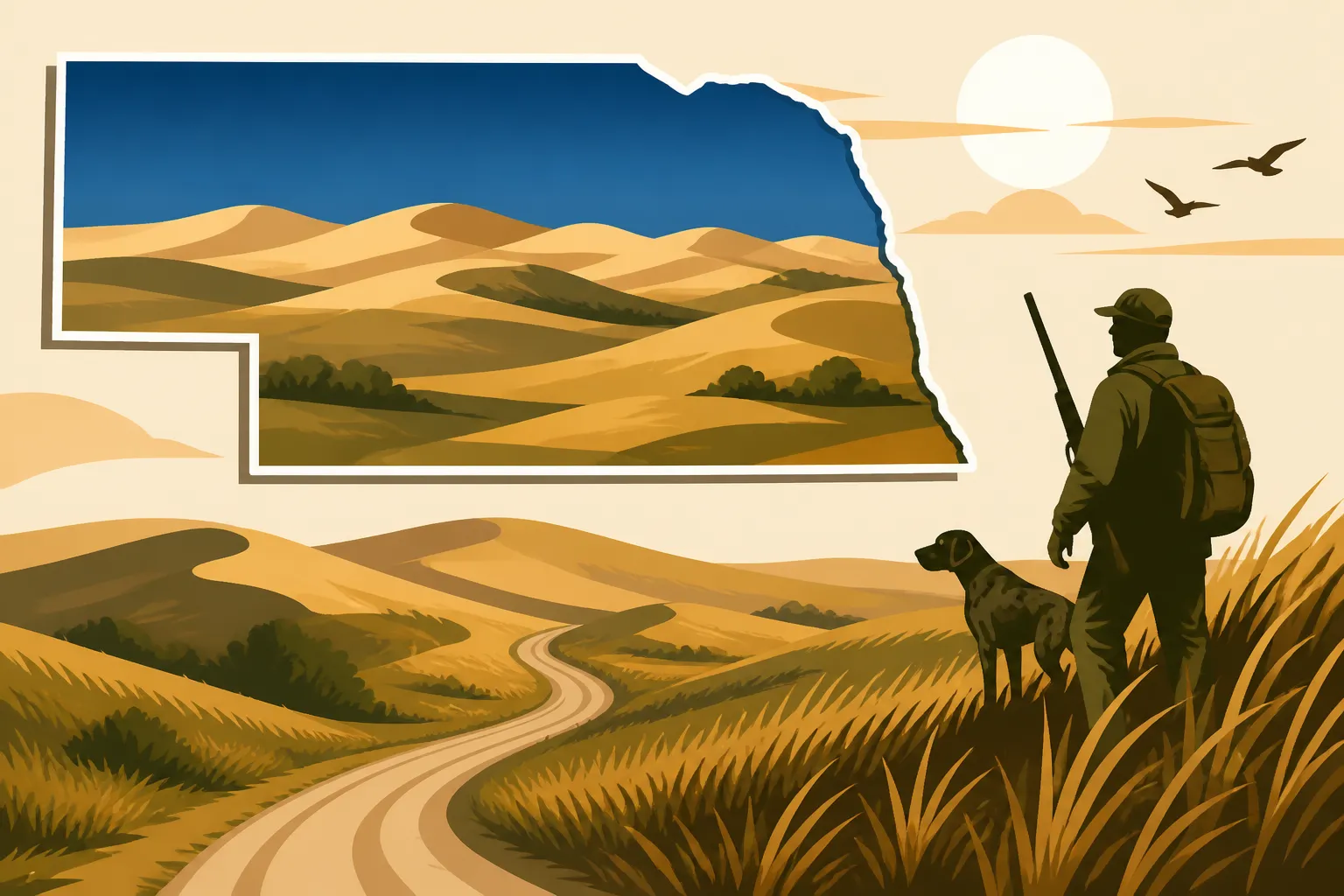
One of the first things that strikes anyone venturing into the Sandhills is its sheer scale. We're talking about approximately 19,300 square miles, making it one of the largest sand dune formations in the Western Hemisphere. Imagine driving for an hour, or sometimes even more, and seeing little beyond rolling grasslands, scattered wetlands, and distant treelines. This immense size means that distances are deceptive, and what looks like a short jaunt on a map can be a grueling trek in person. It’s easy to feel utterly insignificant, and a little disoriented, in such a wide-open landscape.
Because of this vastness, established infrastructure—like paved roads, gas stations, or even cell towers—is incredibly sparse. Towns are few and far between, and even small settlements might only offer the bare essentials. This lack of development means that once you turn off a main highway, you are truly on your own. Hunters accustomed to short drives to their stand or easy access to supplies often underestimate the logistical challenges. This isolation is a huge part of the Sandhills' appeal, but it's also its greatest challenge when it comes to simply getting around.
The Nature of Sandhills Roads and Two-Tracks
When people talk about "roads" in the Sandhills, they're often not talking about anything you'd find in a typical suburban or even rural area. The primary arteries might be paved state highways, but off those, you'll quickly transition to gravel and then, most frequently, to two-track trails. These "two-tracks" are exactly what they sound like: a pair of ruts worn into the grass or sand by previous vehicles. They are rarely maintained, often wind around obstacles like hills, wetlands, or fences, and can vary dramatically in condition.
These sandy tracks present a unique set of hazards. After a dry spell, the sand can be incredibly soft and deep, making it easy for two-wheel-drive vehicles, or even unprepared four-wheel-drives, to get hopelessly bogged down. A seemingly shallow dip can turn into a tire-swallowing pit. Conversely, after heavy rains, these tracks can become slick, muddy quagmires or completely washed out, making passage impossible. It's not uncommon to encounter hidden rocks, deep ruts, or even small tree stumps that could damage a vehicle with insufficient clearance. Understanding the variable nature of Sandhills Two-Track Road Access is paramount for avoiding a long walk back.
Interspersed Ownership and the Checkerboard Pattern
Another significant challenge in the Sandhills is the often-complex mosaic of land ownership. While some areas, like portions of the Oglala National Grassland, offer large contiguous blocks of public land, many other regions feature a fragmented, "checkerboard" pattern where public and private parcels are interspersed. You might have a section of state or federal land, bordered by private ranchland, then another small public parcel, and so on.
This creates a constant need for vigilance and accurate mapping to ensure you're not inadvertently trespassing. A fence line might not always delineate public from private, and even if it does, it might be the only clear indicator for miles. Ranchers depend on their land for their livelihood, and unauthorized access is not only illegal but also disrespectful to their operations. This intricate ownership pattern means that just because you're near public land doesn't mean you can drive across private land to get to it. Hunters must be diligent about knowing exactly where they are at all times, making accurate land navigation tools an absolute necessity in this environment.
Navigating Public Hunting Land in the Sandhills
For many hunters, public land offers the most straightforward way to access the Sandhills. While private land constitutes the vast majority of the region, Nebraska has made significant efforts to open up areas for public use. However, simply knowing that public land exists isn't enough; you need to understand what kind of public land it is, where to find it, and how to effectively navigate it to make the most of your hunt.
Key Public Land Types and How to Find Them
Nebraska's public hunting opportunities in the Sandhills typically fall into a few categories. Wildlife Management Areas (WMAs) are managed directly by the Nebraska Game and Parks Commission and are often specifically acquired or designated for hunting, fishing, and wildlife viewing. These areas usually have clearer boundaries, sometimes designated parking areas, and specific rules that apply. They can range from small parcels around lakes and rivers to larger tracts of grassland and wetland.
Then you have federal lands, primarily the Oglala National Grassland in the northwest corner of the state. This is a massive area, managed by the U.S. Forest Service, and it offers some of the most expansive and wild hunting experiences in the Sandhills, particularly for mule deer and pronghorn. These lands generally have open access, but like all Sandhills terrain, can be incredibly remote with primitive roads. Lastly, the Open Fields and Waters (OFW) program is a game-changer for access. This program leases private land from landowners to provide walk-in hunting access for specific seasons, and many of these tracts are located within the Sandhills. These areas are signed, and their availability can change yearly, so checking the current atlas is essential. The Nebraska Game and Parks Commission's Nebraska Public Access Atlas is your bible for locating all these types of public hunting opportunities.
Utilizing Digital Mapping Tools for Access
In a landscape as vast and often unmarked as the Sandhills, digital mapping tools aren't just convenient; they are absolutely critical. Forget relying solely on paper maps once you're deep in the two-tracks—while a physical map is a good backup, a robust GPS-enabled app is your primary navigation system. Services like onX Hunt have become indispensable for Sandhills hunters. These apps overlay detailed land ownership maps onto satellite imagery, allowing you to instantly see property boundaries, public land designations, and even specific parcel numbers. This is invaluable when you're driving down a two-track, trying to determine if you're on a public right-of-way or veering onto private property.
Beyond showing property lines, these apps allow you to mark waypoints for parking, game sightings, or difficult terrain. Crucially, they also allow you to download maps for offline use. Downloading Nebraska Public Land Maps before you leave an area with cell service is paramount because, as we've discussed, reliable signal is often non-existent once you leave the main highways. With a downloaded map, your phone's GPS still functions, showing your precise location relative to land boundaries, even without an internet connection. Another valuable resource like GoHunt can offer similar capabilities, often with a focus on big game draw odds and harvest data, complementing the real-time navigational aspects of onX. Using the onX Layers for Nebraska Land Status can provide additional insights into federal, state, and private boundaries, making your navigation much more precise.
Accessing Public Ground on Foot: The True Sandhills Experience
While your vehicle will get you into the general vicinity, the true hunting experience in the Sandhills often begins on foot. Many of the most productive and least pressured hunting areas are well beyond where you can reasonably drive. This means embracing the "walk-in" aspect of hunting. You might drive a two-track as far as you dare, park, and then shoulder your pack for a hike that could stretch for miles across rolling hills and through drainages. This is where physical conditioning and appropriate gear truly come into play.
Walking the Sandhills means navigating uneven terrain, often through deep grass, sometimes across sandy blowouts, and around numerous small wetlands or "choppy" areas. Footwear must be robust, comfortable, and provide excellent ankle support. Carrying sufficient water, snacks, and extra layers, regardless of the forecast, is crucial. It’s also important to pay close attention to your surroundings, as the repetitive landscape can make it easy to lose your bearings, especially on an overcast day. This immersive, on-foot approach is particularly effective for pursuing Walking Nebraska Sandhills Meadows for Sharptails or still-hunting for deer in areas far from road noise and human disturbance. It’s a challenging but incredibly rewarding way to hunt, connecting you directly with the wild heart of Nebraska.
Respecting Private Land and Securing Permission
The reality of hunting in the Sandhills is that the vast majority of the land is privately owned. These are working ranches, often passed down through generations, and the families who own them are stewards of both the land and its wildlife. Understanding and respecting this fundamental truth is critical to both your success as a hunter and maintaining positive relationships between hunters and landowners in Nebraska.
The Dominance of Private Ranches and the Ranching Culture
The Sandhills are ranching country, pure and simple. Cattle graze on the vast grasslands, and the livelihoods of countless families depend on these operations. This means that fences, gates, and cattle are an integral part of the landscape. When you encounter a gate, whether it's closed or open, assume it's there for a reason and act accordingly. If it's closed, close it behind you. If it's open, leave it open unless explicitly instructed otherwise by a landowner. These aren't just minor courtesies; they are essential acts of respect that demonstrate you understand and value the ranching culture.
The wildlife you seek on these lands, whether it's deer, elk, or upland birds, are often considered part of the ranch's ecosystem. Landowners invest time, effort, and sometimes significant resources into managing their property, and they are rightly protective of it. Ignoring "no hunting" signs or trespassing without permission is not only illegal but also severely damages the reputation of all hunters and makes it harder for everyone to gain access in the future. Building a relationship with a Sandhills rancher can open doors to incredible hunting, but that relationship must be founded on mutual respect and understanding.
Strategies for Asking for Permission
Given the prevalence of private land, asking for permission is often the most direct route to accessing prime hunting spots. This isn't always easy, and it requires a specific approach. Cold calling or knocking on doors just before opening day is rarely successful. Ranchers are busy, and they've likely been inundated with requests already. Instead, try to make contact well in advance of the season, perhaps in late summer or early fall. Asking a Nebraska Farmer for Permission outlines some key principles that apply equally well to Sandhills ranchers.
When you do make contact, be respectful, articulate your intentions clearly, and be prepared for a "no." If they say no, thank them for their time and move on; do not argue or push. If they consider it, be prepared to offer something in return. Perhaps you can offer to help with a chore, keep an eye on things, or simply share some of your harvest. Many landowners appreciate responsible hunters who understand their operation and are willing to abide by specific rules, such as staying out of certain pastures, avoiding livestock, or only hunting specific species. Being a good steward of their land while you're there is key to being invited back.
Understanding Nebraska's Trespass Laws and Posted Land
It's absolutely vital to understand Nebraska's trespass laws, especially in a region where boundaries can be subtle and land ownership fragmented. In Nebraska, it is illegal to hunt, fish, or trap on private land without permission from the landowner or tenant. While some states require "No Hunting" signs for land to be considered off-limits, Nebraska law states that any private land is considered closed unless permission is granted. However, landowners often do post signs as an extra deterrent and clear communication.
If land is posted with "No Hunting" or "Private Property" signs, these are unmistakable directives. Even if you believe a parcel of public land is adjacent, you cannot cross posted private land to access it without explicit permission. The legal repercussions for trespassing can include fines, confiscation of game, and even loss of hunting privileges. It's a serious offense, and ignorance is rarely accepted as an excuse. Referencing Nebraska's Posted-Land and Trespass Rules is essential to ensure you are always on the right side of the law. Using your digital mapping tools like onX Hunt helps you identify property boundaries clearly, allowing you to avoid accidental trespass.
Vehicle and Gear Preparedness for Sandhills Travel
Your vehicle is more than just transportation in the Sandhills; it's often your mobile base camp, a storage locker, and sometimes, your only lifeline. The terrain is unforgiving, and remote locations mean that a breakdown or getting stuck isn't just an inconvenience; it can quickly become a serious problem. Being prepared with the right vehicle and essential gear is non-negotiable for a safe and successful Sandhills hunting trip.
Choosing the Right Vehicle for Sandy Terrain
When planning a trip to the Nebraska Sandhills, forget about taking your low-clearance sedan or even a standard two-wheel-drive pickup. This is prime territory for a reliable 4×4 vehicle with good ground clearance. A truck, SUV, or even a robust UTV with four-wheel-drive capability is highly recommended. The deep, soft sand on many two-tracks, especially after dry spells, demands traction and power. High clearance is crucial to avoid damaging your undercarriage on rocks, ruts, or the occasional sagebrush mound that grows between the tracks.
Think about your tires, too. All-terrain or mud-terrain tires with aggressive tread patterns will provide far better grip in sand and mud than standard highway tires. It’s also a good idea to ensure your spare tire is in excellent condition and properly inflated, along with the necessary jack and lug wrench. Nothing ruins a hunt faster than a flat tire miles from pavement with no way to fix it. Consider adding a few pounds of air pressure to your tires before hitting deep sand, as slightly higher pressure can sometimes help you float over the soft stuff, though some hunters swear by lowering pressure, which is a nuanced technique that requires an air compressor for reinflation afterwards.
Essential Recovery Gear to Carry
Even with the best 4×4, the Sandhills has a way of finding your limits. Getting stuck is not a matter of if, but often when. Because tow services can be hours away, and cell service is spotty, self-sufficiency is key. Always carry essential recovery gear. A heavy-duty tow strap (without metal hooks, which can be dangerous projectiles) is critical for getting pulled out, or for pulling someone else out. A folding shovel or a dedicated recovery shovel is invaluable for digging out tires. Traction boards, like Maxtrax or similar brands, can provide the grip needed to get moving again when tires are spinning freely in sand.
An air compressor is also a smart addition. If you choose to air down your tires for better traction in deep sand, you'll need a way to reinflate them once you're back on firmer ground or pavement. Jumper cables, basic tools, and a fire extinguisher round out a solid recovery kit. Remember, help can be a long way off, so preparing for a Getting Stuck in Sandhills Sand scenario will give you peace of mind and greatly increase your chances of getting home safely.
Navigation and Communication Tools Beyond Your Phone
While we emphasized digital mapping apps like onX Hunt, it's crucial to have backup navigation and robust communication options in the Sandhills. Cell service is notoriously unreliable in many parts of the region, especially once you venture off main roads. A dedicated GPS unit can be a lifesaver, as it doesn't rely on cell towers for its location data. Pre-loading maps onto this device ensures you always have a reference.
Even better for true remote communication is a satellite messenger device, such as a Garmin InReach or Spot device. These allow you to send and receive text messages, track your location, and, most importantly, send an SOS signal to emergency services, even when miles from any cell signal. This can be a game-changer if you or a hunting partner gets injured, lost, or stranded. For groups hunting together, two-way radios can be incredibly useful for short-range communication, especially when out of sight of each other. Finally, always carry a physical paper map of the area you're hunting, along with a compass. Batteries die, electronics fail, and a traditional map provides a reliable, low-tech backup. Combining these tools ensures you're prepared for any communication or navigation challenge the Sandhills throws your way, as explored in GPS Units Versus Phone Apps.
Planning Your Hunt and Staying Safe in Remote Areas
Hunting the Nebraska Sandhills is an adventure, but like any venture into remote wilderness, it requires meticulous planning and a strong emphasis on safety. The remoteness, unpredictable terrain, and limited services mean that a little extra effort before and during your trip can make all the difference between a memorable hunt and a stressful ordeal.
Pre-Trip Scouting and Research
The success of a Sandhills hunt often begins long before you ever set foot in Nebraska. Pre-trip scouting and research are absolutely critical. Start by studying the Nebraska Public Access Atlas extensively. This isn't just a list of places; it's a treasure trove of information on boundaries, access points, and sometimes even specific game species found in certain areas. Combine this with satellite imagery from Google Earth or your onX Hunt app to get a bird's-eye view of the terrain. Look for drainages, isolated pockets of timber, water sources, and potential travel corridors for game. Identify obvious parking areas or safe pull-offs along two-tracks.
Don't hesitate to call the Nebraska Game and Parks Commission local offices for specific areas you're interested in. They can often provide insights on current conditions, recent game sightings, or any area-specific regulations or closures. Understanding Reading the Nebraska Public Access Atlas isn't just about finding blue and orange areas on a map; it's about interpreting the landscape and access opportunities it presents. The more virtual scouting you do, the less time you'll spend driving aimlessly once you're on the ground, and the more efficiently you can hunt.
Informing Others and Emergency Protocols
One of the most important safety rules for hunting in remote areas like the Sandhills is to always tell someone your plan. This means sharing your exact hunting location, your intended route, where you plan to park, and when you expect to return. Give this information to a reliable person who knows what to do if they don't hear from you. In the absence of consistent cell service, a detailed plan communicated beforehand becomes your primary safety net. If you have a satellite messenger, use its tracking feature to let your contacts follow your progress.
Beyond informing others, develop your own emergency protocols. What will you do if you get a serious injury miles from the truck? What if your vehicle gets irrevocably stuck? Pack a comprehensive first-aid kit that goes beyond band-aids; include items for severe cuts, sprains, and allergic reactions. Carry extra food, water, and warm clothing, even if the forecast seems mild. Weather in Nebraska can change rapidly, and a sunny morning can turn into a cold, windy, or rainy afternoon. Being prepared to spend an unexpected night out in potentially adverse conditions can literally save your life.
Respecting the Environment and Other Users
As hunters, we are guests on the land, whether it's public or private, and it's our responsibility to leave it better than we found it. Respecting the environment and other users is paramount. Practice strict "Leave No Trace" principles: pack out everything you pack in, including spent shell casings, food wrappers, and anything else you brought with you. Avoid driving off designated two-tracks or causing unnecessary erosion, especially in sensitive sandy areas.
Remember that the Sandhills are enjoyed by many, including other hunters, birdwatchers, photographers, and, on private land, ranchers. Be courteous and considerate. If you encounter livestock, give them a wide berth and avoid spooking them. Always close gates behind you unless specifically directed otherwise. If you see another hunter, acknowledge them and maintain a respectful distance; there's plenty of room for everyone. Understanding principles like Wind Direction on Open Nebraska Prairie Stands can also help you minimize your impact and avoid disturbing game you're not actively pursuing, or conversely, running into another hunter inadvertently. By demonstrating respect for the land, its wildlife, and its people, you ensure that future generations can continue to enjoy the incredible hunting opportunities the Nebraska Sandhills offers.
Disclaimer
This article is for general informational purposes only and does not constitute professional advice. Laws, prices and regulations vary by location and change over time. Consult a qualified professional for guidance on your specific situation.