Predator Calling on the Nebraska Plains
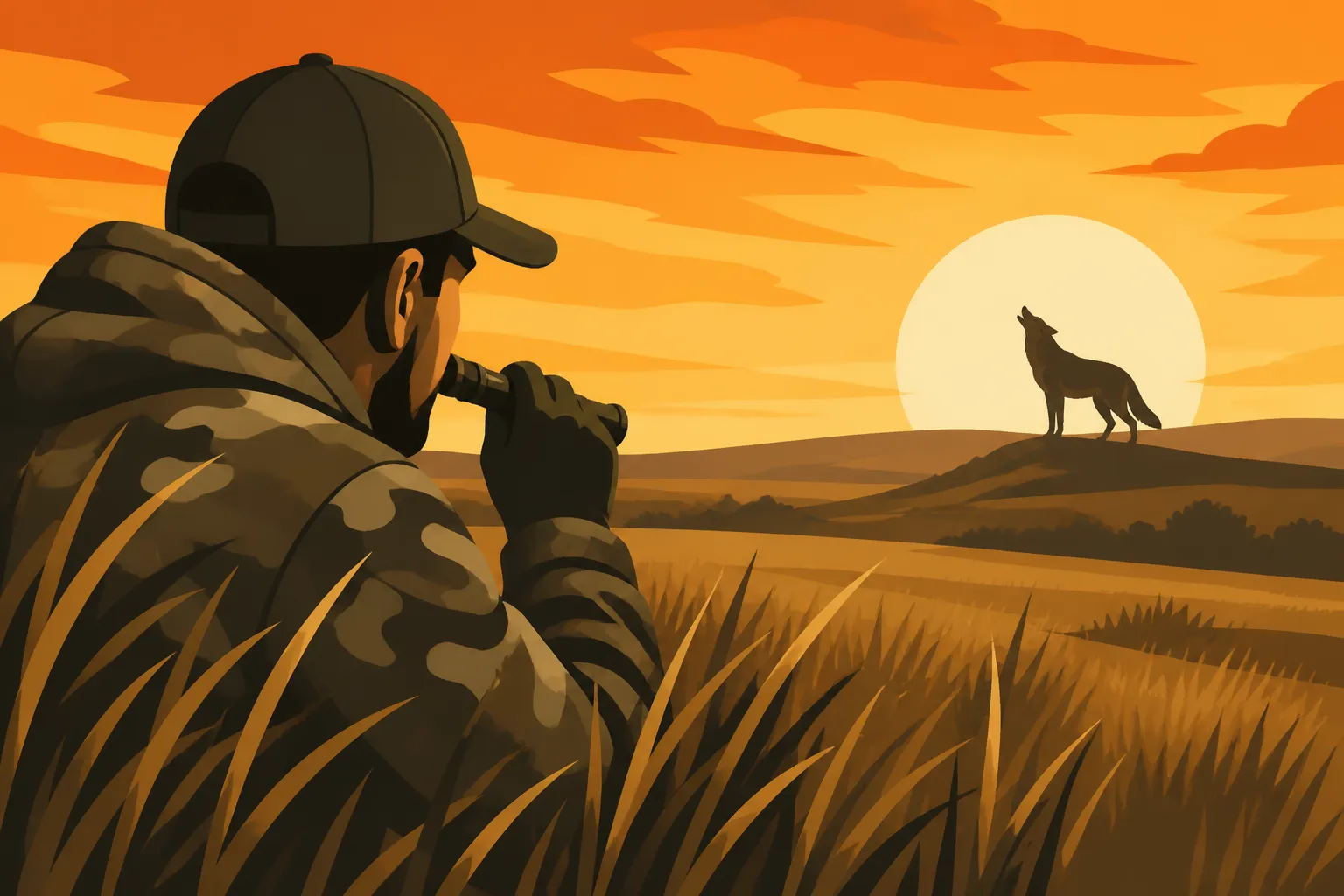
There's nothing quite like the sound of a coyote howl echoing across the vast, open expanse of the Nebraska plains. But connecting with those elusive predators, whether it's a cunning coyote, a sleek bobcat, or a darting fox, can feel like trying to catch smoke in a sieve. Many hunters, myself included, have spent countless hours battling the elements, the vastness of the landscape, and the keen senses of these animals, often walking away empty-handed and wondering what piece of the puzzle they missed. This comprehensive guide is here to unravel those mysteries, offering tried-and-true strategies, gear insights, and detailed tactics to help you become a more successful predator caller right here in Nebraska.
Understanding Nebraska's Apex Predators
Before you can effectively call a predator, you need to understand who you're calling. Nebraska is home to several furbearer species, but when it comes to calling, we're primarily focused on coyotes, foxes, and occasionally bobcats. Each has its own distinct behaviors, habits, and preferences that can make or break your setup. Without a solid grasp of their natural instincts, you're essentially just shouting into the wind. This understanding forms the bedrock of any successful calling strategy on the unpredictable Nebraska plains.
Coyote Behavior and Habits
Coyotes are perhaps the most common and widely distributed predators you'll encounter across Nebraska. They are incredibly adaptable, thriving in everything from the rugged Sandhills to the dense river bottoms of eastern Nebraska. Their diet is diverse, ranging from small rodents, rabbits, and birds to deer fawns and even carrion, which makes a variety of prey distress calls effective. They are also highly social animals, often communicating through howls, yips, and barks. This social aspect is a key component of effective calling, as mimicking their vocalizations can sometimes be more potent than a simple rabbit distress call.
Coyotes are notoriously intelligent and can become "call-shy" if they've had negative experiences with hunters, making them even more challenging to draw in. They operate with a keen sense of smell, hearing, and eyesight, demanding that hunters be equally vigilant about wind direction, concealment, and minimal movement. Often, a coyote will circle downwind to try and scent check the source of a call before committing to a full approach. This is a critical habit to anticipate, as it dictates your setup and where you expect the animal to appear. Understanding their daily patterns, such as hunting more actively at dawn and dusk, but remaining opportunistically active throughout the day, especially in colder weather, is also vital. You can learn more about Nebraska Predators and Furbearers in our detailed guide.
Fox Species and Their Quirks
Nebraska is home to two primary fox species that hunters might target: the red fox and the gray fox. While both are smaller than coyotes, they offer a unique calling challenge. Red foxes are widespread, often found in agricultural areas, grasslands, and mixed woodlands. They are characterized by their reddish-orange fur, white-tipped tail, and black "stockings" on their legs. Gray foxes, on the other hand, are a bit more elusive and tend to prefer brushy, timbered, or rocky habitats, particularly in the eastern and southern parts of the state. They are unique among canids for their ability to climb trees.
Both fox species are primarily nocturnal or crepuscular, meaning they are most active during the night and twilight hours. Their diets consist mainly of small mammals like mice, rabbits, and voles, as well as insects, fruits, and birds. When calling for foxes, softer, higher-pitched distress calls are often more effective than the louder, coarser calls used for coyotes. Foxes also tend to be a bit more cautious than coyotes and may "hang up" at a distance, requiring patience and subtle changes in calling volume or type. Setting up where there is dense cover for them to feel secure in their approach is often beneficial.
Elusive Bobcats and Their Territories
Bobcats are the wildcards of Nebraska predator calling. They are far less common than coyotes or foxes and possess an innate wariness that makes them incredibly difficult to call in consistently. These beautiful felines prefer rugged, broken terrain, dense cover, and areas with a strong prey base, such as rabbits and rodents. You'll primarily find them in the Pine Ridge, Wildcat Hills, and along major river systems with extensive timber. Seeing a bobcat during daylight hours is a rare treat, as they are predominantly nocturnal.
When calling for bobcats, your best bet is to use distressed rabbit or bird calls, often interspersed with long periods of silence. Unlike canids, bobcats rarely vocalize in response to calls, so don't expect a howl back. They rely heavily on their incredible eyesight and stealth, often appearing silently and unexpectedly. A bobcat might stalk in slowly, using every piece of cover, and often only present itself for a brief, fleeting moment. Because of their rarity and elusive nature, many predator callers consider a called-in bobcat to be the ultimate trophy. The key is extreme patience, subtle calling, and choosing ambush locations that offer good visibility into dense cover edges.
Choosing the Right Calling Setup
Just like a golfer selects the right club for each shot, a predator hunter needs to carefully choose their calling setup. The vastness of the Nebraska plains, with its varying terrain and weather, means that a "one-size-fits-all" approach simply won't cut it. Your gear—from calls to decoys to firearms—must be tailored to the specific conditions and the specific predator you hope to encounter.
Electronic Callers vs. Hand Calls
The choice between electronic callers and hand calls is often a personal preference, but each has distinct advantages in different scenarios. Electronic callers, like those from FoxPro or Lucky Duck, offer a vast library of realistic sounds, from various prey distress calls (rabbits, birds, rodents) to coyote howls, barks, and pup distress. They allow for hands-free operation, meaning you can keep your rifle mounted and ready. This is particularly beneficial when a predator comes in fast and hot. The ability to control volume and switch sounds with a remote from a distance (even up to 100 yards) can also help draw wary animals closer without revealing your position. For hunting Coyote Calling in Nebraska Winter when the wind can carry sound far, an electronic call can be very effective.
Hand calls, on the other hand, require a different skill set. They are generally more affordable, don't require batteries, and offer a more intimate connection to the calling process. Open-reed calls are versatile, capable of producing a wide range of distress sounds and some howls, while closed-reed calls are simpler to master, often specializing in a particular sound like a cottontail distress. Mouth calls can be incredibly realistic, and a skilled caller can inject a lot of emotion and variation into their sounds. While they demand more practice, the satisfaction of luring in a predator with a hand call is immense. Many experienced hunters carry both, using an electronic caller for primary sequences and a hand call for subtle changes or follow-up chirps when a coyote might hang up just out of range.
Essential Decoys and Scent Control
Decoys add a visual element that can be incredibly effective, especially for coyotes and foxes. A simple motion decoy, like a rabbit spinner or a small furry critter on a stick, can divert a predator's attention away from your concealed position. When an animal focuses on the decoy, it often becomes less aware of its surroundings, allowing you precious seconds to get into shooting position. Placing the decoy 20-40 yards from your hidden position, ideally slightly downwind or crosswind, means the predator will focus on the decoy and present a good shot opportunity before noticing you. Some hunters even use full-body coyote decoys to mimic a territorial intruder, sometimes sparking an aggressive response from resident coyotes.
Scent control is absolutely paramount, perhaps even more so on the open plains where the wind can carry your scent for miles. Predators, especially coyotes, have an olfactory sense far superior to humans. Any foreign scent – human, gasoline, cigarette smoke – can immediately signal danger and send them fleeing. Always play the wind; it's the most critical factor. Additionally, wearing scent-eliminating clothing, storing hunting gear in scent-free containers, and showering with scent-free soap before a hunt can make a difference. Some hunters even use cover scents, like skunk essence or fresh earth, but these should be used sparingly and strategically, as too much can be unnatural. The goal is to minimize your human footprint as much as possible, leaving no trace for their sensitive noses to detect.
Appropriate Firearms and Ammunition
Selecting the right firearm for predator calling on the Nebraska plains involves balancing range, accuracy, and impact. Given the often vast distances and the need for precision, a flat-shooting rifle is often the tool of choice. Calibers like the .223 Remington, .204 Ruger, .22-250 Remington, or even the 6mm ARC are popular for their speed and minimal bullet drop out to typical predator ranges. These calibers are capable of making clean, ethical kills on coyotes and foxes without excessive pelt damage. For the open nature of the terrain, you'll want to ensure you have Rifle Scopes for Long Nebraska Shots.
Ammunition choice is equally important. Varmint-specific bullets, such as hollow points or ballistic tips, are designed for rapid expansion and energy transfer, ensuring a quick kill while often minimizing exit wounds that can damage furs. Practice with your chosen load is crucial to understand its trajectory and performance. A good quality scope with sufficient magnification (e.g., 3-9x or 4-12x) and a clear reticle is essential for accurate shot placement.
While rifles dominate, shotguns can also be effective in thick cover or for close-range opportunities. A 12-gauge or 20-gauge loaded with high-density shot like #4 buckshot or T-shot can be devastating at ranges up to 40-50 yards. This setup works well in river bottoms or dense shelterbelts where encounters are expected to be tight. Regardless of your firearm, ensuring it's sighted in, clean, and you're proficient with it is non-negotiable for ethical hunting.
Scouting and Location Selection
You can have the best calls and gear in the world, but if you're setting up in the wrong spot, your chances of success plummet. Effective predator calling on the Nebraska plains starts long before you ever blow a call. It begins with meticulous scouting and strategic location selection, which means understanding the land, reading the signs, and planning your approach and escape routes with military precision. This is where many hunts are won or lost before they even begin.
Reading the Landscape for Predator Sign
Predator sign is everywhere if you know what to look for. Tracks are perhaps the most obvious indicator. Look for distinct canine tracks in soft soil, mud around water sources, or snow. Coyote tracks are typically oval-shaped with visible claw marks, and they often travel in a relatively straight line. Fox tracks are smaller and more delicate. Pay attention to scat (droppings), which can tell you what predators are eating and how recently they've been in an area. Scat containing hair, bone fragments, or berries is a clear indicator of their presence.
Game trails, especially those leading through bottlenecks like fences, small culverts, or draws, are often used by predators as travel corridors. Areas with high concentrations of prey animals, like rabbit populations or deer bedding areas, are also prime spots for predators to patrol. Look for den sites during the denning season, although these should generally be avoided for ethical calling to prevent disturbing young. The vastness of Hunting the Nebraska Sandhills can make finding concentrated sign challenging, but focusing on areas around water, rimrock, or even isolated cedar tree patches can reveal activity. Remember, fresh sign is always best – if it looks old, the animals might have moved on.
Utilizing Aerial Maps and Topography
In today's age, technology is an indispensable scouting tool. Satellite imagery, topographical maps, and dedicated hunting apps like GoHunt (which offers excellent map layers for public and private land, as well as topographic features) can give you a bird's-eye view of your hunting area without ever stepping foot in the field. This is crucial for understanding the flow of the land. Look for natural funnels like creek beds, draws, fencelines, and shelterbelts that predators might use to travel or hunt. Identify potential bedding areas (often dense cover, south-facing slopes for warmth, or river bottom thickets) and feeding areas (often crop fields or areas with high rodent populations).
Topographical maps reveal elevation changes, which are vital for understanding wind currents and spotting potential setup locations. A slight rise can give you a better vantage point, while a deep draw can conceal your approach. Use these tools to identify potential ambush points where a predator might pause or offer a clear shot. By studying these maps, you can virtually scout multiple locations, narrowing down your choices to the most promising spots before you dedicate valuable field time. Consider our guide on GPS Units Versus Phone Apps for more insight into these tools.
Wind Direction on Open Nebraska Prairie Stands
If there's one golden rule in predator calling on the Nebraska plains, it's "hunt the wind." Wind direction is not just important; it is the most critical factor in your setup. Predators rely heavily on their sense of smell to detect danger, and your human scent, even in trace amounts, will send them scattering. You absolutely must position yourself so that the prevailing wind carries your scent away from where you expect the predator to approach. This typically means setting up downwind of your calling location, allowing the sound to travel upwind into potential predator territories, while your scent is carried behind you.
On the open prairie, wind can be notoriously shifty and unpredictable, especially in areas with varied topography or thermal drafts. Always check the wind direction just before setting up, and re-check it frequently. Even a slight swirl can blow your cover. Identifying terrain features that might funnel or block wind can also be helpful. A small rise, a stand of trees, or even a deep cut in the land can create micro-climates of wind. Sometimes, rather than directly downwind, a crosswind setup can work well, allowing you to cover both sides of an expected approach corridor. Regardless, always prioritize placing your scent where it will not reach the predator before you get a shot opportunity. Don't forget to check out our specific advice on Wind Direction on Open Nebraska Prairie Stands to master this critical skill.
Effective Calling Sequences and Strategies
Once you've scouted your location and set up with the wind in mind, it's time to make some noise. But effective calling isn't just about loud sounds; it's about crafting a sequence that sounds natural, evokes curiosity or a predatory response, and adapts to the specific situation. It's a dialogue with the wild, and you need to speak their language.
Mimicking Prey Distress Calls
The most common and often most effective calling strategy is mimicking a prey animal in distress. Rabbits, such as cottontails and jackrabbits, are primary food sources for coyotes, foxes, and bobcats across Nebraska. A high-pitched, frantic rabbit squeal can trigger an immediate predatory response. Similarly, bird distress calls (like a woodpecker, crow, or even a turkey poult) can be highly effective, especially for foxes and bobcats, who will readily opportunize on vulnerable birds.
Start your calling sequence with moderate volume, gradually increasing it to carry across the plains. After 30-60 seconds of calling, go completely silent for 2-3 minutes. This allows any approaching predator to pinpoint the sound and gives you time to scan for movement. Often, a predator will stop and listen when the call stops, trying to locate the "crippled" prey. Repeat the sequence, varying the intensity and duration. If nothing appears after 15-20 minutes, consider moving to a new setup. Remember that continuous, unbroken calling can sometimes sound unnatural or even robotic, alerting wary predators. Subtle breaks and variations are key to realism.
Intermixing Howls and Barks
While prey distress calls are the bread and butter, intermixing predator vocalizations can add another layer of effectiveness, particularly for coyotes. Howls can serve several purposes:
- Locating: A lone howl or interrogation howl can provoke a response howl from a nearby coyote, revealing their general location.
- Territorial Challenge: A series of aggressive barks and howls, mimicking a pack of coyotes, can challenge a dominant male in the area, often drawing him in defensively.
- Excitement: Sometimes, a pup distress call followed by an excited adult howl can draw in a curious or protective female.
These types of calls are usually used sparingly, perhaps once or twice per stand, and often after an initial distress sequence has failed to produce results. Be mindful of the time of year; territorial responses might be stronger during breeding season, while pup distress is more effective in late spring and summer. The vast, open nature of the Nebraska plains means that howls can carry for miles, so don't be surprised if you get a response from a long distance. When using howls, ensure your setup allows you to see animals approaching from all directions, as they can come in fast and aggressively. Our article on Coyote Calling on Winter Grassland offers great tips for specific seasonal approaches.
Adapting to Predator Responses
One of the biggest mistakes a caller can make is sticking rigidly to a pre-planned sequence regardless of how the predators respond. Predator calling is a dynamic interaction. You need to be a keen observer and adapt your strategy on the fly.
- No Response: If your initial distress calls yield no response after several minutes, try switching to a different prey sound or incorporating some howls to stir up curiosity or territorial aggression.
- Hanging Up: If a coyote or fox approaches to a certain distance and then stops, appearing wary or hesitant, this is called "hanging up." This is a common frustration. Try reducing the volume of your call to a soft whimper, mimicking a dying or severely injured animal. Sometimes, a subtle chirp or even silence can draw them the last few yards. A small, fluttering decoy can also convince them to commit.
- Coming In Fast: If an animal charges in, be ready! Keep your calling simple and minimal to avoid distracting yourself from the shot.
- Circling Downwind: As discussed, coyotes frequently try to circle downwind. If you see this happening, quickly adjust your body position for the shot or be prepared to whisper a few soft distress sounds to try and make them commit before they hit your scent stream.
The key is to pay attention to their body language, how they move, and their reactions to your calls. Don't be afraid to experiment, but always keep realism in mind. The goal is to make your sounds irresistible and make the predator believe there's an easy meal to be had.
Setting Up for the Shot
Getting a predator to commit to the call is only half the battle. The other half is being in the right position to take an ethical shot when they finally appear. On the Nebraska plains, where cover can be sparse and distances vast, your setup is crucial for concealment, visibility, and shot stability.
Concealment and Blind Placement
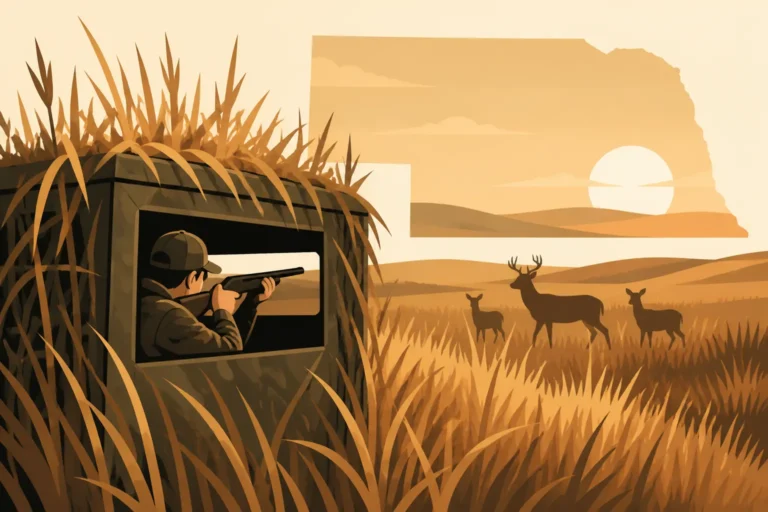
Effective concealment is paramount when calling predators. These animals have incredibly keen eyesight and can spot even the slightest movement or unnatural silhouette. Your primary goal is to blend into your surroundings. For many, this means wearing full camouflage, including a face mask and gloves. When choosing a setup location, look for natural breaks in the terrain:
- Cedar Trees/Brush Piles: Small clumps of cedars, like those found in draws or along fencelines, offer excellent natural cover.
- Hay Bales: In agricultural areas, strategically placed hay bales can create a solid blind, but ensure you blend in with the stack.
- Elevated Positions: A slight rise or knoll can provide a good vantage point, but be mindful of backlighting that could silhouette you.
- Ground Blinds: Portable ground blinds, like those from Primos or Ameristep, can offer excellent concealment, especially in open country. Choose a blind that can handle Ground Blinds That Handle Nebraska Wind and brush it in thoroughly with local vegetation to break up its outline.
Always set up with a good backdrop that breaks up your outline – a hillside, a thicket of brush, or even a vehicle (if legal and safe). Avoid skylineing yourself, as you'll stick out like a sore thumb. Remember to clear shooting lanes before you start calling, ensuring you have unobstructed views of where you expect the predator to appear.
Shooting Sticks and Bipods on Grass
The Nebraska plains are rarely flat. Even subtle undulations in the terrain, combined with tall prairie grass, can make prone shooting difficult or impossible. This is where shooting sticks or a bipod become invaluable. Shooting Sticks and Bipods on Grass provide a stable shooting platform, allowing you to maintain an elevated position over the grass and achieve accuracy on distant or moving targets.
- Bipods: Attach directly to your rifle and offer a solid, stable base for prone or sitting shots. They are quick to deploy and excellent for steadying your aim.
- Shooting Sticks: Available in monopod, bipod, or tripod configurations, these offer greater versatility in height. Tripod sticks, in particular, provide exceptional stability and allow you to quickly adjust for kneeling or even standing shots, which can be critical if a predator pops up unexpectedly close or on uneven ground.
Practice using your chosen support system. You want to be able to deploy it quickly, quietly, and effectively. A wobbly rest leads to missed shots, and on a predator hunt, you often only get one chance. Stability is king for precision shooting in open country.
Reading Wind on the Nebraska Plains for the Shot
Beyond scent control, understanding wind for ballistic purposes is crucial for accurate shooting on the Nebraska plains. Wind can dramatically affect the flight path of a bullet, especially at longer distances. A strong crosswind, even a moderate one, can push your bullet off target by several inches or even feet. Our detailed guide on Reading Wind on the Nebraska Plains is a must-read for mastering this skill.
- Observe indicators: Look for flags, tall grass, distant trees, or even mirage to gauge wind direction and speed. Carrying a small wind meter (anemometer) can also be highly beneficial.
- Hold for wind: Instead of trying to adjust your scope's turrets for every shot, especially on moving animals, learn to "hold for wind." This means aiming slightly into the wind to compensate for the bullet's drift. The amount of hold depends on the wind speed, distance to target, and your bullet's ballistic coefficient.
- Practice: The best way to learn Bullet Weight for Windy Conditions is to practice shooting in various wind conditions. Only then will you truly understand how wind affects your specific rifle and ammunition.
Combine your knowledge of wind for scent control with your understanding of ballistic wind drift. Position yourself so your scent isn't blowing towards the predator, but also choose a shooting lane that offers the most favorable wind conditions for an accurate shot. Sometimes, waiting for a lull in the wind or picking a shot when the wind is quartering (rather than directly across) can make all the difference.
Advanced Tactics and Troubleshooting
Even the most seasoned predator callers encounter situations where animals are call-shy, the terrain is challenging, or standard tactics just aren't working. This is where you need to dig into your bag of tricks and employ some advanced strategies to outsmart the cleverest of coyotes, foxes, and bobcats.
Dealing with Call-Shy Predators
The open nature of Nebraska's landscape, combined with hunting pressure, means that predators can become incredibly call-shy. These animals have likely heard every distress call in the book and may have even had negative experiences with hunters. If you suspect you're dealing with call-shy animals, consider these tactics:
- Extreme Volume Reduction: Instead of blasting calls, start with extremely soft, subtle whimpers or short chirps. Sometimes, the quieter and more pathetic a call sounds, the more curiosity it elicits.
- Longer Silences: Extend your silent periods between calling sequences. Instead of 2-3 minutes, try 5-10 minutes. This gives the predator more time to process the sound and commit without feeling rushed or pressured.
- New Sounds: Introduce completely novel sounds they might not have heard before. This could be a different bird distress, an obscure rodent sound, or even the distress of a domestic animal like a puppy or kitten. GoHunt often has sound libraries that include these less common, yet effective, calls.
- Vocalizations Only: Sometimes, bypassing distress calls altogether and focusing solely on social vocalizations (howls, barks) can work, especially during the breeding season when territorial instincts are high.
- Ambush Calling: Instead of trying to call them from long distances, focus on setting up near known travel corridors or bedding areas and using extremely short, subtle calling sequences for animals already in close proximity. This can be effective in areas of Still-Hunting Nebraska Cedar Draws.
Patience and persistence are critical. A call-shy predator might only give you a brief, fleeting opportunity, so always be ready.
Night Hunting Rules for Predators in Nebraska
Night hunting for predators in Nebraska adds an entirely new dimension to the challenge and is regulated differently from daytime hunting. It offers a unique experience, often under a blanket of stars, but requires specialized equipment and adherence to specific rules. In Nebraska, it is generally permissible to hunt coyotes, foxes, and bobcats at night with certain restrictions. You can use artificial lights, electronic calls, and even night vision or thermal imaging devices. For detailed information, consult the official guide on Night Hunting Rules for Predators in Nebraska.
When night hunting:
- Lighting: Red or green lights are often preferred over white lights, as animals are less likely to be spooked by them. A scanning light to locate eyes and a shooting light mounted on your rifle are common setups.
- Thermal/Night Vision: Devices like thermal scopes and monoculars (often available from brands like Pulsar or ATN) can be incredibly effective for spotting animals in the dark. Be aware of Thermal and Night Vision Rules in Nebraska as these technologies become more prevalent.
- Safety: Always have a clear backdrop. Identify your target positively before shooting. Never shoot towards roads, homes, or unknown areas. Hunt with a partner for safety and to help spot.
- Concealment: Even at night, maintaining a low profile is important. Animals can still detect movement against the sky.
Night hunting can be incredibly productive, as many predators are naturally more active after dark. However, it demands even greater discipline, safety awareness, and preparation.
Incorporating Multiple Callers
Predator calling is often a solo pursuit, but bringing a partner or two can exponentially increase your effectiveness, especially on the vast Nebraska plains. Multiple callers can execute a more complex and realistic scenario, mimicking a group of distressed prey animals or a territorial dispute between multiple coyotes.
One common strategy is for one person to run the electronic caller while another focuses on scanning and shooting. This division of labor allows each hunter to concentrate on their primary role, minimizing movement and maximizing vigilance. Another effective tactic is to have one caller use distress sounds from one position, while a second caller, positioned 50-100 yards away, intersperses with howls or barks. This creates a broader soundscape, making the setup sound more realistic and often drawing predators from different directions.
For highly call-shy areas, consider "leap-frogging." One hunter calls from a position for 15-20 minutes, then silently moves to a new spot while the second hunter starts calling from the original location. This constant shift in the source of the sound can sometimes confuse wary animals and draw them into an area they might otherwise avoid. Always communicate clearly and plan your movements and shooting zones in advance to ensure safety.
Rules, Regulations, and Ethical Considerations
Predator hunting, like all hunting, is governed by a set of rules and an unspoken code of ethics. Adhering to these is not just about staying legal; it's about preserving the sport, respecting the animals, and maintaining a positive public perception of hunters.
Nebraska Predator Seasons and Regulations
In Nebraska, coyotes are classified as furbearers and typically have an open season year-round, meaning you can hunt them at any time. Foxes (red and gray) and bobcats also have designated furbearer seasons, which usually run from late fall through early spring. It's absolutely crucial to consult the current Nebraska Game and Parks Commission (NGPC) hunting guide for the exact dates, bag limits (if any), and specific regulations for each species. These regulations can change annually, so never rely on old information.
Always check for:
- Harvest Limits: While coyotes often have no bag limit, foxes and bobcats might have specific harvest limits per season.
- Tagging Requirements: Bobcats, in particular, often require a specific tag and mandatory check-in with the NGPC after harvest. This is vital for population management and data collection.
- Hunting Hours: While night hunting is generally allowed for these species, confirm legal shooting hours.
- Firearm Restrictions: Ensure your chosen firearm and ammunition comply with all state regulations. For instance, some areas or situations might have restrictions on certain calibers or projectile types.
Ignorance of the law is never an excuse, so carry a copy of the regulations, or have the NGPC app on your phone.
Ethical Calling and Public Perception
Ethical conduct is the bedrock of responsible predator hunting. Beyond legal compliance, it's about making sound judgments that reflect positively on the hunting community.
- Clean Kills: Always strive for a clean, humane kill. This means practicing with your firearm, knowing your effective range, and taking only ethical shots. If you're unsure of your shot placement, don't pull the trigger.
- Pelt Care: If you intend to harvest pelts, learn proper Field Dressing and Cooling Game in Warm Weather techniques and care to preserve the fur.
- Respect for Private Land: Always obtain explicit permission before hunting on private land. This is not just a courtesy but a legal requirement in Nebraska. Familiarize yourself with Nebraska Trespass and Permission Law.
- Conservation: Predator hunting can be a tool for managing populations, especially coyotes that can impact deer and livestock. However, it should not be about senseless slaughter. Hunt purposefully and ethically.
- Public Image: Be mindful of how your actions are perceived by non-hunters. Avoid unnecessary displays of harvested animals, especially in public areas. Uphold the image of a respectful and responsible conservationist.
Ethical considerations extend to your calling itself. Avoid prolonged torment of animals. If a predator comes in and you don't take a shot, consider why and adjust your strategy, rather than simply repeatedly calling and educating them further.
Seasonal Considerations for Predator Calling
Nebraska's seasons can be extreme, from blistering summer heat to frigid winter blizzards. These seasonal shifts dramatically influence predator behavior, activity levels, and fur quality, all of which should dictate your calling approach. Adapting your tactics to the time of year is crucial for consistent success.
Coyote Calling in Nebraska Winter
Winter is arguably the most popular and often most productive time for coyote calling in Nebraska. Several factors contribute to this:
- Hunger: Food sources can become scarce as winter deepens and snow covers the ground, making coyotes more susceptible to distress calls. They are actively seeking food, often ranging farther.
- Fur Quality: The cold weather means coyotes have developed their thickest, most prime pelts, making them highly desirable for fur harvesters.
- Visibility: Snow cover can improve visibility, making it easier to spot approaching coyotes against the white backdrop. Tracks in the snow also make Reading Sign on a Nebraska Sandhills Two-Track much easier, helping you pinpoint high-traffic areas.
- Breeding Season: Late winter (January-March) is the coyote breeding season. Howls and territorial barks can be incredibly effective during this period, often drawing in dominant males seeking rivals or females looking for mates.
When Coyote Calling in Nebraska Winter, dress warmly in layers, including Wind-Blocking Outerwear for the Plains, and bring insulated boots and hand warmers. Your setup should account for potential snow drifts and bitter winds. Consider using pup distress calls early in the winter when young coyotes are still maturing, transitioning to more adult social howls as breeding season approaches.
Warm Weather Calling Challenges
Calling predators in warm weather, particularly during the late spring, summer, and early fall, presents its own unique set of challenges.
- Vegetation: Dense vegetation, tall crops, and thick prairie grass can make spotting animals difficult.
- Heat: Predators are often less active during the hottest parts of the day, preferring to move during cooler dawn and dusk hours. Overheating is also a concern for hunters.
- Lower Urgency: With abundant prey and less energy expenditure required, predators may respond with less urgency to distress calls.
- Pelt Quality: Pelts are generally thinner and less desirable during the summer months.
Despite these challenges, warm weather calling can still be productive. Focus on early morning and late evening hunts. Set up near water sources or dense shade where predators might be resting. Use calls that mimic young, vulnerable prey, as spring and summer are prime times for fawns, turkey poults, and rabbit kits. Short, sharp bursts of calling followed by long periods of silence can work well. Pay extra attention to scent control, as warmer temperatures can amplify human odors. Consider using Coolers and Game Bags for a Nebraska Opener to keep harvested animals cool if you plan to keep the meat.
Pre-Pelt Prime Strategies
For hunters interested in fur harvesting, the period just before the pelts become "prime" (typically late fall) and during the prime season (winter) is crucial. "Pelt prime" refers to when the fur is at its thickest, densest, and most uniform, making it most valuable. This usually begins around November and extends through February or early March in Nebraska.
Leading up to the prime season, coyotes and foxes are often actively putting on weight for winter, and young of the year are dispersing, making them more vulnerable and responsive to calls. This "pre-prime" window (October-November) can be highly productive for sheer numbers. As the pelts begin to thicken, predators will be more active in securing food resources.
During the actual prime season (winter), focus your efforts on cold, clear days. These are often when animals are most active and their fur is at its best. Long-range calling with electronic callers can be very effective, covering vast tracts of land. Understanding Where Nebraska Whitetails Bed in Row-Crop Country and setting up adjacent to these areas can also draw in coyotes hunting for easy meals. The goal is to maximize your opportunities during this critical period, knowing that each animal you call in not only offers an exciting hunt but also a valuable resource.
| Predator Species | Prime Calling Times | Preferred Calls | Typical Approach | Key Strategy |
|---|---|---|---|---|
| Coyote | Early Morning, Late Evening, Night (Winter) | Rabbit Distress, Pup Distress, Howls, Barks | Often circles downwind, cautious | Wind awareness, varied calls, patience |
| Red Fox | Dawn, Dusk, Night | Mouse Squeaks, Bird Distress, Fawn Distress | More cautious, may hang up at distance | Softer calls, good concealment, small decoys |
| Gray Fox | Night, Dawn, Dusk | Mouse Squeaks, Bird Distress, Squirrel Distress | Stealthy, may use cover to approach | Call-and-pause, target brushy areas, extreme stealth |
| Bobcat | Night, Low Light | Rabbit Distress, Bird Distress | Very stealthy, appears silently, short opportunity | Extreme patience, long silent periods, ambush sites |
Disclaimer
All information provided in this guide is for informational purposes only. Hunting regulations, seasons, and requirements can change frequently. It is the hunter's sole responsibility to consult the most current Nebraska Game and Parks Commission regulations and local laws before engaging in any hunting activities. Always prioritize safety, ethical hunting practices, and respect for wildlife and landowners. This guide does not endorse illegal hunting practices.